

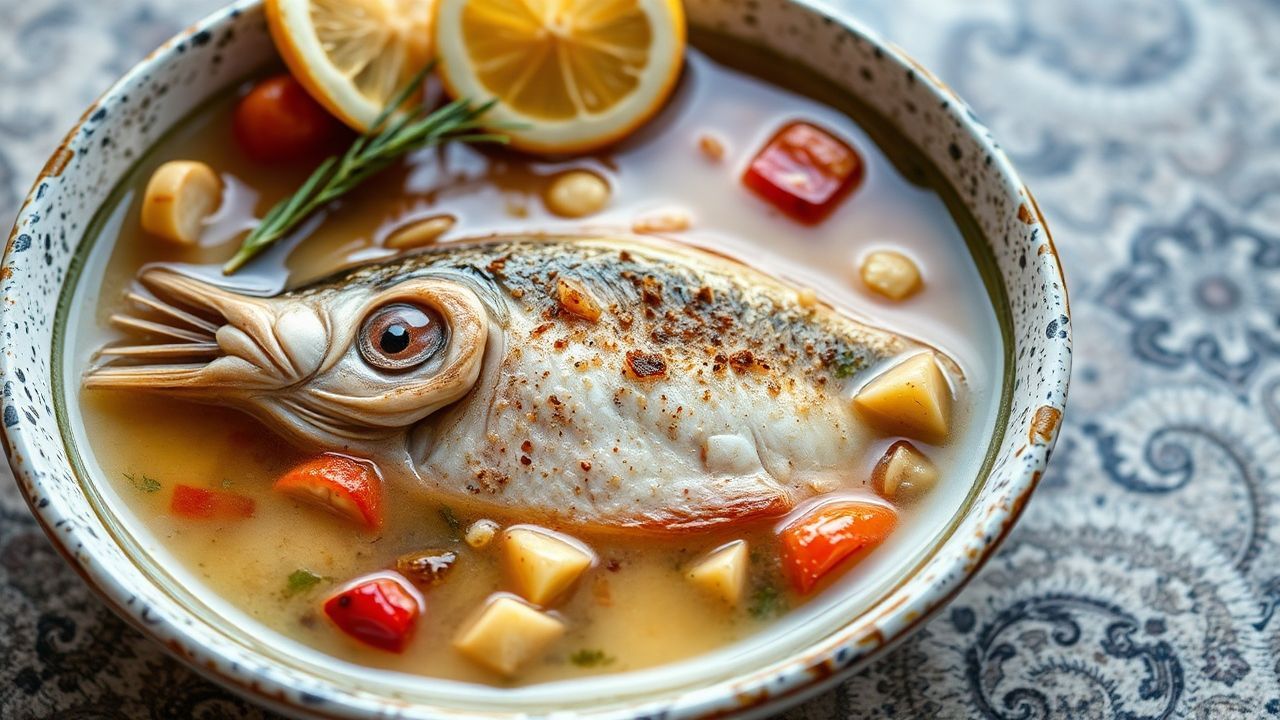
Pesce all’Acqua Pazza: the Naples “crazy water” fish that tastes fresh
Pesce all’Acqua Pazza—often translated as “fish in crazy water”—is a simple poached-fish dish from Southern Italy. You simmer a tomato–garlic broth around a whole white fish, then finish with lemon and herbs.
- Pesce all’Acqua Pazza: the Naples “crazy water” fish that tastes fresh
- What “crazy water” actually is (and why it tastes so clean)
- The broth balance: light, aromatic, and seasoned
- Garlic timing: fragrant, not bitter
- Herbs at the end: maximum perfume
- Which fish works best (and why whole fish matters)
- Ingredients for Pesce all’Acqua Pazza (serves 4)
- Step-by-step: cook Pesce all’Acqua Pazza in 35 minutes
- 1) Prep the fish (5 minutes)
- 2) Build the garlic–tomato base (10–12 minutes)
- 3) Poach gently in the “crazy water” (10–12 minutes)
- 4) Finish with lemon and herbs (2–3 minutes)
- Common mistakes (and how to avoid them fast)
- Mistake 1: boiling too hard
- Mistake 2: burnt garlic
- Mistake 3: herbs simmered too long
- Mistake 4: underseasoned broth
- How to serve Pesce all’Acqua Pazza like a Campanian home cook
- Why this dish earns a spot in your repeat rotation
- Nutritional overview (estimated)
- FAQ
At a Glance: what makes it special
- Gentle poaching keeps the fish moist and flaky.
- Tomato–garlic “crazy water” turns into a spoonable sauce.
- Fresh finish with lemon + herbs makes the flavor feel bright.
- Bread-friendly broth begs to be soaked up.
Despite the dramatic name, the technique stays calm and repeatable. You control the heat, watch the fish, and build a broth that perfumes the surface without overpowering it.
If you’ve never cooked a whole fish before, this recipe still works. It’s forgiving because the broth cooks the fish gently, and you judge doneness by texture—not by guesswork.
For background on the cooking method, see poaching. The same low-heat principle protects delicate proteins in the fish.
What “crazy water” actually is (and why it tastes so clean)
The “crazy water” is not a thick stew. It’s a lightly concentrated poaching liquid made from olive oil, garlic, tomatoes, water (or light stock), and seasoning.
As it warms, the tomatoes release sweetness and acidity, and the garlic softens into aroma. Because the broth stays relatively thin, it coats the fish rather than smothering it.
That’s why each bite tastes like fish plus Mediterranean aromatics. You get a fresh, spoonable sauce that naturally clings to flaky layers.
Tomatoes and olive oil form a core Mediterranean flavor base. If you want a broader food-science context, read tomatoes and olive oil.
The broth balance: light, aromatic, and seasoned
The biggest flavor secret is not adding more ingredients—it’s controlling concentration. Too little liquid makes the broth harsh and salty; too much makes it taste watery.
In practice, you want enough liquid to come about halfway up the fish. That lets heat circulate and transfers flavor through steam and liquid contact.
Salt matters early because it dissolves and grows more even during simmering. Taste the broth at the 10-minute mark; adjust before you add herbs.
Garlic timing: fragrant, not bitter
Garlic should cook gently in olive oil until it turns soft and aromatic. If it browns hard, it can taste sharp, and that bitterness will show up in the final broth.
Keep an eye on color, not on the clock. Once garlic smells sweet and warm, you’re close.
If you want culinary context on aromatic foundations, the role of garlic in cooking is discussed broadly in garlic.
Herbs at the end: maximum perfume
Fresh parsley and basil belong at the finish. Gentle heat brings them to life, but long simmering dulls the top notes you want in a coastal dish.
Tear or chop the herbs, then add them after the fish is done. Let residual heat warm them for 30–60 seconds.
Basil vs. parsley is simple: basil brings floral aroma; parsley adds clean, green lift. Use both for classic “Naples style” balance.
Which fish works best (and why whole fish matters)
This dish loves firm, mild white fish that stays moist under gentle heat. Common choices include branzino/sea bass, red snapper, gilt-head bream, and other similar filleting-friendly species.
Whole fish gives you the most traditional look. Bones and skin help the fish keep shape while the flesh cooks through in the poaching liquid.
Fillets work too, but they cook faster and risk drying if you keep simmering. If you choose fillets, watch doneness closely and spoon broth over the top.
For general understanding of fish cooking behavior and classification, see fish.
Size guide: how to time poaching
Aim for small whole fish, roughly 400–600 g each (or similar in size). Small fish cook quickly and soak up flavor without turning rubbery.
Poaching time varies with thickness. Instead of chasing an exact minute count, use visual cues: the flesh turns opaque and flakes near the thickest part.
If you’re cooking fillets, reduce time by about 5–8 minutes for comparable thickness. Start checking early.
Ingredients for Pesce all’Acqua Pazza (serves 4)
This recipe uses a short ingredient list with high impact. You don’t need fancy spice blends—just good tomatoes, strong olive oil, and a dependable white fish.
Most people also add chili. You should keep it light so the broth stays clean and the fish stays in front.
Core ingredient list
Fish: 4 whole small white fish (scaled and gutted)
Seasoning: sea salt + black pepper
Broth base: extra-virgin olive oil, garlic (sliced), cherry tomatoes (halved) or peeled plum tomatoes (chopped), water or light seafood stock, optional chili
Finish: fresh lemon juice, chopped parsley, torn basil leaves
Substitutions that won’t break the dish
If you can’t find cherry tomatoes, use ripe plum tomatoes. Simmer them a bit longer so they break down and release sweetness.
If filtered water isn’t available, use regular water or a light stock. The goal stays the same: a broth that tastes like tomato and garlic, not like muddy cooking liquid.
Skip chili if you want a milder version. You can always add a pinch of chili flakes at the table, which keeps heat optional.
Step-by-step: cook Pesce all’Acqua Pazza in 35 minutes
Plan for about 35 minutes from start to finish. Most of the time goes to gentle simmering, not prep.
To keep it stress-free, do the fish seasoning while the broth base builds. Then you poach, finish, and serve immediately.
1) Prep the fish (5 minutes)
Pat the fish dry. Season inside the cavity and on the outside with salt and black pepper.
Let the fish sit for 5 minutes while you start cooking the broth. This short rest helps the seasoning cling to the surface and supports even flavor transfer.
2) Build the garlic–tomato base (10–12 minutes)
Warm olive oil in a wide skillet over medium heat. Add sliced garlic and sauté until fragrant and lightly golden.
Add cherry tomatoes (halved) or chopped plum tomatoes, plus chili if using. Cook until the tomatoes soften and release juice—about 4–6 minutes.
At this stage, taste the broth base. It should taste like “almost dinner,” not bland soup. Add a small pinch of salt if needed.
3) Poach gently in the “crazy water” (10–12 minutes)
Lower the heat and nestle the fish into the pan. Spoon some of the tomato mixture over the top so the fish starts cooking immediately at the surface.
Pour in enough water (or light stock) to reach about halfway up the fish. Bring the liquid to a gentle simmer.
Cover with a lid and poach until the fish turns opaque and flakes easily at the thickest point. For whole small fish, this usually takes 10–12 minutes.
4) Finish with lemon and herbs (2–3 minutes)
Turn off the heat. Squeeze fresh lemon juice over the fish and broth, then add torn basil and chopped parsley.
Let the herbs warm for 30–60 seconds. Taste the broth and adjust salt or pepper right now, not later.
Serve immediately. The fish keeps cooking from residual heat, and herbs lose brightness if they sit too long.
Common mistakes (and how to avoid them fast)
Most failures come from heat control and timing. Once you understand what poaching requires, the dish becomes repeatably good.
Use these checks while you cook, and you’ll avoid the “why did mine turn bitter / dry / bland?” cycle.
Mistake 1: boiling too hard
A rolling boil roughens fish proteins and can make the flesh break apart. It also causes the broth to reduce unevenly.
Fix it by lowering heat the moment you see a steady simmer. Keep the lid on but avoid constant peeking.
Mistake 2: burnt garlic
Garlic turns bitter when it browns aggressively. Since garlic perfumes the entire broth, bitterness spreads quickly.
Fix it by cooking garlic until just fragrant. If it starts to darken too fast, pull the pan off heat for 30 seconds, then continue gently.
Mistake 3: herbs simmered too long
Fresh basil can lose its aroma when it spends too much time near boiling liquid. The dish then tastes flatter than it should.
Add basil and parsley only after the fish finishes, off heat or at the very end with residual warmth.
Mistake 4: underseasoned broth
Fish is mild, so the broth carries the flavor. If the liquid tastes weak in the pan, it will taste even weaker on the plate.
Taste and adjust the base before poaching ends. Then fine-tune with lemon and pepper right before serving.
How to serve Pesce all’Acqua Pazza like a Campanian home cook
Serve in shallow bowls so you get broth and fish in each bite. Use a spoon to scoop sauce, then a fork to flake the fish gently.
In Naples and along the coast, crusty bread often becomes the “fourth utensil.” It soaks up the tomato–garlic liquid better than any spoon.
Best pairings (simple, not competing)
Keep sides light. A green salad with olive oil and lemon adds crunch without fighting tomato acidity.
If you want something heartier, serve a simple rice dish or lemon risotto. The key is restraint—don’t overwhelm the fish broth.
Wine and non-alcoholic options
Choose dry, crisp drinks that match tomato brightness. Many people prefer a dry white with clean acidity, served chilled.
For non-alcoholic pairing, sparkling water with lemon works well. The bubbles and citrus help cut through the olive-oil richness.
If you want broader context on how people pair food and wine, see wine and basic style considerations.
Why this dish earns a spot in your repeat rotation
Pesce all’Acqua Pazza fits a very specific cooking philosophy: minimal ingredients, controlled heat, and bold freshness.
You cook it in one pan, clean up stays easy, and the broth turns your fish into a complete plate without extra steps.
Flexible for the market
Because you poach gently, you can adapt to what your fishmonger has. As long as the fish is firm and mild, it will work.
This adaptability makes it a great “weekly coastal dinner.” You can keep the method and swap only the fish variety.
Comfort food without heaviness
The broth feels comforting because it’s aromatic and spoonable. At the same time, it doesn’t become heavy the way cream-based sauces do.
That balance makes it suitable for weeknights and guests alike.
Nutritional overview (estimated)
Nutrition depends on the fish type and how much olive oil stays in the dish. Still, white fish provides lean protein, and the sauce remains relatively light compared with thick stews.
A typical serving often lands around 250–330 kcal, with roughly 30–40 g protein and 6–12 g fat. These numbers vary with portion size and the amount of oil absorbed.
FAQ
What fish is best for Pesce all’Acqua Pazza?
Pick firm, mild white fish that flakes easily when poached: branzino (sea bass), red snapper, Mediterranean bream, or similar species. Avoid very oily fish because their flavor can dominate the broth.
Why is it called “crazy water”?
The name points to the bubbling tomato–garlic liquid around the fish. When the broth simmers, it looks lively and vibrant as it coats the fish.
Can I make it with fillets instead of whole fish?
Yes. Use skin-on fillets if possible. Poach for less time, spoon broth over the top, and check for flaking early to prevent dryness.
Do I need filtered water for the broth?
Filtered water helps keep the broth clean and prevents off flavors from tap water. If you don’t have it, use regular water or a light stock—the main goal remains a bright, tomato-forward poaching liquid.
How do I know the fish is fully cooked?
The flesh turns opaque and flakes easily at the thickest point. Gently test with a fork; the fish should separate into tender flakes with little resistance.
See also: Pesce all’Acqua Pazza