

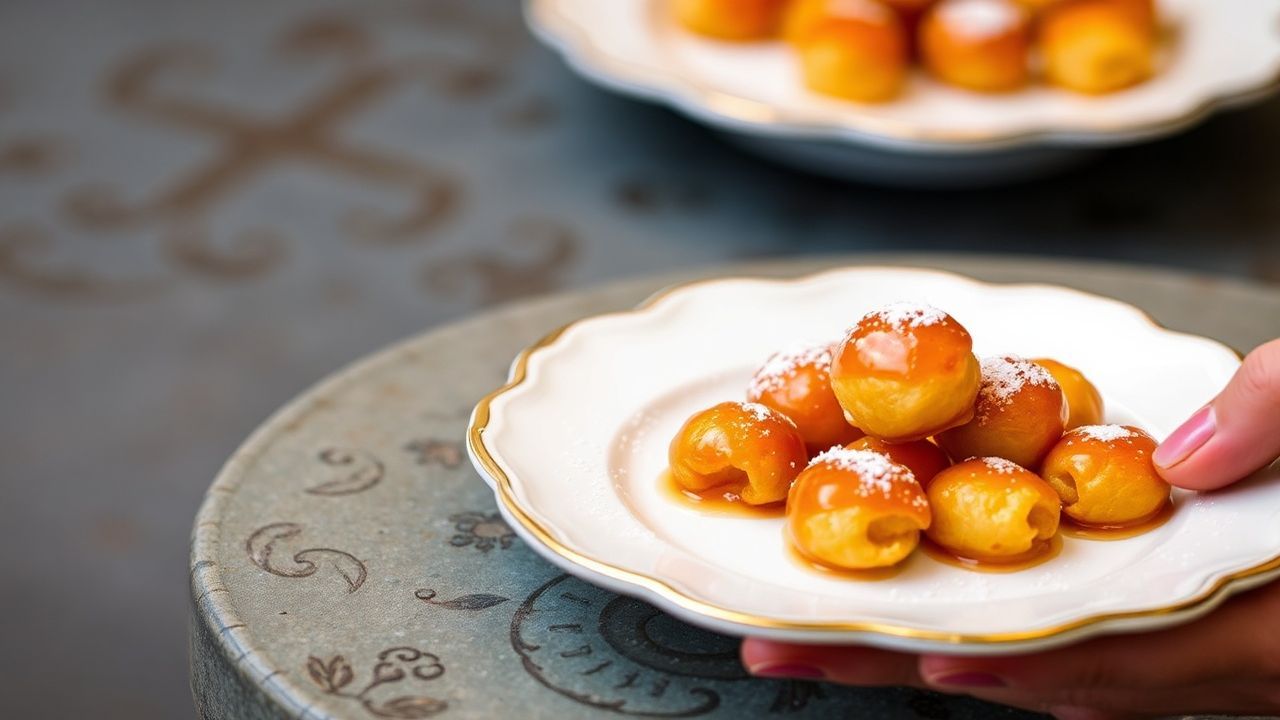
In Naples, a street-level buzz meets a kitchen tradition that never fades: Neapolitan Honey Struffoli. These small fried dough bites, glazed with fragrant honey and bright sprinkles, feel festive because they are. They also carry a clear family tradition—made for holidays, shared at tables, and enjoyed by hand.
- What Are Neapolitan Honey Struffoli?
- Neapolitan Honey Struffoli Prep and Cook Times
- Yield and Difficulty Level
- Ingredients for Neapolitan Honey Struffoli
- Instructions: How to Make Neapolitan Honey Struffoli
- 1) Prepare the dough
- 2) Knead and rest
- 3) Shape into tiny balls
- 4) Heat the oil
- 5) Fry until golden
- 6) Warm the honey glaze
- 7) Toss and coat
- 8) Garnish and set
- 💡 Expert Insight Expert Insight for Better Crisp and Better Coating
- ⚠️ Pro-Caution Pro-Caution with Oil Heat and Honey Temperature
- Tips for Success with Neapolitan Honey Struffoli
- Serving Suggestions for Festive Enjoyment
- FAQ About Neapolitan Honey Struffoli
- What are Neapolitan Honey Struffoli made of?
- Why does the honey need to be warmed gently?
- How do I keep struffoli from becoming greasy?
- Can I make Neapolitan Honey Struffoli ahead of time?
- How should I store leftover struffoli?
- The Way Forward: Make Struffoli Your Signature
At a Glance: Neapolitan Honey Struffoli
- Frying technique controls crunch and color.
- Honey glaze must warm gently for a glossy coating.
- Uniform sizing helps every piece finish at the same time.
- Presentation turns a dessert into a centerpiece.
Struffoli are often associated with Christmas in Southern Italy, especially in Naples. You shape the dough into tiny balls, fry them until golden, then coat them in warm honey so they cling together. If you want a crisp exterior and a tender center, you must control heat, timing, and glaze temperature.
For background, it helps to know how Italian sweets often balance texture and symbolism. Honey stands for sweetness and abundance across many European food traditions. You can read more about honey as a food ingredient here: honey.
What Are Neapolitan Honey Struffoli?
Neapolitan Honey Struffoli are bite-size fried dough balls coated in honey and decorated with colorful toppings. People serve them in mounds, wreath shapes, or ring forms so guests can grab pieces easily. The dessert relies on two strengths: crispy frying and proper honey binding.
The dough base stays simple—flour, eggs, and fat—so flavor comes from aroma and garnish. In many versions, citrus zest and warm spices add brightness. For a wider view of Italian dessert types, see Italian dessert.
Neapolitan Honey Struffoli Prep and Cook Times
Plan ahead for rest time. The dough needs a short rest so it firms up and fries evenly. Then frying takes most of your active attention.
Readiness: 30 minutes | Cooking: 20 minutes | Total: 50 minutes
Yield and Difficulty Level
This dessert scales well for gatherings. You can also adjust the honey and toppings depending on how glossy you want the final coating to look.
Yield: Serves 6-8, ideal for festive tables or family sharing.
Difficulty Level: Medium—manageable if you measure dough size and keep frying oil steady.
Ingredients for Neapolitan Honey Struffoli
Use fresh eggs and quality honey for the best flavor. Honey quality matters because it directly shapes the aroma, not just the sweetness. If possible, choose a floral variety.
Ingredients
- 2 cups all-purpose flour, sifted
- 3 tbsp granulated sugar
- 2 large eggs
- 3 tbsp unsalted butter, softened
- 1 tsp pure vanilla extract
- 1 tsp lemon zest, finely grated
- Pinch of salt
- Vegetable oil for frying (about 2 cups)
- 1 cup raw honey (wildflower or orange blossom)
- 1 tbsp freshly squeezed orange juice
- 1 tsp ground cinnamon
- 2 tbsp chopped toasted almonds or mixed candied fruit (optional garnish)
Honey contains sugars that caramelize when heated correctly. Keep the glaze warm rather than aggressively boiling so it stays smooth and coats evenly. For a quick reference on honey chemistry and composition, visit Honey composition.

Instructions: How to Make Neapolitan Honey Struffoli
Work in a steady rhythm. Mix the dough, shape small pieces, then fry in batches. After that, glaze and garnish right away for the best shine.
1) Prepare the dough
In a large mixing bowl, combine flour, sugar, and salt. Create a well, then add eggs, softened butter, vanilla, and lemon zest. Mix until you form a cohesive dough.
2) Knead and rest
Knead on a lightly floured surface for about 8 minutes. Cover and rest for 30 minutes so the dough relaxes and fries more evenly.
3) Shape into tiny balls
Roll dough into ropes about 1/4 inch thick. Cut into small pieces and roll to form uniform balls near 1/2 inch.
4) Heat the oil
Heat vegetable oil to 350°F (175°C) in a deep pan. Use a thermometer so your frying stays consistent across batches.
Oil temperature strongly affects texture in fried dough. If oil runs too cool, dough absorbs oil and turns greasy. If it runs too hot, the outside darkens before the inside cooks through.
5) Fry until golden
Fry in small batches for 2-3 minutes, stirring gently. Remove with a slotted spoon and drain on paper towels.
6) Warm the honey glaze
In a medium saucepan, warm honey on low heat. Stir in orange juice and cinnamon until smooth and fragrant.
7) Toss and coat
Add fried dough balls to the warm honey and toss gently until evenly coated. Transfer to a serving dish immediately.
8) Garnish and set
Sprinkle with toasted almonds or candied fruit. Let the dessert sit briefly so the honey sets for a glossy finish.
For a broader view of Italian confectionery technique, you can reference confectionery.
💡 Expert Insight
Expert Insight for Better Crisp and Better Coating
[TIP]Expert Insight: Weighing your dough pieces helps a lot. If each ball is near the same size, you avoid under-fried centers and over-browned outsides. Use a small kitchen scale or a consistent measuring cut for repeat results.
[TIP]Expert Insight: Weighing your dough pieces helps a lot. If each ball is near the same size, you avoid under-fried centers and over-browned outsides. Use a small kitchen scale or a consistent measuring cut for repeat results.
This also improves coating behavior. When pieces finish frying at similar times, they drain similarly, so honey clings without forming extra pooling.
⚠️ Pro-Caution
Pro-Caution with Oil Heat and Honey Temperature
[WARNING]Pro-Caution: Do not boil the honey aggressively. If the glaze bubbles hard, it can thicken too fast and grab into a tacky coating instead of a smooth, glossy one.
[WARNING]Pro-Caution: Do not boil the honey aggressively. If the glaze bubbles hard, it can thicken too fast and grab into a tacky coating instead of a smooth, glossy one.
Also, avoid overcrowding the frying pan. Crowding drops oil temperature and makes dough absorb more oil, which hurts crunch. Fry in batches and keep the thermometer close.
Tips for Success with Neapolitan Honey Struffoli
Small changes improve texture. Focus on even rolling, stable oil temperature, and gentle honey warming. Those choices determine whether the dessert tastes crisp or heavy.
- Consistency is king: Roll dough evenly for uniform frying.
- Honey selection: Choose wildflower or orange blossom for an authentic floral profile.
- Oil temperature: Maintain 350°F (175°C) for crisp color and cooked centers.
- Make-ahead: Prepare up to a day early, then warm lightly in honey before serving.
- Flavor variations: Add chopped pistachios or a light drizzle of melted dark chocolate.
If you want to refine your understanding of why frying changes moisture and texture, review frying. It explains how heat drives rapid cooking and surface crisping.
Serving Suggestions for Festive Enjoyment
Presentation boosts perceived freshness and makes the dessert feel more “occasion-worthy.” Shape a wreath or mound so guests can pick pieces without breaking the glaze.
Pair Neapolitan Honey Struffoli with a hot drink that balances sweetness. Crisp espresso works well because bitterness cuts through honey richness. You can also serve spiced tea for a warm, aromatic finish.
For pairing ideas across dessert beverages, see espresso and tea.

If you want more holiday-style Italian inspirations, you can explore regional sweets from Italian cuisine. Use those ideas to build a dessert table that feels cohesive.
FAQ About Neapolitan Honey Struffoli
What are Neapolitan Honey Struffoli made of?
They use a simple dough of flour, eggs, butter, and flavorings like citrus zest. You fry small dough balls until golden, then coat them with warm honey and add garnishes such as almonds or candied fruit.
Why does the honey need to be warmed gently?
Gentle heat keeps honey fluid enough to coat each piece. It also prevents the glaze from thickening too quickly or forming a dull, sticky crust.
How do I keep struffoli from becoming greasy?
First, fry in small batches so oil stays near 350°F (175°C). Second, drain fried balls well before tossing in honey.
Can I make Neapolitan Honey Struffoli ahead of time?
Yes. You can prepare the fried pieces ahead and then warm them briefly in honey before serving. This approach protects crunch and boosts shine.
How should I store leftover struffoli?
Store in an airtight container at cool room temperature for best texture for a short period. For longer storage, refrigeration may make honey coating firm, so portion and rewarm gently if needed.
For broader background on traditional sweets, you can also reference Christmas dessert and compare how honey-based confections appear in different regions.
The Way Forward: Make Struffoli Your Signature
Neapolitan Honey Struffoli offer a clear goal: crisp fried dough, glossy honey, and a festive look that invites sharing. When you control frying heat and coat with warm honey, you get the texture that makes struffoli memorable.
Keep your steps repeatable and your pieces uniform. With each batch, you learn what your kitchen oil and honey do in real time, then your dessert gets more reliable. When guests taste the first honey-glazed bite, they will feel the Naples tradition through your technique.

See also: Neapolitan Honey Struffoli