
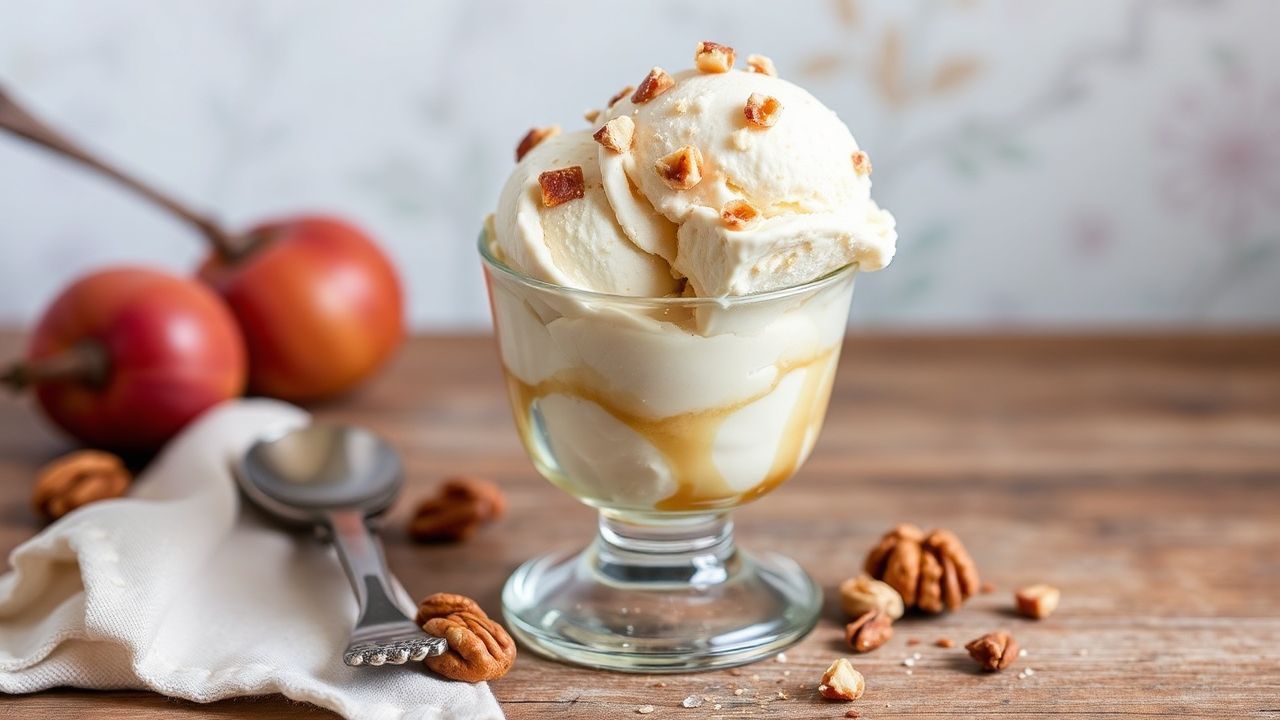
Maple walnut ice cream brings together pure maple sweetness and the deep, toasted flavor of walnuts. The result tastes indulgent, yet it stays grounded in simple pantry ingredients and classic custard technique.
- Origins and Flavor Profile of Maple Walnut Ice Cream
- Crafting the Perfect Balance of Sweetness and Crunch
- Innovative Pairings and Serving Suggestions to Elevate Your Experience
- Tips for Making Maple Walnut Ice Cream at Home with Natural Ingredients
- Q&A
- What makes maple walnut ice cream taste uniquely delicious?
- How do I pick the best maple syrup for this recipe?
- Why does custard thickening matter for ice cream texture?
- Can I make maple walnut ice cream without an ice cream maker?
- How should I store leftover maple walnut ice cream?
- The Way Forward
At a Glance: Key Takeaways
- Use Grade A light amber maple syrup for balanced caramel notes.
- Toast walnuts for aroma, then fold them in late to keep crunch.
- Cook custard gently to avoid grainy texture.
- Chill long enough so flavors and viscosity settle.
If you love nut-forward desserts, this flavor pairing delivers a sweet-meets-roasted contrast. Maple gives caramel, vanilla, and a mild woodsy edge, while walnuts add earthy bitterness and satisfying chew.
Plus, this ice cream works year-round. It feels cozy in fall, but it also pairs beautifully with fruit in warmer months.
Origins and Flavor Profile of Maple Walnut Ice Cream
Maple and walnuts belong to a long tradition of North American pantry flavors. Maple syrup comes from the sap of maple trees, while walnuts grow in many temperate regions and became a popular ingredient for baking and desserts. For background on maple production, see maple syrup.
Walnuts contribute a distinct fatty, nutty profile that stands up well to caramel-like sweetness. For more on the nut itself, read walnut. Together, they create a dessert where aroma leads, then texture carries the finish.
In practice, maple walnut ice cream tastes like toasted nuts wrapped in a smooth, custard-based sweetness. Expect a slow-melting creaminess, then crunchy pops from the walnuts. The flavor stays rich without tasting flat or one-note when you toast nuts correctly.
To keep the profile clean, balance sweetness with real flavor sources. That means real maple syrup and toasted walnuts, not extract-only shortcuts. When those ingredients match, the whole dessert tastes more “finished.”
Crafting the Perfect Balance of Sweetness and Crunch
Sweetness control starts with your maple syrup choice. Light amber Grade A syrup usually gives caramel depth with fewer intense flavors than darker grades. It also helps the custard taste smooth instead of syrupy.
For the right bite, toast walnuts until aromatic but not burnt. Toasting drives off moisture and boosts nut oils, which lifts aroma in the finished ice cream. If you want the science angle, check roasting.
Next, decide when to add walnuts. If you mix them in early, they can soften during long chilling. If you add them near the end of churning, you preserve crunch and improve bite consistency across scoops.
Finally, don’t overdo sugar. A custard base already carries sweetness from maple and dairy. Too much extra sugar can make the texture feel heavy rather than creamy.
Innovative Pairings and Serving Suggestions to Elevate Your Experience
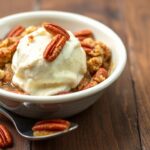
Pairing works best when you contrast temperature and texture. Serve maple walnut ice cream with something warm and spiced, such as apple crumble or a pear tart. Warm fruit brightens the maple and refreshes the palate.
For sauce ideas, a thin bourbon caramel or dark chocolate ganache adds depth without drowning the nuts. If you prefer a lighter route, use a citrusy berry topping so the walnuts don’t feel too heavy.
Salt also helps. A pinch of flaky sea salt makes the maple taste more complex and keeps sweetness from dominating. If you want a crisp reference for salt’s role in flavor, see salt.
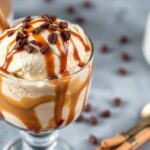
Garnish matters for presentation. Add a small scatter of crushed toasted walnuts on top for visual contrast. Then drizzle a controlled ribbon of maple sauce so every spoon gets a balanced bite.
Instead, plate first, then add toppings quickly. This keeps the ice cream firm and the walnuts crisp.
Tips for Making Maple Walnut Ice Cream at Home with Natural Ingredients
Start with a custard base. Custard thickens as egg yolks coagulate, and that structure helps ice cream stay creamy after freezing. For the fundamentals of custard cooking, see custard.
Use chilled dairy for better emulsification. Heavy cream carries fat, while whole milk balances richness. Together they create smooth body and help the custard churn evenly.
Infuse carefully if you want extra maple lift. A small vanilla bean or a mild cinnamon note can support the maple without overpowering walnuts. Keep the infusion short and strain well so you don’t add grainy texture.
Chill the base overnight. This step lets flavors meld and helps fat stabilize before churning. It also lets the mixture cool fully, which improves churn performance.
Prep and Cook Time
- Planning: 20 minutes
- Chilling the base: 8 hours or overnight
- Churning: 30 minutes
- Total time: ~9 hours (mostly inactive)
Yield
Serves 6 generous scoops.
This batch works well for bowls and for a layered sundae presentation.
Difficulty Level
Medium. You’ll succeed even as a home cook if you keep heat moderate and stir constantly while thickening.
If you’ve made custard before, this will feel familiar and repeatable.
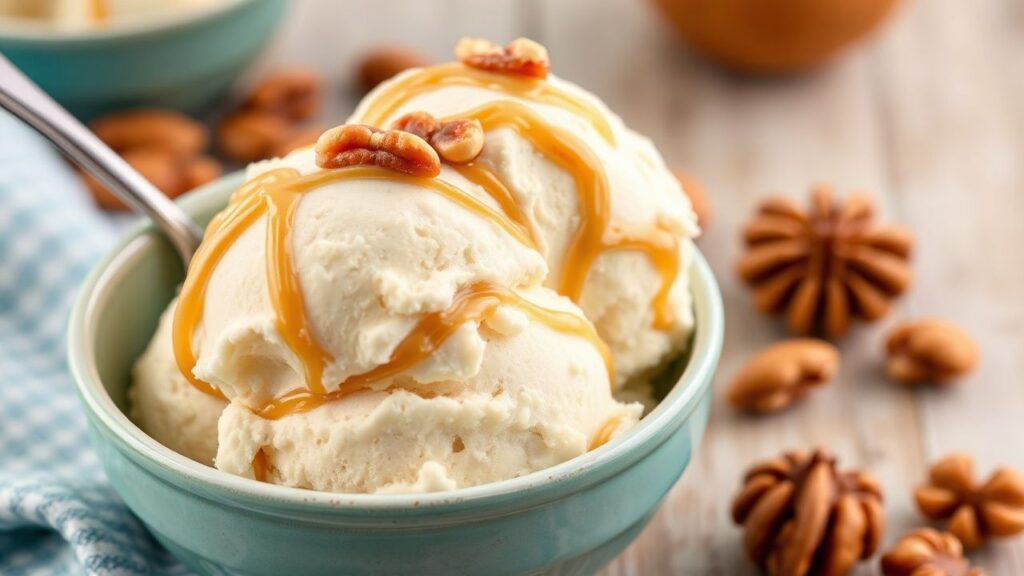
Ingredients
- 2 cups heavy cream, chilled
- 1 cup whole milk, chilled
- 4 large egg yolks, room temperature
- 3/4 cup pure maple syrup, preferably Grade A light amber
- 1/2 cup granulated sugar
- 1 teaspoon vanilla extract
- 1 cup walnuts, toasted and coarsely chopped
- Pinch of fine sea salt
Instructions
- Toast the walnuts: Toast walnuts in a dry skillet over medium heat for 3–4 minutes, stirring often. Cool completely, then chop coarsely.
- Warm dairy: In a saucepan, combine cream and milk. Heat over medium until you see small bubbles around the edges. Do not boil.
- Whisk yolks: Whisk egg yolks, sugar, and salt until the mixture looks smoother and slightly lighter.
- Temper: Slowly pour about 1/2 cup warm dairy into the yolks while whisking. This step prevents curdling.
- Cook custard: Pour the tempered mixture back into the saucepan. Cook on low, stirring constantly, until thick enough to coat a spoon (about 170–175°F / 77–80°C).
- Add maple and vanilla: Remove from heat. Stir in maple syrup and vanilla until fully combined.
- Strain and chill: Strain through a fine mesh sieve into a clean bowl. Cover with plastic wrap pressed to the surface. Chill overnight.
- Churn: Churn according to your ice cream maker instructions until soft-serve consistency.
- Add walnuts late: During the final 5 minutes of churning, add toasted walnuts so they distribute evenly without losing crunch.
- Freeze and serve: Transfer to a container, cover, and freeze 4 hours or until firm.
Chef’s Notes
- Maple syrup grade: Grade A light amber usually keeps sweetness balanced while letting caramel notes shine.
- Walnuts substitute: Pecans can replace walnuts for a milder, sweeter nut flavor. Toast first for the best aroma.
- Dairy-free option: Use coconut cream plus a neutral plant milk. Expect a softer, less custard-like texture.
- Make ahead: Chill the custard up to 2 days in advance for easier scheduling.
- Storage tip: Place a sheet of parchment directly on the ice cream surface before sealing to reduce ice crystals.
Serving Suggestions
- Serve scoops in chilled bowls. Add a drizzle of maple syrup and a small scatter of crushed toasted walnuts for crunch.
- Pair with warm baked goods like pear galette, cinnamon muffins, or churros to match hot-and-cold contrast.
- Top with a few raspberries or thin apple slices to add brightness and acidity.
- Finish with shaved dark chocolate or a light dusting of nutmeg for a warm spice note.
If you want a deeper look at why ice cream stays creamy, skim ice cream. You’ll find useful background on fat, sugar, and freezing behavior.
| Nutrient | Per Serving (1 scoop) |
|---|---|
| Calories | 220 kcal |
| Protein | 3 g |
| Carbohydrates | 18 g |
| Fat | 15 g |
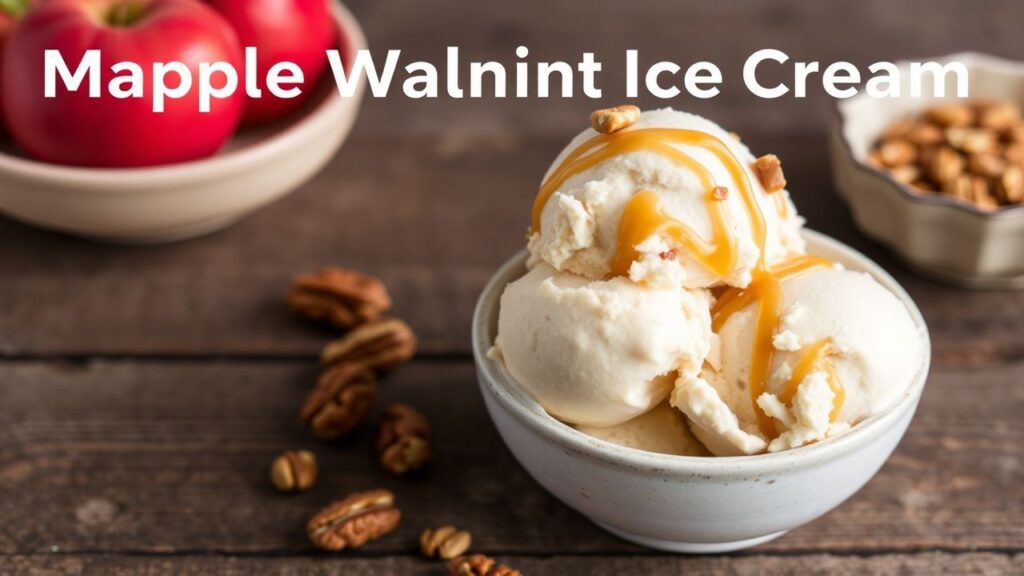
For additional texture guidance, understand how emulsions behave in dairy mixes. Helpful background appears in emulsion. When the custard emulsifies well, the ice cream feels silkier.
Next, if you enjoy exploring other nut-forward flavors, compare how different nuts toast and taste. A quick primer on botanical classifications can help you pick substitutes. See nut.
Use the same technique—toast, chill, churn, and add nuts late. Then adjust sweetness slightly based on your syrup and your preferred nut intensity.
Q&A
What makes maple walnut ice cream taste uniquely delicious?
The flavor comes from a match between maple’s caramel-vanilla notes and walnuts’ toasted, slightly bitter earthiness. Toasting unlocks richer walnut aroma, while custard cooking keeps the sweetness smooth and rounded.
How do I pick the best maple syrup for this recipe?
Choose pure maple syrup, ideally Grade A light amber, for a clear maple flavor and balanced sweetness. Darker syrup grades can taste bolder and may overpower the custard when you want a delicate nutty finish.
Why does custard thickening matter for ice cream texture?
Egg yolks thicken as they heat, which builds structure. That structure helps reduce iciness and improves melt feel after freezing, so each scoop stays creamy instead of firm and flaky.
Can I make maple walnut ice cream without an ice cream maker?
Yes, but the texture shifts. You’ll need to freeze and stir repeatedly to break up ice crystals, which mimics churning’s role. Expect a slightly less uniform creaminess than a churned batch.
How should I store leftover maple walnut ice cream?
Keep it tightly covered to limit air exposure and reduce freezer burn. Press parchment directly against the surface to reduce ice crystal buildup, then return to the coldest part of your freezer.
The Way Forward
Maple walnut ice cream works because it respects two core elements: toasted nuts for aroma and custard structure for creaminess. When you follow the timing—toast cool, temper carefully, chill fully, and fold walnuts late—you get a balanced scoop every time.
Make it once, then tweak one variable at a time. Try a different maple grade, or toast the walnuts slightly lighter. Small changes help you find your ideal version of this sweet, nutty classic.
See also: Maple walnut