

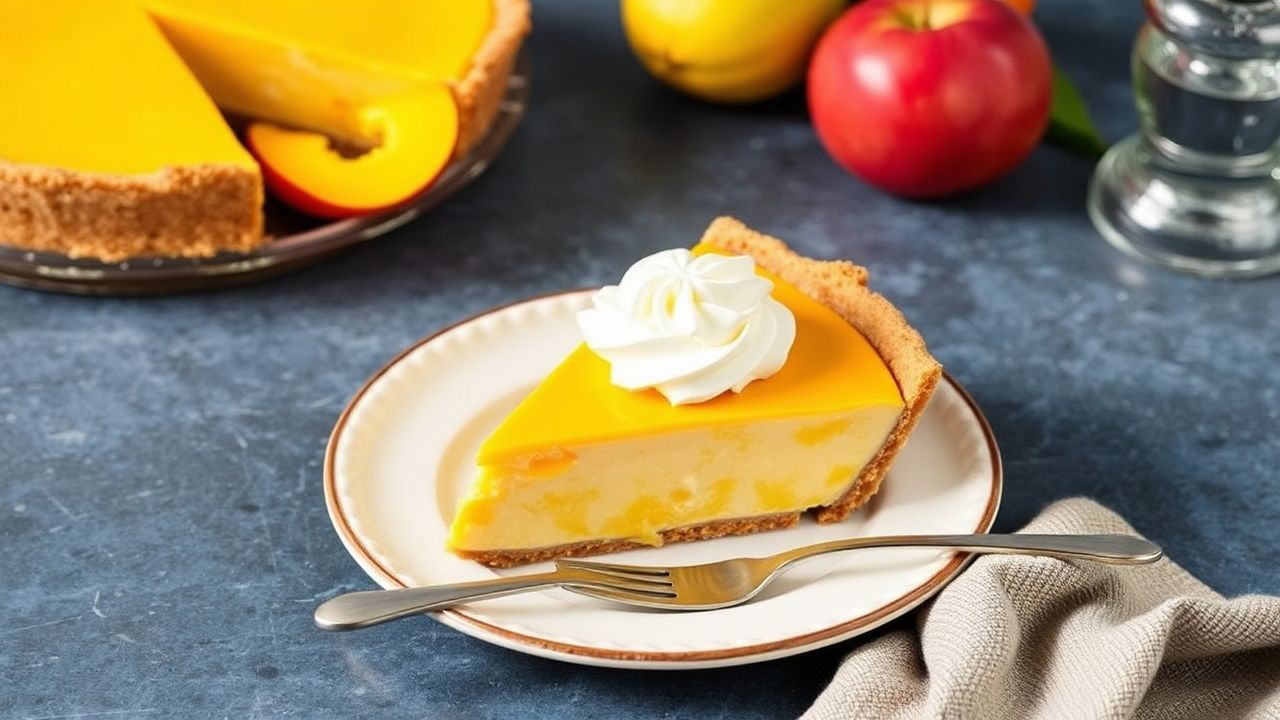
There’s something irresistible about a silky, chilled cream pie—one of those desserts that feels familiar the moment you cut the first slice. Still, mango cream pie adds a bright tropical layer that classic cream desserts rarely capture so clearly.
- Exploring the rich History Behind Mango Cream Pie
- Why Mango Cream Pie Works (Texture, Flavor, and Stability)
- Selecting the Perfect Mangoes for Maximum Flavor
- Crafting the Silkiest Cream Filling with Tropical Flair
- Tips for Stunning Presentation and Serving Suggestions
- How to Store Mango Cream Pie for Best Results
- FAQ
At a Glance
- Use ripe mangoes for smooth flavor and a naturally vibrant color.
- Whip cream to soft peaks, then fold gently for a light, creamy texture.
- Cook the custard base until it thickens fully, then chill long enough to set.
- Garnish with fresh fruit and coconut for a clean tropical finish.
Mango cream pie brings the comfort of classic custard to the flavor of ripe fruit. With the right mango variety and a properly cooked thickener, you get a slice that tastes like sunshine but holds its shape on the plate.
In the sections below, you’ll learn what makes this pie different, how to choose mangoes, and how to build a custard filling that stays smooth after chilling. You’ll also find a clear Q&A for common issues like runny filling and uneven texture.
Exploring the rich History Behind Mango Cream Pie
Mangoes have an extremely long culinary history, and they show up across many food cultures as fresh fruit, paste, or pulp. When bakers fold mango flavor into dairy-based desserts, they turn a fresh fruit tradition into a custard-friendly format that still feels light.
For context, mango cultivation traces back thousands of years in South Asia, where mangoes became a prized fruit long before modern refrigeration. You can read more about the fruit itself in mango background and why it became so widely cultivated.
Classic cream pies rely on a cooked thickening step (often cornstarch or egg yolks) to create a stable custard structure. Mango cream pie keeps that core method, then adds fruit puree for aroma, color, and a sweet-tart balance.
That mix matters because mango flavor compounds come through best when you puree the fruit and add it after the base thickens. It also helps the filling stay glossy rather than dull or grainy, especially after the pie chills.
Why Mango Cream Pie Works (Texture, Flavor, and Stability)
Every good mango cream pie balances three things: fruit sweetness, dairy richness, and a thickened structure. If any one part fails—under-thickened custard or overmixed cream—you end up with softness that can feel watery instead of creamy.
To keep the texture smooth, mango cream pie uses a puree with minimal fiber and a custard base cooked until it reaches full thickening. For thickening science, cornstarch behavior is well documented in cornstarch references, including why it needs heat and time to set properly.
For the flavor, mango brings more than sweetness. It adds fruity aroma and a mild tang that balances the fat in heavy cream. If you want extra lift, lime juice works well because citrus brightens perceived sweetness without turning the pie sour.
Finally, chilling locks in structure. Dairy-based fillings need time to cool and firm up, and the custard thickener continues to stabilize as it cools.
Selecting the Perfect Mangoes for Maximum Flavor
Choosing fruit drives the final taste more than most people expect. A mango cream pie built on bland or fibrous mango pulp tastes flat, even if your custard base goes perfectly.
Look for mangoes that smell strongly at the stem end and yield slightly to gentle pressure. Varieties such as Alphonso or Ataulfo often puree smoothly, which supports a clean custard texture. For general fruit ripening concepts, review ripening to understand why aroma and softness increase as fruit matures.
Avoid mangoes that feel hard and green, because they can taste tart and can release more fiber into the puree. Fiber doesn’t always show visually, but it can change mouthfeel and make the filling feel less velvety.
If you need to puree mangoes, blend until smooth, then strain if you still notice threads. That extra step often matters for a premium, creamy finish.
When mangoes feel ripe, they also reduce the need for extra sugar. That means your filling tastes like mango instead of like a vanilla custard with mango flavor on top.
To support reliable results, measure puree volume after blending. Mango sizes vary, and exact puree helps you match the custard ratio.
Crafting the Silkiest Cream Filling with Tropical Flair
The goal is a custard base that thickens fully before you fold in dairy and mango. Start by whisking sugar and cornstarch to remove lumps, then cook with milk until the mixture bubbles and turns glossy.
This stage matters because cornstarch thickening depends on heat and agitation. If you stop too early, the filling can loosen during chilling. You can also review pie crust basics if you need a reminder of how crust moisture affects pie fillings.
After the custard base thickens, cool it slightly. Hot custard can melt whipped cream, which reduces volume and makes the pie feel dense instead of light.
Next, whip cold heavy cream to soft peaks, then fold the custard in gently. Folding preserves air and gives that classic cream pie mouthfeel.
Expert Insight: If your mango puree tastes sweet but not bright, add lime juice in small amounts (start with 1 tbsp for a standard pie) and taste the mixture. Adjusting citrus early helps you avoid an overly sugary finish.
Then add the mango puree and vanilla after the custard base thickens. Keep stirring until the color turns uniform. Finally, cool the filling to room temperature or slightly cooler before assembling.
If you want a more tropical aroma, grated lime zest can add fragrance. Zest adds essential oils, which carry aroma even when flavor levels stay balanced.
Tips for Stunning Presentation and Serving Suggestions
Presentation turns a dessert into an event. Start with a fully baked and cooled crust so the filling doesn’t soak through. A blind-baked crust also reduces sogginess and supports clean slices.
For toppings, use thin slices of fresh mango for a glossy, sun-like look. Add toasted coconut flakes for texture and contrast. If you want a fresh, green pop, mint leaves and kiwi slices work well for color.
Chill the pie long enough before cutting. Cream pies taste best when cold and set, so aim for at least 4 hours, often overnight for the cleanest slice.
When you serve, wipe your knife between cuts. The custard stays smooth, but a warm blade can pull the filling and make edges look messy.
Prep and Cook Time
Plan your schedule so the pie can chill undisturbed. This timing helps the thickened custard reach full stability.
Use the times below as a practical guide for home kitchens.
- Readiness: 25 minutes
- Chilling Time: 4 hours (or overnight for best results)
- Total Time: Approximately 4 hours 30 minutes
Yield
This recipe makes a standard 9-inch pie with generous portions. You’ll get about eight slices depending on how thick you cut.
If you’re serving a crowd, plan for smaller cuts or offer extra toppings on the side.
Serves 8 generous slices
Difficulty Level
The method uses common pantry ingredients and a straightforward custard step. You don’t need advanced baking skills, but you do need attention while the custard thickens.
Once the filling turns glossy and thick, the rest becomes assembly and chilling.
Medium – approachable for bakers comfortable with cream-based desserts
Ingredients
Gather everything before you start so you can whisk and cook without interruptions. Measure liquids carefully, especially lime juice and milk.
Also, confirm your mango yield so you have enough puree for the filling.
- 1 prepared 9-inch pie crust, blind-baked until golden
- 3 large ripe mangoes (approx. 2-2.5 cups mango puree)
- 1 cup heavy cream, cold
- ½ cup whole milk
- ⅔ cup granulated sugar
- 3 tbsp cornstarch
- 1 tbsp fresh lime juice
- 1 tsp pure vanilla extract
- Optional garnish: toasted coconut flakes, fresh mint, sliced kiwi or mango
Instructions
Follow the steps in order to protect the custard texture. Each stage affects how the filling sets later.
Stir consistently during cooking, then cool the base before you fold in whipped cream.
- Prepare the mango puree: Peel and pit mangoes, then blend the flesh into a smooth puree. Measure 1 cup for the cream filling. Reserve thin slices from the remaining mangoes for garnish.
- Make the custard base: In a saucepan, whisk together sugar and cornstarch until combined. Gradually add whole milk while whisking to prevent lumps. Cook over medium heat, stirring constantly, until thick and bubbling, about 5-6 minutes. Remove from heat.
- Combine flavors: Stir in the mango puree (1 cup), lime juice, and vanilla extract into the hot custard. Mix until smooth, then cool until warm rather than hot.
- Whip the cream: Whip cold heavy cream with an electric mixer until soft peaks form. Fold the cooled mango custard into the whipped cream gently, preserving volume.
- Assemble the pie: Pour the mango cream filling into the prepared pie crust. Smooth the top with a spatula. Refrigerate at least 4 hours, ideally overnight, until set.
- Add finishing touches: Right before serving, garnish with thin mango slices, toasted coconut flakes, fresh mint, and kiwi if desired.
Chef’s Notes
These notes help you avoid common home-baking issues. They also help your results stay consistent even when ingredients vary.
Use them to fine-tune thickness, flavor brightness, and planning time.
- Substitution tip: If fresh mangoes aren’t available, thawed frozen mango pulp works. Start with the same puree volume, then taste for sweetness before adjusting.
- Make-ahead: This pie tastes even better after resting overnight. The flavors meld, and the slice holds cleaner edges.
- Texture troubleshooting: If the filling seems too loose, the custard base likely didn’t thicken fully. In future batches, cook until it reaches a clear bubbling stage for the full time, then chill thoroughly.
- For added zing: Add finely grated lime zest to deepen citrus aroma. For background on citrus oils and flavor, see lime.
Serving Suggestions
Serve mango cream pie cold for the best flavor and texture. Pair it with a light beverage that won’t overpower the fruit.
Try mint-infused iced tea, chilled sparkling water with lime, or a mild jasmine tea for a clean finish.
You can also serve small slices with a scoop of coconut sorbet for contrast. If you prefer a dairy-forward pairing, a small dollop of lightly whipped cream works well.
For a more elegant look, add edible flowers or a spoonful of passionfruit pulp. Keep garnishes minimal so the mango flavor stays in front.
| Nutrient | per Serving (1 slice) |
|---|---|
| Calories | 310 kcal |
| Protein | 4 g |
| Carbohydrates | 42 g |
| Fat | 14 g |
How to Store Mango Cream Pie for Best Results
Storage affects both texture and flavor. Keep the pie covered in the refrigerator to protect it from fridge odors and surface drying.
Ideally, store mango cream pie for 3-4 days. Dairy fillings often hold best within this window while still tasting fresh.
If you want extra guidance on food safety and refrigeration, review refrigeration principles. Cool storage slows bacterial growth and helps the custard remain stable.
For freezing, results can vary because dairy-based fillings may weep slightly after thawing. If you plan to freeze, freeze the pie un-garnished and add fresh toppings after thawing.
FAQ
What makes mango cream pie different from a customary cream pie?
Mango cream pie uses ripe mango puree in the custard filling, so the flavor stays fruit-forward instead of purely vanilla. It also adds natural color and aroma, which you can’t mimic with extract alone.
A customary cream pie often relies on flavoring that doesn’t contribute the same fresh fruit texture. Mango cream pie keeps its silky feel through proper custard thickening and gentle folding of whipped cream.
Can I use canned mangoes instead of fresh ones?
Yes, you can use canned mangoes, but they may be sweeter and softer than fresh fruit. That can slightly change thickness and overall flavor balance.
If you use canned mango, drain well and blend until smooth. Taste the puree before you finalize the filling so it doesn’t end up overly sweet.
What crust pairs best with mango cream pie?
A buttery graham cracker crust or a flaky pastry crust both work. A graham crust adds a gentle crunch that complements the creamy filling.
A classic pie crust adds a tender base and a more traditional look. Either way, blind-bake to keep the crust crisp.
Is mango cream pie difficult to make at home?
No. The steps are straightforward: cook the custard base, cool it, whip cream, fold, then chill.
The one skill that matters most is cooking the custard long enough to thicken fully, so the final filling stays creamy and sliceable.
How do I garnish mango cream pie for an extra pop?
Top with thin mango slices, toasted coconut flakes, and mint leaves. Kiwi slices add contrast, while edible flowers make the pie look celebratory.
Keep garnishes fresh and add them just before serving to prevent moisture from affecting the surface texture.
Can I make mango cream pie ahead of time?
Yes. Mango cream pie improves after chilling because the filling sets and the flavors blend.
Make it the day before for the cleanest slices, then garnish right before guests arrive.
See also: Mango cream pie