

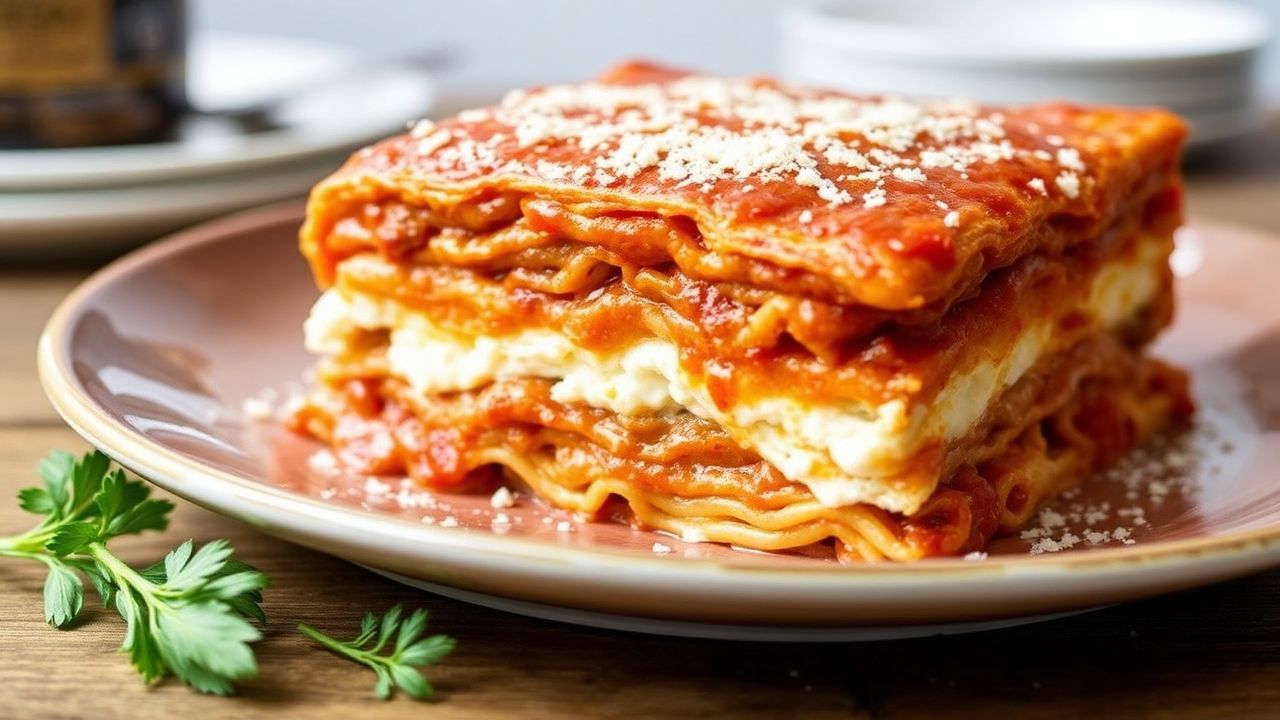
Homemade lasagna with ricotta delivers comfort because each layer sets into a balanced mix of pasta, tomato sauce, and creamy dairy. The ricotta brings a tender bite, while the sauce adds tang and natural sweetness without making the dish feel heavy.
- Why Homemade Lasagna with Ricotta Tastes Better
- Prep and Cook Time, Yield, and Difficulty
- Ingredients for the Best Homemade Lasagna with Ricotta
- Instructions: Make the Sauce, Filling, and Layers
- Chef’s Notes and Tips for Success
- Serving Suggestions and Pairing Ideas
- At a Glance: Quick Checklist Before You Bake
- FAQ
- Drain ricotta for creamy layers that don’t pool.
- Thicken the sauce so noodles hydrate fully.
- Bake covered, then uncovered for structure and browning.
- Rest 15–20 minutes so slices hold clean lines.
Many home cooks chase “authentic” flavor by swapping ingredients. Technique drives results more than variety: manage moisture, control layer thickness, and spread sauce evenly across the full pan.
If you want background on why dairy behaves the way it does in baked dishes, read about lactose and how it relates to milk products. Understanding this helps you reason about texture during baking.
Why Homemade Lasagna with Ricotta Tastes Better
Homemade lasagna with ricotta tastes better when you control moisture and heat. Store-bought versions often use thinner sauce or wetter fillings, which can leave a watery bottom or a dry top.
Ricotta plays a clear role in that balance. Whole-milk ricotta holds shape between pasta sheets, so you get a creamy interior instead of a loose bake.
To ground your ingredient choices, review ricotta and tomato sauce for basic product behavior. Then you can adjust your sauce thickness with confidence.
Heat management matters, too. Bake covered first to melt and soften everything, then bake uncovered to evaporate moisture and brown the cheese.
Prep and Cook Time, Yield, and Difficulty
Preparation: 45 minutes. You’ll chop aromatics and mix the ricotta filling while your sauce simmers.
Cooking: 1 hour 30 minutes. This includes sauce simmering, assembly, covered baking, and final browning for color.
Total: 2 hours 15 minutes. Yield: Serves 8 generous portions. Difficulty: Medium—mostly about timing and layer consistency.
If you like learning why regional styles differ, read about Emilia-Romagna. It won’t change the method, but it explains why sauce thickness varies.
Ingredients for the Best Homemade Lasagna with Ricotta
Use solid ingredients and keep the list focused. You build most flavor from tomato sauce, dairy richness, and herbs.
For this version, plan for one classic 9×13-inch pan. Then adjust sauce thickness if you prefer a looser or firmer slice.
Lasagna base ingredients:
- 12 sheets dried or fresh lasagna pasta (durum wheat preferred)
- 28 oz canned crushed tomatoes (San Marzano preferred)
- 2 tbsp tomato paste
- 1 tbsp extra virgin olive oil
- 1 large yellow onion, finely chopped
- 4 cloves garlic, finely minced
- 1 tsp dried oregano
- 1 handful fresh basil leaves, torn
- Salt and freshly ground black pepper, to taste
- Fresh parsley, for garnish
Ricotta and cheese ingredients:
- 3 cups whole milk ricotta cheese, drained
- 2 eggs, lightly beaten
- 3 cups whole milk mozzarella, shredded
- 1 cup freshly grated Parmigiano-Reggiano
These amounts aim for a classic balance. If you like a saucier lasagna, increase the sauce by about 10–15% without loosening it too much.
For a helpful foundation on grains used in pasta, you can read about wheat. It supports why durum pasta holds up between layers.
Instructions: Make the Sauce, Filling, and Layers
Start with sauce. When sauce simmers long enough, it thickens and coats pasta sheets, improving both texture and flavor.
Then build the filling and assemble with even layer thickness. That step reduces dry spots and watery pockets.
1) Prepare the Tomato Sauce: Heat olive oil in a large saucepan over medium heat. Add chopped onion and sauté until translucent and tender, about 7 minutes. Stir in garlic and cook 1 minute, just until fragrant.
This order builds a sweet onion base and keeps garlic from turning bitter. Next, you’ll add tomatoes and let the sauce reduce into a spoonable consistency.
2) Simmer Sauce: Pour in crushed tomatoes and tomato paste. Stir in oregano, salt, and pepper. Lower heat and simmer gently for 45 minutes, stirring occasionally, until thickened. Stir in fresh basil right before removing from heat.
If the sauce looks too thin, simmer 5–10 minutes longer. You want sauce that spreads easily, not watery liquid that pools at the bottom.
3) Make the Ricotta Filling: In a bowl, combine drained ricotta with beaten eggs, half the Parmigiano-Reggiano, a pinch of salt, and black pepper. Mix until smooth and creamy. Eggs help the filling set while the casserole bakes.
WARNING: Don’t skip draining ricotta. Wet ricotta adds extra water that can weaken the slice and cause pooling in the baking dish.[/WARNING]
4) Preheat and Prep: Preheat the oven to 375°F (190°C). Lightly grease a 9×13 inch baking dish with olive oil or non-stick spray.
Grease the edges well. A clean release keeps slices intact and improves how the top layer presents when you serve.
5) Assemble the Lasagna Layers: Spread a thin layer of tomato sauce on the bottom. Layer 3 sheets of pasta evenly over the sauce. Spread one-third of the ricotta mixture, then one-third of the mozzarella, and add a ladle of sauce. Repeat two more times, ending with mozzarella and the remaining Parmigiano-Reggiano.
Use a spatula to smooth each layer. Even thickness helps pasta cook at the same rate across the whole pan.
6) Cover and Bake: Cover tightly with aluminum foil. Tent it slightly to prevent sticking. Bake for 40 minutes. Remove foil and bake 15–20 minutes more, until the top turns golden and bubbly.
This two-stage bake works because the covered phase melts everything and hydrates noodles. Then the uncovered phase evaporates excess moisture so the surface browns properly.
7) Rest Before Serving: Rest at least 15 minutes. Resting lets the sauce thicken slightly and helps layers firm up so slices hold their shape.
If you want to understand why melted dairy behaves like a stable system in heat, review emulsion. That idea helps explain why cheese feels cohesive instead of greasy.
Chef’s Notes and Tips for Success
Small adjustments improve texture fast. They also prevent common issues like watery layers, undercooked pasta, and uneven browning.
Use these notes while you cook so you can troubleshoot without starting over.
Drain excess whey for creaminess: Strain ricotta through a fine mesh sieve or cheesecloth overnight for the best texture. If you’re short on time, drain for 30 minutes and then check consistency.
Well-drained ricotta feels thicker and holds a spoon-mark. If it drips, you need more draining before mixing in eggs.
Pasta choice changes timing: Fresh pasta cooks faster, while dried pasta needs enough sauce moisture. With high-quality dried sheets, keep your sauce thick and saucy during simmering.
If your pasta looks like it needs more hydration, add a few spoonfuls of sauce before the first bake. Don’t cover it in too much liquid, though, or you’ll dilute the final texture.
Add vegetables carefully: Sauté mushrooms or spinach first, then stir them into the tomato sauce. This step removes extra water so your lasagna stays firm after baking.
After sautéing, let vegetables cool slightly. Hot vegetables can heat the ricotta unevenly and make assembly messier.
Pick a good baking dish: Glass or ceramic helps distribute heat steadily. That steadiness supports even baking and consistent cheese melt across the pan.
Use a dish that holds 9×13-inch layers comfortably. Overcrowding can create thick corners that stay underbaked.
Store and reheat well: Refrigerate leftovers tightly covered up to 3 days. Reheat in the oven or microwave, and add a spoon of sauce if the top dries out.
Lasagna often tastes even better the next day because flavors meld and the sauce redistributes. For storage handling basics, see refrigeration.
Serving Suggestions and Pairing Ideas
Serve hot with fresh parsley and a light shower of Parmigiano-Reggiano. Let diners add extra cheese if they want a stronger salty finish.
For side dishes, choose options that cut through richness. A bright salad keeps the meal balanced.
Pair with a crisp green salad and a lemon vinaigrette. The acidity lifts the flavor and helps each bite feel lighter.
If you want a warm side, offer crusty Italian bread. Use it to scoop sauce and enjoy the layered texture.
For beverages, try sparkling water with a lemon wedge. The fizz refreshes your palate between bites.
At a Glance: Quick Checklist Before You Bake
Use this checklist to confirm your setup. It helps you catch texture problems before they start.
Check these items right after assembly, before the oven.
- Ricotta drained = less pooling and cleaner slices.
- Sauce thickened = pasta cooks fully.
- Covered bake then uncovered browning = best structure.
- Rest 15–20 minutes before slicing.
When you follow these four steps, the casserole delivers dependable results batch after batch. You’ll see the difference in how the first slice looks and how it holds.
That consistency is why homemade lasagna with ricotta feels restaurant-like at home.
FAQ
What makes ricotta the best ingredient for a lasagna filling?
Ricotta adds a creamy, tender texture that stays soft between pasta layers. Whole-milk ricotta also mixes well with eggs, which helps the filling set when baked.
If your ricotta tastes mild, that’s normal. It supports tomato sauce and herbs instead of overpowering them.
Should I drain ricotta before using it?
Yes, drain it. Excess liquid can make the bottom layer watery and weaken the structure of each slice.
Strain ricotta through a fine sieve or cheesecloth for about 20–30 minutes, or longer if you want a firmer interior.
Can I use no-boil noodles in this lasagna?
You can, and they work well when the sauce stays thick enough. No-boil noodles need moisture and steam to hydrate during baking.
Keep the sauce simmered until it reduces, then assemble with full coverage so each sheet gets enough liquid.
How do I prevent watery lasagna?
Control three variables: thick tomato sauce, properly drained ricotta, and pre-cooked vegetables. If you add spinach or mushrooms, sauté them first to release water.
For the final texture, bake uncovered at the end so moisture evaporates and the top browns.
What oven temperature and baking time should I use?
Use 375°F (190°C). Bake covered for about 40 minutes, then uncovered for 15–20 minutes until golden and bubbly.
After baking, rest 15–20 minutes before cutting so layers settle and hold shape.
See also: Homemade lasagna