
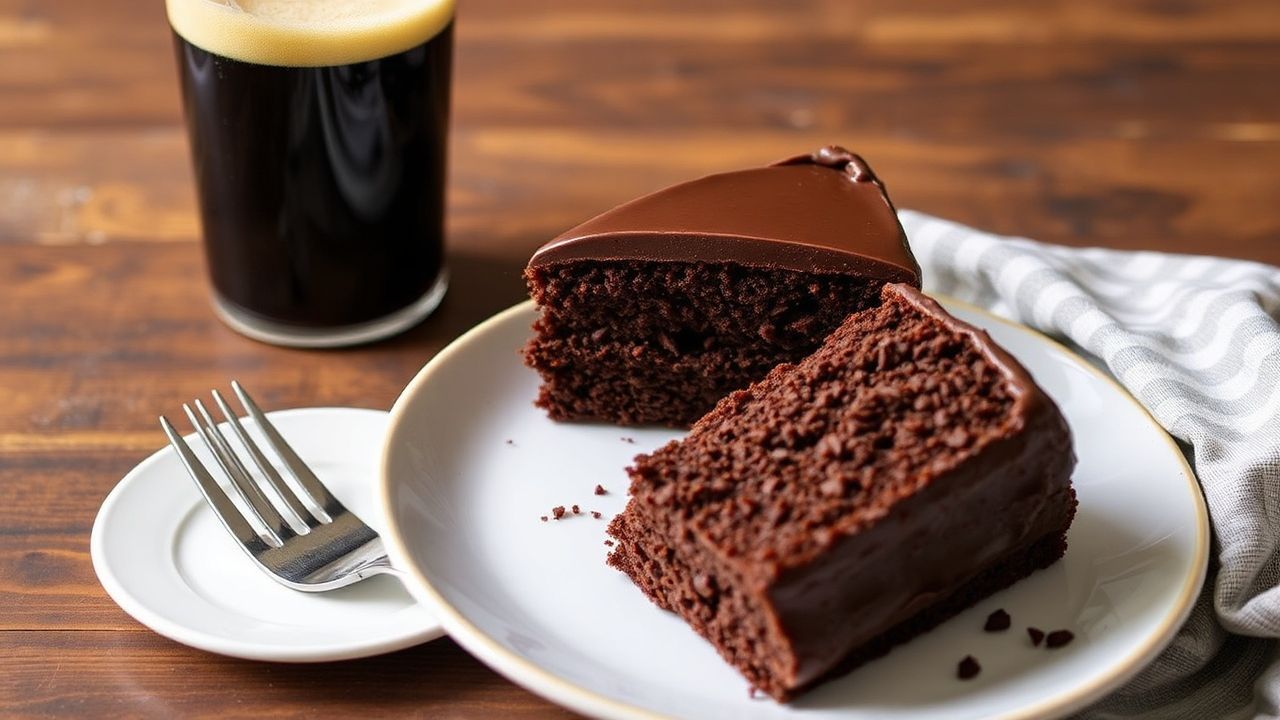
Imagine a chocolate cake that tastes like a dark stout—roasty, cocoa-forward, and lightly bitter—then remove the alcohol entirely. A Guinness-free chocolate stout cake can still deliver that signature mocha depth using stout-style flavor ingredients and proven moisture-building mixing.
- Why Stout-Style Flavor Makes Chocolate Taste Deeper
- Choosing the Right Stout Alternative (Flavor and Structure)
- Best Options
- 1) Non-alcoholic stout (most direct)
- 2) Coffee stout or “coffee porter” style flavor
- 3) Strong coffee or concentrate (highest control)
- What to Avoid
- The Moisture Blueprint: How This Cake Stays Tender
- Ingredients for Guinness-Free Chocolate Stout Cake
- Step-by-Step Method (1 Bowl, Bakery-Style Texture)
- Prep and Bake Setup
- 1) Bloom Cocoa With Warm Stout Alternative
- 2) Mix Wet Ingredients
- 3) Combine Warm Cocoa and Wet Batter
- 4) Fold Dry Into Wet (Gentle Matters)
- 5) Bake and Test Correctly
- 6) Cool Fully Before Frosting
- Frosting Pairings That Match the Roasted Profile
- Serving Ideas That Feel Like a Specialty Bakery Cake
- Make-Ahead, Storage, and Freezing
- Troubleshooting: Fix Texture and Flavor Fast
- FAQ
At a Glance
- Stout taste comes from roast: use non-alcoholic stout/porter notes or concentrated coffee.
- Moist crumb is built, not added: sour cream (or thick yogurt) plus oil supports tenderness.
- Cocoa tastes richer when bloomed: warm liquid boosts aroma and smooths chocolate flavor.
- Texture depends on mixing + bake timing: fold dry in gently, then stop early.
Why Stout-Style Flavor Makes Chocolate Taste Deeper
Chocolate reads as “bolder” when roast aromas meet mild bitterness and a touch of acidity. That blend makes cocoa feel more complex instead of just sweet.
Stout-style ingredients add dark malt character, a toasted finish, and a bitter edge that matches cocoa’s natural profile. Even without alcohol, you can rebuild that same flavor family for a true stout-like bite.
Stout flavor traces to roasted grain notes and dark caramel-like flavor compounds. You can mirror that effect with a non-alcoholic stout/porter product or roasted coffee concentrate. For background on the grain base, see malt.
Cocoa also behaves differently depending on processing. Dutch-process cocoa often tastes smoother and darker, which helps it blend into the batter for a richer finished crumb. For more on cocoa styles, read cocoa.
Guinness-Free Still Delivers Stout Taste
Many people assume stout flavor requires alcohol. In reality, most recognizable taste comes from roasted malt, fermentation-derived complexity, and mellow bitterness.
So choose substitutes that taste like dark beer rather than sweet soda or dessert syrups. Look for labels that say non-alcoholic stout, dark porter, or a coffee-stout style.
If the substitute tastes thin, it can fade in the oven. If it tastes overly sweet, it can make the cake heavy and muddy as cocoa bakes.
Coffee can also mimic stout’s roast dimension. Use strong coffee or concentrate to add roasted aromatics and controlled bitterness that stays compatible with cocoa. For general context, see coffee.
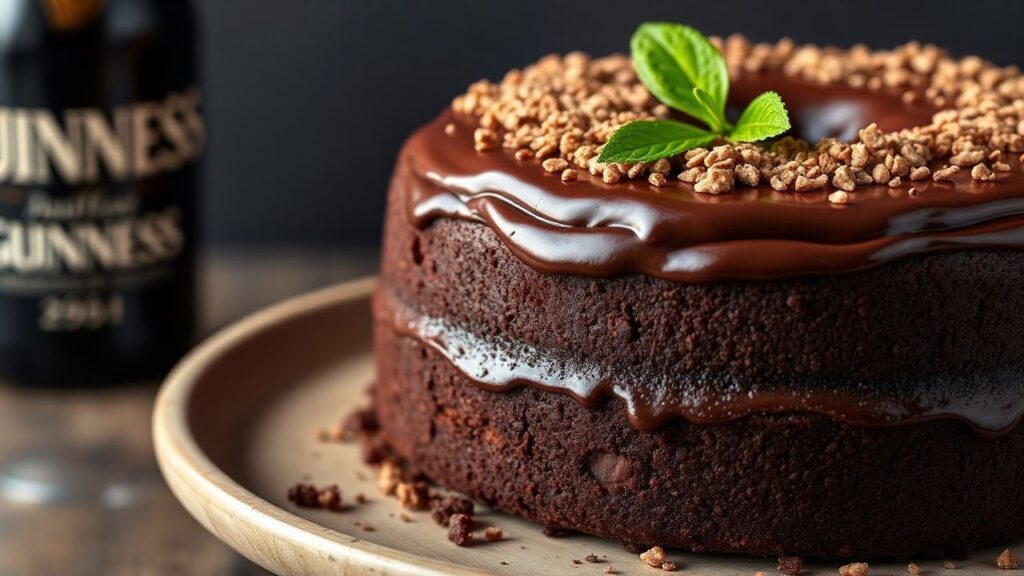
Choosing the Right Stout Alternative (Flavor and Structure)
Your stout alternative affects more than taste. It also changes how much liquid your batter holds, which shifts lift, bake time, and final density.
If your substitute is watery, you risk over-hydrating the batter. If it tastes sharply acidic, it can push cocoa flavor in a direction that feels harsher after baking and cooling.
Start with flavor intent. Aim for roasted malt notes, a smooth dark finish, and bitterness that tastes chocolate-compatible.
Then check thickness and intensity. A darker product usually holds its roast character better during heat and cooling, which matters for a cake that needs consistent flavor from first bite to last.
Best Options
1) Non-alcoholic stout (most direct)
This option creates the closest match to real stout flavor in a cake. Choose a stout that tastes like dark roasted beer, not a sweet drink.
If the label clearly says stout or dark porter, you’ll usually get the roast notes cocoa needs. Use room-temperature product for smoother mixing and fewer lumps.
2) Coffee stout or “coffee porter” style flavor
Coffee-stout styles often add roasted aromatics that cocoa amplifies well. They also tend to bake more predictably because they include more flavorful solids than plain brewed coffee.
Pick a product with a deep roast profile. Avoid ones that taste strongly tangy, since cocoa can intensify sharp edges as the cake cools.
3) Strong coffee or concentrate (highest control)
For texture control, concentrate works well because it adds roast intensity with less dilution. That helps you keep the batter thick and the crumb tender.
If you use brewed coffee, keep it very strong. Otherwise, the cake can bake less dense and taste thinner after cooling.
Whichever option you choose, keep ingredients near room temperature. Warm liquids blend faster, so the cocoa blooms evenly instead of clumping.
What to Avoid
Avoid substitutes that taste sour, metallic, or sharply tangy on the first sip. Cocoa can amplify those edges, and you may end up with a harsh finish.
Also avoid overly sweet versions. Too much sugar can make the crumb feel dense or gummy, and it can slow baking so the outside sets before the inside properly finishes.
The Moisture Blueprint: How This Cake Stays Tender
Moist cake comes from the right balance of fat, tender structure, and correct bake timing. In this recipe, oil supports a consistently supple crumb.
Sour cream adds softness and mild tang. It also improves batter cohesion, which helps the cake hold moisture during cooling.
As the cake bakes, sour cream proteins set and then stabilize the crumb. When you cool fully before slicing, the interior stays tender instead of turning paste-like.
If you want the ingredient science behind lift and tenderness, review leavening agents. It clarifies how baking soda needs acidity to perform well.
Why Sour Cream Works Especially Well With Cocoa
Sour cream brings both acidity and fat. The acidity supports baking soda’s leavening action, while the fat slows moisture loss over time.
In dark cakes, moisture matters even more. When cocoa dries, flavors can taste flat, but sour cream’s tang helps keep the taste rounded and balanced.
For the best crumb, use full-fat sour cream. If you substitute, keep the dairy thick so you don’t dilute the batter.
Oil vs. Butter: Texture Differences You Can Feel
Butter adds flavor, but it also contains water that changes baking behavior. Oil contains mostly fat, so it helps this cake stay tender across different ovens.
The neutral oil keeps texture consistent and prevents greasy pockets. Meanwhile, cocoa and stout-style flavor do the heavy flavor work.
If you want a baseline comparison, see butter for how dairy fat and water content affect baking.
Ingredients for Guinness-Free Chocolate Stout Cake
This ingredient list targets one result: a dense, moist chocolate crumb with roasted stout-style depth. Every item supports structure, aroma, moisture, or balance.
Start with Dutch-process cocoa for a smooth, dark chocolate flavor. Then bloom it with warm stout-style liquid so roast aroma shows up inside the crumb.
If you want more detail on chocolate behavior, check chocolate. Processing affects flavor development during baking.
Core Ingredients
- 1 cup stout alternative (non-alcoholic stout, coffee stout, or robust porter), room temperature
- 3/4 cup Dutch-process unsweetened cocoa powder
- 2 cups all-purpose flour, sifted
- 2 cups granulated sugar
- 1 1/2 tsp baking soda
- 3/4 tsp baking powder
- 1 tsp sea salt
- 3 large eggs, room temperature
- 1/2 cup vegetable oil
- 1 cup full-fat sour cream
- 2 tsp vanilla extract
- Optional: 1 cup bittersweet chocolate chips or chunks
If you need a dairy swap, use full-fat Greek yogurt. Choose a thick style so the batter stays properly set during baking and cooling.
For more moisture control and ingredient roles, pair this cake approach with Guinness-free cake. It helps you dial in flavor swaps without losing crumb quality.
Step-by-Step Method (1 Bowl, Bakery-Style Texture)
This method builds flavor first, then protects texture. You’ll bloom cocoa in warm stout-style liquid, mix wet ingredients smoothly, and fold dry into wet with restraint.
Overmixing after adding flour develops gluten. That tightens the crumb and can dry it out even if the flavor sounds perfect.
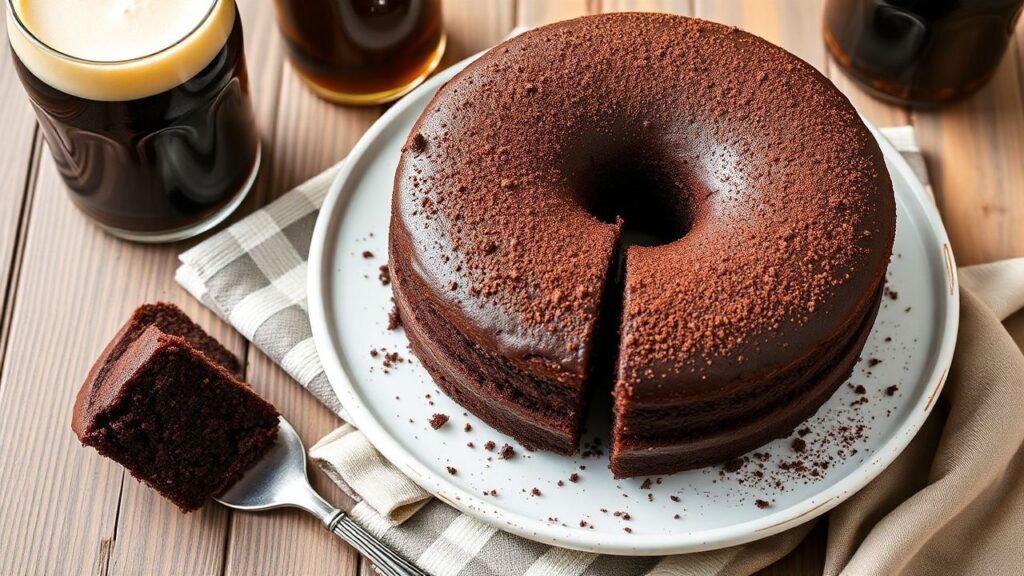
Prep and Bake Setup
Preheat your oven to 350°F (175°C). Grease two 9-inch round pans and line the bottoms with parchment.
If your flour looks compact, sift before measuring. Even distribution helps the cake rise more evenly.
1) Bloom Cocoa With Warm Stout Alternative
Warm the stout alternative and whisk in cocoa until smooth. Keep the heat low and gentle so the mixture steams but does not boil hard.
Boiling can push cocoa toward a scorched taste. Cool the mixture slightly before combining it with eggs to prevent scrambling.
2) Mix Wet Ingredients
Whisk eggs, oil, sour cream, and vanilla in a large bowl until smooth. Mix only until uniform—don’t chase foam.
If sour cream looks lumpy, let it sit at room temperature for 20–30 minutes first. Smooth dairy prevents streaks and improves the final crumb.
3) Combine Warm Cocoa and Wet Batter
Pour the warm cocoa-stout mixture into the egg mixture while whisking gently. You want a glossy batter with no dry cocoa pockets.
If the cocoa mixture thickens too much, loosen it with 20–30 seconds of low-heat whisking. Then proceed right away so the batter stays pourable.
4) Fold Dry Into Wet (Gentle Matters)
Add the sifted dry ingredients to the batter. Fold with a spatula until no visible flour remains.
Stop early. The batter should stay thick and cohesive, not perfectly silky. That texture bakes into tenderness.
5) Bake and Test Correctly
Divide batter between pans. Bake for 35–40 minutes and start checking at 30 minutes.
Use a toothpick test aimed at moist crumbs, not wet batter. Dark cakes keep cooking as they cool, so overbaking dries the center.
6) Cool Fully Before Frosting
Cool in pans for 15 minutes, then turn out onto a rack. Let the cake cool completely before frosting.
Cooling finishes crumb set and prevents frosting from melting or sliding. It also rounds roast flavor at room temperature.
Frosting Pairings That Match the Roasted Profile
The best frosting for this cake balances cocoa richness with tang or deeper chocolate flavor. Aim for contrast: creamy texture with a clean bite.
Pick frosting based on the mood you want. Tangy frosting makes roast notes feel brighter, while chocolate-forward frosting keeps it bold and dessert-like.
Also consider how frosting interacts with moisture. If your glaze stays too runny, it can soak into the crumb and blur layers.
If you want to learn more about how fats and emulsions behave in dessert mixes, see emulsion.
Best Options
- Cream cheese frosting: adds tang that lifts cocoa roast
- Dark chocolate ganache: keeps flavors deep and cohesive
- Espresso buttercream: intensifies perceived chocolate flavor
If you use ganache, let it thicken slightly before spreading. Otherwise, it can sink into the crumb and make the top look uneven.
Pairing with coffee works especially well. The roast notes align with the cake’s stout-inspired bitterness for a cohesive flavor arc.
Serving Ideas That Feel Like a Specialty Bakery Cake
Roasted chocolate desserts shine with simple accents. Instead of stacking many flavors, choose one or two toppings that echo the stout profile.
Too many mix-ins can blur the cake’s signature identity. Keep garnish focused on roast, salt, or a bright fruit note that cuts through sweetness.
Quick Elevations
- Salted whipped cream with a pinch of cinnamon
- Toasted pecans for crunch and nutty bitterness
- Dark chocolate shavings to reinforce the cocoa look
- Raspberry or orange zest for bright contrast
If you want the strongest flavor harmony, serve with espresso or coffee rather than tea. A medium roast often brings sweetness and roast without tasting grassy.
When you plate, let the cake breathe. A few minutes at room temperature helps aromatics rise.
Make-Ahead, Storage, and Freezing
This cake improves after it rests. After a few hours, cocoa flavors taste more integrated, and the crumb feels even more tender.
Wrap the cake tightly to protect moisture. If you frost later, refrigerate briefly, then bring it back toward room temperature before serving.
Storage Guidelines
Store wrapped in the refrigerator for up to 4 days. For best slice texture, serve at room temperature, especially if your frosting uses butter or cream cheese.
If the cake feels firm straight from the fridge, let it sit 20–30 minutes on the counter. It will slice cleaner and smell more aromatic.
Freezing
Freeze unfrosted layers wrapped separately. Thaw overnight in the refrigerator, then warm to room temperature before frosting.
Freezing lets you prep for gatherings without losing roast depth. Cocoa and stout-style flavor generally hold up well through thawing when you wrap well.
Troubleshooting: Fix Texture and Flavor Fast
Dark cakes fail in predictable ways. Most issues come from bake time, mixing habits, or choosing a stout alternative that doesn’t match the cocoa profile.
Use these checks before you blame the recipe. Small changes usually rescue the next attempt quickly.
If the Cake Is Dry
The most common cause is overbaking. Start checking at 30 minutes and aim for moist crumbs on the toothpick.
Next time, reduce bake time by 2–3 minutes. Dense cakes finish setting as they cool, so carryover heat can still dry the crumb.
If the Cake Is Too Dense or Tough
This usually happens from overmixing after adding flour. Fold just until the flour disappears, then stop.
Also confirm your leaveners stay fresh. Baking soda and baking powder weaken over time, which reduces lift and tenderness.
If the Flavor Tastes Thin
A weak stout alternative often causes this. Choose a darker, roasted non-alcoholic stout/porter or use coffee concentrate.
For extra punch, add bittersweet chocolate chunks. They create intense cocoa pockets that boost perceived flavor in every bite.
FAQ
What makes this cake taste like stout even though it has no beer?
You get stout-like flavor from roasted malt notes in a stout alternative (non-alcoholic stout/porter or coffee-stout products) and from strong roasted coffee. Cocoa then amplifies those dark, mocha-like aromas during baking and cooling.
Can I use regular brewed coffee instead of a non-alcoholic stout?
Yes, but use strong coffee or concentrate so the batter doesn’t become watery. Keep cocoa and sour cream amounts the same to preserve moisture and balance.
Why do I bloom cocoa with warm liquid?
Warm liquid dissolves cocoa solids and helps release aromatic compounds. That makes the chocolate taste deeper, smoother, and more roasty while also reducing dry cocoa pockets.
How do I know when the cake is done?
Start checking at about 30 minutes. The toothpick should come out with moist crumbs, not wet batter. Dark cakes continue to set as they cool, so avoid overbaking.
What frosting pairs best with Guinness-free chocolate stout cake?
Cream cheese frosting works well because it adds tang that lifts the cocoa’s roast notes. Dark chocolate ganache also pairs nicely, keeping the dessert rich and cohesive.
See also: Guinness-free cake