
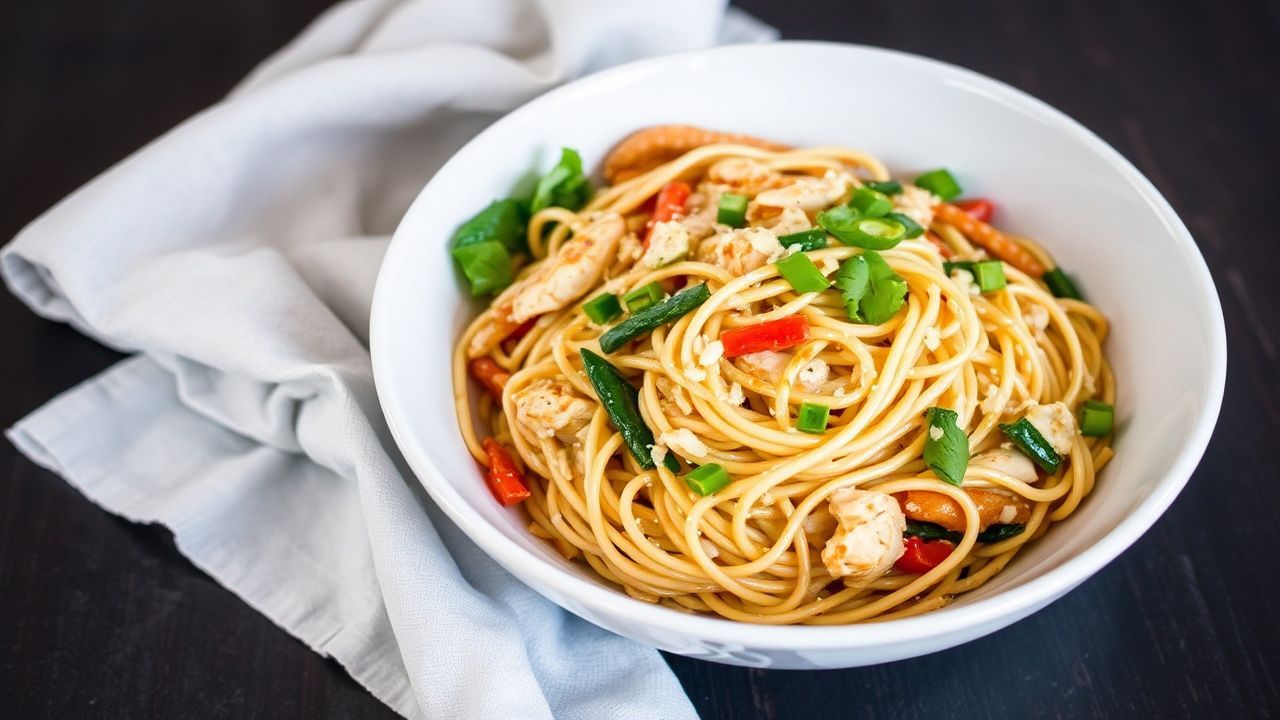
Chicken Lo Mein delivers takeout-style satisfaction with a savory sauce, springy noodles, and crisp-tender vegetables. This effortless chicken lo mein recipe keeps the process simple, so you can cook a restaurant-style bowl on a weeknight.
- Choosing the Perfect Noodles and Fresh Ingredients for Authentic Flavor
- Mastering the Sauce Blend That Elevates Every Bite
- Step-by-Step Guide to Achieving the Ideal Stir-Fry Texture
- Step 1: Cook Noodles Al Dente
- Step 2: Sear Chicken Without Drying It Out
- Step 3: Stir-Fry Aromatics and Vegetables
- Step 4: Combine, Coat, and Finish
- Tips and Tricks for Customizing Your Chicken Lo Mein to Suit Every Palate
- Prep and Cook Time
- Yield
- Difficulty Level
- Ingredients
- Instructions
- Tips for Success
- Serving Suggestions
- FAQ
- Focus on al dente noodles so stir-frying stays glossy, not mushy.
- Use a balanced sauce with soy, oyster sauce, and sesame oil.
- Cook fast at high heat to keep chicken juicy and veggies bright.
- Coat evenly by tossing constantly after sauce goes in.
Many people skip lo mein at home because they fear complicated steps or long prep. You don’t need that. With smart timing and a few pantry staples, your chicken lo mein turns out rich, aromatic, and reliably good.
Choosing the Perfect Noodles and Fresh Ingredients for Authentic Flavor
Effortless chicken lo mein starts with the right noodles and fresh produce. Egg noodles work best because they have a tender bite and hold sauce well during quick stir-frying.
Pick crisp vegetables so they stay colorful after heat. Bok choy brings sweet, leafy flavor, while carrots and snap peas add crunch. For seasoning and aroma, use minced garlic and ginger and keep them ready before the pan heats.
For noodle and starch behavior basics, it helps to understand noodle types and how their structure changes with cooking time. Shorter cooking and a quick rinse help you control texture.
Best Noodle Texture: Al Dente, Then Toss
Boil noodles until they are just tender but still firm in the center. Rinse briefly with cold water, then toss with a small amount of oil to reduce clumping.
This step matters because noodles finish cooking in the wok. If you boil too long, you’ll end up with a soft, heavy bowl instead of light, glossy chicken lo mein.
Vegetables That Keep Their Bite
Slice ingredients so they cook at similar speeds. Cut carrots into thin matchsticks, and separate bok choy stems from leaves so each part hits the pan at the right moment.
If you want extra texture, add mushrooms or water chestnuts. Fresh aromatics also matter, since lo mein relies on a warm base of garlic and ginger.
Mastering the Sauce Blend That Elevates Every Bite
The sauce drives the flavor profile in chicken lo mein. Use soy sauce for salty depth, oyster sauce for umami, and sesame oil for toasted aroma.
Add a touch of brown sugar to round out the savory notes. Then balance with rice vinegar for a gentle tang. For a quick reference on fermented flavor and soy-based ingredients, see soy sauce.
Simple Sauce Formula (No Complex Steps)
Whisk soy sauce, oyster sauce, sesame oil, a little dark soy sauce for color, brown sugar, and rice vinegar. Keep it smooth so it coats noodles evenly.
Also, measure your sauce before you start cooking. Stir-frying moves fast, and stopping to measure can overcook chicken or vegetables.
Optional Heat and Pepper Control
If you like spice, use red pepper flakes or white pepper. Add small amounts first, because you can always adjust at the end.
For heat guidance, remember that pepper intensity depends on grind and freshness. Keep it simple for consistent results.
Step-by-Step Guide to Achieving the Ideal Stir-Fry Texture
Good chicken lo mein comes from heat control and timing. Use a wok or large skillet, and preheat it before you add any ingredients.
When the pan is properly hot, chicken browns quickly and veggies stay crisp. This method matches how many stir-fry styles rely on stir-frying at high temperature.
Step 1: Cook Noodles Al Dente
Boil egg noodles until al dente, then drain and rinse under cold water. Toss with a small teaspoon of vegetable oil to prevent sticking.
Set noodles aside while you cook chicken and vegetables. This reduces time pressure once the wok is hot.
Step 2: Sear Chicken Without Drying It Out
Cook sliced chicken in a single layer so it browns instead of steams. Cook until the pieces lose their pink color, then remove them from the pan.
Thin slicing helps speed up cooking and keeps the meat tender. Overcooking is the main reason chicken turns dry in stir-fries.
Step 3: Stir-Fry Aromatics and Vegetables
Sauté garlic and ginger briefly, until fragrant. Add carrots and snap peas first, because they need more time.
Next, add bok choy stems, then finish with bok choy leaves until just wilted. This staged order keeps texture intact.
Step 4: Combine, Coat, and Finish
Return chicken to the pan. Add noodles, pour in the sauce, and toss constantly for 2–3 minutes.
Stop once noodles are glossy and hot, but not mushy. If sauce looks too thick, add a splash of water and toss again.
To keep flavor consistent, avoid adding sauce too early. Sauce goes in after aromatics and vegetables finish their quick cook, so everything tastes fresh and balanced.
Tips and Tricks for Customizing Your Chicken Lo Mein to Suit Every Palate
Chicken lo mein adapts easily, because the sauce works with many proteins and vegetables. Swap ingredients without changing the core method: fast cook, even toss, and controlled noodle texture.
For example, you can use shrimp, firm tofu, or a mix of mushrooms. Each swap changes timing, but the workflow stays the same.
Protein Swaps
Use shrimp if you want a lighter finish. Cook until just opaque, then combine with sauce at the end to prevent rubbery texture.
For vegetarian lo mein, choose tofu or tempeh. Press and cube tofu, then pan-sear so it holds up during tossing.
Vegetable Add-Ins
Thinly sliced napa cabbage works well, especially when added after stems and before delicate leaves. Water chestnuts add crunch and help keep each bite interesting.
Green onions make a clean topping. They brighten the dish and add a fresh aroma that works with sesame oil.
Sauce Adjustments
If you want extra richness, add a little more oyster sauce. If you prefer lighter flavor, reduce dark soy and keep the vinegar steady.
You can also add a teaspoon of chili garlic sauce for heat. Start small so the sauce doesn’t overpower the noodle flavor.
Expert Insight: For even coating, toss noodles and sauce over high heat for the last 1–2 minutes. Hot metal helps the sauce cling, which creates that glossy lo mein texture you get from takeout.
Timing matters more than fancy ingredients. When noodles go in at the right moment and the toss is quick, the dish tastes cohesive instead of mixed.
Prep and Cook Time
- Preparation: 15 minutes
- Cooking: 12 minutes
- Total Time: 27 minutes
This schedule fits weeknight cooking. Most of your time goes into slicing and measuring.
If you prep vegetables in advance, you can cut the active time further and keep the stir-fry quick.
Yield
Serves 4 hearty portions.
If you cook for fewer people, reduce the sauce slightly and keep the noodle-to-sauce ratio balanced.
Difficulty Level
Easy — perfect for home cooks who want a quick, flavorful dinner without fuss.
The method stays straightforward: cook noodles, sear chicken, stir-fry vegetables, then toss with sauce.
Ingredients
- 8 oz fresh egg noodles
- 1 lb boneless, skinless chicken breasts, thinly sliced
- 1 cup snap peas, trimmed
- 1 medium carrot, julienned
- 2 cups chopped bok choy (stems and leaves separated)
- 3 cloves garlic, minced
- 1 tbsp minced fresh ginger
- 3 tbsp soy sauce
- 1 tbsp oyster sauce
- 1 tsp sesame oil
- 1 tsp dark soy sauce
- 1 tbsp brown sugar
- 1 tsp rice vinegar
- 2 tbsp vegetable oil, divided
- Pinch of red pepper flakes (optional)
If you use dried noodles, cook them to package instructions for al dente, then rinse and oil-toss as well.
For reference on sesame and oil flavor, you can review sesame oil and how its aroma changes with heat.
Instructions
- Cook noodles: Bring a large pot of water to a boil and cook egg noodles until al dente, about 4–5 minutes. Drain, rinse under cold water, then toss with 1 teaspoon vegetable oil. Set aside.
- Mix the sauce: In a small bowl, whisk soy sauce, oyster sauce, sesame oil, dark soy sauce, brown sugar, and rice vinegar until smooth. Set aside.
- Sear the chicken: Heat 1 tablespoon vegetable oil in a wok or large skillet over medium-high heat. Add sliced chicken in a single layer and sauté until golden and cooked through, about 5–6 minutes. Remove and set aside.
- Stir-fry the veggies: Add remaining vegetable oil to the pan. Sauté garlic and ginger for about 30 seconds. Add carrots and snap peas first, stir-frying for 2 minutes. Add bok choy stems and cook for 1 minute, then add bok choy leaves and cook until just wilted, about 1 minute.
- Combine and coat: Return chicken to the pan. Add noodles, pour in the sauce, and toss constantly until noodles are glossy and heated through, about 2–3 minutes. Adjust with red pepper flakes or a pinch of white pepper.
- Serve immediately: Plate chicken lo mein hot. Garnish with toasted sesame seeds or sliced green onions.
Serve right after tossing. Noodles keep absorbing sauce as they sit, so early serving gives the best texture contrast.
If you need to hold the dish briefly, keep it warm over low heat and toss once before serving.
Tips for Success
- Don’t overcook noodles: Keep noodles slightly firm before stir-frying to avoid mushy texture.
- Use mise en place: Measure sauce and chop vegetables before you heat the pan.
- High heat, fast tosses: Browning and crunch come from quick cooking at high temperature.
- Customize the sauce: Add chili oil or a small squeeze of lime at the end for brightness.
- Leftovers: Store in an airtight container and reheat on the stovetop with a splash of water to loosen sauce.
Stovetop reheating works better than microwaving because it helps recoat noodles. For more context on sauce thickening and starch, see starch.
When you loosen leftover sauce with a bit of water, you restore a lighter mouthfeel and improve flavor distribution.
Serving Suggestions
Serve chicken lo mein in shallow bowls. Top with sliced green onions, toasted sesame seeds, or cilantro if you like a fresh herbal note.
Pair it with a simple cucumber salad for contrast. You can also serve spring rolls for extra crunch and a classic takeout vibe.
FAQ
Is chicken lo mein the same as chow mein?
They overlap, but they aren’t always identical. Many recipes use similar noodles and stir-fry methods, yet lo mein often features thicker, sauce-coating noodles and a more sauce-forward finish.
When in doubt, focus on technique: al dente noodles, hot pan, and even sauce coating.
Can I use dried noodles?
Yes. Cook them until al dente according to the package, then rinse and toss with oil before stir-frying.
Dried noodles vary by brand, so check texture a minute early and adjust.
What if my sauce tastes too salty?
Balance salt with a small amount of sugar and a splash of rice vinegar. Add gradually, taste, and toss again.
Also check whether your soy sauce is naturally more concentrated.
How do I keep chicken tender?
Slice chicken thinly and cook it just until done. Remove it when it’s golden, then return it after vegetables finish.
This prevents overcooking during the final sauce toss.
Can I make chicken lo mein ahead?
You can prep vegetables and mix the sauce ahead of time. For best texture, cook noodles and stir-fry right before serving.
If you must store cooked leftovers, reheat on the stovetop and add a splash of water to revive gloss.
For quick noodle timing guidance, you can also review noodle basics and how cooking time affects texture.
See also: Chicken Lo Mein