
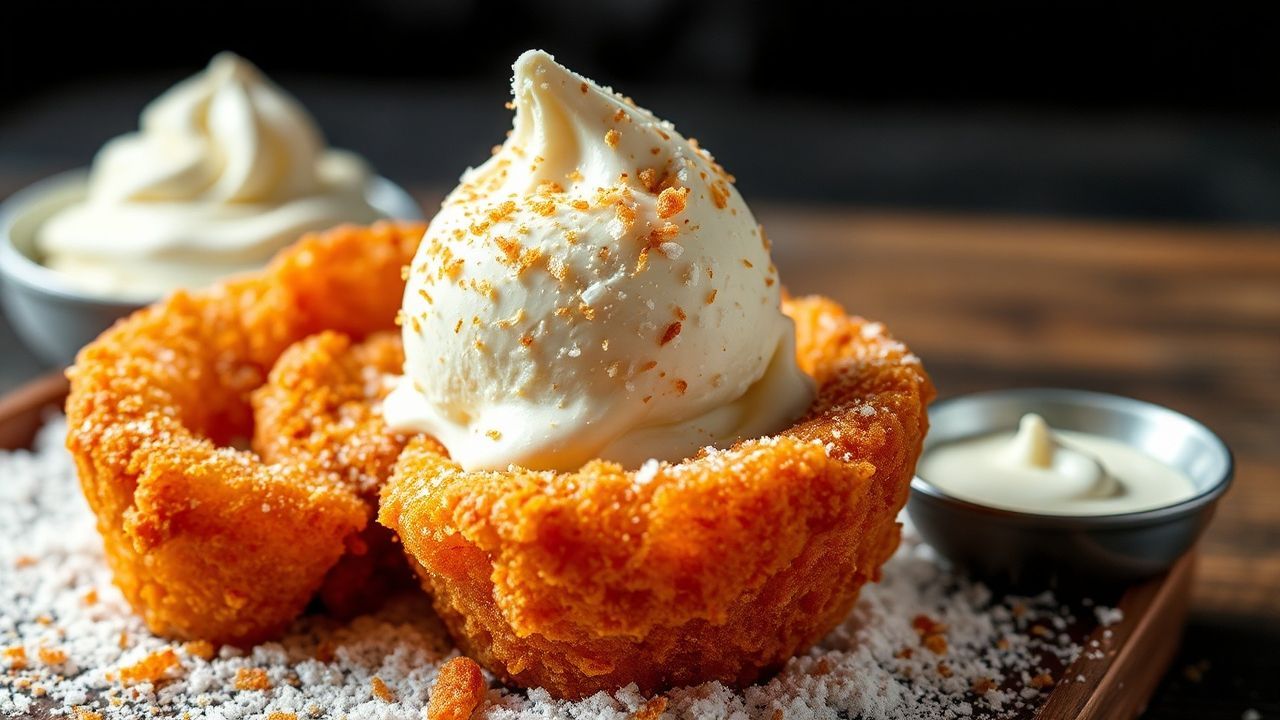
Deep-fried ice cream delivers a rare promise: a cold center inside a hot, crunchy shell. The first bite cracks, the second bite melts, and the contrast feels almost impossible—until you see how the coating forms.
- Why the Crunchy Coating Works
- Prep and Cook Time
- Yield and Difficulty
- Ingredients for a Crispy, Crunchy Coating
- Step-by-Step Techniques to Achieve the Ultimate Crunch
- Expert Tips for Serving and Enjoying Deep-Fried Ice Cream Fresh
- Tips for Success (Troubleshooting the Coating)
- Nutritional Information (per serving)
- In Retrospect: The Coating Makes the Magic
- FAQ
At a Glance
- Fast frying + frozen balls prevent the ice cream from melting before the crust sets.
- Coating layers (flour → egg → crunchy mix) control adhesion and crispness.
- Oil temperature accuracy drives crunch; small drops make oil-soaked crusts.
- Second freeze firms the crust so it stays intact during frying.
Deep-fried ice cream works because heat transfers quickly to the outside but has very little time to reach the center. That timing depends on the coating thickness, the cold starting point, and the fry duration. For the crisp layer, you rely on quick gelatinization and browning from the starchy coating and the Maillard reaction during short contact with hot oil.
Chefs also choose coatings that trap steam and limit oil absorption. For context on the heat process behind frying, see frying. For the science of browning that creates that toasted flavor, check Maillard reaction.
Why the Crunchy Coating Works
The crunchy coating is not one ingredient. It is a system. A thin flour base helps the egg cling, and the crunchy crumbs create a rigid outer shell that holds shape as the surface browns.
Most home recipes use a cereal + breadcrumb combo because it balances texture and structure. Cornflakes add big, audible crunch. Panko adds a lighter, crispier bite that stays crisp longer than many fine crumbs.
In practical terms, the ice cream needs a strong insulation shell. Dense crumb coatings slow heat transfer, while the brief fry time keeps the interior near its frozen temperature. If you want a baseline for oil behavior, deep frying explains why submerged cooking changes heat flow.
Prep and Cook Time
Plan ahead so the ice cream stays rock-solid during coating and frying. Deep-fried ice cream fails most often due to shortcuts in freezing or coating timing.
- Planning: 30 minutes
- Freezing: Minimum 4 hours (overnight gives best results)
- Frying: 1–2 minutes per ball
Cook time stays short on purpose. You want enough heat to crisp the shell, but not enough to warm the center. When you keep the fry brief, the crunch forms quickly and the ice cream stays cold.
Yield and Difficulty
This recipe yields a small batch so you can keep quality high and frying safe. Smaller portions also help you manage oil temperature while you work.
Yield: 4 servings (1 ball each)
Difficulty: Medium (requires steady oil temperature and fast handling)
Ingredients for a Crispy, Crunchy Coating
Choose ingredients that create texture on the outside and adhesion between layers. When the layers bond well, the crust stays intact instead of sliding off.
- 4 scoops vanilla ice cream, tightly packed and well-frozen
- 1 cup cornflakes, crushed finely with a few larger bits
- 1 cup panko breadcrumbs, for a lighter crisp
- 1/2 cup desiccated coconut, optional for extra crunch
- 1 tsp ground cinnamon, for warm aroma
- 2 large eggs, beaten
- 1 cup all-purpose flour, sifted
- Vegetable oil, for deep frying (enough to submerge)
- Honey or chocolate sauce, optional for serving
For more general grounding on carbs and starch behavior during heating, you can review starch. That background helps explain why flour boosts crust stability in fast-fry desserts.
Optional flavor swaps that keep the crunch
If you want variations, swap one texture component at a time. Keep the same layer structure so the egg still binds and the crumbs still crisp.
For example, replace cornflakes with crushed rice cereal or add finely chopped nuts. Avoid super-wet add-ins because they can steam the crust and soften it.
Step-by-Step Techniques to Achieve the Ultimate Crunch
The goal is simple: freeze hard, coat fast, fry briefly. Every step supports that chain, so treat each one as a timed process.
- Build the crunchy mix: In a shallow bowl, combine crushed cornflakes, panko, desiccated coconut (if using), and cinnamon. Mix until evenly colored. This mix sets the texture you will hear when you bite.
- Shape the ice cream: Scoop into tight round balls. Place on parchment-lined tray with space between them, then freeze until rock-solid, at least 4 hours.
- First layer (flour): Roll each frozen ball in flour to create a dry base. Tap off excess so you do not form thick gummy patches.
- Second layer (egg wash): Dip into beaten eggs, then let excess drip briefly. You want coverage, not pooling.
- Third layer (crunch coating): Roll immediately in the crunchy mix. Press gently to help crumbs adhere without crushing the ice cream shape.
- Double up for extra insulation (optional but effective): Repeat flour → egg → crumbs once for a thicker shell, then press lightly again.
- Freeze again: Place coated balls back in the freezer for at least 1 hour. This step firms the crust so it resists melting during frying.
- Heat oil correctly: Heat vegetable oil to about 375°F (190°C). Use a thermometer because oil temperature swings affect crispness fast.
- Fry and drain: Fry one ball at a time to keep oil temperature stable. Fry 1–2 minutes, turning gently if needed. Remove immediately and drain on a rack or paper towels.
Heat control is the backbone of crisp success. A stable temperature creates quick surface browning and strong crust formation. For a helpful overview of temperature-driven cooking outcomes, you can review temperature.
Also remember that ice cream contains water and fats. During brief frying, surface water turns to steam and helps puff the crust slightly. That effect supports crispness when time stays short.
After frying, serve right away. The crust cools, and cooling changes crisp texture. If you must hold them, keep them in a freezer-safe container for short periods and re-crisp quickly before serving.
Expert Tips for Serving and Enjoying Deep-Fried Ice Cream Fresh
Serve immediately for the best “crack then melt” experience. At the moment you drain, the crust still holds peak crunch. As it cools longer, the exterior starts to soften from moisture migration.
Garnish adds both flavor and presentation. Use fresh berries for acidity, mint for freshness, and a light dusting of powdered sugar for sweetness contrast. A drizzle of honey or chocolate also adds visual shine and flavor depth.
If you pair the dessert with hot drinks, choose flavors that contrast the sweetness. Strong black tea or coffee works well because bitterness balances the creamy vanilla. You can also add a pinch of flaky sea salt if your coating tastes sweet.
Tips for Success (Troubleshooting the Coating)
Most issues trace back to freezing, coating thickness, or oil temperature. Use these checkpoints so you can diagnose fast and fix the next batch.
- Freeze thoroughly: Solid ice cream protects shape and slows heat transfer.
- Keep oil steady: A thermometer prevents low-oil frying that soaks crusts with oil.
- Control coating thickness: Thick coating can insulate well, but overly thick layers may brown too slowly.
- Customize calmly: Swap textures (nuts, rice cereal, coconut) while keeping the same layer sequence.
For substitutions like gluten-free breadcrumbs, keep the binding logic the same: flour and egg still help the outer layer attach. If you need background on gluten’s role in dough strength, see gluten. For this dessert, the key is adhesion and crisp structure, not elastic dough development.
Make-ahead planning matters. You can freeze shaped balls before coating for convenience, but fry only when the crust is set and ready. If you coat early and leave coated balls out, you lose crisp performance.
Nutritional Information (per serving)
Nutrition varies based on ice cream brand, crumb type, and how much oil the crust absorbs. The values below reflect a typical batch with the stated ingredients and brief frying time.
| Calories | Protein | Carbs | Fat |
|---|---|---|---|
| 320 kcal | 5 g | 38 g | 15 g |
If you want lower calories, reduce crust thickness and portion size. You can also use a lighter ice cream base and keep the frying time tight to reduce additional oil absorption.
In Retrospect: The Coating Makes the Magic
When the shell cracks and the center stays cold, the coating did its job. It formed quickly, held firm, and created a crisp barrier that protected the frozen core during a short fry.
That crunch comes from a simple set of controls: dry flour adhesion, egg bonding, a crumb mix built for crunch, and a fast, hot oil session. If you understand those mechanics, you can adjust flavors confidently while keeping the texture consistent.
To connect cooking methods to ingredient behavior, you can also review breadcrumbs and how crumb structure affects crispness. Those basics help you choose the right crumb size and texture for a better shell.
FAQ
What makes deep-fried ice cream crunchy instead of soggy?
Crunch depends on quick frying, correct oil temperature, and a well-bonded coating. If the oil runs cool or the ice cream softens before frying, oil soaks into the crust and it loses its crisp texture.
How cold should the ice cream be before coating?
Freeze until the balls are rock-solid. At that stage, the crust can set during the short fry while the center stays near frozen temperature. This timing prevents melting before the shell firms.
Can I bake deep-fried ice cream coatings instead of frying?
Baking can work for a lighter texture, but it usually lacks the same crisp shock that deep frying creates. Baking tends to take longer, which gives the ice cream more time to warm through the crust.
Why do some coatings fall off during frying?
Coating can fall if the surface melts or if the layers do not adhere well. Use flour for a dry base, ensure full egg coverage, press crumbs gently, and keep the balls frozen until oil time.
Can I make the coating gluten-free?
Yes. Use gluten-free breadcrumbs and a flour substitute for the first layer, then follow the same flour → egg → crumbs process. The goal stays the same: create a bonded, crisp outer shell that fries fast.
See also: Deep-fried ice cream