

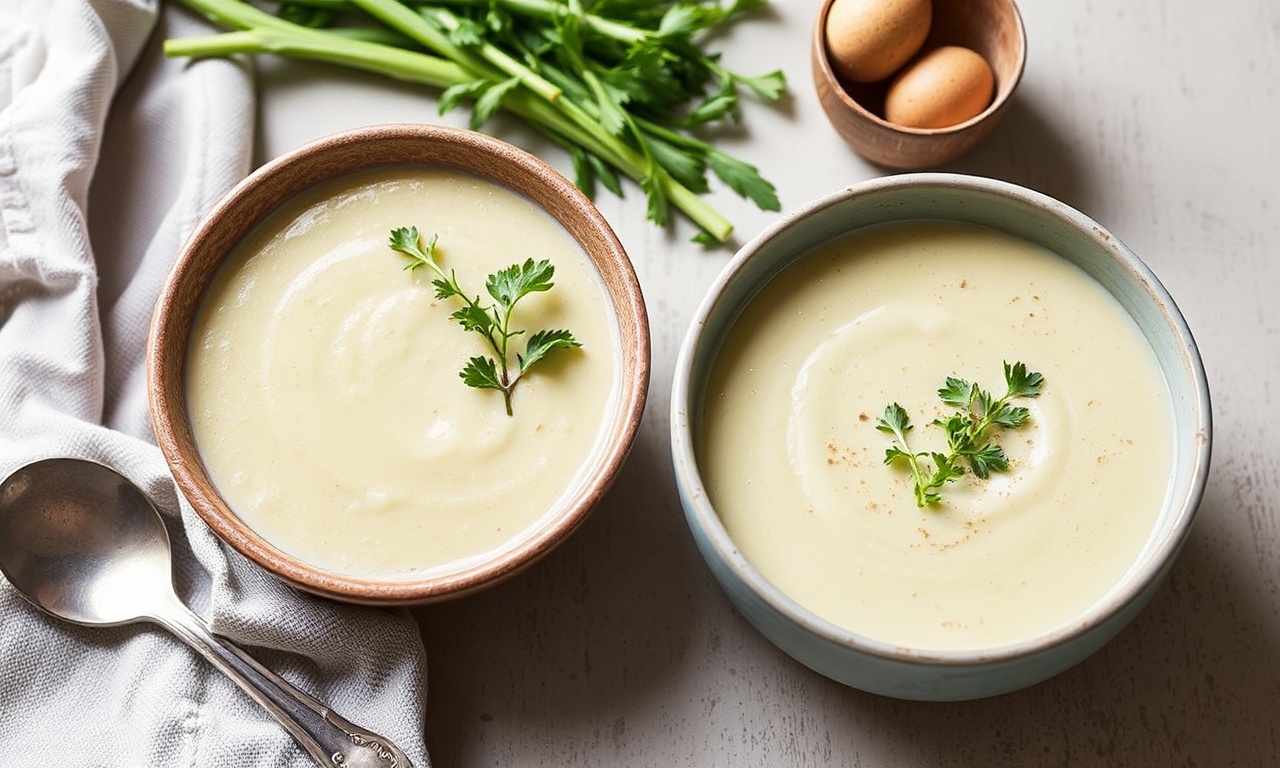
ThereS something irresistibly soothing about a bowl of creamy potato leek soup—a warm embrace in liquid form that comforts the soul and satisfies the senses. The blend of tender potatoes, sweet leeks, and a silky finish creates a bowl that feels both rustic and refined. Velvety in texture and rich with subtle layers of flavor, this creamy potato leek soup turns everyday ingredients into a meal you’ll want to repeat.
- Choosing the Perfect Potatoes and Leeks for Ultimate Creaminess
- Mastering the Art of Sautéing to Unlock Deep Flavors
- Blending Techniques That Transform Texture and Taste
- Finishing Touches Enhancing Warmth and Aromatic Comfort
- Prep and Cook Time
- Total Time
- Yield
- Difficulty Level
- Ingredients
- Instructions
- Chef’s Notes: Tips for Success
- Serving Suggestions
- Q&A
- What makes potato and leek soup so velvety and comforting?
- How do you clean leeks properly to avoid grit?
- Can I make creamy potato leek soup dairy-free?
- What potato variety gives the best results?
- Should I blend completely smooth or leave some chunks?
- In Retrospect
Whether it’s a chilly evening or a busy weeknight when you still want something special, this method makes the process reliable. You’ll learn how to build deep, leek-forward flavor first, then create the smooth, spoon-coating body that defines the best creamy versions. Get ready to stir up a pot of velvety comfort that’s as delightful to make as it is to savor.
At a Glance
- Starchy potatoes help you thicken naturally without heavy cream.
- Slow sautéing of leeks boosts sweetness and roundness.
- Blend carefully for a smooth, velvety finish.
- Finish with herbs and pepper to keep the flavor bright.
Choosing the Perfect Potatoes and Leeks for Ultimate Creaminess
For the best texture, start with the right produce. Starchy potatoes break down as they simmer, which thickens the soup and creates that velvety mouthfeel. Yukon Gold and Russet potatoes work especially well because their starches soften evenly during cooking.
Next, focus on leeks. Choose firm leeks with pale green to white stalks, and rinse them well to remove trapped grit. Leeks carry natural sweetness when cooked gently, which balances the earthy notes of potato.
If you want a helpful background on flavor foundations, read about leeks and how their allium character changes with heat. For potatoes, a quick primer on potatoes explains why starch matters for texture in soups.
Mastering the Art of Sautéing to Unlock Deep Flavors
Sautéing sets the flavor tone, so treat it like a step that earns its place. Wash leeks thoroughly, then slice them thin so they cook evenly. Melt butter over medium-low heat and cook slowly until the leeks soften and turn slightly golden.
Slow cooking helps leeks develop a round, sweet aroma instead of a harsh bite. Stir often and keep the heat gentle, because browning too fast can push the flavor toward bitterness. For the best results, aim for about 8–10 minutes of sautéing before you add potatoes.
Understanding how heat and browning affect flavor can make your timing sharper. For more context on this chemistry, see Maillard reaction and why low-and-slow cooking changes the outcome.
Blending Techniques That Transform Texture and Taste
After the soup simmers until the potatoes feel very tender, it’s blending time. Use an immersion blender for control or a blender for a uniform finish. Start gently, then blend until the soup looks smooth and thick.
Avoid overblending for too long, because texture can turn gluey when you break down everything completely. If the soup feels too thick, loosen it with hot vegetable broth a splash at a time. If you want extra creaminess, stir in oat milk during blending or right after.
For a practical guide to emulsions and creamy textures, review emulsion. Potato starch also plays a key part in thickening, and this helps explain why the soup stays silky even when you skip heavy cream.
Finishing Touches Enhancing Warmth and Aromatic Comfort
Once the soup is blended, seasoning makes the final difference between “good” and “memorable.” Add sea salt and freshly ground black pepper, then stir in chopped thyme or chives. Herbs bring a clean lift that keeps the potato-leek flavor from feeling flat.
For richness, drizzle high-quality extra virgin olive oil just before serving, or swirl in crème fraîche if you use dairy. A light dusting of smoked paprika adds gentle warmth without overwhelming the sweetness of the leeks.
If you like understanding why herbs feel “bright,” check thyme and cr%C3%A8me fra%C3%AEche for flavor context. These ingredients work because they add aromatic compounds that show up strongly in soups.
Prep and Cook Time
Readiness: 15 minutes.
Cooking: 35 minutes. This includes the gentle sauté and simmer until the potatoes melt.
Total Time
Total Time: 50 minutes from start to serve.
Because the steps run in a smooth sequence, you won’t need long waiting periods.
Yield
Serves: 4 generously.
You can stretch to 5 if you serve with bread or a light side salad.
Difficulty Level
Difficulty: Easy.
Home cooks can master the texture with simple blending control.
Ingredients
- 3 large Yukon Gold potatoes, peeled and diced (about 6 cups)
- 3 medium leeks, white and light green parts only, sliced thinly
- 3 tbsp unsalted butter
- 4 cups vegetable broth, low sodium
- 1 cup oat milk or whole milk (optional, for extra creaminess)
- 1 tsp sea salt, adjust to taste
- ½ tsp freshly ground black pepper
- 1 tsp fresh thyme leaves, chopped (optional)
- 1 tbsp extra virgin olive oil, for finishing
- Smoked paprika, a light dusting for garnish
Instructions
- Prepare the leeks: Rinse sliced leeks under cold running water to remove grit. Drain well.
- Sauté the leeks: Melt butter in a large pot over medium-low heat. Sauté 8–10 minutes until soft and lightly golden.
- Add potatoes and broth: Stir in diced potatoes to coat them. Pour in vegetable broth and bring to a gentle simmer.
- Simmer until tender: Cook uncovered 25–30 minutes, stirring occasionally, until potatoes break easily with a spoon.
- Blend for velvety texture: Blend with an immersion blender until smooth. Add oat milk gradually if you want extra creaminess.
- Season and finish: Stir in salt, pepper, and thyme. Warm gently without boiling.
- Serve: Ladle into bowls. Drizzle with olive oil and sprinkle with smoked paprika and extra herbs if desired.
Chef’s Notes: Tips for Success
- Leek cleaning: Slice lengthwise, then rinse layers thoroughly. If you soak leeks briefly in cold water, grit drops out and you can drain cleanly.
- Potato varieties: Yukon Gold offers a buttery result. Russets also deliver strong thickening due to higher starch.
- Lighter option: Use oat milk or unsweetened almond milk. Add gradually to keep the soup balanced and smooth.
- Make-ahead: Store refrigerated up to 3 days. Reheat gently and add a splash of broth if it thickens.
- Texture preference: For a chunkier bowl, blend mostly smooth and stir in a small portion of reserved cooked potatoes.
Serving Suggestions
Serve creamy potato leek soup with crusty sourdough bread or warm focaccia for dipping. Garnish with chopped chives or parsley to add a fresh green pop.
For extra crunch, add toasted pumpkin seeds on top. If you want a lighter meal, pair the soup with a peppery arugula salad dressed with lemon vinaigrette to balance the richness.
| Nutritional data (per serving) | Amount |
|---|---|
| Calories | 210 kcal |
| Protein | 5 g |
| Carbohydrates | 35 g |
| Fat | 6 g |
Q&A
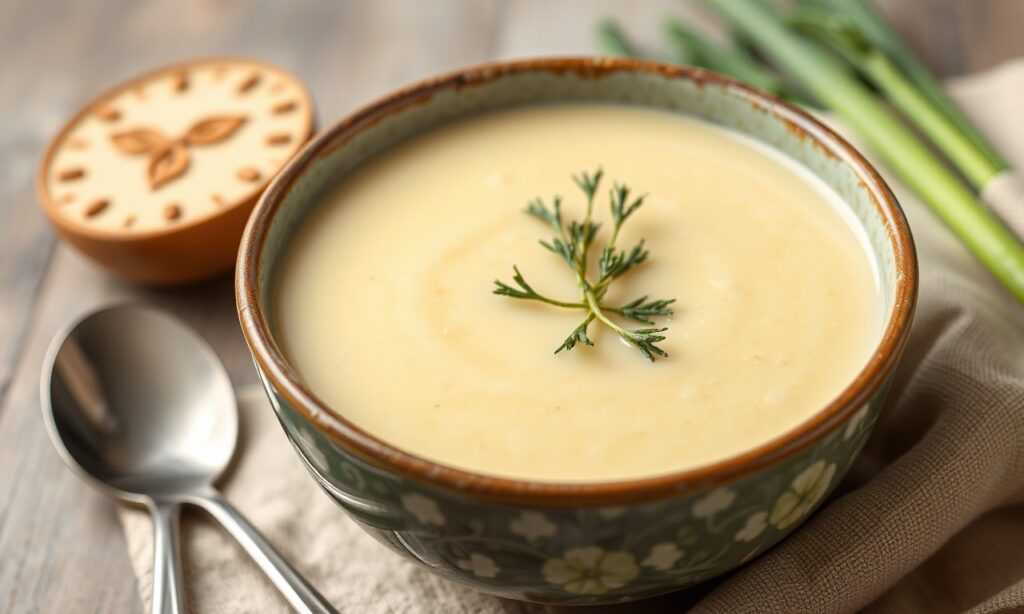
If you want consistent results every time, these answers tackle the most common questions. Use them as a quick checklist when you cook creamy potato leek soup.
When you understand why texture and seasoning work the way they do, you can adjust the recipe confidently.
What makes potato and leek soup so velvety and comforting?
Velvety texture comes from soft, starchy potatoes and thorough cooking. When you blend the base until smooth, potato starch thickens the soup into a silky body.
Gentle leek sautéing adds sweetness, and finishing herbs keep flavor bright. Together, these steps create the comforting balance you expect from a classic creamy bowl.
How do you clean leeks properly to avoid grit?
Slice the leeks and rinse each layer under cold water, fanning the rings so water reaches inside. Drain well before sautéing.
If grit still worries you, soak sliced leeks in cold water briefly, then scoop them out and discard the soaking water. This approach reduces sand-like residue.
Can I make creamy potato leek soup dairy-free?
Yes. Use oat milk or another unsweetened plant milk in place of dairy cream, then blend for smoothness. The soup stays creamy because potatoes provide much of the thickening.
If you want extra richness, use a plant-based yogurt swirl or a small amount of blended cashews. Add gradually so the flavor doesn’t turn nutty.
What potato variety gives the best results?
Choose starchy potatoes like Yukon Gold or Russets for natural thickening. These varieties soften and break down more easily during simmering.
Waxy potatoes tend to stay firmer, which can make the soup less creamy unless you rely more on blending and added milk.
Should I blend completely smooth or leave some chunks?
For maximum velvety comfort, blend until fully smooth. Short pulses help you reach the texture without turning it overly thick or pasty.
If you prefer rustic texture, blend most of the soup and stir in reserved chunks at the end. This method keeps creamy body while adding bite.
In Retrospect
creamy potato leek soup is one of those dependable classics that rewards careful technique. When you sauté leeks slowly, simmer potatoes until very tender, and blend with control, the soup naturally turns silky and rich.
Seasoning and finishing matter too. Herbs, pepper, and a final drizzle of olive oil create the warm, aromatic comfort that makes each spoonful feel special.
If you want to learn more about the ingredients behind the flavor, the basics of vegetable broth and the onion family (alliums) can strengthen your instincts for future soups.

See also: Creamy potato leek