
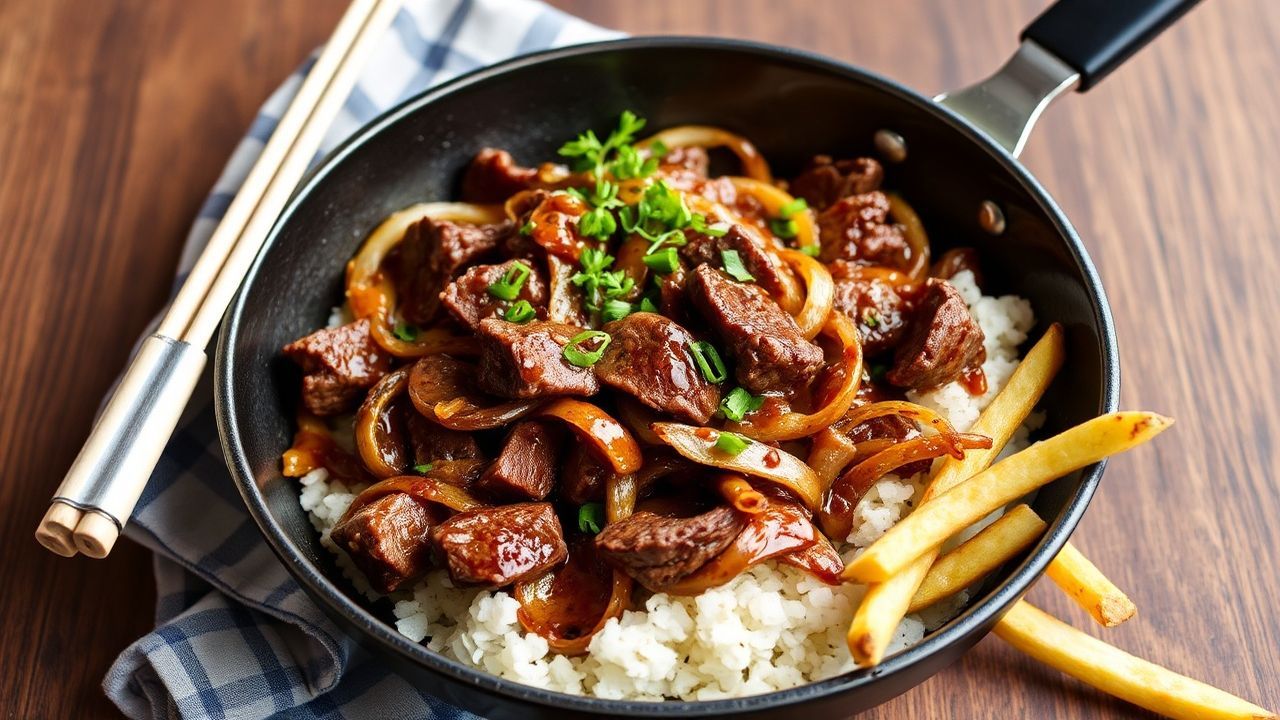
Beef and onion stir-fry works fast when you build flavor in the right order: sear the beef hard, soften the onions gently, then glaze everything with a glossy sauce. Add crispy fries on the side, and you get a dinner that feels “restaurant” without the stress.
- Why This Beef & Onion Stir-Fry Works (Even When You’re Busy)
- Flavor Blueprint: What Each Component Should Taste Like
- Build Umami With Common Pantry Ingredients
- Caramelization Isn’t Optional for Great Onion Flavor
- Choose the Right Beef Cut and Slice Direction
- Essential Stir-Fry Technique (So the Beef Stays Tender)
- Crispy Fries Pairing: How to Get Crunch Without Timing Chaos
- Best Potato Choice and Cut Size
- Air-Fry vs. Oven vs. Deep Fry (What to Expect)
- Season Fries the Right Way
- Sauce Design: Build Umami, Add Shine, Finish With Heat Balance
- 30-Minute Recipe: Beef & Onion Stir-Fry with Crispy Fries
- Serving Ideas That Make the Plate Look Restaurant-Ready
- Make-Ahead Tips for Real Weekdays
- Troubleshooting: Fix Common Problems Fast
- Why This Combo Beats “Same Dinner, Different Day”
- FAQ
- High-heat beef sear keeps meat tender and brown.
- Caramelized onions add sweet depth, not just softness.
- Crispy fries coordination helps you serve hot, crunchy food together.
- Quick cornstarch slurry makes sauce cling without turning pasty.
This recipe targets a true 30-minute flow. You multitask the fries while the onions cook, then you finish the stir-fry quickly so textures stay distinct.
Why This Beef & Onion Stir-Fry Works (Even When You’re Busy)
This beef and onion stir-fry uses a timing split that makes cooking predictable. You cook onions first for sweetness, then you sear beef fast so it browns instead of steams.
Meanwhile, the fries finish on a parallel track. When both parts land at the same time, the plate tastes intentional, not random.
Flavor Blueprint: What Each Component Should Taste Like
Think of the plate in three simple lanes: savory, sweet, and salty crunch. The beef and onion stir-fry delivers savory umami, the onions add caramel sweetness, and the fries bring texture with every bite.
For the sauce, aim for balance. Soy sauce and optional oyster sauce give deep flavor, while a small touch of sugar rounds the edges. Then you glaze just long enough to coat.
Build Umami With Common Pantry Ingredients
Many cooks lean on soy sauce and oyster sauce because they carry naturally savory compounds. Umami is the reason that “extra depth” hits even when the recipe stays simple. For background, see umami.
You also use garlic and ginger for aroma, not just heat. Those aromatics boost perception of flavor, so the sauce tastes fuller even without heavy amounts of sugar.
Caramelization Isn’t Optional for Great Onion Flavor
Onions taste sweet when sugars concentrate during cooking. That change comes from heat-driven caramelization, not just “waiting until they’re soft.” If you want the science overview, read caramelization.
When you rush, onions brown early and stay sharp. When you cook gently, the flavor smooths out and becomes round.
Choose the Right Beef Cut and Slice Direction
Use sirloin or flank for reliable tenderness. Thin slices cook fast, and fast cooking reduces the chance of chewy texture.
Always slice against the grain. That single move shortens muscle fibers in each bite, so the beef and onion stir-fry stays silky instead of tough.
Essential Stir-Fry Technique (So the Beef Stays Tender)
Stir-fry success usually breaks down into three causes: pan temperature, crowding, and overcooking while you glaze. Fix those, and your beef browns cleanly instead of turning gray.
Start with a wide wok or skillet so moisture escapes quickly. Then use high heat when the beef hits the pan so you sear surfaces fast.
High Heat, Small Batches, and a Fast Finish
Stir-frying relies on high heat and quick movement. That method transfers heat efficiently to thin slices, so they cook before they dry out. For process context, see stir-frying.
Also, don’t crowd the pan. Crowding traps steam, and steam pulls browning away from your meat.
After the beef cooks, your sauce step must stay short. Stir and glaze just until glossy, because extra heat keeps pushing meat beyond “tender” into “chewy.”
For browning science that helps explain the change, check Maillard reaction. It’s the browning chemistry behind the flavor jump you want.
Step-by-Step Method with Timing That Actually Matches
Use this sequence to keep everything on schedule. It also keeps onions sweet and beef browned, which matters when you only have 30 minutes.
1) Season and coat the beef: toss beef with a thin cornstarch slurry plus a little oil. The coating helps browning and improves sauce cling.
2) Cook onions first: sauté until golden and soft, then remove them temporarily. This prevents onion steam from softening your sear.
3) Sear beef fast: spread in a single layer and let it sit briefly. Stir just until cooked through.
4) Combine and glaze: return onions, pour in sauce, and stir until glossy. Cook only 30–60 seconds so the sauce thickens without turning heavy.
[TIP]Expert Insight: Keep your sauce ready before you start glazing. When the pan is hot and the beef is seared, you shouldn’t pause—smooth timing keeps texture and flavor both on track.
Crispy Fries Pairing: How to Get Crunch Without Timing Chaos
Fries change the eating experience because they add crunch to a tender main. To keep crunch, you need consistent cut size and enough airflow during cooking.
To coordinate with the stir-fry, cook fries first (or start them while onions cook). That way the fries come out hot and crisp near the moment you plate.
Best Potato Choice and Cut Size
Use starchy potatoes like russets for classic fries. Sweet potatoes work too if you want a slightly sweeter edge that complements caramelized onions.
Cut sticks evenly. Uneven thickness creates a mix of underdone centers and burnt tips, which ruins the “crispy outside, fluffy inside” goal.
Air-Fry vs. Oven vs. Deep Fry (What to Expect)
Deep-fried fries offer the most crunch, but you can still get strong results with air-frying or oven baking. The key is spacing and managing moisture.
Air-fryer success comes from preheating and using a single layer. Oven fries do best on a wire rack because airflow dries the surface.
Season Fries the Right Way
Season immediately after cooking. Salt sticks better when fries are hot and lightly oiled, and seasoning at the end avoids sogginess.
Keep dipping sauces separate. That simple choice protects crispness for longer, especially when guests eat at different speeds.
After resting, plate fast. Fries lose crispness when trapped under heat or covered too tightly.
Sauce Design: Build Umami, Add Shine, Finish With Heat Balance
Your sauce should coat the beef and onion stir-fry evenly. If it pools, it tastes thin and the plate feels unbalanced.
A cornstarch slurry helps you get that glossy cling texture. It thickens quickly, so you don’t need a long simmer.
Use a Simple Stir-Fry Sauce Formula
Combine soy sauce, optional oyster sauce, minced garlic, minced ginger, black pepper, and a small amount of brown sugar. Then add sesame oil at the end so its aroma stays strong.
If you want the general background on sesame oil, read sesame oil. Adding it late protects its scent and keeps flavor cleaner.
Adjust Sweetness and Salt to Match Your Fries
Since fries bring their own salt, don’t oversalt the stir-fry. Instead, lean on balanced sweetness and ginger heat so the overall plate stays layered.
If oyster sauce is strong or your soy sauce is high-sodium, reduce added salt and let the onions carry sweetness. Taste as you go during the final glaze.
30-Minute Recipe: Beef & Onion Stir-Fry with Crispy Fries
This method is designed to finish fast, keep textures distinct, and still taste like you cooked with intention. Total time lands around 30 minutes when you multitask fries while onions cook.
Use a wide skillet or wok to avoid crowding. Also keep a clear prep area so you can move quickly once beef hits the pan.
Ingredients (Serves 4)
Beef & stir-fry
1 lb (450g) beef sirloin, thinly sliced against the grain
2 large yellow onions, thinly sliced
3 tbsp vegetable oil (divided)
3 cloves garlic, minced
1 tbsp fresh ginger, minced
3 tbsp low-sodium soy sauce
1 tbsp oyster sauce (optional)
1 tsp brown sugar
1 tsp toasted sesame oil
1/4 tsp black pepper
1 tbsp cornstarch + 2 tbsp water (slurry)
Fries
4 cups frozen or fresh fries (russet or sweet potato)
Salt and smoked paprika, to season
Garnish
Sliced scallions, toasted sesame seeds, lime wedges
Instructions
1) Coat the beef: toss sliced beef with cornstarch slurry and 1 tbsp oil. Mix until the pieces look lightly coated.
2) Caramelize onions: heat 2 tbsp oil in a wok or large skillet over medium heat. Add onions and cook 10–12 minutes, stirring often, until golden and soft.
3) Add aromatics: stir in garlic and ginger. Cook about 1 minute until fragrant.
4) Sear and stir-fry beef: push onions to the side. Increase heat to high. Add beef in a single layer and sear 60–90 seconds. Stir-fry until just cooked, about 2–3 minutes.
5) Glaze with sauce: combine soy sauce, oyster sauce (if using), brown sugar, black pepper, and a splash of water if needed. Pour in, stir quickly, and cook 30–60 seconds until glossy and lightly thickened.
6) Cook fries: air-fry or bake per package directions. Immediately after cooking, toss fries with salt and smoked paprika.
7) Serve: plate the beef and onion stir-fry hot with fries on the side. Finish with scallions, sesame seeds, and lime wedges.
Serving Ideas That Make the Plate Look Restaurant-Ready
Presentation matters because it supports appetite and makes the meal feel intentional. When fries sit in a separate pile, you protect the crunch.
Use wide, shallow plates. That shape helps sauce spread across the beef without drowning fries or turning them soft.
Garnish Strategy: Fresh + Crunchy + Aromatic
Use scallions for sharp freshness and toasted sesame seeds for nutty texture. Lime adds bright acidity that cuts through rich sauce and lifts onion sweetness.
If you like heat, add chili garlic sauce on the side. Keep it optional so guests control spice levels.
Make-Ahead Tips for Real Weekdays
You can prep parts of this beef and onion stir-fry ahead to protect your evening time. Onions reheat well, and aromatics also prep easily.
Cook fries on demand for best texture. Still, you can cut and soak potatoes earlier if you plan to cook them fresh.
What to Prep in Advance
Caramelized onions keep in the fridge for a short window. Reheat in a hot pan until steaming, then continue with the beef step.
You can also mince garlic and ginger ahead so your cooking flow stays smooth. If you want a general guide on food prep safety, see food safety.
Troubleshooting: Fix Common Problems Fast
Even great stir-fry technique can miss if one variable goes off. Use these fixes to recover without starting over.
If your sauce feels thin, cook 15–30 seconds more. If it turns too thick, add a splash of water and stir until glossy again.
Beef Too Tough
Usually this comes from thick slices or overcooking. Slice thinner next time and reduce the time beef stays in the pan after searing.
Also check your slicing direction. Cutting against the grain reduces chew and keeps the beef and onion stir-fry enjoyable.
Fries Not Crispy
Most often, fries come out soft because they were crowded or not dried enough. Spread them in a single layer and ensure good airflow.
For fresh fries, soaking removes surface starch. Pat them very dry before cooking so high heat can create crisp texture.
Why This Combo Beats “Same Dinner, Different Day”
Many meals taste similar because texture stays similar. Here, you intentionally contrast tender beef and onions with crisp fries.
Caramelized onions bring sweet depth that works with savory soy and ginger. Then you finish with lime and scallions for brightness, so the flavor stays lively instead of heavy.
In cooking terms, you layer browning, glazing, and crunch. That combination keeps the dinner balanced and keeps guests coming back for more.
FAQ
Can I use ground beef instead of sliced beef?
Yes, but texture changes. Use lean ground beef and brown it first, then stir in onions and sauce. Keep simmer time short so the sauce coats instead of turning the mixture wet.
What if I don’t have oyster sauce?
Skip it and increase soy sauce by 1–2 teaspoons. Keep brown sugar for balance, and you can add a small pinch of garlic powder for extra savory punch.
How do I keep fries crisp if I’m plating for guests?
Cook fries to order when possible. If you must hold them, keep them on a wire rack in a warm oven for 5–10 minutes max, then season right before serving.
Can I swap onions for another vegetable?
You can swap, but onions drive the dish’s signature sweetness. If you choose another vegetable, pick ones that caramelize well, like mushrooms or thin-sliced bell peppers, and expect a different flavor profile.
Is this stir-fry suitable for meal prep?
Partially. The stir-fry reheats well, but fries won’t hold crunch. Store the stir-fry separately and reheat in a skillet, then cook or reheat fries right before eating.
See also: beef stir-fry