
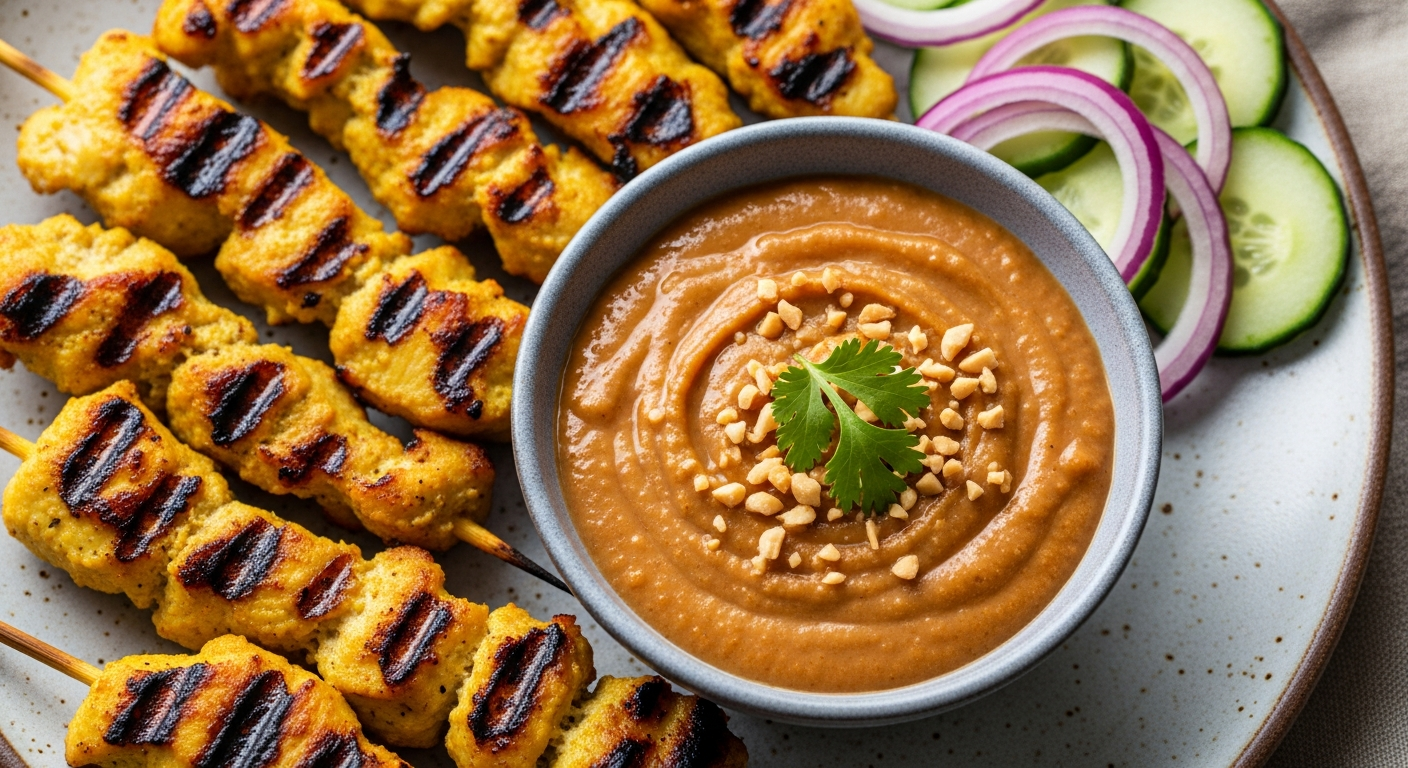
Chicken satay feels like a celebration the moment the skewers hit the heat. The smell of toasted spices, the gentle snap of char, and that creamy peanut dip create a flavor combo people crave again and again.
- The Flavor Formula Behind Great Chicken Satay
- Ingredients for Perfect Chicken Satay + Classic Peanut Sauce
- Step-by-Step: Marinate, Grill, and Sauce Like a Pro
- Step 1: Make the Marinade
- Step 2: Marinate the Chicken (Don’t Skip Time)
- Step 3: Thread Skewers for Even Cooking
- Step 4: Cook the Peanut Sauce to Smooth Perfection
- Step 5: Preheat and Grill for Juicy Char
- Step 6: Rest and Serve
- Grilling Techniques That Raise Satay from Good to Memorable
- Heat Control: Medium-High, Not Max
- Skewer Safety and Fire Management
- Broiler and Grill Pan Alternatives
- Classic Peanut Sauce Troubleshooting (So It Always Works)
- Serving Ideas That Maximize Flavor and Texture
- Time Plan, Yield, and Storage
- What Makes This “Classic” Peanut Sauce Feel Right?
- FAQ
At a Glance
- Marinate for depth: turmeric, garlic, ginger, and coconut milk build real flavor, not just surface seasoning.
- Grill fast on medium-high: cook quickly to keep chicken juicy while still getting char.
- Peanut sauce should be silky: warm it, then thin to a dip-able, spoon-coating texture.
- Match heat to balance: chili and lime add punch, but sugar rounds everything out.
The Flavor Formula Behind Great Chicken Satay
Satay works because it combines three systems at once: seasoning chemistry, high-heat cooking, and a sauce that bridges richness with acidity. Marination prepares the chicken for fast grilling by boosting flavor penetration and helping spices cling to the surface.
Traditional satay often leans on bold aromatics like garlic and ginger, plus earthy spice layers such as turmeric and coriander. Those ingredients show up across Southeast Asian cooking because they create “warm” notes that taste good even when char develops on the grill.
Why Chicken Thighs Stay Juicier
For satay, chicken thighs give you a wider safety margin than breasts. Thigh meat has more fat, which buffers heat and prevents the dry, chalky texture that can happen when cooking time slips by a minute or two.
Skewers also create thin edges where juices escape faster. With thighs, you still get the pull-apart tenderness that makes satay feel premium.
How Turmeric and Ground Spices Shape Aroma
Turmeric adds a warm, slightly bitter color and aroma. Ground spices like coriander and cumin add depth that you can smell before you taste, which makes the dish feel more complex than its ingredient list.
If you’ve ever noticed satay tasting “tea-like” or “toasty,” that’s the spice blend doing its job. For background on spice histories and common uses, see turmeric.
Ingredients for Perfect Chicken Satay + Classic Peanut Sauce
Below is a reliable home-cook version that stays true to the classic peanut profile while making grilling practical. It uses pantry-friendly items and a marinade you can mix in about 10 minutes.
The goal: tender chicken plus a sauce that’s glossy, not gritty. Natural peanut butter helps, but technique matters more than brand.
Chicken Satay Ingredients (Makes ~12 Skewers)
Chicken: 1½ lb boneless, skinless chicken thighs, cut into 1-inch strips.
Marinade: 3 cloves garlic (minced), 1 tbsp fresh ginger (grated), 2 tbsp soy sauce, 1 tbsp fish sauce, 1 tbsp brown sugar, 1 tsp turmeric, 1 tsp ground coriander, 1 tsp cumin, juice of 1 lime, 2 tbsp coconut milk, 1 tbsp vegetable oil, salt + pepper to taste.
Skewers: bamboo skewers, soaked in water for at least 30 minutes.
Classic Peanut Sauce Ingredients
Base: ¾ cup creamy natural peanut butter, 1 cup coconut milk, 2 tbsp soy sauce, 1 tbsp palm sugar (or brown sugar), 1 tbsp lime juice.
Heat & aroma: 1 tsp red chili flakes (adjust), 2 cloves garlic (minced), plus ½ cup water (for thinning).
Peanut sauce is usually built around roasted peanuts or peanut butter plus a sweet-salty balance. If you want a broader culinary context on peanut and nut usage in sauces, review peanut sauce.
Step-by-Step: Marinate, Grill, and Sauce Like a Pro
You’ll get the best results by doing the work in the right order. Marinate first, prepare sauce next, and then grill close to serving time so char and juiciness both hit at once.
This process also prevents common mistakes like overcooking or letting sauce cool too much before it reaches the right dip consistency.
Step 1: Make the Marinade
Whisk garlic, ginger, soy sauce, fish sauce, brown sugar, turmeric, coriander, cumin, lime juice, coconut milk, and vegetable oil in a bowl. Season with salt and black pepper, then taste the liquid—your marinade should feel balanced: savory, bright, and gently sweet.
If the lime feels too sharp, add a little more sugar. If it feels too sweet, add a small splash of soy sauce or lime. This adjustment matters because the chicken absorbs the marinade’s flavor profile.
Step 2: Marinate the Chicken (Don’t Skip Time)
Add chicken strips and toss until every piece looks coated. Cover and refrigerate for at least 2 hours, but overnight gives deeper flavor and better seasoning adhesion.
During marination, acids and salt help flavor move inward while spices cling to the surface for browning. For reference on how soy-based marinades work in general, see soy sauce.
Step 3: Thread Skewers for Even Cooking
Drain chicken from the marinade and thread pieces onto soaked bamboo skewers. Leave small gaps between strips so each piece browns instead of steaming.
Even spacing also helps fat render and keeps the surface from staying wet—wet surfaces delay browning and reduce char.
Step 4: Cook the Peanut Sauce to Smooth Perfection
In a saucepan over medium heat, combine peanut butter, coconut milk, soy sauce, palm sugar, lime juice, chili flakes, and garlic. Stir continuously until the sauce turns warm and smooth, usually about 4–7 minutes.
Then thin with water until the sauce coats a spoon. It should look glossy and pourable. If it thickens as it cools, loosen it with a splash of hot water right before serving.
Peanut sauce texture depends on emulsification: fat + water must blend without turning oily. Using coconut milk helps with that because it naturally supports a creamy emulsion; see coconut milk for background.
Step 5: Preheat and Grill for Juicy Char
Heat your grill (or grill pan) to medium-high. Lightly oil the grates, then place skewers on the hot surface.
Grill 4–5 minutes per side, turning once, until cooked through and visibly charred. Chicken is forgiving, but still don’t stretch cooking time—thin strips cook fast.
Expert Insight: Brush the sauce lightly on the chicken only in the last 1–2 minutes, and only if your sauce is thin. Peanut sauce sugars can burn quickly, so use it as a finishing glaze rather than cooking the chicken in sauce.
Step 6: Rest and Serve
After grilling, rest skewers for 5 minutes. Resting helps juices redistribute, so the chicken stays moist when you bite into the center.
Serve with peanut sauce on the side for dipping, and add extra lime wedges for brightness. If you want a more “street-food” feel, drizzle a small amount over the top right before serving.
Grilling Techniques That Raise Satay from Good to Memorable
Chicken satay rewards control. Small changes—heat level, turning frequency, and moisture management—show up quickly in flavor and texture.
If you treat satay like a slow roast, you’ll lose the signature smoky edge. Keep the heat strong and the timing tight.
Heat Control: Medium-High, Not Max
Medium-high heat gives you char without drying. Too hot can burn the spice-coated exterior while the inside stays undercooked.
Too low can lead to uneven cooking and minimal char. Your target: a caramelized outside and tender interior.
Skewer Safety and Fire Management
Bamboo skewers char if they dry out, which can create flare-ups. Soak them for at least 30 minutes and trim excess ends if they look exposed.
If you grill often, use a spray bottle to mist skewers lightly, especially near heat sources.
Broiler and Grill Pan Alternatives
No outdoor grill? A cast-iron grill pan works well for that char line effect. Preheat the pan thoroughly, then cook skewers in batches.
For a broiler method, place skewers on a wire rack over a sheet pan and broil 3–4 minutes per side. Watch closely; broilers can overcook fast.
Classic Peanut Sauce Troubleshooting (So It Always Works)
Most peanut sauce failures come from texture problems: graininess, separation, or a sauce that’s too thick to dip. You can fix all three with simple technique.
Here’s how to diagnose and correct common issues.
Problem: Sauce Is Too Thick
Thin it gradually with warm water. Add 1–2 tablespoons at a time, stirring until smooth.
Remember: peanut butter thickens as it cools. Warm sauce should look slightly looser than you want in the serving bowl.
Problem: Sauce Looks Oily or Separated
Separation usually happens when heat was too high or stirring stopped early. Lower the heat and whisk or stir vigorously for 30–60 seconds.
If it still breaks, add a spoonful of coconut milk and stir until it re-emulsifies.
Problem: Sauce Tastes Flat
Peanut sauce needs balanced acidity and salt. Add a bit more lime juice for brightness or soy sauce for salt.
If it needs warmth, add a pinch of chili flakes or a small amount of garlic.
For more on how fermentation and seasoning contribute to savory depth, you can also read about fish sauce in general culinary terms.
Serving Ideas That Maximize Flavor and Texture
Satay tastes best when your sides cut through the richness of peanut sauce. That means cool, crunchy, and bright elements.
Build a plate that keeps every bite interesting.
Easy Side Pairings
Try cucumber slices, thin red onion, and fresh herbs like cilantro. Add lime wedges so you can adjust brightness to taste.
Serve with jasmine rice or coconut-infused rice to round out the meal.
Street-Style Garnish for High Visual Impact
Top the skewers with chopped roasted peanuts and a light dusting of chili flakes. Add a small drizzle of peanut sauce in a zigzag pattern for a restaurant look.
That contrast—creamy dip, crunchy peanuts, and smoky chicken—makes people reach for “one more bite.”
Time Plan, Yield, and Storage
Planning helps you cook better and serve at peak flavor. This recipe includes marination time because that’s where the magic starts.
Grilling itself stays fast, which makes satay ideal for weeknight guests or weekend gatherings.
Prep, Marinate, Cook
Prep time: ~25 minutes (including mixing marinade).
Marinate: minimum 2 hours (overnight preferred).
Cook: 10–15 minutes total, depending on grill size and batch count.
Storage and Reheating
Cooked chicken keeps in an airtight container in the refrigerator for up to 3 days. Reheat gently in a pan over low heat so you don’t dry it out.
Peanut sauce keeps 3–4 days. Reheat on low, stirring often, and thin with water if needed.
What Makes This “Classic” Peanut Sauce Feel Right?
Classic peanut sauce relies on a specific flavor balance: nutty richness, salty depth, sweet warmth, and a tangy lift from lime. Chili adds heat, but it should amplify—not overpower.
That balance is why peanut sauce works across so many satay styles and regional variations. For a wider context on Southeast Asian food patterns, you can read about Southeast Asian cuisine.
Sweetness Without Clutter
Palm sugar (or brown sugar) gives a rounded sweetness with a caramel-like note. It helps the peanut flavors taste richer and keeps the sauce from tasting harsh.
If you’re sensitive to sweetness, reduce sugar slightly, then compensate with a bit more lime juice for lift.
Acidity That Cuts Through
Lime juice keeps peanut sauce from becoming heavy. Add it at the end of heating so you preserve a brighter citrus aroma.
When you taste the sauce, it should feel like a dip you could spoon onto rice—bold, creamy, and lively.
FAQ
Can I use chicken breast instead of thighs?
Yes, but you must watch cooking time closely. Cut breast into slightly thicker strips and grill carefully so you don’t dry it out. Thighs stay more forgiving and usually taste better for satay.
What if my bamboo skewers start burning?
Soak them longer next time and keep the grill at medium-high, not max. Also leave a little extra gap between chicken pieces so steam doesn’t trap moisture near the ends.
How do I make peanut sauce thicker or thinner?
To thicken, simmer a minute or two to reduce. To thin, stir in warm water a tablespoon at a time. Always adjust while the sauce is warm for the most accurate texture.
Can I make the peanut sauce ahead of time?
Yes. Make it a day ahead, refrigerate, then reheat gently. It often tastes even better after the flavors meld, but you’ll likely need a splash of water to restore dip-able consistency.
Is fish sauce necessary for the marinade?
It’s not mandatory, but it adds deep savory “umami” that soy alone can’t fully replicate. If you skip it, add a small amount of extra soy sauce and consider a pinch of sugar to maintain balance.
See also: Chicken satay