

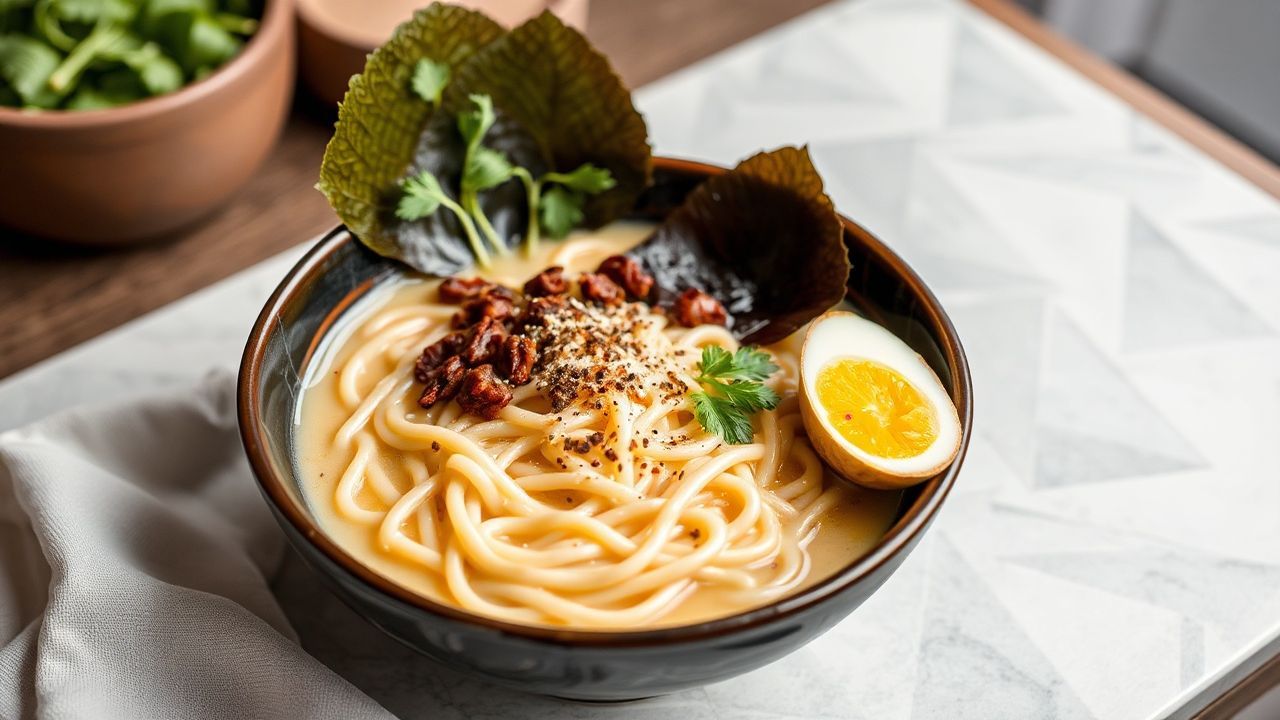
Carbonara ramen brings together two comfort-food traditions. You get the silky egg-and-cheese character of Italian carbonara and the depth of Japanese ramen, built around tender noodles and a warm, savory base. The result tastes familiar, yet clearly new.
- Origins and Evolution of Carbonara Ramen: Where Fusion Makes Sense
- Prep and Cook Time
- Yield and Difficulty
- Key Ingredients That Define Carbonara Ramen Flavor and Texture
- Step-by-Step Guide to Crafting the Perfect Carbonara Ramen at Home
- Expert Tips and Variations to Elevate Your Carbonara Ramen
- Serving Suggestions
- Key Takeaways
- FAQ
At a Glance
- Flavor: Pecorino/Parmesan + black pepper create a carbonara-style sauce.
- Texture: Tempered eggs thicken the broth into a glossy coating.
- Ramen core: Fresh alkaline noodles or high-quality ramen deliver the bounce.
- Finish: Nori, scallions, and sesame balance richness with aroma.
To nail carbonara ramen, you need one key skill: off-heat sauce building. Heat controls prevent scrambled eggs and keep the emulsion smooth. With the right timing, you can serve restaurant-style bowls at home.
Carbonara Ramen: Creamy Italian-Japanese Fusion
Carbonara ramen works because both cuisines use the same idea: hot starch and fat can form a smooth emulsion. In Italian carbonara, eggs and cheese thicken the pasta water. In ramen, broth carries aroma and umami. This fusion simply links both mechanics so the noodles drink the sauce.
You also control richness. Many versions skip heavy cream and rely on egg yolk, cheese, and a measured splash of warm broth. Then you build flavor with garlic, shallot, and a savory base like chicken stock or dashi.
Origins and Evolution of Carbonara Ramen: Where Fusion Makes Sense
Fusion foods often succeed when they respect technique, not just ingredients. Carbonara ramen adapts Italian carbonara methods—especially the egg-and-cheese emulsification—while switching pasta for ramen noodles. That shift changes mouthfeel, but it keeps the sauce logic intact.
Carbonara itself is closely tied to Italian pasta tradition and cured pork flavors such as pancetta or guanciale. If you want a grounded reference for the dish’s roots, review Carbonara. Then treat carbonara ramen as a ramen-forward interpretation.
On the Japanese side, ramen stands on broth plus noodles, built to deliver aroma and comfort in a single bowl. For background on broth styles and noodle culture, see Ramen. Carbonara ramen borrows that bowl structure, then overlays the Italian dairy-egg sauce texture.
Chefs often chase bold contrast: creamy sauce against springy noodles. Carbonara ramen also lets you tune umami using mushrooms, nori, or miso. That flexibility is the “innovation” part—yet the technique stays practical.
Prep and Cook Time
Readiness: 20 minutes. This includes chopping aromatics and measuring cheese and yolks.
Cooking: 30 minutes. You cook broth components, bacon/protein, and noodles.
Total Time: 50 minutes. You also need 2–3 minutes to temper eggs and finish the emulsion.
Yield and Difficulty
Yield: Serves 4 generous bowls. Scale the sauce ratios based on the number of servings.
Difficulty Level: Medium. You’ll multitask, but the steps follow a simple order: broth → noodles → sauce → combine.
Key Ingredients That Define Carbonara Ramen Flavor and Texture
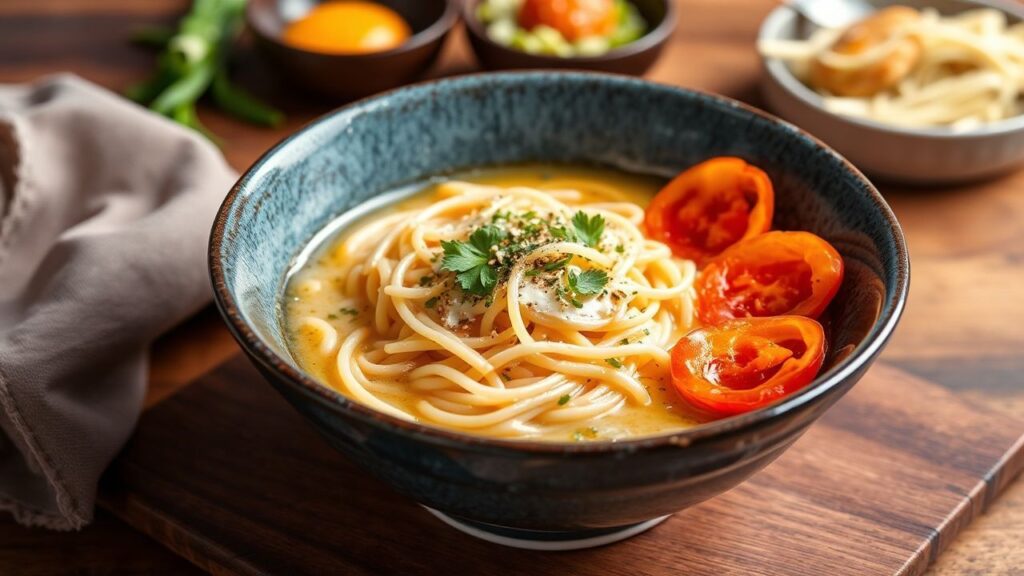
Carbonara ramen depends on a small set of ingredients that each perform a job. Cheese builds savory depth and body. Egg yolk thickens and creates silkiness. Noodles deliver bite.
- Fresh ramen noodles: Prefer alkaline noodles for springy bite.
- Egg yolks: Enrich and thicken the sauce through emulsion.
- Pecorino Romano or Parmigiano-Reggiano: Sharp, nutty cheese for classic carbonara notes.
- Chicken broth (or dashi + stock): Provides umami and liquid base.
- Garlic and shallots: Add aromatic sweetness and depth.
- Black pepper: Freshly cracked for warm heat and perfume.
- Olive oil: Helps round flavors and improves mouthfeel.
- Optional vegetables: Spinach or shiitake for balance.
- Smoked turkey bacon (or other protein): Adds a smoky, pork-like element without pork.
If you want a quick science-backed view of how cheese and fat affect flavor, explore emulsion. Carbonara ramen relies on that same concept when you combine yolk, cheese, and warm liquid.
You can also reference umami to understand why mushrooms, nori, and broth reduce the need for heavy cream. Umami creates “fullness” on the palate.
Step-by-Step Guide to Crafting the Perfect Carbonara Ramen at Home
Follow this order. Each step sets up the next one, especially the sauce timing. Work fast once eggs meet heat.
- Prepare the broth: Bring 6 cups quality chicken broth to a gentle simmer in a large pot. Add minced garlic and finely chopped shallots, then cook until translucent and fragrant (about 5 minutes). Keep it warm on low.
- Cook the turkey bacon: Heat a skillet over medium heat and sauté turkey bacon with 1 tablespoon olive oil. Cook until crisp, about 5–7 minutes. Drain on paper towels.
- Cook the ramen noodles: Boil a separate pot of water. Cook 400 g fresh ramen noodles according to package directions (often 2–3 minutes). Drain promptly. Toss with a teaspoon of olive oil to limit sticking.
- Make the carbonara-style sauce: In a bowl, whisk 4 large egg yolks with 1 cup grated Pecorino Romano and plenty of freshly cracked black pepper until smooth. Add about 2 tablespoons warm broth to temper and prevent scrambling.
- Combine noodles and broth: Transfer hot noodles into the warm broth pot. Stir gently to coat and warm through, but avoid overcooking.
- Incorporate the sauce: Remove the pot from direct heat. Pour in the tempered egg-cheese mixture while stirring quickly. The sauce should thicken into a glossy coating within seconds.
- Add vegetables and protein: Fold in baby spinach or quickly cook shiitake until just tender. Crumble or top with crispy turkey bacon.
- Final seasoning and garnish: Taste and adjust black pepper. Garnish with chopped chives, shredded nori, and an optional light drizzle of olive oil.
Notice the heat control. You build the emulsion off direct heat, then let residual warmth finish the job. That approach keeps the texture smooth and prevents graininess.
Expert Tips and Variations to Elevate Your Carbonara Ramen
Small upgrades make a big difference. Texture and flavor both benefit from precise choices in noodles, cheese blend, and seasoning timing.
- Temperature control: Keep broth at a gentle simmer. Stir the egg mixture off heat for a stable sauce.
- Noodle choice: Fresh alkaline noodles work best. Dried ramen works too, but cook it carefully to avoid softness.
- Cheese alternatives: Use Pecorino for sharp bite, or Parmigiano for a milder profile. Blending gives complexity.
- Protein swaps: Try smoked chicken, roasted mushrooms, or firm tofu for different flavor directions.
- Make-ahead support: Prepare broth and crisp protein ahead. Cook noodles fresh, then assemble right before serving.
- Heat variations: Add shichimi togarashi or chili oil in small amounts to keep the peppery carbonara style intact.
- Vegetarian adaptation: Use silken tofu blended with nutritional yeast and soak cashews if you want a creamy, dairy-free effect, paired with mushroom broth.
For a deeper look at how traditional Japanese flavors create umami and depth, dashi is a helpful reference. For Italian-style sauce technique, cheese shows why aging and fat content matter to melt and texture.
Vegetable add-ins also deserve attention. Spinach wilts quickly, while mushrooms benefit from a short sauté so they release savory notes instead of water.
Serving Suggestions
Serve carbonara ramen immediately. The sauce thickens as it cools, and noodles lose spring if you wait too long. Use wide bowls so the glossy coating spreads evenly.
Garnish like a ramen shop. Add freshly cracked black pepper, thin scallion slices, and toasted sesame seeds for crunch. A side of steamed bok choy or pickled vegetables cuts through richness with acidity and freshness.
For pairing, choose drinks that cleanse the palate. Light green tea works well because it stays crisp. If you prefer citrus, yuzu-style soda adds bright aroma that contrasts with the creamy sauce.
To understand why aroma and taste balance matters, review flavor. Carbonara ramen highlights fat and salt, so you need a fresh “lift” to keep every bite interesting.
| Nutrient | Per Serving |
|---|---|
| Calories | 470 kcal |
| Protein | 28 g |
| Carbohydrates | 45 g |
| Fat | 18 g |
Key Takeaways
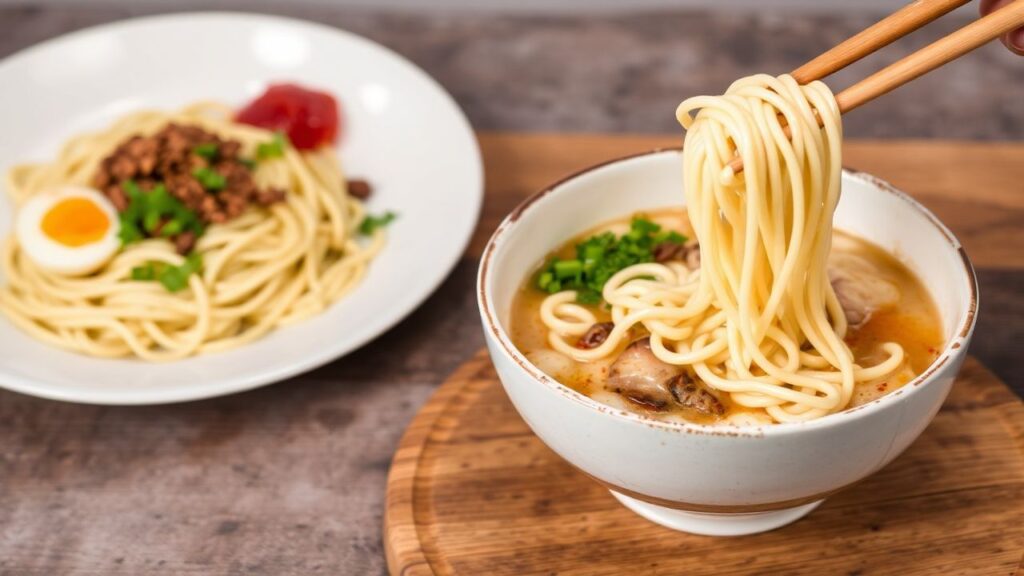
Carbonara ramen succeeds when you treat it like ramen first and carbonara second. You build a rich base, then use tempered yolk and cheese to coat noodles with a glossy, emulsified sauce.
Whether you choose traditional cheeses or a lighter protein, your goal stays the same: smooth texture, strong peppery aroma, and balanced umami. With the timing and heat control in place, you get a fusion bowl that tastes intentional—not accidental.
For a broader culinary lens on how food cultures adapt over time, fusion cuisine offers context. Carbonara ramen fits that pattern because it preserves core techniques while switching the format.
FAQ
What exactly is carbonara ramen?
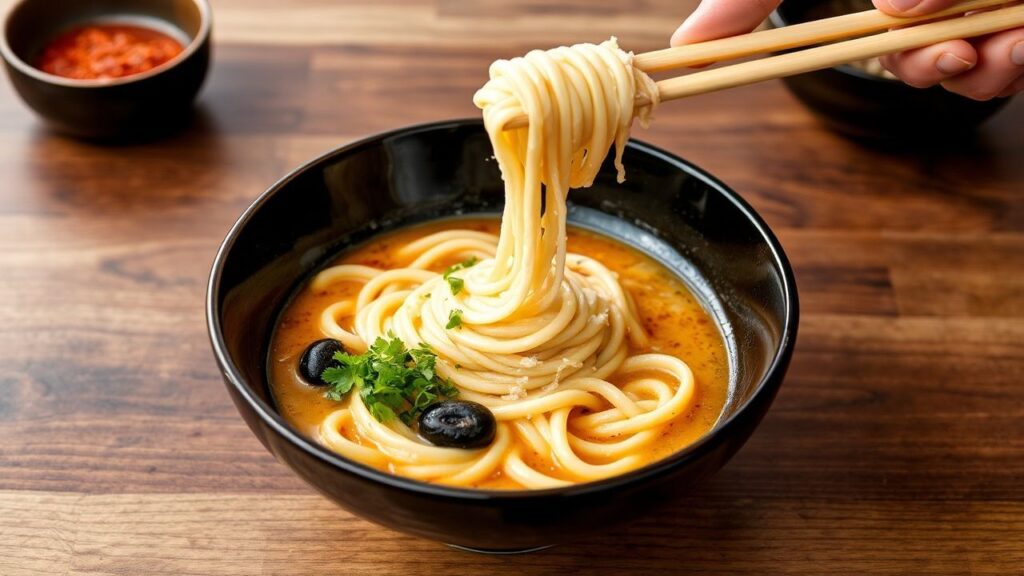
Carbonara ramen is a fusion bowl that combines ramen noodles and broth with a carbonara-style sauce made from egg yolk and grated cheese. Black pepper and a savory base create the signature aroma, while ramen format keeps the bite and bowl experience.
Do I need cream to make carbonara ramen creamy?
No. Creamy texture comes from emulsion between yolks, cheese, and warm broth. If you follow the off-heat sauce step and stir fast, you can skip cream and still get a smooth coating.
Why do my eggs scramble instead of forming a smooth sauce?
Scrambling happens when the egg mixture meets high heat too quickly. Remove the pot from direct burner heat, temper yolks with warm broth, and stir continuously when combining.
Can I make carbonara ramen vegetarian?
Yes. Use mushroom-forward broth and swap turkey bacon for sautéed mushrooms or tofu. For dairy-free creaminess, some cooks use blended silken tofu with nutritional yeast, but texture will differ from real cheese-and-yolk sauce.
What toppings work best for carbonara ramen?
Choose toppings that add aroma and contrast. Nori strips, scallions, sesame seeds, and extra cracked black pepper boost the ramen feel and balance the sauce richness.
See also: carbonara ramen