
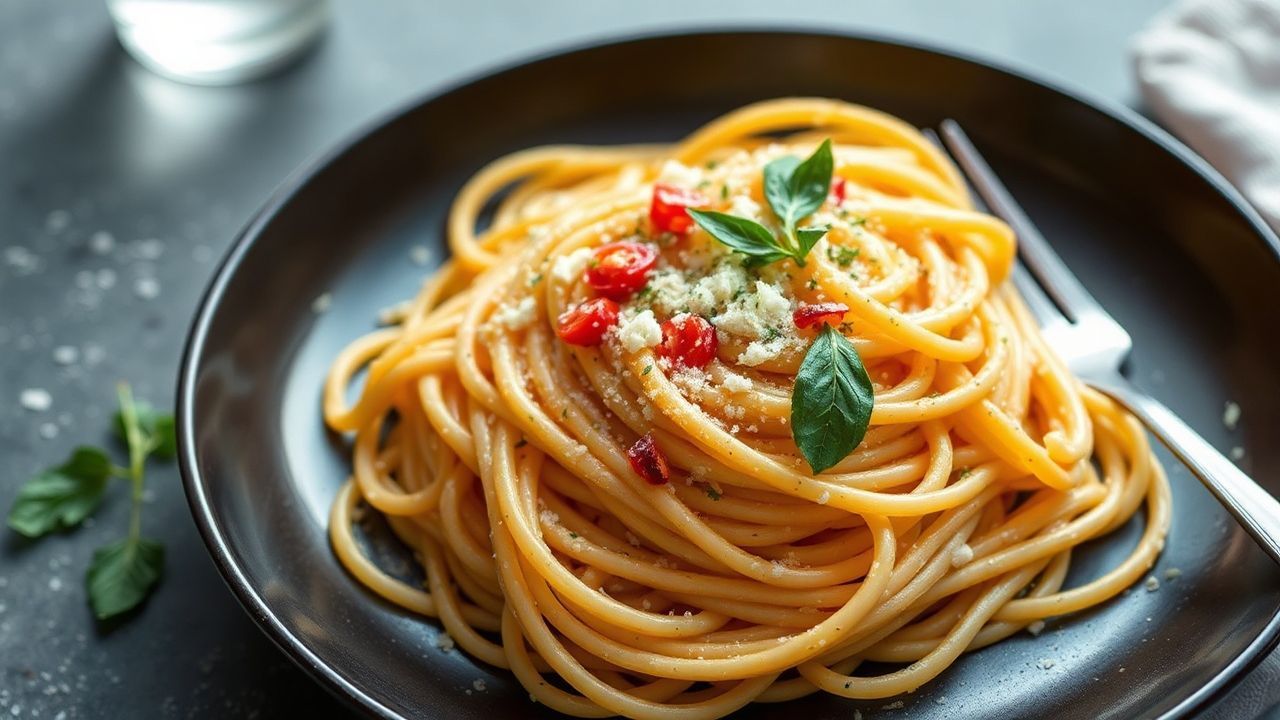
Authentic spaghetti carbonara delivers that signature creamy texture without heavy cream. It happens because hot pasta, eggs, Pecorino Romano, and starchy pasta water form a stable emulsion. When you respect the method, you get a sauce that clings and tastes unmistakably Roman.
- What Makes Spaghetti Carbonara Creamy Without Cream?
- Prep and Cook Time, Yield, and Difficulty
- Ingredients for No-Cream Spaghetti Carbonara
- Instructions: Foolproof Method Step by Step
- 1) Cook the Mushroom “Beef” for Smoky, Savory Depth
- 2) Cook Spaghetti to Al Dente
- 3) Whisk Eggs and Pecorino Romano
- 4) Combine Off Direct Heat for a Silky Emulsion
- 5) Finish With Mushroom “Beef” and Serve Immediately
- Tips for Success (So Your Sauce Always Turns Out)
- Serving Suggestions and Authentic Variations to Elevate Your Dish
- Nutrient Snapshot (Per Serving)
- FAQ
- No cream: the sauce emulsifies with egg, cheese, and pasta water.
- Timing matters: combine off direct heat to prevent scrambling.
- Cheese quality: Pecorino Romano creates the classic salty depth.
- Use starchy water: it loosens and thickens at once.
If you want a foolproof bowl, focus on three things: heat control, proper pasta doneness, and finely grated cheese. Roman carbonara traditionally uses cured pork, but you can keep the same emulsion logic with a plant-forward “mushroom beef” approach. For the science behind the creamy texture, see the basics of emulsions.
Spaghetti carbonara also depends on correct egg handling. Eggs thicken when gently warmed, and they scramble if you overheat them. For a quick primer on how eggs set, review egg structure.
Let’s build a reliable, no-cream recipe that stays true to the technique while meeting modern preferences. You’ll learn the exact order of steps, plus practical fixes if your sauce feels too thick or too loose.
What Makes Spaghetti Carbonara Creamy Without Cream?
The “creaminess” in spaghetti carbonara comes from emulsion, not dairy cream. When you whisk eggs with finely grated cheese and then toss with hot pasta, the starch helps bind everything into a smooth coating.
Starch from pasta water plays matchmaker. It thickens gently and improves sauce cling, so each strand tastes coated and glossy. If you want the chemistry behind this, explore starch and how it hydrates in hot liquids.
Finally, pepper and Pecorino create the classic Roman flavor profile. Pecorino Romano brings sharp salt and nutty depth that makes the sauce taste rich even without cream. For background on the cheese, check Pecorino Romano.
Now that you know the “why,” you’re ready for a method that works in real home kitchens. The goal is simple: warm the eggs gently, toss fast, and keep the pasta slightly al dente so the sauce finishes perfectly.
Prep and Cook Time, Yield, and Difficulty
This recipe takes about 25 minutes from start to finish. Most of your time goes to cooking the pasta and browning the mushrooms for an umami-forward “pancetta-style” bite.
You’ll get a medium difficulty result. The steps feel short, but the sauce stage rewards close attention to temperature and texture. If you follow the order below, you should get a smooth coating every time.
Total Time: 25 minutes
Yield: Serves 4 generous portions
Difficulty: Medium
Ingredients for No-Cream Spaghetti Carbonara
Use simple staples with one key upgrade: finely grated Pecorino Romano. Below is a plant-forward “mushroom beef” adaptation that supports the same creamy emulsion technique.
For best results, keep egg temperature near room level and choose mushrooms that brown well. Shiitake and portobello give you deeper flavor and a satisfying bite.
- 400g (14 oz) dried spaghetti, preferably durum wheat semolina
- 150g (5 oz) shiitake or portobello mushrooms, thinly sliced
- 3 large eggs
- 1 cup finely grated Pecorino Romano, plus extra for serving
- 2 cloves garlic, peeled and lightly crushed
- 2 tbsp extra-virgin olive oil
- Freshly cracked black pepper, to taste
- Salt, for pasta water
- Optional: finely chopped fresh flat-leaf parsley
Spaghetti works especially well because long strands capture sauce evenly. This pairing is common across classic Italian pasta dishes, where sauce texture clings to the surface. For general pasta shapes and how they hold sauce, see Pasta.
Keep the “sauce” phase calm. Turn off the burner, toss quickly, and adjust consistency with reserved pasta water.
Instructions: Foolproof Method Step by Step
1) Cook the Mushroom “Beef” for Smoky, Savory Depth
Heat the olive oil in a large skillet over medium heat. Add the crushed garlic and sauté until fragrant, about 1 minute.
Remove the garlic. Add mushrooms in a single layer and cook without stirring for 3–4 minutes, until the undersides crisp and turn golden brown.
Flip and cook 3–4 minutes more, until deeply browned. Season lightly with salt and black pepper, then remove from heat and set aside.
2) Cook Spaghetti to Al Dente
Bring a large pot of salted water to a boil. Cook spaghetti until al dente, usually 1–2 minutes less than package directions.
Before draining, reserve about 1 cup of pasta cooking water. Drain the spaghetti, then transfer it to a large mixing bowl right away.
Al dente matters because the pasta keeps cooking from residual heat. That extra warmth finishes the emulsion without turning it grainy.
3) Whisk Eggs and Pecorino Romano
In a separate bowl, whisk eggs with Pecorino Romano and a generous amount of black pepper. Whisk until smooth and thick, like a pourable custard.
If your cheese clumps, keep whisking. Fine cheese melts faster, and that smooth melt helps the sauce stay glossy.
4) Combine Off Direct Heat for a Silky Emulsion
Let the bowl cool for 30–60 seconds if the pasta is steaming fiercely. Then slowly pour the egg-cheese mixture over the hot spaghetti while tossing vigorously.
Add reserved pasta water a little at a time. Toss until the sauce turns silky and coats the noodles evenly.
Residual heat gently cooks the eggs. The pasta water provides starch to stabilize the sauce, so you don’t need cream.
5) Finish With Mushroom “Beef” and Serve Immediately
Fold in the crisp mushrooms. Reserve a few pieces for garnish so each plate looks fresh and hearty.
Divide pasta among warm plates. Top with extra Pecorino, more black pepper, and optional parsley for color and freshness.
Serve right away. Carbonara thickens as it sits, so the best texture happens from the pan to the plate.
Tips for Success (So Your Sauce Always Turns Out)
- Choose mushrooms that brown: shiitake and portobello caramelize well, adding umami similar to cured pork.
- Control temperature: use room-temperature eggs, and keep the sauce phase off direct heat.
- Use pasta water: it’s the natural emulsifier. Add slowly until the sauce clings, not pools.
- Grate cheese finely: fast melting helps prevent graininess.
- Balance salt and pepper: Pecorino is salty, so taste before you add extra salt.
- Reheat gently: if you must, warm pasta lightly and then re-toss with a splash of pasta water.
For the classic Roman context, carbonara is tied closely to Italian culinary technique and ingredient restraint. If you want the broader background of Italian food traditions, see Italian cuisine.
Also remember: the dish relies on a short window of perfection. Your goal isn’t to “cook more.” Your goal is to emulsify and coat.
Serving Suggestions and Authentic Variations to Elevate Your Dish
Serve carbonara in warm bowls or plates. Warm serving keeps the sauce glossy and prevents fast thickening. Then finish with a final grind of black pepper and a light dusting of extra Pecorino.
Texture drives satisfaction here. Crisp mushrooms add contrast, while the egg-cheese sauce stays smooth. If you want to understand why contrast works in food, review sensory perception.
For variations that still respect the technique, try different pasta shapes. Bucatini or rigatoni hold thicker sauce better because they have more surface and interior ridges.
If you want a flavor boost, add roasted garlic flavor to the mushroom step rather than into the egg sauce. That keeps the egg mixture clean and prevents overpowering notes. The core method stays the same: emulsion, not cream.
Nutrient Snapshot (Per Serving)
The following estimate fits a standard 4-serving batch with Pecorino and eggs. Your numbers may shift with egg size, cheese packing, and how oily the mushrooms turn out.
Use this as a practical guide, not a medical value. For general nutrition concepts, see Nutrition.
| Nutrient | Per Serving |
|---|---|
| Calories | 480 kcal |
| Protein | 20 g |
| Carbohydrates | 65 g |
| Fat | 14 g |
FAQ
1) Can I make spaghetti carbonara without cream and still get a creamy sauce?
Yes. You get creaminess through emulsion from egg, finely grated Pecorino Romano, and starchy pasta water. Keep the egg phase off direct heat and toss vigorously to stabilize the sauce.
2) What cheese works best for authentic flavor?
Pecorino Romano gives the classic salty tang and melt quality. Use finely grated cheese so it melts fast and helps the sauce stay smooth.
3) Why do my eggs scramble?
Eggs scramble when they hit direct high heat. Turn off the heat before combining, then pour egg mixture slowly and toss immediately. Adjust with reserved pasta water to loosen and smooth.
4) How much pasta water should I reserve?
Reserve about 1 cup. Add it gradually because starch controls thickness and helps the emulsion cling. Stop when the sauce coats noodles with a glossy finish.
5) Can I swap mushrooms for traditional cured pork?
You can. Brown mushrooms well to develop deep umami and a “meaty” bite. The emulsion technique stays the same, so the sauce still tastes like carbonara in texture and style.
Mastering spaghetti carbonara comes down to technique: gentle egg warming, fine cheese, and the right amount of pasta starch. Follow the steps, serve immediately, and you’ll get a silky, no-cream sauce that tastes right at home in any Roman-style meal.[/p]
See also: spaghetti carbonara