

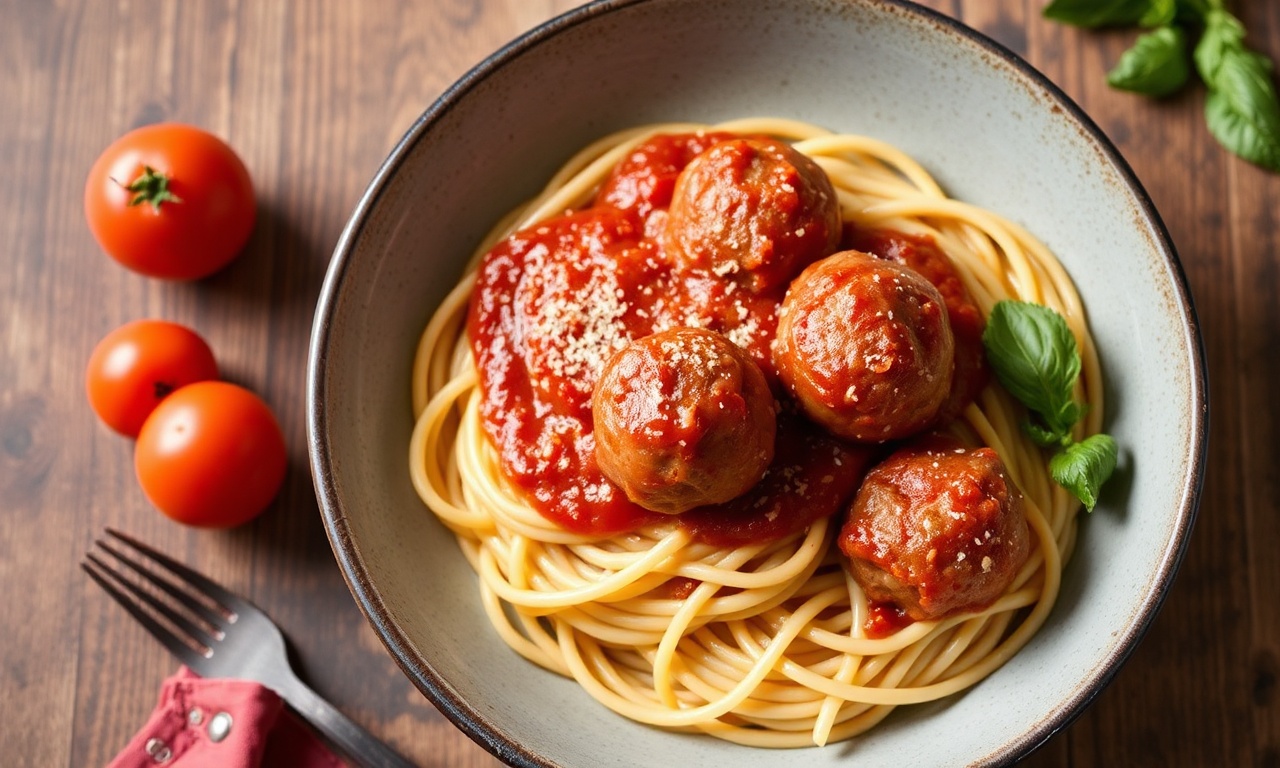
Spaghetti and meatballs is one of the most trusted comfort meals in Italian-American cooking. This easy recipe focuses on tender meatballs, a rich tomato sauce, and spaghetti cooked to al dente—so the dinner tastes homemade every time.
- Prep and Cook Time
- Yield
- Difficulty Level
- Ingredients
- Instructions
- Tips for Success: Mastering Classic Comfort
- Serving Suggestions
- FAQ
- 1) Why do my meatballs turn out tough?
- 2) How do I prevent the spaghetti from getting sticky?
- 3) Can I freeze spaghetti and meatballs?
- 4) What’s the best way to thicken or thin the sauce?
- 5) Can I make this gluten-free?
- To conclude
At a Glance
- Juicy meatballs: soak breadcrumbs in warmed milk, then mix gently.
- Flavor base: sauté onion and garlic before adding tomatoes.
- Best texture: brown meatballs first, then simmer in sauce.
- Silky finish: toss pasta with reserved pasta water.
From busy weeknights to relaxed weekend dinners, this classic comfort dish stays reliable. You’ll build flavor in layers, then serve it straight from the pot with a simple garnish.
Best Easy Spaghetti and Meatballs Recipe Guide (Classic Comfort)
Classic spaghetti and meatballs depends on timing and technique more than fancy ingredients. When you brown the meatballs and simmer them in tomato sauce, the texture turns tender and the sauce absorbs that savory flavor.
Prep and Cook Time
Plan for 20 minutes of prep and 45 minutes of cooking. Total time lands at about 1 hour 5 minutes, which fits most weeknight schedules.
If you want faster results, measure ingredients first and set up your workstation. That keeps your hands moving and prevents the sauce or pasta from waiting.
Yield
This recipe makes about 6 hearty servings. It also reheats well, so leftovers taste even better the next day.
For larger families, double the sauce and keep the meatball size the same for even cooking.
Difficulty Level
This is an easy to medium recipe. The steps follow a logical order, and you only need basic cooking skills.
Home cooks succeed here because the process reduces guesswork: brown, simmer, cook pasta, and toss.
Ingredients
Use quality ground meat and real dairy for the best meatball texture. For the sauce, choose tomatoes that taste sweet and bright.
If you’re unsure, check the label on canned tomatoes and aim for whole San Marzano-style tomatoes or another trusted brand.
For the Meatballs
- 1 lb (450g) ground beef, preferably 80% lean
- 1/2 cup fresh breadcrumbs (from day-old Italian bread, crust removed)
- 1/4 cup whole milk, warmed
- 1 large egg, lightly beaten
- 1/3 cup grated Parmesan cheese
- 3 cloves garlic, minced
- 2 tbsp fresh parsley, finely chopped
- 1 tsp dried oregano
- 1/2 tsp crushed red pepper flakes (optional)
- Salt and freshly ground black pepper, to taste
- 2 tbsp olive oil, for frying
For the Tomato Sauce
- 2 tbsp extra virgin olive oil
- 1 small yellow onion, finely diced
- 4 cloves garlic, thinly sliced
- 1 (28 oz) can whole tomatoes, crushed by hand
- 1 tbsp tomato paste
- 1 tsp granulated sugar
- 1 tsp dried basil
- 1 tsp dried oregano
- Salt and freshly ground black pepper, to taste
- Fresh basil leaves, for garnish
For the Spaghetti
- 12 oz (340g) spaghetti pasta
- Salt, for pasta water
- Freshly grated Parmesan, for serving
Breadcrumbs help bind and keep the meatballs tender. This method works because milk hydrates the crumbs, which then release moisture as the meatballs cook.
If you want background on bread-based binding, see breadcrumbs and how they behave during cooking.
Instructions
Work in sequence: prepare the meatball mixture, shape, brown, then simmer. While the sauce simmers, cook pasta and toss right before serving.
When you follow this order, your pasta won’t overcook, and your sauce stays focused on developing flavor.
- Prepare the meatball mixture: Soak the breadcrumbs in warmed milk for 5 minutes until soft. Add ground beef, beaten egg, Parmesan, minced garlic, parsley, oregano, red pepper flakes (if using), salt, and pepper. Combine gently until just mixed—avoid overmixing.
- Shape the meatballs: With slightly wet hands, form 1 1/2-inch meatballs (about 20). Place on a parchment-lined tray so they hold their shape.
- Brown the meatballs: Heat olive oil in a large skillet over medium heat. Brown meatballs in batches so the pan doesn’t crowd. Fry 6–7 minutes total, turning carefully. Remove to a plate.
- Make the tomato sauce: In the same skillet, add 2 tbsp olive oil. Sauté diced onion for about 5 minutes until translucent. Stir in sliced garlic and cook 1 minute until fragrant.
- Add tomatoes and seasonings: Pour in crushed tomatoes and stir in tomato paste. Season with sugar, dried basil, oregano, salt, and pepper. Bring to a gentle simmer.
- Simmer the meatballs in sauce: Nestle meatballs into the simmering sauce. Cover loosely and cook on low for about 25 minutes, turning once halfway through.
- Cook the spaghetti: Bring a large pot of salted water to a boil. Cook spaghetti until just shy of al dente according to the package. Drain and reserve 1 cup of pasta water.
- Toss and serve: Add spaghetti to the sauce (or serve spaghetti alongside the meatballs). Toss gently, adding reserved pasta water as needed for a glossy coating.
- Garnish and finish: Top with freshly grated Parmesan and torn basil leaves. Add black pepper if you like a sharper finish.
To understand why pasta turns best when you finish it in sauce, read about al dente cooking. Slightly undercooking helps pasta absorb sauce without going mushy.
For sauce fundamentals like simmering and tomato flavor development, you can reference tomato sauce. It reinforces how heat and time build depth.
Small adjustments often make a noticeable difference. If your sauce looks too thick, add a splash of reserved pasta water. If it tastes flat, simmer 5 more minutes to concentrate flavors.
Tips for Success: Mastering Classic Comfort
These tips protect texture and flavor. With spaghetti and meatballs, small changes to breading, heat, and timing deliver better results.
Use them as a checklist, especially if you plan to cook for guests.
- Breadcrumbs and milk: Use fresh crumbs and warmed milk. Hydrated crumbs keep meatballs moist and tender.
- Don’t overmix: Mix just until combined. Overworking tightens proteins and makes meatballs dense.
- Browning before simmering: The crust adds savory flavor. You still simmer to finish cooking and blend flavors.
- Tomato sauce enhancements: Simmer longer for deeper flavor. If tomatoes taste sharp, sugar can balance acidity.
- Make-ahead: Cook meatballs and sauce up to a day ahead. Reheat gently so the meatballs stay tender.
- Meatball variations: You can swap part of the beef with turkey or veal. Match fat content as closely as possible for juiciness.
When you store leftovers, keep sauce and pasta separate if possible. Then reheat pasta with a splash of sauce so the texture stays springy.
If you want general guidance on safe food handling and leftovers, consult food safety best practices.
Serving Suggestions
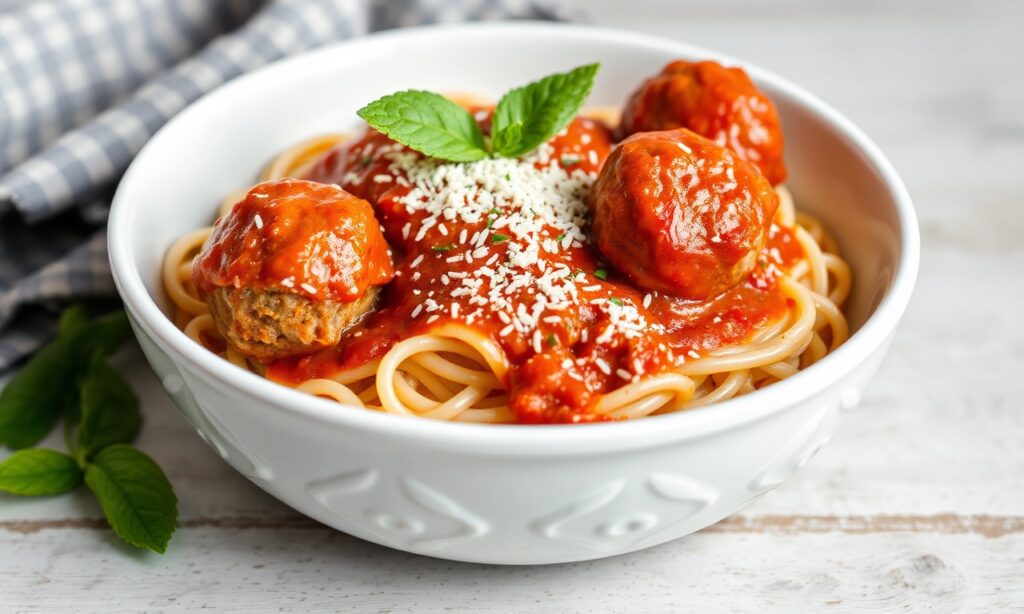
Serve spaghetti and meatballs in warm bowls so sauce stays glossy. A shallow bowl helps you catch every ladle and keeps the portion neat.
Pair it with a crisp salad or garlic bread for balance. The acidity in a salad cuts through the richness of the meat and cheese.
For a classic pairing idea, you can revisit Caesar salad. It complements tomato flavors with a tangy, creamy note.
| Nutrient | Per Serving |
|---|---|
| Calories | 520 |
| Protein | 32g |
| Carbohydrates | 52g |
| Fat | 18g |
Nutrition varies based on meat lean-to-fat ratio and cheese amount. Use this table as a planning estimate for portion control and meal prep.
For more on how pasta types affect texture, see spaghetti. It explains why the right shape holds sauce well.
FAQ
These quick answers address common problems. If you run into one of these issues, use the fix below and keep cooking.
Most mistakes in spaghetti and meatballs come from heat control and timing, not from ingredient quality.
1) Why do my meatballs turn out tough?
Toughness usually comes from overmixing or cooking at too high heat. Mix gently, brown properly, then simmer on low until tender.
2) How do I prevent the spaghetti from getting sticky?
Use plenty of salted water and stir once early. Also cook to just shy of al dente, then finish in sauce for even coating.
3) Can I freeze spaghetti and meatballs?
Yes. Freeze meatballs and sauce in a container, then thaw and reheat gently. Cook fresh pasta or reheat pasta separately for best texture.
4) What’s the best way to thicken or thin the sauce?
To thicken, simmer uncovered 5–10 minutes. To thin, add reserved pasta water a tablespoon at a time until the sauce coats a spoon.
5) Can I make this gluten-free?
You can swap gluten-free breadcrumbs and use gluten-free spaghetti. Check labels for both pasta and bread crumbs so the texture stays close to the classic version.
To conclude
Classic comfort on a plate feels easy when you follow the right order. Brown the meatballs, simmer them in tomato sauce, and toss spaghetti with pasta water for a silky finish.
Now you can make spaghetti and meatballs that tastes like a tradition, even on a weeknight.
See also: Spaghetti and Meatballs