

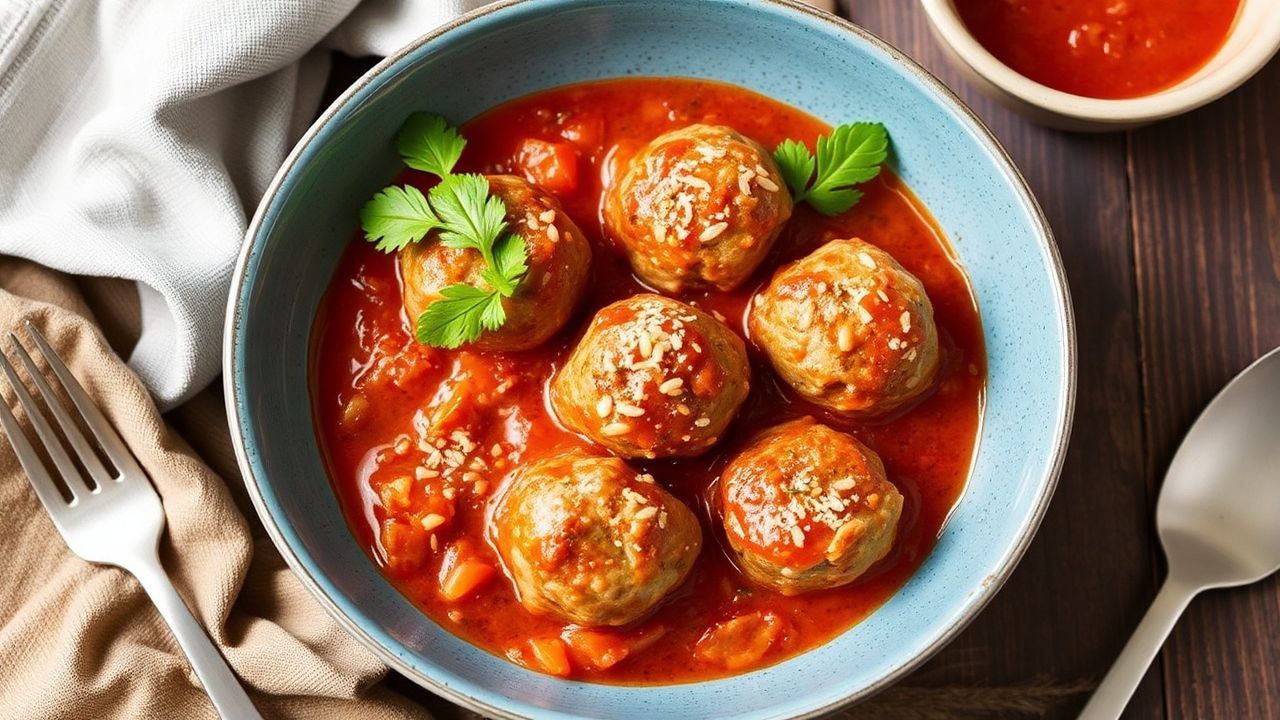
Porcupine meatballs in tomato sauce deliver a cozy, old-school dinner with rich flavor and satisfying texture. They blend seasoned ground beef with rice, then simmer until the grains soften and “prickle” through the meatballs like tiny quills.
- What Are Porcupine Meatballs in Tomato Sauce?
- Ingredients for Porcupine Meatballs in Tomato Sauce
- Instructions: Mastering Porcupine Meatballs in Tomato Sauce
- Prep and Cook Time, Yield, and Difficulty
- Tips for Success: Fluffy Rice, Juicy Meatballs, Better Sauce
- Serving Suggestions and Presentation Tips
- Storage, Make-Ahead, and Reheating
- Final Thoughts
- FAQ
- Key texture: long-grain rice stays tender without turning gummy.
- Best flavor base: simmered crushed tomatoes with broth and herbs.
- Gentle cooking matters: low, steady heat keeps meatballs juicy.
- Make-ahead friendly: they taste even better the next day.
Even if you’ve never made them before, this recipe stays easy and repeatable. You’ll brown the meatballs for color, build a simple tomato sauce, and simmer until the rice cooks through. For background on the dish style, see meatball and tomato sauce.
What Are Porcupine Meatballs in Tomato Sauce?
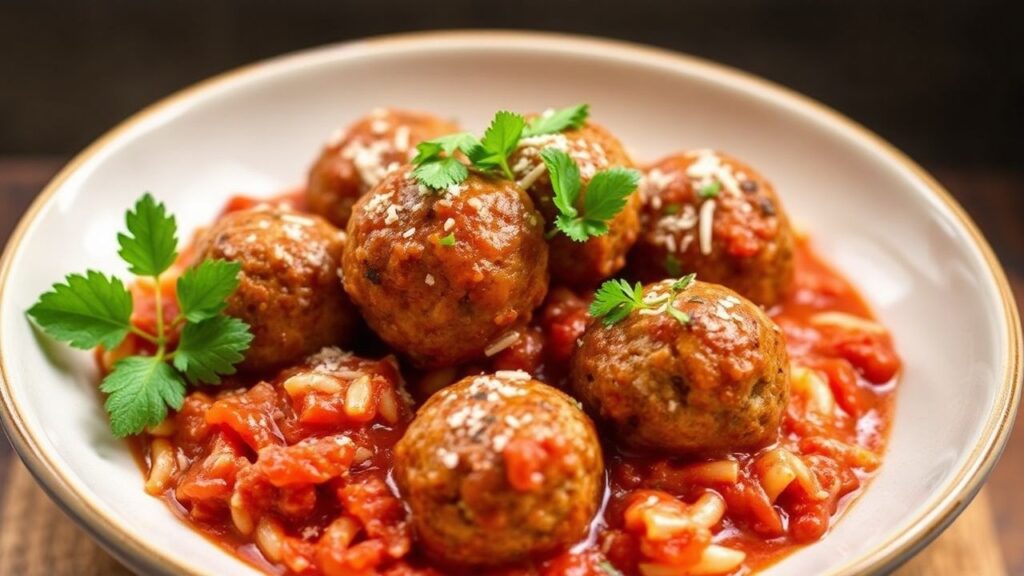
Porcupine meatballs are a classic comfort dish where rice gets mixed into the meatball center. As they cook, the rice expands and makes small points visible, which gives the “porcupine” name.
The sauce ties everything together. A simmered tomato base coats each meatball so the rice absorbs flavor from the broth, not just from the meat mixture. If you want to understand the role of rice in cooking, review rice and its cooking behavior.
Ingredients for Porcupine Meatballs in Tomato Sauce
Use lean ground beef for a clean, meaty bite. Choose long-grain white rice because it cooks evenly and helps maintain structure inside the meatballs.
For the sauce, crushed tomatoes, tomato paste, and beef broth create depth without extra steps. Add dried herbs and a small amount of sugar to round out acidity. If you want a quick refresher on tomato products, visit tomatoes.
- 1 lb lean ground beef (85% lean)
- 1/2 cup long-grain white rice, uncooked
- 1 small yellow onion, finely minced
- 2 cloves garlic, finely minced
- 1 large egg
- 1/4 cup plain breadcrumbs
- 3/4 cup whole milk
- 1 tsp kosher salt
- 1/2 tsp freshly ground black pepper
- 1/2 tsp dried oregano
- 2 tbsp olive oil (for browning)
- 1 (28 oz) can crushed tomatoes
- 1 cup beef broth (low sodium)
- 1 tbsp tomato paste
- 1 tsp sugar (balances acidity)
- 1/2 tsp dried basil
- 1/4 tsp crushed red pepper flakes (optional)
- Fresh parsley, chopped (for garnish)
Instructions: Mastering Porcupine Meatballs in Tomato Sauce
Start by soaking breadcrumbs in milk. This step helps the mixture stay tender and keeps the meatballs from tasting dry.
Next, combine the meatball mixture gently. Overmixing makes dense meatballs, so mix just until the ingredients disappear.
- Prepare the meatball mixture: Soak breadcrumbs in milk for about 5 minutes. Add ground beef, uncooked rice, minced onion, garlic, egg, salt, pepper, and oregano. Mix gently until just combined.
- Shape the meatballs: Form golf ball-sized spheres (about 1 1/2 inches). Use slightly wet hands to prevent sticking. Place on a parchment-lined tray.
- Brown the meatballs: Heat olive oil in a large deep skillet or Dutch oven over medium heat. Brown meatballs in batches if needed, turning until golden on all sides. Remove and set aside.
- Make the tomato sauce: Add crushed tomatoes, beef broth, tomato paste, sugar, dried basil, and red pepper flakes. Stir and scrape browned bits from the pan for extra flavor. Simmer on medium-low.
- Simmer to cook the rice: Return meatballs to the sauce, nestling them in so they cook through. Cover partially and simmer gently for 35–40 minutes, stirring the pot carefully once or twice so sauce distributes evenly.
- Finish and garnish: Taste the sauce and adjust salt or pepper. Garnish with freshly chopped parsley before serving.
Prep and Cook Time, Yield, and Difficulty
Readiness Time: 20 minutes
Cooking Time: 45 minutes
Total Time: 1 hour 5 minutes
Yield: Serves 6 hearty portions
Difficulty Level: Easy to Medium
Tips for Success: Fluffy Rice, Juicy Meatballs, Better Sauce
For the best results, treat this like a controlled simmer, not a boiling stew. Keep bubbles gentle so the meatballs stay intact and the rice cooks evenly.
Use the same pan for the sauce after browning. The browned bits dissolve into the tomato base and add an instant layer of savory flavor. If you want more on how heat changes proteins and texture, see meat.
Long-grain rice tends to hold its shape better than short-grain varieties. If you use a different rice type, expect a different texture and adjust simmer time.
For sauce balance, keep sugar modest. Tomatoes vary in acidity, so taste near the end and fine-tune seasoning with salt and pepper first. The goal is harmony, not sweetness.
Expert Insight:
[/TIP]
Serving Suggestions and Presentation Tips
Serve hot meatballs straight from the sauce. Ladle generously so guests get both tender meatballs and flavorful tomato broth.
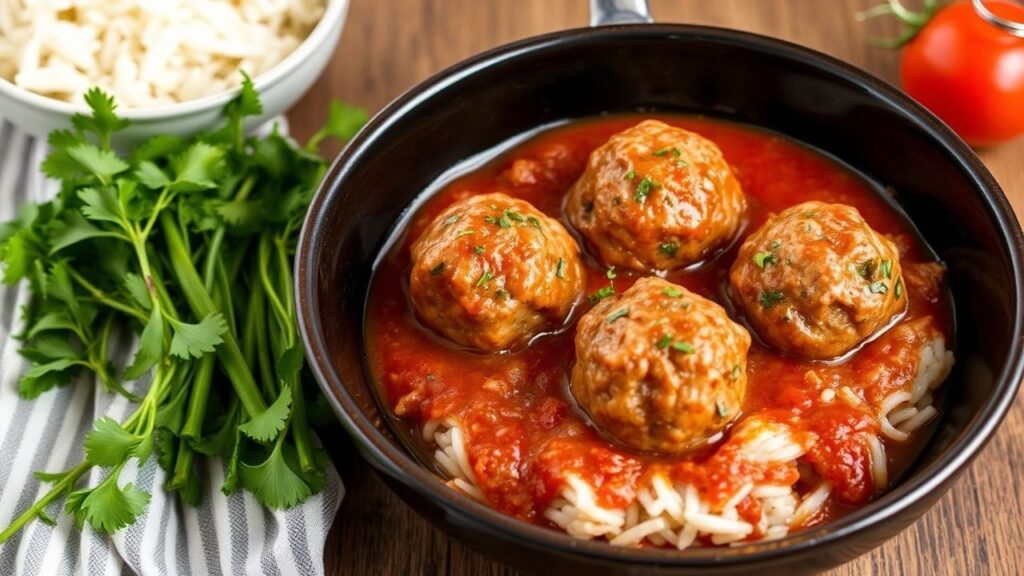
Classic pairings include mashed potatoes, buttered noodles, or creamy polenta. The starchy base soaks up sauce and makes each bite feel complete, especially when the rice inside adds subtle chew.
Add a finishing sprinkle of Parmesan or Pecorino for salty depth. If you enjoy fresh herbs, garnish with parsley and consider torn basil for brightness. For more about cheese basics, see cheese.
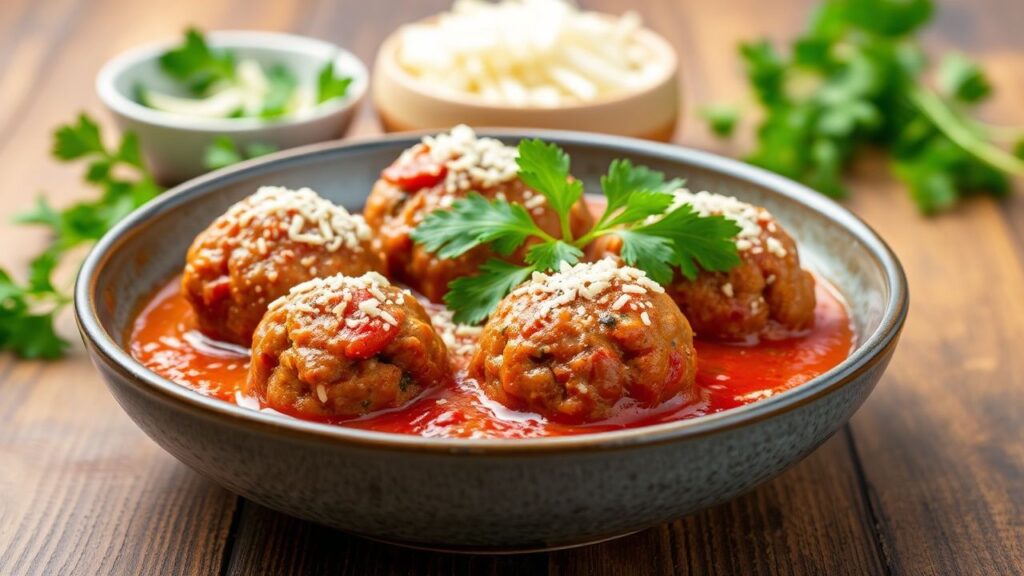
For a simple presentation, cluster meatballs in a wide bowl and spoon sauce around them. Then top with parsley so it stands out against the red tomato base.
| Nutrient | Per Serving |
|---|---|
| Calories | 380 kcal |
| Protein | 28 g |
| Carbohydrates | 22 g |
| Fat | 18 g |
Storage, Make-Ahead, and Reheating
These meatballs hold up well because they simmer in sauce. Let leftovers cool, then store in sealed containers in the refrigerator.
Reheat gently on the stovetop with a splash of broth or water if the sauce thickens. Warm just until hot throughout to avoid drying the meatballs.
If you want to freeze, cool completely first. Pack in airtight portions so you can thaw and reheat what you need. For general guidance on freezing food, see freezing.
Final Thoughts
Porcupine meatballs in tomato sauce combine familiar flavors with a fun, distinctive texture. The rice inside creates that signature “quill” look, while the sauce keeps everything moist and flavorful.
When you follow gentle simmer timing and avoid overmixing, the result stays tender and satisfying. Make a batch, serve it with your favorite starch, and enjoy how the flavors deepen as the dish rests.
FAQ
What exactly are porcupine meatballs?
They are meatballs made with mixed-in rice that expands as they cook. That expansion creates small rice points that resemble porcupine quills.
Do I have to use long-grain rice?
Long-grain rice works best because it cooks evenly and holds structure. If you use another rice type, check doneness and expect a different texture.
How do I keep the meatballs from falling apart?
Mix gently and don’t overwork the beef. Also simmer at a steady low heat so the meatballs set gradually in the sauce.
Can I make porcupine meatballs ahead of time?
Yes. You can prepare the meatballs, store them, and cook later. Leftovers taste great too, and reheating stays easy with a splash of broth.
What should I serve with porcupine meatballs?
Serve them with mashed potatoes, noodles, or polenta so sauce soaks in. Add parsley and a sprinkle of cheese for extra flavor.
See also: porcupine meatballs