
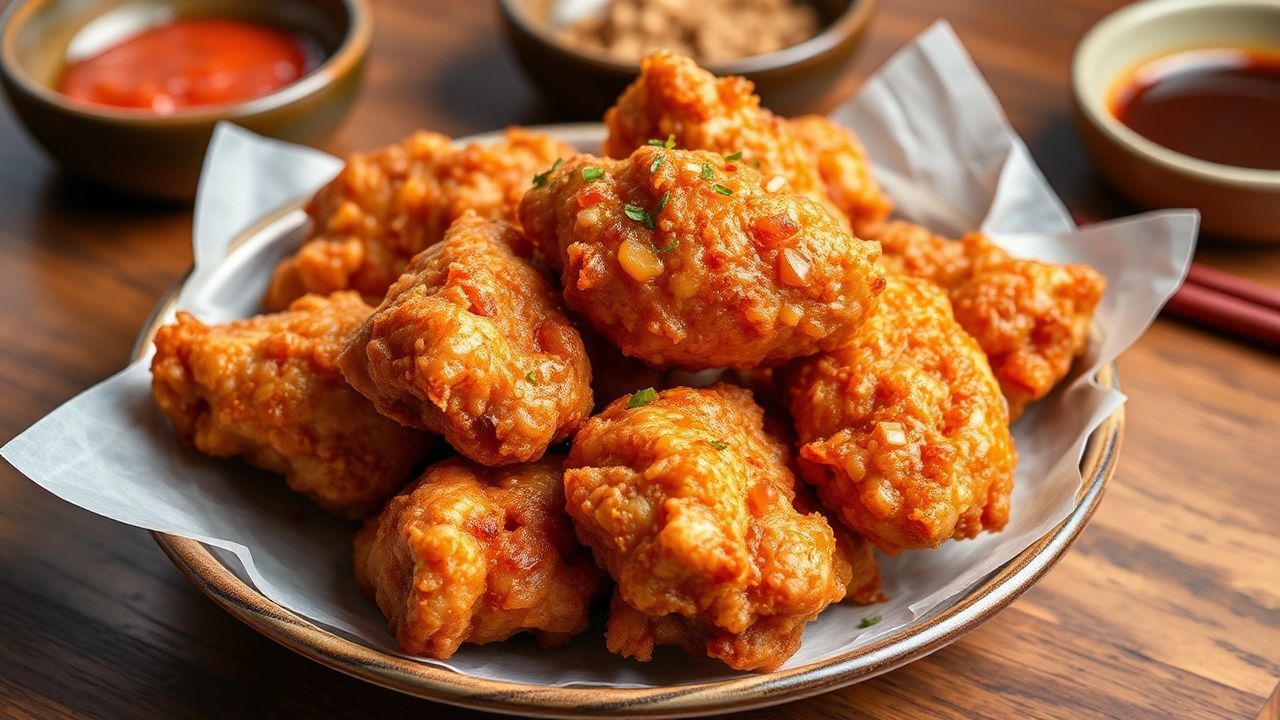
In the world of global comfort food, sweet and spicy Korean fried chicken stands out for one reason: the crunch. A thin, crisp coating turns shatteringly golden, then a glossy glaze seals in sweet heat without making the bite heavy. Double-frying creates that signature texture, so every piece stays crisp long after it lands on your plate.
- Prep and Cook Time
- Yield
- Difficulty Level
- The Art of Achieving the Perfect Crispy texture
- Balancing Bold Flavors Sweetness Meets Spice
- Essential Ingredients for Authentic Korean Fried Chicken
- Step-by-Step Instructions
- Chef’s Notes & Tips for Success
- Pairing Suggestions to Elevate Your Sweet and Spicy Korean Fried Chicken
- To Conclude
- FAQ
- What makes sweet and spicy Korean fried chicken different from other fried chicken?
- How do I keep the chicken crisp after frying?
- Can I adjust the spice level without changing the recipe too much?
- What oil temperature should I use for the double-fry method?
- Can I make a gluten-free version of sweet and spicy Korean fried chicken?
- Double-fry method: first fry cooks, second fry crisps.
- Gochujang glaze: balances chili heat with honey-like sweetness.
- Light batter: rice flour + starch helps achieve crackly crunch.
- Sauce timing: toss right after the second fry for best cling.
This style of fried chicken grew alongside Korea’s street-food culture and became widely loved through late-night dining and casual gatherings. If you want the closest home version, focus less on thick batter and more on moisture control, oil temperature, and glaze technique. For background on fermentation-based flavors, see gochujang, the chili paste at the heart of many sweet-spicy sauces.
Prep and Cook Time
Plan for about 1 hour total, with extra time if you choose to marinate. The process stays simple: prep the chicken, coat, fry twice, then coat with sauce.
Here’s a practical timing breakdown you can follow on a weeknight. You can also prep batter while the oil heats to save minutes.
- Preparation: 20 minutes
- Marinating: 30 minutes (optional)
- Cooking: 15 minutes
- Total Time: Approximately 1 hour
Yield
This recipe makes enough for 4 hungry guests. You’ll get about 12 pieces depending on wing size and drumette thickness.
If you plan to serve as a full meal, consider extra sauce. Sweet and spicy Korean fried chicken works best when the glaze coats every surface.
Difficulty Level
This recipe sits at Medium. You do need steady frying temperatures and a clean workflow.
If you already fry cutlets, you can handle this. Keep your station organized: rack or paper towels ready, thermometer nearby, and sauce ingredients measured before oil heats.
The Art of Achieving the Perfect Crispy texture
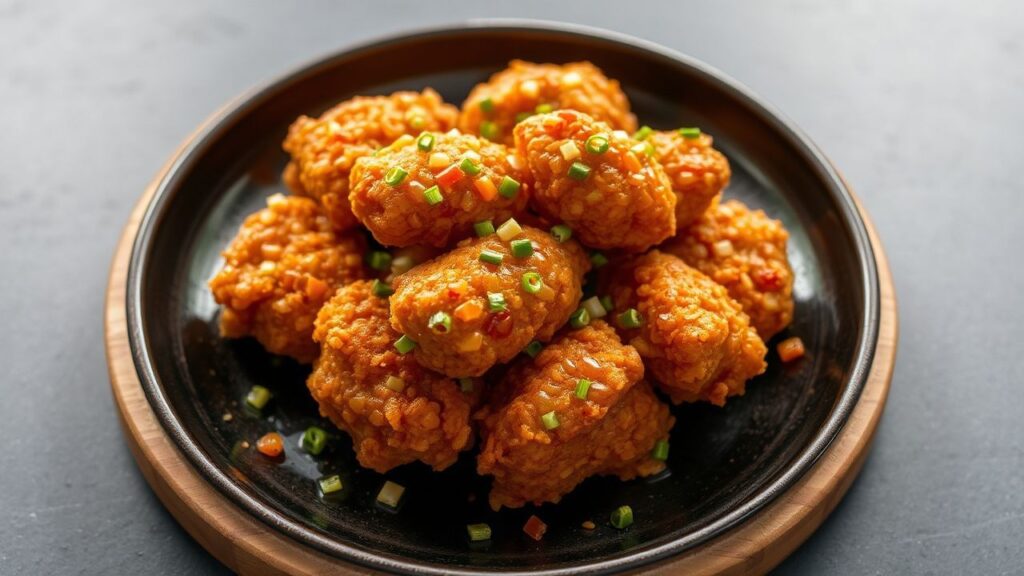
For sweet and spicy Korean fried chicken, crispness comes from structure, not heaviness. A two-step frying process drives out surface moisture and then re-crisps the coating after it sets.
Use a mix like rice flour and cornstarch. The rice flour helps form a delicate shell, while cornstarch boosts crispness through starch gelatinization as heat hits the coating.
Heat oil to 350°F (175°C) for the first fry. Fry long enough to cook the chicken through, then drain on a rack so steam can escape.
After a short rest, raise oil to 375°F (190°C) for the second fry. This second pass strengthens the crisp exterior and helps the glaze cling without sliding off.
Balancing Bold Flavors Sweetness Meets Spice
The sweet-spicy balance works because the sauce follows a clear logic: chili paste supplies heat and umami, while sweet elements round out the sharp edges. Then aromatics like garlic and ginger deepen the flavor.
To ground the sauce in known food science, remember that browning reactions occur during heating and help create deeper savory notes when sugars and amino compounds meet heat. That’s why simmering the glaze briefly can taste richer even if the sauce stays simple.
Start with gochujang, then add honey or brown sugar for sweetness. Add soy sauce for salt and umami, plus garlic, ginger, sesame oil, and a touch of rice vinegar for lift.
Taste as you go. If you want more heat, increase gochujang slightly. If you want a gentler sweet heat, add a little more honey or reduce chili paste by a teaspoon.
Essential Ingredients for Authentic Korean Fried Chicken
Use simple, measurable ingredients so you can repeat results. For best crunch, keep the coating dry and evenly mixed.
Also note that wing pieces vary in fat and thickness. That’s why the first fry should focus on doneness, while the second fry focuses on crisp texture.
- 1 lb chicken wings or drumettes, patted dry
- 1 cup all-purpose flour, sifted
- ½ cup rice flour
- ¼ cup cornstarch
- 1 tsp baking powder
- 2 large eggs
- ½ cup cold water
- Salt and freshly cracked black pepper, to taste
- Vegetable oil for frying
- For the sauce:
- 3 tbsp gochujang (Korean chili paste)
- 2 tbsp soy sauce
- 2 tbsp honey or brown sugar
- 1 tbsp sesame oil
- 3 cloves garlic, minced
- 1 tsp grated fresh ginger
- 1 tbsp rice vinegar
- 1 tsp toasted sesame seeds, for garnish
- 2 scallions, thinly sliced for garnish
Step-by-Step Instructions
Follow these steps in order for consistent crispness. Keep oil temperature steady and don’t crowd the pan.
Work with a timer. Fried chicken moves fast once the second fry starts.
- Marinate the chicken: Season the wings with salt and pepper. For deeper flavor, marinate in the refrigerator for about 30 minutes.
- Prepare the batter: Mix all-purpose flour, rice flour, cornstarch, and baking powder. Whisk eggs with cold water, then combine to form a smooth batter.
- Heat the oil: Pour oil into a deep pan (at least 2 inches deep). Heat to 350°F (175°C). Use a thermometer so you don’t guess.
- First fry: Dip each piece into batter, let excess drip, then lower into oil. Fry 6–7 minutes until cooked through. Drain on a wire rack.
- Rest: Let chicken rest for 10 minutes. The coating sets and surface moisture escapes.
- Second fry: Raise oil to 375°F (190°C). Fry again for 2–3 minutes until deep golden and intensely crisp. Drain well.
- Prepare the sauce: Simmer gochujang, soy sauce, honey, sesame oil, garlic, ginger, and rice vinegar for 3–4 minutes until slightly thickened.
- Coat and serve: Toss hot chicken in warm sauce until fully coated. Garnish with sesame seeds and scallions right away.
Chef’s Notes & Tips for Success
Small adjustments can protect crispness even when you cook for guests. Use these checks to troubleshoot texture.
Also remember that wings vary. If your pieces are larger, extend the first fry by 1–2 minutes, then rely on the second fry for crisp color.
- Double frying delivers the iconic crunch. The rest between fries matters.
- Rice flour supports that delicate crackle. Don’t swap entirely with flour.
- Keep oil temperature stable with a thermometer. Temperature swings cause soggy crust or burnt edges.
- Gluten-free option: replace all-purpose flour with a gluten-free flour blend that binds well.
- Spice lovers: increase gochujang slightly for a stronger chili profile.
- Make-ahead strategy: fry twice, hold on a rack, and reheat in a hot oven for crisp refresh. Toss with warmed sauce at serving time.
Pairing Suggestions to Elevate Your Sweet and Spicy Korean Fried Chicken
Pairing matters because sweet and spicy sauces hit multiple taste channels at once. Choose sides that cut richness, add crunch, or bring tang.
A simple cucumber salad with vinegar dressing offers crisp relief. Pickled radish adds tart brightness that clears the palate after each glazed bite.
For a classic Korean-style balance, add kimchi. It brings acidity and probiotic culture notes many people seek with fermented foods. Serve it alongside rice to soak up extra sauce.
For drinks, choose something cold and lightly carbonated. That carbonation helps reset taste buds after chili heat.
| Nutritional Info (per serving) | Calories | Protein | Carbs | Fat |
|---|---|---|---|---|
| Chicken Wings with Sauce | 420 kcal | 35 g | 18 g | 22 g |
To Conclude
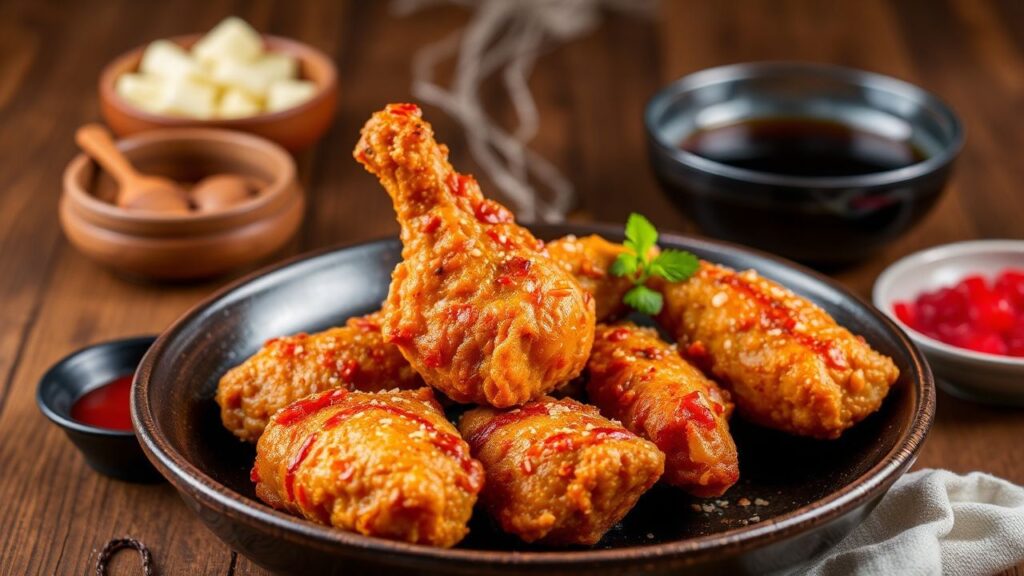
When you build sweet and spicy Korean fried chicken with a double-fry plan, the texture stays sharp instead of turning greasy. When you simmer the glaze and toss at the right moment, the sauce coats without soaking in.
Sweet comes first, spice follows, and umami lingers through the crackly shell. Make the recipe once, then adjust sweetness and heat using gochujang and honey until it matches your taste.
For more on how frying works at the ingredient level, review frying and the role of oil temperature in cooking outcomes. For the basics of starch behavior during cooking, see starch. Those concepts explain why your coating crispness changes with heat control.
Ready to serve? Plate immediately, garnish fresh, and let guests enjoy the crunch while it’s at its peak.
FAQ
What makes sweet and spicy Korean fried chicken different from other fried chicken?
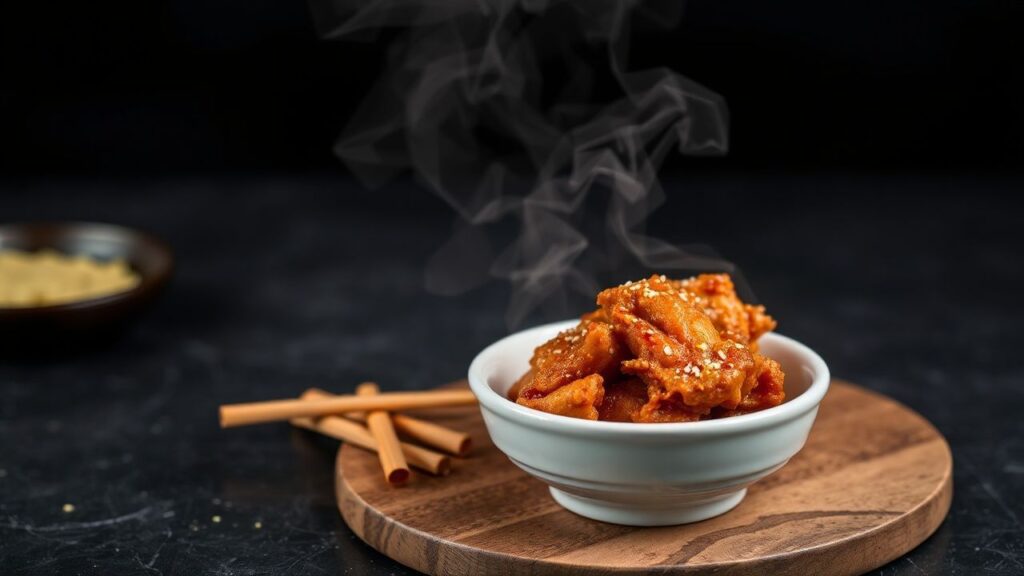
Korean-style fried chicken typically uses a thinner coating and focuses on crispness from a double-fry process. The final step is tossing in a glaze that balances sweetness, chili heat, and savory umami.
That combination makes the crust feel lighter while the sauce adds flavor without turning the exterior soft.
How do I keep the chicken crisp after frying?
Drain on a wire rack, not paper towels, to prevent steam trapping. Then rest briefly between the first and second fry.
Finally, toss with sauce right before serving. Reheat in a hot oven if you must hold it, then sauce at the end.
Can I adjust the spice level without changing the recipe too much?
Yes. Increase gochujang for more chili character, or add more honey/brown sugar to soften heat. You can also keep soy sauce stable for consistent salt and umami.
Make one small batch of sauce first, then taste and refine for the next round.
What oil temperature should I use for the double-fry method?
Use 350°F (175°C) for the first fry to cook through. Then raise to 375°F (190°C) for the second fry to deepen crispness and color.
Keep the thermometer handy. Even short drops in temperature can reduce crunch.
Can I make a gluten-free version of sweet and spicy Korean fried chicken?
You can. Swap the all-purpose flour with a gluten-free flour blend that binds well, and keep the rice flour and cornstarch.
For best results, test coating consistency on a single piece first, then fry the full batch once the texture matches your expectation.
See also: sweet and spicy