

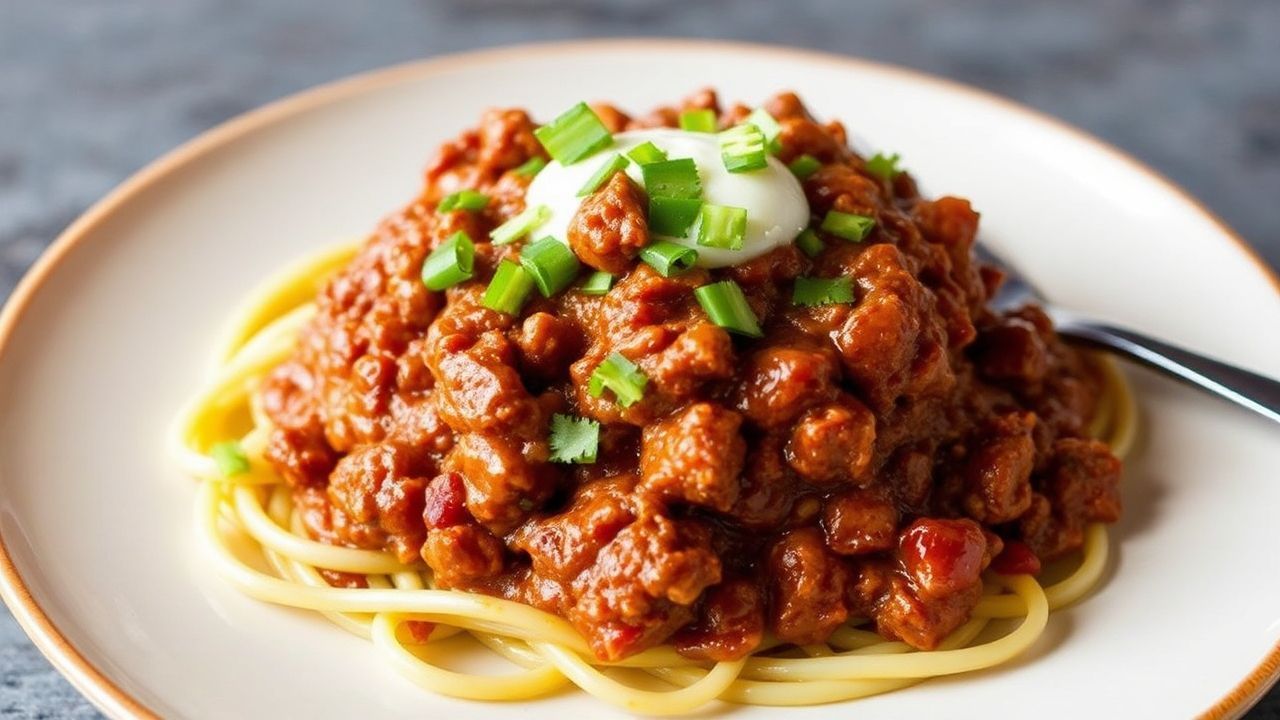
In the Midwest, Cincinnati chili brings a distinct taste that feels both familiar and new. It combines finely ground meat, warm spices, and a smooth sauce served over spaghetti. Then toppings turn it into a build-your-way meal that local diners know by heart.
Unlike thick, bean-heavy chili, Cincinnati chili leans on spice warmth and sweet-savory balance. You’ll find it at chili parlors across the city, where orders often move by “ways” rather than by heat level. This recipe-style guide walks you through the flavor logic, the key ingredients, and the steps that create restaurant-style results.
At a Glance: You’ll get an easy method for Cincinnati chili over spaghetti, plus clear serving rules.
- Flavor base: browned beef + tomato sauce + warm spices.
- Signature balance: cinnamon, cloves, and cocoa add depth (not just heat).
- Best texture: simmer long enough to thicken and harmonize.
- Classic serving: build 3-way, 4-way, or 5-way on spaghetti.
The Rich Origins Behind Cincinnati Chili’s Unique Flavor
Cincinnati chili traces its roots to the early 20th century, shaped by immigrant cooks and local tastes. Many sources link the dish’s spice profile to Greek and Macedonian influence, which fits how chili parlors evolved in that era. Today, the result feels unmistakably Midwestern while still carrying Mediterranean-style spice logic.
Seasoning choices matter because Cincinnati chili aims for smooth, evenly seasoned sauce rather than chunky chili. Warm spices like cinnamon and clove pair with cocoa for a layered sweetness and a darker, savory tone. If you want cultural context, review Greek cuisine and Macedonian cuisine for how spice blends travel across regions.
That origin story also explains the “ways” culture. Instead of swapping beans or adding heat, diners add components in set combinations. The dish stays consistent, while toppings control texture and richness.
What Makes Cincinnati Chili Different From Traditional Chili?
Cincinnati chili differs in texture and seasoning style. Traditional regional chili often uses chili peppers, beans, and a thicker, chunk-forward build. Cincinnati chili usually uses finely ground meat and a smoother tomato-based sauce.
Its spice mix creates warmth and depth. Cinnamon, allspice, and cloves bring an aromatic profile that reads as sweet-savory rather than spicy-hot. A small amount of cocoa also deepens the flavor without turning it into a dessert. For background on how spices shift flavor across cuisines, see allspice and cinnamon.
Finally, the serving method changes the experience. Spaghetti acts as a neutral base that carries sauce and toppings evenly in each bite.
Prep and Cook Time
Plan for a relaxed cook with one main work phase and a long simmer. You’ll get the best flavor when the sauce thickens and the spices fully integrate.
- Readiness: 15 minutes
- Cooking: 1 hour 10 minutes
- Total Time: 1 hour 25 minutes
Yield
This recipe makes enough for about 6 servings. It works well for weeknight dinners and for making ahead lunches.
If you scale up, keep the spice ratios consistent and adjust only the simmer time as needed. A thicker sauce tastes best over spaghetti because it clings to the noodles.

Difficulty Level
Medium difficulty. You’ll manage spices, then simmer for depth. Most of the work is hands-off once the sauce starts cooking.
Home cooks succeed here when they brown the beef well and give the sauce time to reduce. If you rush, you’ll taste raw spice instead of blended spice.
Ingredients
Gather your ingredients before you start. Cincinnati chili moves fast once the pot is hot, and the spices toast better when you add them in a planned order.
- 2 lbs lean ground beef (85% lean)
- 1 large yellow onion, finely chopped
- 4 cloves garlic, minced
- 1 (15 oz) can tomato sauce
- 2 cups beef broth (low sodium preferred)
- 2 tbsp chili powder
- 1 tbsp ground cinnamon
- 1 tsp ground allspice
- 1 tsp ground cloves
- 1 tsp unsweetened cocoa powder
- 1/2 tsp ground cumin
- 1/2 tsp cayenne pepper (optional, for mild heat)
- 1 tbsp Worcestershire sauce
- 1 tbsp apple cider vinegar
- 1 tbsp brown sugar
- Salt and black pepper, to taste
- 1 lb spaghetti, cooked al dente
Instructions
Follow the steps in order to build flavor layers. You’ll brown beef for savory depth, toast spices for aroma, then simmer until the sauce thickens.
- Brown the beef: In a large heavy-bottomed pot, crumble the ground beef over medium-high heat. Cook 7–8 minutes until fully browned, breaking it apart as it cooks. Drain excess fat if needed.
- Sauté aromatics: Add onion and garlic. Cook about 4–5 minutes, stirring often, until translucent and fragrant.
- Toast and bloom spices: Stir in chili powder, cinnamon, allspice, cloves, cocoa powder, cumin, and cayenne if using. Toast 1–2 minutes so the spices smell warmer and deeper.
- Build the chili base: Pour in tomato sauce, beef broth, Worcestershire sauce, apple cider vinegar, and brown sugar. Stir until the sauce looks evenly mixed.
- Simmer slowly: Reduce heat to low. Cover partially and simmer about 60 minutes, stirring every 15 minutes. The sauce should thicken and the flavors should taste integrated.
- Season to taste: Add salt and black pepper near the end. If the sauce tastes flat, adjust with a tiny bit more vinegar or sugar.
- Prepare spaghetti: Cook spaghetti in salted boiling water until al dente. Drain and keep warm.
- Assembly: Serve spaghetti on plates and ladle Cincinnati chili over the top. Keep a little extra sauce for second helpings.
For spice science, it helps to understand how heat and fat unlock aroma. Spices behave differently when toasted versus when simmered, which is why the bloom step matters. See spice for general background on spice use across cuisines.
After you simmer, taste the sauce by itself before you assemble. You want it strong enough to stand up to pasta and cheese, but not so sweet that it tastes like dessert.
Tips for Success
Small adjustments keep the dish faithful to the classic profile. Use these practical checks as you cook Cincinnati chili over spaghetti.
- Lean meat matters: Lean ground beef reduces greasiness and helps the tomato sauce feel smooth.
- Spice balance: Cincinnati chili runs on sweet-spice harmony. Start with the full spices listed, then fine-tune only at the end.
- Slow-simmer patience: A full simmer pulls flavors together and helps the sauce cling to spaghetti.
- Make ahead: Cool the chili, then store in the refrigerator up to 3 days or freeze up to 3 months.
- Vegetarian option: Use a plant-based ground or textured vegetable protein and swap in vegetable broth, while keeping the same spice blend.
Serving Suggestions: 3-Way to 5-Way
Cincinnati chili shines when you treat it like a layering system. Instead of “one topping fits all,” each way adds a new texture and flavor note.
Start with a mound of spaghetti, then ladle chili generously. Add sharp shredded cheddar so it melts slightly and cuts through the sweet-savory sauce. Next add diced onions for crunch and/or kidney beans for creaminess and body.
Here’s the classic ordering idea many diners follow:
- 3-way: chili + spaghetti + shredded cheddar
- 4-way: add onions or kidney beans
- 5-way: add both onions and kidney beans
Many people also serve oyster crackers on the side for crunch. If you want a root beer or iced tea pairing, focus on drinks that refresh between bites.
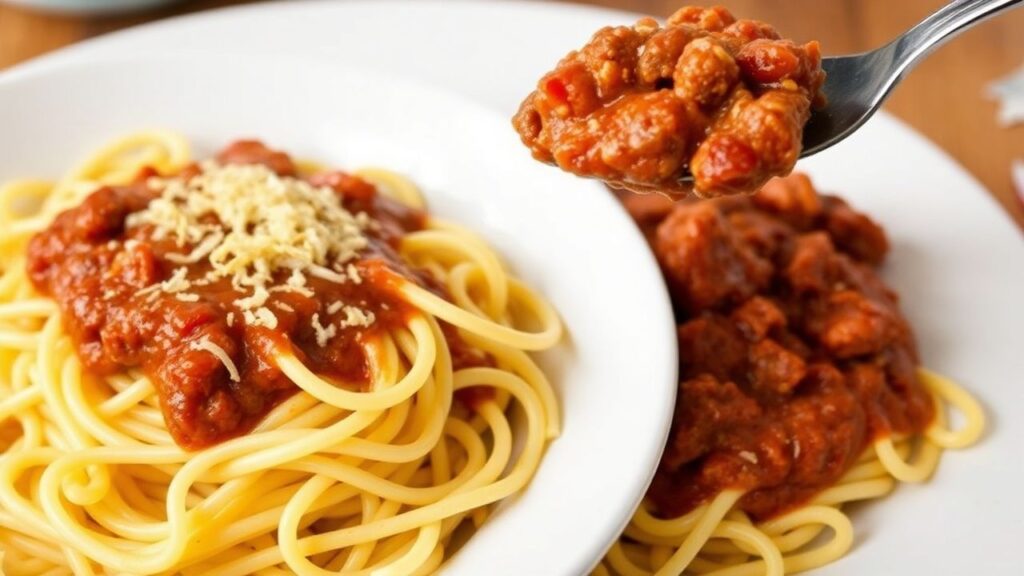
Cincinnati Chili Over Spaghetti Nutritional Data
Nutritional needs vary by portion size and topping amounts. The table below gives a useful estimate for one serving of Cincinnati chili over spaghetti with typical quantities.
| Nutrient | Per serving |
|---|---|
| Calories | 420 kcal |
| Protein | 28 g |
| Carbohydrates | 36 g |
| Fat | 14 g |
If you reduce cheese or use less pasta, calories drop quickly. For a healthier plate, pair your spaghetti with a side salad while keeping the chili spice profile intact.
FAQ
Below are quick answers to common questions about Cincinnati chili over spaghetti. These notes help you troubleshoot flavor, heat, and serving style.
What exactly is Cincinnati chili over spaghetti?
It’s a smooth, tomato-based meat sauce flavored with warm spices, served over al dente spaghetti. Cheddar cheese and toppings like onions or beans create the classic “ways.”
Is Cincinnati chili spicy-hot like other chili?
Usually it’s not. The dish uses spices for warmth and aroma, not intense chili heat. Optional cayenne can add mild heat without changing the core flavor.
Why does Cincinnati chili include cocoa powder?
Cocoa adds a darker, slightly sweet depth that rounds out the tomato and spices. It also helps the sauce taste richer even when you keep the base simple.
Can I make Cincinnati chili ahead of time?
Yes. The flavor often improves after a day because the spices blend and the sauce thickens. Reheat gently, then loosen with a splash of broth if needed.
What are the best toppings for a classic experience?
Sharp shredded cheddar works first, then diced onions and/or kidney beans. Many diners follow 3-way, 4-way, or 5-way layering to keep the experience consistent.
For broader food context, you can explore spaghetti and cheese to understand why cheese melt and pasta texture matter in this dish.
See also: Cincinnati chili