
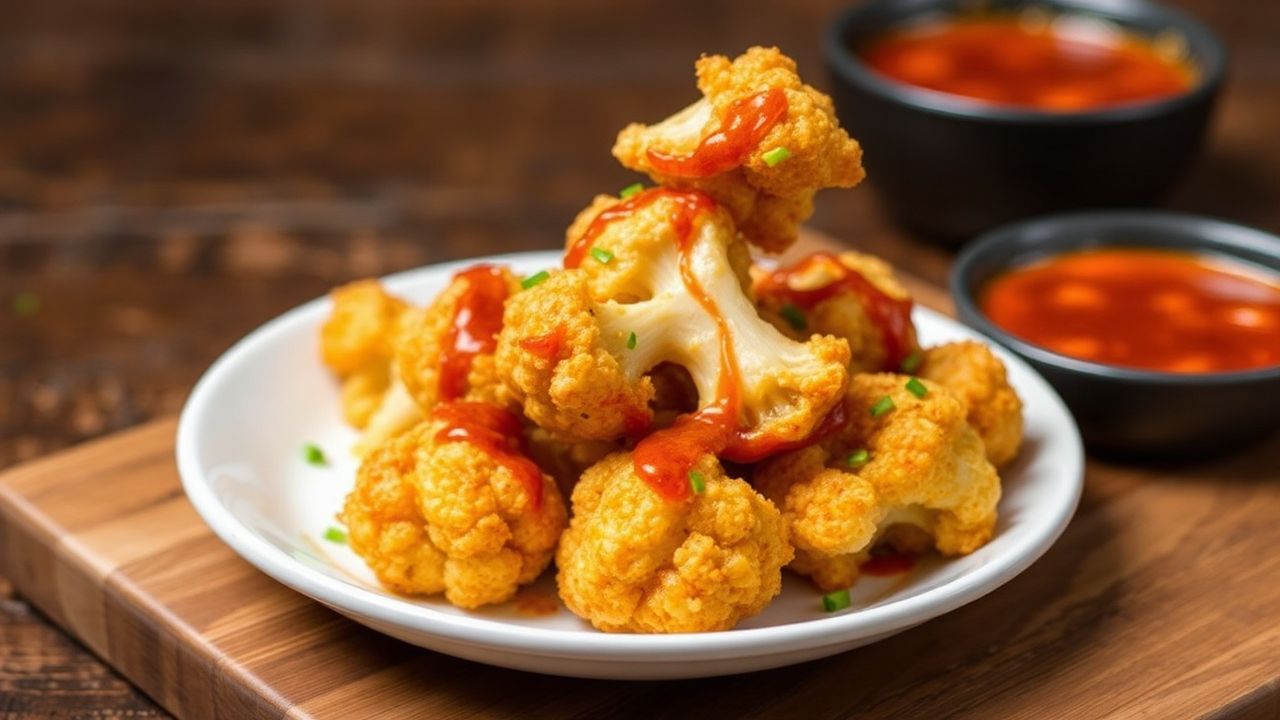
Imagine biting into a golden, crunchy morsel that balances bold heat with a hint of sweetness. This Spicy Korean Fried Cauliflower recipe turns cauliflower into a snack that tastes like Korean street food, built for a home kitchen.
- Why Spicy Korean Fried Cauliflower Is the Best Plant-Based Crunch
- Ingredients for the Crunchy Gochujang Glaze Cauliflower
- Prep and Cook Time
- Yield and Difficulty
- Step-by-Step Instructions for Spicy Korean Fried Cauliflower
- Pro Tips to Nail Crunch Without Sogginess
- Tips for Success and Smart Substitutions
- Serving Suggestions That Match the Heat
- Nutrition Snapshot (Per Serving)
- FAQ
- What makes Spicy Korean Fried Cauliflower different from regular fried cauliflower?
- How do I keep the cauliflower crunchy after frying?
- Can I make Spicy Korean Fried Cauliflower gluten-free?
- How spicy is the gochujang glaze?
- What kitchen tools make this easier?
- Recipe Card: Ingredients List
- The Conclusion
At a Glance
- Double-frying builds a crisp shell that resists sogginess.
- Gochujang glaze brings sweet, spicy, and tangy depth.
- Gluten-free swaps keep the same crunch goal.
- Prep-smart timing keeps frying smooth.
Beyond flavor, this method helps the coating stay crisp longer than many sauce-heavy appetizers. Cauliflower stays tender inside, while a light batter and hot oil form a crunchy shell. If you want fermented, chili-forward Korean flavor, the gochujang glaze delivers.
For background on the main Korean ingredient, see gochujang. Understanding what it is helps you control the final heat and sweetness.
Why Spicy Korean Fried Cauliflower Is the Best Plant-Based Crunch
Spicy Korean Fried Cauliflower earns its place as comfort food because it delivers two textures people crave: crunch and tenderness. Cauliflower holds moisture in the center, so it stays soft while the outside crisps fast.
The glaze clings well because it thickens as it simmers and coats evenly. That matters, since thin sauce can soak into batter and soften it. If you love the sticky coating style, you will recognize the logic behind Korean-inspired fried snacks.
This recipe also follows a familiar technique: controlled frying plus a bold sauce. To understand why coatings behave differently under heat, review frying. Stable oil heat sets the crust and improves texture.
Another reason it works is flavor chemistry. Gochujang combines savory fermented depth with chili heat and gentle sweetness. For more context on fermentation in foods, visit food fermentation.
Ingredients for the Crunchy Gochujang Glaze Cauliflower
Start with one medium head of cauliflower and cut it into bite-sized florets. Uniform pieces fry at similar rates, which improves crispness and reduces undercooked spots. After washing, pat the florets dry so batter sticks instead of sliding off.
For the batter, use flour plus cornstarch, then add baking powder and seasonings. The starch supports a light, shattery crust. Baking powder adds lift so the coating crisps quickly.
Oil matters for frying. Use a neutral oil with a high smoke point so frying stays stable at 350°F to 375°F. For guidance on smoke behavior, see smoke point.
For the glaze, combine gochujang with maple syrup, soy sauce, rice vinegar, sesame oil, garlic, and ginger. Simmering thickens the sauce through evaporation, so it clings instead of pooling. If you want more on soy sauce types, use soy sauce.
Gluten-Free Option That Still Crisps
If you need gluten-free, swap the all-purpose flour with a gluten-free flour blend and keep cornstarch. For an even lighter crunch, you can use rice flour plus potato starch. Adjust batter thickness until it coats smoothly and clings to florets.
Also check product labels on soy sauce and gochujang. Some brands contain wheat-based ingredients. This small check keeps flavor goals intact while meeting dietary needs.
Prep and Cook Time
This Spicy Korean Fried Cauliflower recipe fits a typical evening schedule. Prep takes about 20 minutes, then you fry in two rounds. While the second fry runs, you simmer the glaze.
Plan about 45 minutes total from cutting to plating. If you serve a crowd, set up a wire rack and keep a warm oven ready for drained cauliflower.
- Prep Time: 20 minutes
- Cook Time: 25 minutes
- Total Time: 45 minutes
Yield and Difficulty
This batch makes about 4 servings as an appetizer or side dish. The portion size helps you maintain even frying and manageable glaze tossing. If you double the recipe, fry in batches so oil temperature stays stable.
The cook time includes double-frying, so you need basic multitasking. Still, the steps stay straightforward, and you only need a thermometer for best results.
Difficulty: Medium — beginner-friendly with clear timing and temperature targets.
Step-by-Step Instructions for Spicy Korean Fried Cauliflower
Follow these steps in order so you get crunch first, then sauce coating. The double-fry drives most of the crispness. Aim for this flow: first fry cooks, second fry crisps.
Before you start, place a wire rack over paper towels. This setup drains oil while airflow prevents sogginess. Keep a second tray ready for the batches that you will glaze right before serving.
- Prepare the batter: In a large bowl, whisk flour, cornstarch, baking powder, garlic powder, onion powder, salt, and pepper. Add plant-based milk gradually and whisk until smooth and thick enough to coat.
- Heat the oil: Heat neutral oil in a heavy pot or deep fryer to 350°F (175°C). Use a thermometer so the oil stays steady during frying.
- Coat the cauliflower: Dip florets into batter and let excess drip off. Too-thick coating can form uneven bubbles; too-thin coating can lead to weak crispness.
- First fry: Fry in batches until pale golden, about 4 minutes. Transfer to the wire rack to drain.
- Second fry: Increase oil to 375°F (190°C). Fry again for 2–3 minutes until deeply golden and uniformly crisp. Drain well.
- Make the glaze: While cauliflower fries, simmer gochujang, maple syrup, soy sauce, rice vinegar, sesame oil, garlic, and ginger for 3–5 minutes. Stir until slightly thicker.
- Toss and serve: Add cauliflower to a bowl and pour warm glaze over. Toss gently to coat without breaking the crust, then serve immediately.
- Finish with garnish: Top with toasted sesame seeds, chopped scallions, and cilantro for fresh aroma.
Pro Tips to Nail Crunch Without Sogginess
[TIP]Expert Insight: Keep the batter thick and work in small batches. If the batter looks runny, whisk in 1–2 tablespoons cornstarch and reassess thickness before the next batch. Thick batter forms a stronger crust during the second fry.
Also control the rest time between fries. After the first fry, steam escapes and the batter sets. That short window improves crispness when you move to the higher temperature.
[WARNING]Pro-Caution: Don’t overcrowd the pot. Overcrowding drops oil temperature fast and can lead to pale, greasy coating. Fry in batches so the oil returns quickly to 350°F and 375°F.
Glaze timing matters too. Toss right after the second fry when the cauliflower is crisp and the glaze is warm. If you wait too long, moisture starts to soften the crust.
Oil Temperature and Texture Control
Oil temperature drives texture because it controls how fast batter sets and releases moisture. If the oil runs too cool, cauliflower absorbs more oil and turns heavy. If the oil runs too hot, the outside can brown before the center crisp level catches up.
For quick reference on frying behavior and heat transfer, review frying. Stable heat prevents uneven color and greasy results.
Tips for Success and Smart Substitutions
Double-frying makes the crunch reliable, so don’t skip it. The first fry cooks through and sets the batter structure. The second fry drives off remaining moisture and locks in a crisp shell.
Make the batter slightly thicker than pancake batter. You want a coating that clings and forms a textured crust. If batter slides off florets, add more cornstarch in small amounts.
- Keep cooked cauliflower on a wire rack to maintain airflow.
- Use a thermometer to prevent greasy or burnt results.
- Reheat in an oven or air fryer to restore some crispness.
- Reheat glaze gently so it stays glossy and doesn’t burn.
Serving Suggestions That Match the Heat
Spicy Korean Fried Cauliflower pairs best with sides that cool the palate and add crunch or tang. Serve it with a cucumber salad dressed with vinegar and a touch of sugar. The acidity cuts through fried richness and keeps flavors bright.
For an easy contrast, add a simple slaw from shredded cabbage and carrots. Then use a sesame-lime or rice-vinegar dressing so the meal stays light. This balance keeps dinner from becoming one-note spicy.
For dipping, offer a creamy vegan ranch or a soy-ginger mayo. Cooling dips let guests control heat level across bites. Add extra sesame seeds for a toasted aroma and a little texture.
If you want a heartier plate, place cauliflower over steamed rice and drizzle extra glaze. Finish with chopped scallions and herbs for brightness. For rice basics, see rice.
Nutrition Snapshot (Per Serving)
Calories vary based on oil absorption and portion size, so use this as a planning estimate. This dish includes cauliflower, batter, frying oil, and a sweet-spicy glaze. Adjust ingredients to match your dietary goals.
Use these numbers as a baseline for serving planning. If you want a lighter approach, consider shallow frying with a thick batter, then finishing in an oven for added crispness.
| Nutrient | Per Serving |
|---|---|
| Calories | 280 kcal |
| Protein | 6 g |
| Carbohydrates | 35 g |
| Fat | 12 g |
FAQ
What makes Spicy Korean Fried Cauliflower different from regular fried cauliflower?
Regular fried cauliflower often uses salt or a simple coating sauce. This version uses a gochujang glaze with sweet, spicy, and tangy balance. The double-fry also builds a crunch level that holds up during coating.
Because the glaze thickens during simmering, it coats without instantly soaking in. That gives you a sticky layer instead of a soggy shell.
How do I keep the cauliflower crunchy after frying?
Drain well on a wire rack so steam escapes. Hold in a low oven around 200°F/90°C only if you must, and avoid tight covering. Crisp breading needs airflow to stay dry.
Then toss with glaze right before serving. If you sauce too early, moisture from the glaze reduces crunch.
Can I make Spicy Korean Fried Cauliflower gluten-free?
Yes. Use a gluten-free flour blend or rice flour plus potato starch for the batter, and keep cornstarch. Check both gochujang and soy sauce labels for wheat-containing ingredients.
This keeps texture and flavor goals aligned while keeping the frying method the same.
How spicy is the gochujang glaze?
Gochujang usually brings moderate heat plus a deeper fermented flavor. The final spice level depends on the brand and how much you use. Maple syrup and vinegar balance chili intensity.
To reduce heat, use a smaller portion of gochujang and increase maple syrup slightly.
What kitchen tools make this easier?
A heavy-bottom pot or deep fryer helps maintain stable heat. A thermometer matters most, because oil temperature controls batter crispness. A wire rack prevents soggy results while draining.
Use tongs for flipping and a large bowl for gentle coating during glazing.
Recipe Card: Ingredients List
Use this ingredient list to prepare both the cauliflower batter and the spicy gochujang glaze. Measure everything before you start frying so the timing stays tight. Organized prep improves results because frying happens fast.
These quantities target about 4 servings. If you scale up, cook in batches and keep oil temperature steady between rounds.
- 1 medium head cauliflower, cut into bite-sized florets
- 1 cup all-purpose flour, sifted (swap with gluten-free flour if needed)
- 1/2 cup corn starch
- 1 teaspoon baking powder
- 1 cup unsweetened plant-based milk (almond or oat work well)
- 1 teaspoon garlic powder
- 1 teaspoon onion powder
- Salt and black pepper, to taste
- Vegetable oil, for deep frying (about 4 cups)
- For the glaze:
- 3 tablespoons gochujang (Korean chili paste)
- 2 tablespoons maple syrup
- 1 tablespoon soy sauce or tamari
- 1 tablespoon rice vinegar
- 1 teaspoon toasted sesame oil
- 1 clove garlic, minced
- 1 teaspoon grated fresh ginger
- Garnishes: toasted sesame seeds, chopped scallions, fresh cilantro
The Conclusion
Spicy Korean Fried Cauliflower with Gochujang Glaze delivers the combo people want: crispy crunch, tender florets, and a bold sweet-spicy coating. The double-fry keeps the texture strong, and the glaze brings fermented Korean flavor to every bite.
Make it for a snack board, serve it as an appetizer, or pile it onto rice for a quick meal. Once you taste the crisp shell and sticky gochujang coating together, you’ll want to repeat the process.
See also: Spicy cauliflower