

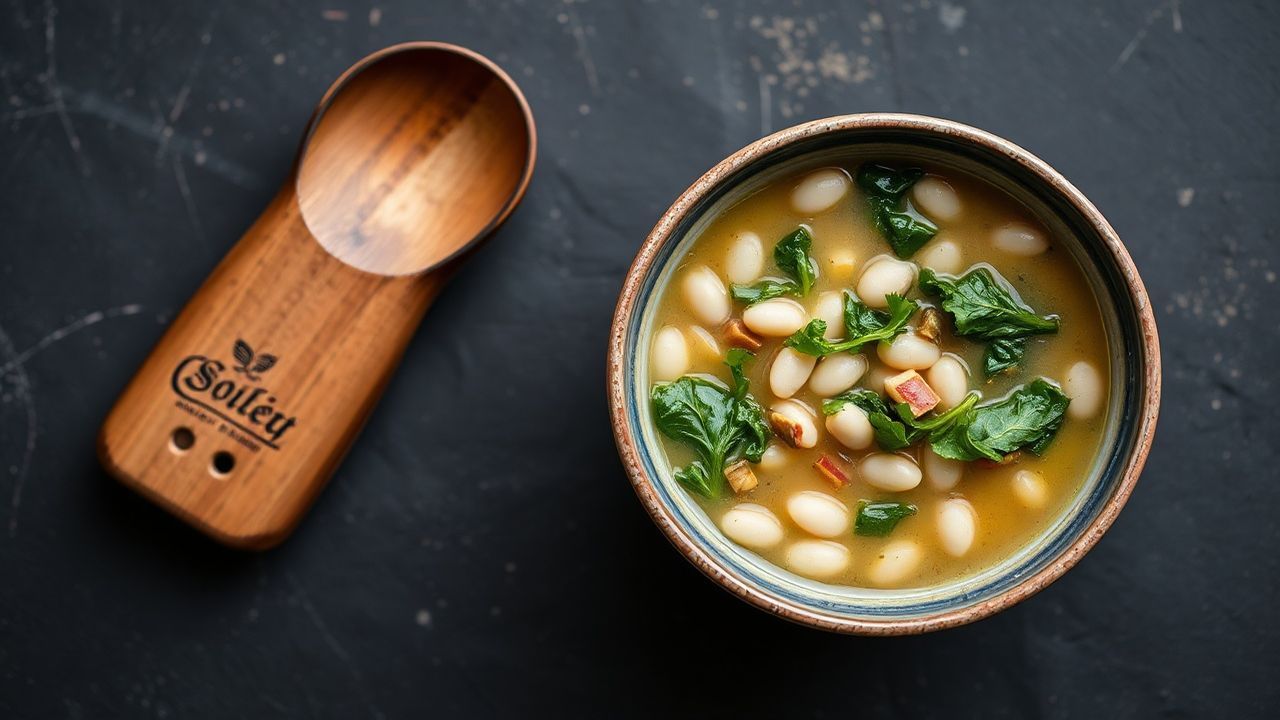
There’s something profoundly satisfying about a bowl of soup that warms both body and soul. This Hearty White Bean and Kale Soup brings tender white beans and vibrant kale together for a filling, nutrient-rich meal.
- Choosing the Perfect Ingredients for Maximum Flavor and Nutrition
- Crafting the Ideal Broth to Elevate Your Soup Experience
- Tips for Preparing Kale and Beans to Retain Texture and Nutrition
- Creative Serving Suggestions to Make Your Soup Unforgettable
- Prep and Cook Time
- Yield
- Difficulty Level
- Ingredients
- Instructions
- Tips for Success
- Serving Suggestions
- FAQ
At a Glance
- High fiber + plant protein from white beans supports satiety.
- Kale adds vitamins and antioxidants with a firm, fresh bite.
- Layered aromatics build deep flavor without meat.
- Easy meal prep—the flavors improve after a rest.
In this recipe, you’ll learn how to pick great ingredients, build a broth with real depth, and cook kale so it stays bright. Whether you cook often or want a reliable weeknight bowl, you can make this soup with confidence.
Perfect timing matters most. Add kale at the right moment, season with care, and you’ll get creamy beans plus leafy greens that don’t turn mushy. Keep reading for a full method and practical tips.
Choosing the Perfect Ingredients for Maximum Flavor and Nutrition
Hearty White Bean and Kale Soup starts with simple choices that deliver big results. Freshness and correct textures help the soup taste balanced, not bland.
Start with cannellini beans for a creamy texture and mild flavor. If you use dried beans, soak them so they cook evenly. If you use canned beans, rinse them well to reduce excess sodium.
Next, use curly kale with firm leaves. Kale holds up well in simmering soups when you add it late. For background on kale nutrition, see kale.
Build a flavor base with onion, garlic, and carrots. Sauté them gently until the onions turn soft and sweet. This step matters because it creates a foundation for every later layer of flavor.
Use sea salt and freshly ground black pepper to finish. Then, consider small umami boosts like tomato paste or a splash of lemon at the end for brightness.
Crafting the Ideal Broth to Elevate Your Soup Experience
The broth turns simple ingredients into a truly satisfying bowl. When you build it with aromatics and simmering time, the flavors become rounded and cohesive.
Use vegetable broth as your liquid base. If you choose store-bought, pick a brand with a clean ingredient list. For basic principles behind stock and broth, refer to stock (food).
Sauté aromatics in extra virgin olive oil until translucent. Then add the broth and bring everything to a steady simmer. Simmering helps extract flavor from vegetables and spices.
For extra depth without meat, add small amounts of flavor boosters. Sun-dried tomato paste adds savory notes, and mushroom flavors can mimic umami depth. You can also add a bay leaf and fresh thyme to build a gentle herbal layer.
Seasoning Strategy for Balanced Flavor
Season early with a light hand, then adjust at the end. Beans absorb salt, so taste after the beans warm through. This prevents an over-salted soup later.
If the soup tastes flat, use acidity. A small squeeze of lemon or a teaspoon of miso (optional) can lift flavors quickly. For general context on acidity in cooking, see acidity.
Tips for Preparing Kale and Beans to Retain Texture and Nutrition
Texture is where this soup wins. Beans should stay tender and creamy, and kale should stay green and slightly firm.
For kale, wash well and remove tough stems if needed. Chop into ribbons, then add it near the end. Cook kale for about 5–7 minutes so it wilts without turning dull.
Overcooking kale steals its brightness. That’s why timing matters even more than fancy ingredients. For more on kale’s plant compounds and general nutrition, check cruciferous vegetables.
Beans require their own timing rules. If you use dried beans, soak overnight and simmer until tender but intact. If you use canned beans, rinse and warm them late so they don’t break apart.
Keep the heat steady, not aggressive. A gentle simmer supports even cooking and reduces the risk of beans splitting. Also, avoid stirring kale too much once it starts to wilt.
If you want a thicker soup, mash a small portion of beans in the pot. This thickens the broth naturally, without adding cream. It also keeps the flavor clean and bean-forward.
Creative Serving Suggestions to Make Your Soup Unforgettable
Serving shapes the final experience. A great bowl needs the right toppings and the right sides.
Ladle the soup into rustic bowls. Finish with toasted pine nuts for crunch, or add pecorino for a savory edge. If you like heat, drizzle chili-infused olive oil lightly so it flavors without overpowering.
Pair the soup with crusty sourdough bread or garlic-roasted baguette. Bread helps you scoop every last drop and boosts satisfaction. For bread basics, see bread.
Brighten the plate with lemon wedges and fresh herbs like parsley. Then invite each person to finish their own bowl. This keeps flavors flexible and makes the meal feel restaurant-style.
Nutrient-Friendly Add-Ons
For extra protein, add a spoon of nutritional yeast. It brings savory notes and a mild, nutty taste. Nutritional yeast fits many vegetarian diets and adds complexity without extra cooking steps.
If you want a lighter garnish, use chopped herbs only. You can also add a swirl of olive oil for aroma. These choices keep the soup flavorful while staying simple.
Prep and Cook Time
This recipe works well for weeknights because prep stays short. After the sauté, you mostly simmer and wait.
Readiness: 15 minutes
Cooking: 45 minutes
Total Time: ~1 hour
Yield
This soup makes enough for a family meal and leftovers. The flavors often taste even better after a short rest.
Serves 6 generous portions.
Difficulty Level
The method stays straightforward. You only need to watch timing for kale and beans.
Easy to medium—ideal for weeknight dinners or meal prep.
Ingredients
Use these ingredients to keep the flavor steady and balanced. Optional garnishes make the soup feel special without changing the base recipe.
- 1½ cups dried cannellini beans (or 2 cans white beans, rinsed and drained)
- 1 tablespoon extra virgin olive oil
- 1 medium yellow onion, finely chopped
- 3 cloves garlic, minced
- 2 medium carrots, diced
- 6 cups vegetable broth
- 1 bay leaf
- 1 sprig fresh thyme
- 6 cups kale, stems removed and chopped
- 1 teaspoon sea salt, adjust to taste
- ½ teaspoon freshly ground black pepper
- Optional garnishes: toasted pine nuts, grated pecorino cheese, lemon wedges, chili oil
Instructions
Follow these steps in order for the best texture. The main goal is to simmer flavors before adding kale.
1) Prepare the beans: If using dried beans, soak overnight, drain, and rinse. Simmer gently in water for 1 to 1½ hours until just tender. Drain and set aside.
2) Sauté aromatics: Warm olive oil in a large soup pot over medium heat. Add onions and carrots, then sauté about 7 minutes until the onion turns translucent and carrots soften.
3) Add garlic: Stir in minced garlic and cook for about 1 minute until fragrant. Avoid browning.
4) Build the broth: Add vegetable broth, then include bay leaf and thyme. Bring to a simmer and cook for 15 minutes to infuse flavor.
5) Add beans: Stir in cooked (or rinsed canned) white beans. Simmer gently for about 10 minutes so flavors blend.
6) Incorporate kale: Add chopped kale and submerge it in the broth. Cook 5–7 minutes until tender but still vibrant.
7) Season: Remove bay leaf and thyme. Taste, then adjust salt and pepper.
8) Serve immediately: Ladle into bowls and top with your chosen garnishes and fresh bread.
Tips for Success
Small adjustments can improve flavor and texture fast. Use these tips to fine-tune the soup to your preferences.
For a creamier soup: Mash a portion of beans in the pot. Stir until smooth.
Boost umami: Dissolve a teaspoon of miso paste in a little hot broth, then stir it in near the end. This adds depth without making the soup heavy.
Make-ahead: Cool completely, refrigerate in an airtight container up to 3 days, or freeze up to 3 months. If you want the freshest texture, you can undercook kale slightly and finish it when reheating.
Bean substitution: Great Northern or navy beans work if cannellini isn’t available. Cooking times may vary slightly.
Serving Suggestions
Serve this soup warm and aromatic. The toppings should add contrast in texture and flavor.
Top with toasted pine nuts or a sprinkle of pecorino for savory crunch. A bright drizzle of chili oil adds heat, while lemon wedges bring acidity that sharpens the taste.
Pair with garlic bread or warm sourdough for scooping. Finish with chopped parsley or thyme for a fresh herbal note. For general guidance on herbs and flavor use, see herbs.
Nutritional note: White beans provide plant-based protein and fiber. Kale contributes key micronutrients. For broader context on dietary fiber, see dietary fiber.
| Nutrient | Per Serving |
|---|---|
| Calories | 280 kcal |
| Protein | 15 g |
| Carbohydrates | 40 g |
| Fat | 4.5 g |
| Fiber | 12 g |
FAQ
Can I make Hearty White Bean and Kale Soup vegan?
Yes. The base recipe is plant-based when you use vegetable broth. For vegan serving, skip pecorino or choose a dairy-free topping.
If you want extra savory flavor, use miso (check that it’s vegan) or tomato paste. These options keep the soup rich.
When should I add kale to avoid mushy greens?
Add kale near the end, after the beans and broth have simmered. Cook it only 5–7 minutes to keep it bright and tender.
If you plan to freeze leftovers, consider adding kale fresh when reheating for the best texture.
Are dried beans or canned beans better for this soup?
Dried beans usually taste best and hold shape well when cooked properly. Soaking and gentle simmering help them become creamy.
Canned beans save time. Rinse them thoroughly, then add them late so they don’t overcook.
How can I thicken the broth without adding cream?
Mash a portion of the beans in the pot. The starch in beans naturally thickens the broth as you stir.
You can also simmer uncovered for a few extra minutes to reduce liquid slightly.
What can I serve with this soup?
Sourdough or crusty whole-grain bread makes an excellent side. It helps you scoop every spoonful.
You can also add a simple salad or roasted vegetables to balance the meal.
See also: white bean