
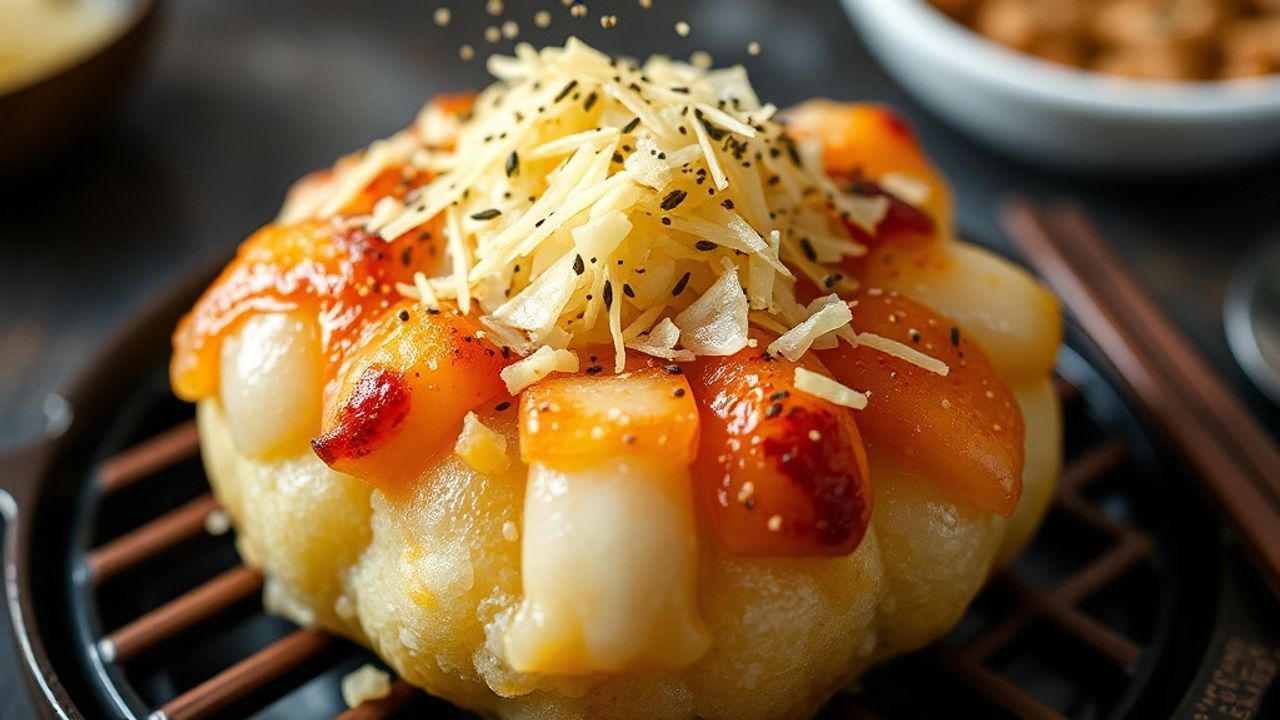
Savor the Best Japanese takoyaki Topped with Bonito Flakes — takoyaki are golden, round octopus fritters with a crisp exterior and soft, custardy interior. I present tested technique and clear timing so you can reproduce authentic takoyaki at home with consistent results.
- Key texture goal: crisp outside, tender inside.
- Finish: hot bonito flakes (katsuobushi) add umami and movement.
- Timing: 10–12 minutes active cooking per batch.
- Tools: a well-oiled takoyaki pan and a sharp turning skewer.
Why takoyaki and bonito flakes work
takoyaki rely on a batter built from wheat flour and dashi to create a delicate interior while the pan forms a thin, crisp shell. The finishing handful of bonito flakes (katsuobushi) adds smoky umami and a visual flourish as the heat makes the flakes flutter.
The science is simple: hot surface contact forms a Maillard crust while a high-moisture interior steams gently. For background on the core ingredients, see the takoyaki and katsuobushi encyclopedia entries.
Prep and Cook Time for reliable batches
Planning: 20 minutes of mise en place makes flipping fast and efficient. Organize diced octopus, green onions, tenkasu, and pickled ginger in small bowls before the pan heats.
Active cooking: expect 10–12 minutes per batch in a hot, well-oiled pan. Allow ~35 minutes total when you include mixing batter and finishing the sauce.
Yield and equipment — set up like a pro
Standard yields: about 24 takoyaki balls serve four as a snack or two as a light meal. Use a cast-iron or non-stick takoyaki pan with uniform molds to ensure consistent color across every ball.
Essential tools: a small turning skewer or metal pick, a pastry brush for oil, and a heat-stable bowl for batter. If you prefer electric convenience, use an indoor takoyaki cooker or an electric griddle with molds.
Ingredients
To achieve authentic flavor balance, assemble measured ingredients: flour, eggs, dashi, diced octopus, scallions, tenkasu, pickled ginger, takoyaki sauce, mayonnaise, bonito flakes, and aonori. Precise liquid-to-flour ratio controls interior texture.
For depth, use quality dashi rather than plain water—dashi provides umami that the bonito flakes then amplify. See the dashi reference for common stock methods.
Instructions
1. Make the batter: whisk sifted flour and baking powder, then combine beaten eggs and chilled dashi. Mix gradually until smooth; avoid overworking the batter to keep a light crumb.
2. Heat and oil: preheat the takoyaki pan on medium-high. Brush each cavity with vegetable oil to promote crisping and prevent sticking.
Filling and turning technique
3. Fill and add fillings: pour batter to about three-quarters full, then add one piece of diced octopus, a pinch of scallions, tenkasu, and a little pickled ginger per hole. Work quickly so batter does not set unevenly.
4. Turn to shape: after 1–2 minutes, when edges set, use a skewer to pull and rotate each piece 90 degrees so uncooked batter flows out and forms a sphere. Repeat turns every 1–2 minutes until golden.
5. Finish and glaze: transfer to a serving plate, brush with takoyaki sauce, add a mayonnaise zigzag, and top each ball with a generous pinch of bonito flakes and a sprinkle of aonori.
Sauce note: a simple mix of Worcestershire-style sauce, ketchup, soy, mirin, and sugar reduces quickly to a glossy finish. Taste and adjust sweetness to match your preference.
Tips for Success
Control pan temperature: too hot burns the exterior before the center sets; too cool yields pale, soggy balls. Aim for a consistent medium-high heat and adjust after the first batch.
Oil thoroughly between turns to preserve crispness. Keep batter chilled and refill holes immediately to maintain even cooking across the pan.
Alternate fillings: if octopus is unavailable, use cooked shrimp or squid, but expect a slightly different texture. Authentic takoyaki centers on tender octopus, so seek it for the closest result.
Rest between batches: clear the pan of crumbs and re-oil before adding fresh batter to prevent sticking. Small adjustments to heat between batches produce uniform color.
Serving Suggestions
Serve takoyaki piping hot to maximize the bonito flakes’ motion and aroma. Offer cold drinks like a citrus soda or light lager to cut the dish’s richness.
Garnish ideas: extra aonori, thinly shaved radish, or a touch of yuzu zest brightens the palate. Present on a warm platter to keep the balls crisp during service.
Variations and cultural context
Regional takes on takoyaki may include different fillings, batter tweaks, or sauce styles. The dish originated in Osaka and sits alongside similar savory pancakes like okonomiyaki in Japanese street food culture.
Bonito flakes themselves come from fermented, smoked skipjack tuna and often feature in multiple Japanese preparations. Their concentrated umami pairs naturally with the savory batter and sauce.
Nutrition and portioning
Expect moderate calories per serving; a six-piece portion typically supplies protein from octopus and carbohydrate from the batter. Adjust portion size based on accompaniments and beverage choices.
For lighter meals, reduce mayonnaise and use a lighter toumenso or diluted sauce. A small side salad or pickles complements the umami-forward profile.
Internal resources
Explore additional recipes and technique pages on our site to expand your Japanese street-food repertoire. Check our internal guide to How to Make Authentic Okonomiyaki at Home for complementary skills.
For equipment options, review our buyer’s notes on electric and stovetop takoyaki tools at takoyaki makers and accessories. These pages highlight models ideal for home cooks and professional users.
FAQ
What is takoyaki made of?
takoyaki consist of a wheat-flour batter, dashi, egg, and small octopus pieces cooked in a specialized pan. The batter’s hydration level and dashi quality strongly affect interior texture.
Why do bonito flakes move on hot takoyaki?
The thin, dried flakes react to steam rising from hot takoyaki; the heat causes the flakes to curl and appear to dance. This visual effect indicates the balls are freshly cooked and hot.
Can I make takoyaki without a special pan?
You can use electric takoyaki makers or a cast pan with molds; improvising with a mini muffin tin will not give the same round shape. A proper pan makes shaping and even browning far easier.
How do I keep the inside tender while achieving a crisp shell?
Maintain a hot pan and generous oil, and avoid overfilling molds. Turn early enough for the uncooked batter to flow out and finish steam-cooking inside while the surface crisps from direct contact.
What are good serving pairings for takoyaki?
Pair takoyaki with light, acidic beverages or a cold beer to balance richness. Simple sides like pickled vegetables or a green salad cut grease and refresh the palate.
For reference on the historical and culinary background of katsuobushi and the role of dashi in Japanese cooking, consult the linked Wikipedia entries above. They provide concise, vetted background that complements these practical instructions.
Enjoy the process: mastering takoyaki rewards practice and attentive heat control. With measured technique and a few expert tweaks, you will consistently produce the crisp, tender balls topped with lively bonito flakes that define great takoyaki.
See also: takoyaki