

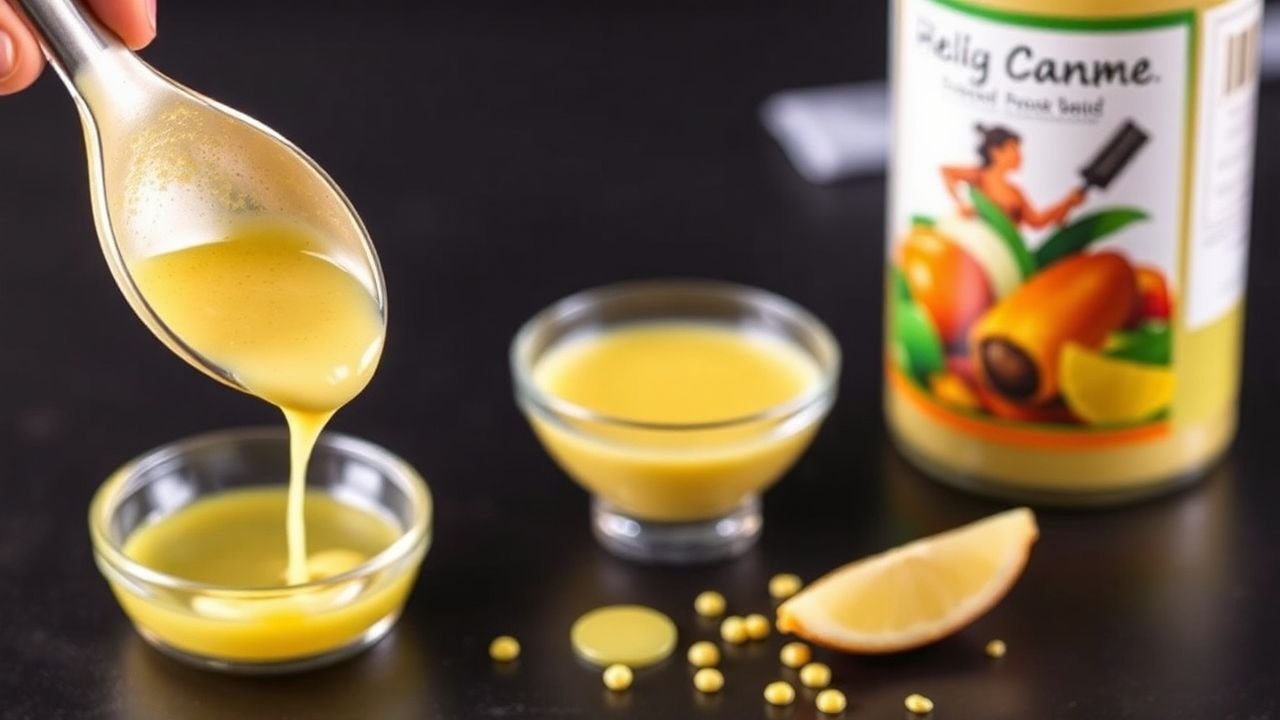
Japanese ginger salad dressing brings a bright, zesty bite to everyday salads. It blends fresh ginger, rice vinegar, soy sauce, and a touch of sweetness for a balanced flavor that tastes clean, not heavy.
- Prep and Cook Time
- Yield
- Difficulty Level
- Ingredients
- Instructions
- Chef’s Notes
- Creative Salad Pairings to Elevate Your Zesty Ginger Dressing
- Serving Suggestions
- Q&A: Japanese Ginger Salad Dressing
- What makes Japanese ginger salad dressing different from other dressings?
- Which ingredients are essential for the best flavor?
- How can I make it taste better if my batch is too strong?
- Is it gluten-free and vegan?
- How long does homemade Japanese ginger salad dressing last?
- In Summary
At a Glance: What Makes This Dressing Work
- Flavor balance: ginger heat + vinegar tang + soy depth + light sweetness.
- No cooking needed: most steps are whisk-and-emulsify.
- Texture control: grate finely for a smooth, even bite.
- Best rest: 30 minutes helps flavors blend.
Whether you serve it on greens, use it on slaw, or turn it into a quick marinade, this dressing stays lively on the palate. Its core profile matches what you find in many Japanese-inspired sauces: savory umami, bright acidity, and a gentle sweetness.
For background on the key ingredient styles, ginger is widely used across Asian cuisines for its sharp aroma and warmth. Rice vinegar provides mild tang without overpowering the rest of the blend. If you want deeper food context, see rice vinegar and ginger for general ingredient notes.
Now let’s make a reliable version you can repeat. You’ll get a dressing that clings well, tastes balanced, and works across many salad builds.
Prep and Cook Time
This recipe keeps prep simple and fast. You’ll spend most of your time grating ginger and carrot.
- Readiness: 10 minutes
- Cook Time: 0 minutes (no cooking required)
Yield
This batch yields about 1 cup. That amount covers roughly 6–8 servings of salad depending on how generously you dress.
If you want extra for meal prep, double the batch and store it properly. Separation is normal because of the oil, so you’ll just re-whisk before serving.
Difficulty Level
Easy. You can make this even if you rarely cook sauces. The process relies on whisking and resting, not heat control.
You’ll get the best results when you grate fresh ginger finely and dissolve the sweetener fully.
Ingredients
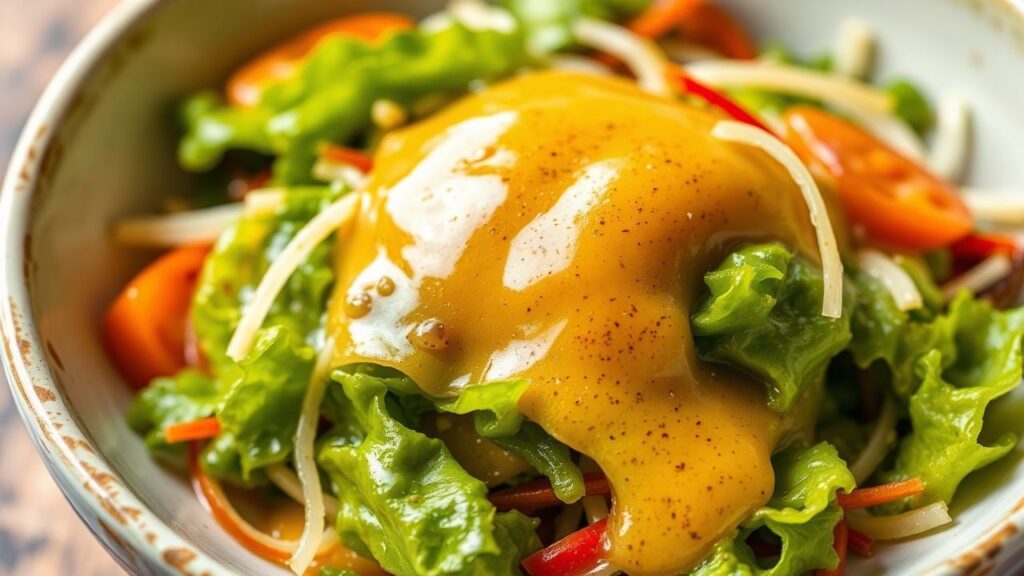
These ingredients create the classic balance: fresh ginger zing, rice vinegar tang, soy-driven umami, and gentle sweetness. Sesame oil adds a roasted aroma that makes the dressing feel “finished.”
For quick reference on the flavor role of soy sauce, check soy sauce. For vinegar background, use vinegar to understand acidity in cooking.
- 1/2 cup fresh ginger root, peeled and finely grated
- 1/4 cup rice vinegar, for delicate acidity
- 2 tablespoons soy sauce (low sodium preferred)
- 2 tablespoons mirin (Japanese sweet rice wine)
- 2 teaspoons honey or pure maple syrup
- 1/4 cup toasted sesame oil, for rich, nutty depth
- 2 tablespoons neutral vegetable oil, such as grapeseed or canola
- 1 medium carrot, peeled and very finely grated (optional but recommended)
- 1 clove garlic, minced
- 1 teaspoon freshly ground black pepper
- 1 teaspoon toasted sesame seeds (optional garnish)
Instructions
Follow these steps closely and you’ll get a smooth, well-blended Japanese ginger salad dressing. The key is to emulsify slowly and let the mixture rest.
- Prepare the fresh ginger: Peel and finely grate the ginger root using a microplane or fine grater for maximum aroma and juice.
- Grate the carrot and mince garlic: Finely grate the carrot so it blends into the dressing. Mince the garlic to avoid big sharp bites.
- Combine the wet ingredients: In a bowl, whisk rice vinegar, soy sauce, mirin, and honey until the honey dissolves fully.
- Emulsify the oils: Drizzle in toasted sesame oil and neutral oil while whisking vigorously. Continue whisking until the mixture looks glossy and cohesive.
- Add fresh aromatics: Stir in ginger, carrot, garlic, and black pepper. Taste once to confirm the balance you want.
- Let it rest: Cover and refrigerate for at least 30 minutes so flavors meld and mellow.
- Stir before serving: Whisk or shake again just before drizzling. Oil separation will settle over time.
Resting matters because ginger’s sharpness and vinegar’s acidity soften into a smoother whole. This is especially helpful if you prefer a less “bite-forward” dressing.
Storage
Store the dressing in an airtight container in the refrigerator. Use it within 4 days for best freshness and aroma quality.
Because fresh ginger loses some intensity over time, you’ll notice stronger “snap” on day one. Shake each time you scoop it out.
Chef’s Notes
These notes help you adapt the dressing to your kitchen and your taste. Small changes create big results because this sauce uses strong flavors (ginger, vinegar, soy) that interact.
- Substitutions: If fresh ginger is unavailable, use 1–2 tablespoons ginger paste. Add slowly because paste strength varies by brand.
- Adjust sweetness and acidity: Taste and tweak. More honey rounds out sharpness, while a small splash of rice vinegar adds brightness.
- Allergy-friendly swap: Use tamari instead of soy sauce for a gluten-free option.
- Texture preference: For smoother dressing, blend until emulsified. For a rustic style, keep it grated.
If you enjoy heat, add a small pinch of chili flakes or a drop of chili oil after resting. Add spice last so the vinegar tang doesn’t mute it.
Creative Salad Pairings to Elevate Your Zesty Ginger Dressing
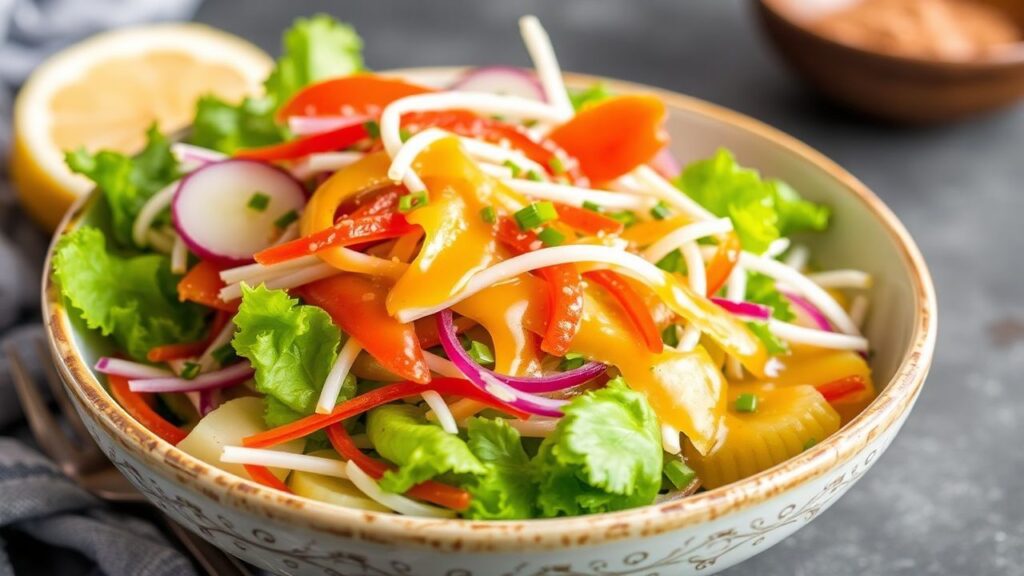
This Japanese ginger salad dressing works best when the salad includes crunchy texture and a mild base. Crisp greens, shredded cabbage, cucumber, and carrots all carry the sauce well.
For a classic slaw build, mix napa cabbage and purple cabbage with thin red pepper strips. The ginger’s warmth cuts through the cabbage sweetness. If you want general background on cabbage types, review cabbage.
For a heartier bowl, add mixed greens plus edamame and avocado. Avocado’s creamy fat smooths the dressing’s acidity, while toasted sesame seeds add aroma. This pairing gives you a balanced bite: bright, creamy, and nutty.
Also try it as a finishing sauce for cold noodles. When you toss soba-style noodles with cucumber ribbons and carrot, this dressing behaves like a light dressing-sauce combo.
Flavor Tweaks by Salad Type
If your salad is mostly leafy greens, add extra sesame oil for a rounder mouthfeel. If your salad is mostly cabbage, lean slightly sweeter so the tang feels balanced.
For protein-heavy salads, add a teaspoon of extra soy sauce to boost umami. For veggie-only salads, keep soy at the original amount to avoid a salty finish.
Serving Suggestions
Use this dressing like you would use any emulsified vinaigrette: drizzle first, then toss, then adjust. Start light so you can build flavor gradually.
- Drizzle over baby spinach and mizuna with sliced radishes for a peppery, fresh bite.
- Serve with chilled noodle salads featuring soba or glass noodles plus cucumber and shredded carrot.
- Use as a marinade for grilled vegetables or tofu for a tangy, aromatic coating.
- Pair with steamed jasmine rice by drizzling a small amount over rice and vegetables for an easy bowl.
- Top finished salads with toasted sesame seeds and chopped scallions for extra crunch.
Because this dressing has strong aromatics, it also works as a dip. Pour it into a small bowl and dip cucumber spears or shredded lettuce for a quick snack.
| Nutrient | Per 2 tbsp Serving |
|---|---|
| Calories | 120 |
| Protein | 0.5 g |
| Carbohydrates | 4 g |
| Fat | 11 g |
If you want to pair this with a simple Japanese meal, consider cooking a light broth or miso-style soup alongside it. For background on miso, see miso. The salty depth of miso complements the dressing’s vinegar brightness.
You can also explore how Japanese cuisine balances flavors by reading about culinary traditions in Japanese cuisine. This helps you understand why umami and acidity often show up together.
Q&A: Japanese Ginger Salad Dressing
This section answers common questions so you can troubleshoot quickly and taste confidently. If your first batch tastes “off,” check the balance tips below.
For quick flavor science, remember that acidity and salt change how ginger feels. Vinegar lifts aroma, and soy sauce adds depth that rounds out sharpness.
What makes Japanese ginger salad dressing different from other dressings?
It centers on fresh ginger plus a vinegar-sweet-salty balance. Soy sauce adds umami, while rice vinegar keeps the tang crisp rather than harsh.
The result feels bright, aromatic, and layered—more complex than a basic citrus vinaigrette.
Which ingredients are essential for the best flavor?
Fresh ginger, rice vinegar, soy sauce, sesame oil, and a sweetener form the core structure. Garlic and carrot add depth and smooth texture.
If you skip sesame oil, the dressing still works, but it loses that roasted Japanese-style aroma.
How can I make it taste better if my batch is too strong?
Adjust one variable at a time. Add a teaspoon of honey (or maple syrup) to soften ginger heat and vinegar bite.
Alternatively, whisk in a small splash of neutral oil to mellow the sharpness while keeping flavor intact.
Is it gluten-free and vegan?
For gluten-free, choose tamari or certified gluten-free soy sauce. Traditional soy sauce often contains wheat, so double-check labels.
For vegan, confirm that your mirin is vegan-friendly. Many mirin types are not vegan because they can include alcohol or other non-vegan inputs depending on brand.
How long does homemade Japanese ginger salad dressing last?
Store it in the refrigerator in an airtight container. Use it within about 4 days for best ginger freshness.
Shake or whisk before serving since oil and ginger solids separate over time.
In Summary
Japanese ginger salad dressing turns simple greens into a bright, restaurant-style meal. Fresh ginger provides the zesty kick, while rice vinegar, soy sauce, and sesame oil create a balanced, savory finish.
Make a batch, let it rest, and taste as you adjust. Once you understand the sweetness-tang-umami balance, this dressing becomes your go-to for slaws, noodle bowls, and quick marinades.

See also: Japanese ginger salad dressing