

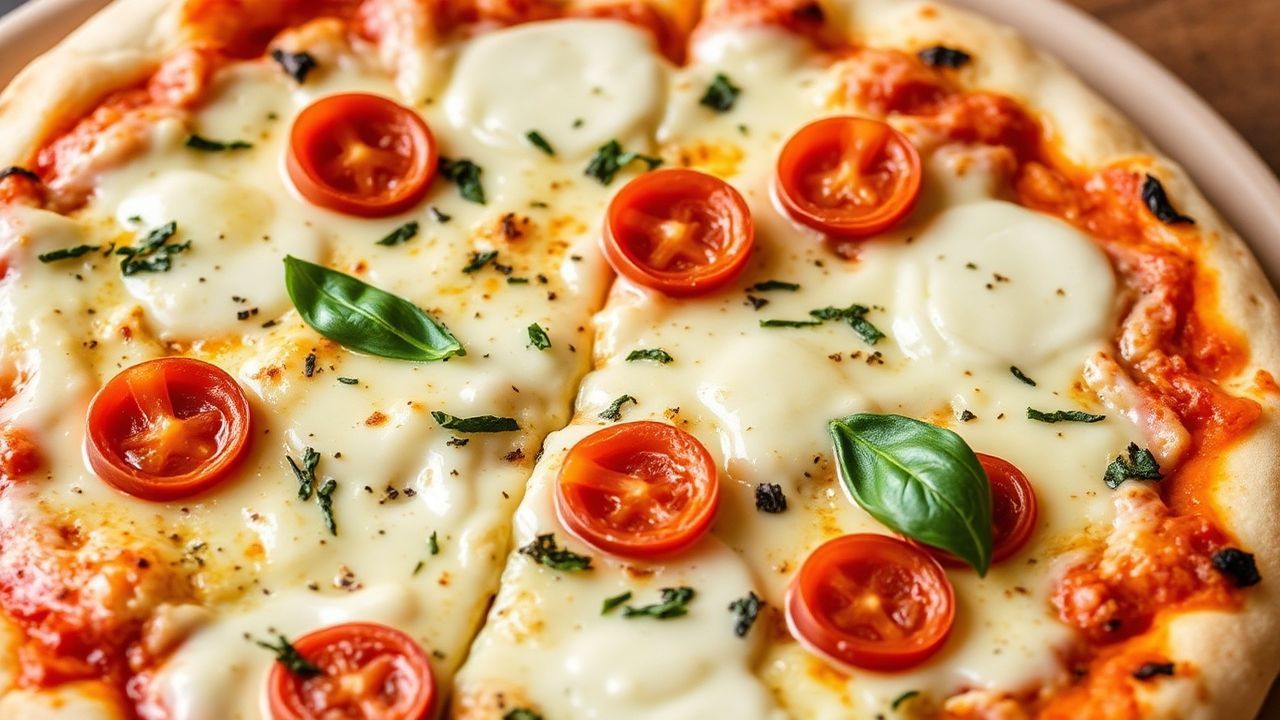
White pizza starts with a creamy base and precise technique to keep the crust crisp while delivering rich, layered flavors. This recipe focuses on a balanced cheese blend, a silky béchamel-ricotta sauce, and baking steps that produce a golden, crackling crust every time.
- At a glance: Aim for a high-heat bake and a thin crust to prevent sogginess.
- Cheese blend: Mozzarella plus a touch of aged cheese adds melt and umami.
- Sauce: A light béchamel folded with ricotta gives silky texture without overpowering toppings.
- Toppings: Use fresh herbs and roasted vegetables for brightness and contrast.
Choosing the Ideal Cheese Blend for White Pizza
Creamy white pizza depends on a cheese strategy that balances stretch, flavor, and browning. Use whole-milk mozzarella as the base for melt and stretch while adding a firmer, flavorful cheese for depth.
Combine mozzarella with a small amount of aged cheese to boost umami and color. For examples of cheese types and production, consult mozzarella and Parmigiano-Reggiano references.
Recommended blend and why it works
Use about 1 cup shredded whole-milk mozzarella, 1/2 cup provolone or fontina for smooth melt, and 1/4 cup grated hard cheese for savory punch. This ratio keeps the cheese pool cohesive and reduces oil separation while baking.
Fold in 2 tablespoons of ricotta after the béchamel cools slightly. Ricotta lightens the overall mouthfeel and prevents a heavy, greasy topping when used sparingly.
Selecting Fresh Toppings That Complement White Pizza
White pizza shines when toppings add textural contrast and brightness. Roast cherry tomatoes until they blister to concentrate sweetness, and use sautéed mushrooms for umami weight without heaviness.
Finish with fresh, peppery greens or herbs to cut the richness. For garlic handling and flavor integration, see the garlic overview at garlic.
Topping combinations to try
Go minimal: blistered tomatoes, thinly sliced garlic, sautéed cremini mushrooms, and a scattering of fresh arugula after baking. Each element provides a distinct counterpoint to the creamy sauce.
For oil quality and finishing technique, consult guidance on extra virgin olive oil to choose a robust finishing oil that complements the cheeses.
Expert Baking Tips for White Pizza
Achieving a crisp, golden crust with a creamy topping requires oven strategy. Preheat the oven with a pizza stone or steel to the highest practical temperature for at least 45 minutes to stabilize the heat reservoir.
Dock the dough lightly, use a thin stretch, and limit sauce quantity to a single thin layer. These steps reduce steam and preserve crust integrity under a moist topping.
Temperature, timing, and placement
Bake at 500°F (or the highest setting) and place the pizza in the lower third of the oven to encourage browning of the base. Monitor the last two minutes closely; the cheese should bubble and brown without burning.
If you seek charred spots like a wood-fired oven, use high heat with a preheated steel and finish with the broiler for 30-90 seconds. Always watch the pizza during this step.
Allow the pizza to rest for 2 minutes after baking to let the sauce set and ease slicing. Resting improves slice integrity and presentation.
Ingredients and Quantities for One 12-inch White Pizza
Below is a concise ingredient list scaled for a standard 12-inch pizza. Measure precisely for predictable results.
Ingredients: 1 cup shredded whole-milk mozzarella, 1/2 cup provolone or fontina, 1/4 cup grated hard cheese, 2 tbsp ricotta, 2 tbsp unsalted butter, 2 cloves garlic minced, 1 cup whole milk, 1 tbsp all-purpose flour, 1 tbsp extra virgin olive oil, fresh rosemary, salt and black pepper, pizza dough (12-inch).
Why these measurements work
The cheeses combine for proper melt and flavor density without overloading fat. The béchamel base uses a light roux to thicken milk; this sequesters moisture and prevents a soggy center.
Use part-skim cheeses only if you want to reduce greasiness; however, whole-milk cheeses give better melt and mouthfeel when used judiciously.
Step-by-Step Instructions
Follow each step in order to ensure the sauce and dough behave as intended. Small timing changes alter texture significantly.
Method: Melt butter, sauté garlic lightly, stir in flour to make a roux, then whisk in milk and simmer until thick. Remove from heat and fold in ricotta. Spread thinly over docked dough, top with cheese blend and toppings, brush crust with olive oil, and bake at high heat for 12–15 minutes.
Prebake and finish notes
If your oven struggles to reach high temperatures, prebake the crust for 3–5 minutes before adding sauce and toppings to reduce sogginess. This step adds control when you bake at lower heat.
After baking, rest for 2 minutes, add fresh arugula or herbs, and slice. Resting improves slice quality and helps the creamy sauce settle.
Timing, Yield, and Difficulty
Prep: 20 minutes. Bake: 12-15 minutes. Total: ~35 minutes. Serves 4 generous slices.
Difficulty: Medium. The technique involves dough handling and a light béchamel; both are manageable with practice and attention to heat control.
Common adjustments
For vegetarian diets, omit meats and increase vegetable variety. For dairy-free versions, substitute a stable plant-based cheese and use cashew cream instead of béchamel for structure.
When scaling recipes for multiple pies, batch the béchamel and store it refrigerated for up to three days to save prep time on bake day.
Chef’s Notes and Troubleshooting
If the crust becomes soggy, either prebake briefly or reduce sauce quantity. Use a peel or parchment to transfer the pizza to a hot stone to minimize handling time and heat loss.
To encourage even color, rotate the pizza halfway through baking if your oven has hot spots. Keep an eye on toppings to prevent over-browning.
Flavor boosters
Finish with a light drizzle of high-quality olive oil or a sprinkle of flaky sea salt to amplify flavors. A few drops of truffle oil or a pinch of truffle salt can elevate umami when used sparingly.
Store leftover slices wrapped tightly in the refrigerator. Reheat on a baking sheet in a hot oven to crisp the base rather than microwaving, which yields a limp crust.
Serving Suggestions
Pair this white pizza with a crisp green salad dressed in lemon vinaigrette or a light, acidic white wine to cut through the richness. Serve slices hot and garnish with fresh herbs for aroma.
For gatherings, bake several smaller pies with varied toppings to offer guests choices and to speed service. This approach maximizes freshness and maintains crust quality.
FAQ
What is a white pizza and how does it differ from tomato-based pies?
White pizza uses a creamy base—béchamel, ricotta, or olive oil and garlic—instead of tomato sauce. This base highlights cheese and toppings rather than tomato acidity.
Can I prepare the creamy base ahead of time?
Yes. Prepare the béchamel-ricotta base up to three days ahead and refrigerate. Rewarm gently to pourable consistency before spreading on the dough.
Which dough works best for white pizza?
A thin, high-gluten dough that bakes quickly at high heat supports the creamy topping without collapsing. A par-bake helps if the oven cannot reach very high temperatures.
How can I prevent a greasy pizza?
Use part-skim options sparingly, limit the sauce layer, and pat roasted toppings dry to reduce moisture and oil. Fresh greens added after baking refresh each bite and cut perceived greasiness.
Is this recipe suitable for gatherings?
Yes. This white pizza appeals to many palates. Bake multiple pies with varied toppings to give guests options and to keep service fast and slices fresh.
For reference on the broader topic of pizza history and styles, review the main pizza entry.
See also: white pizza