
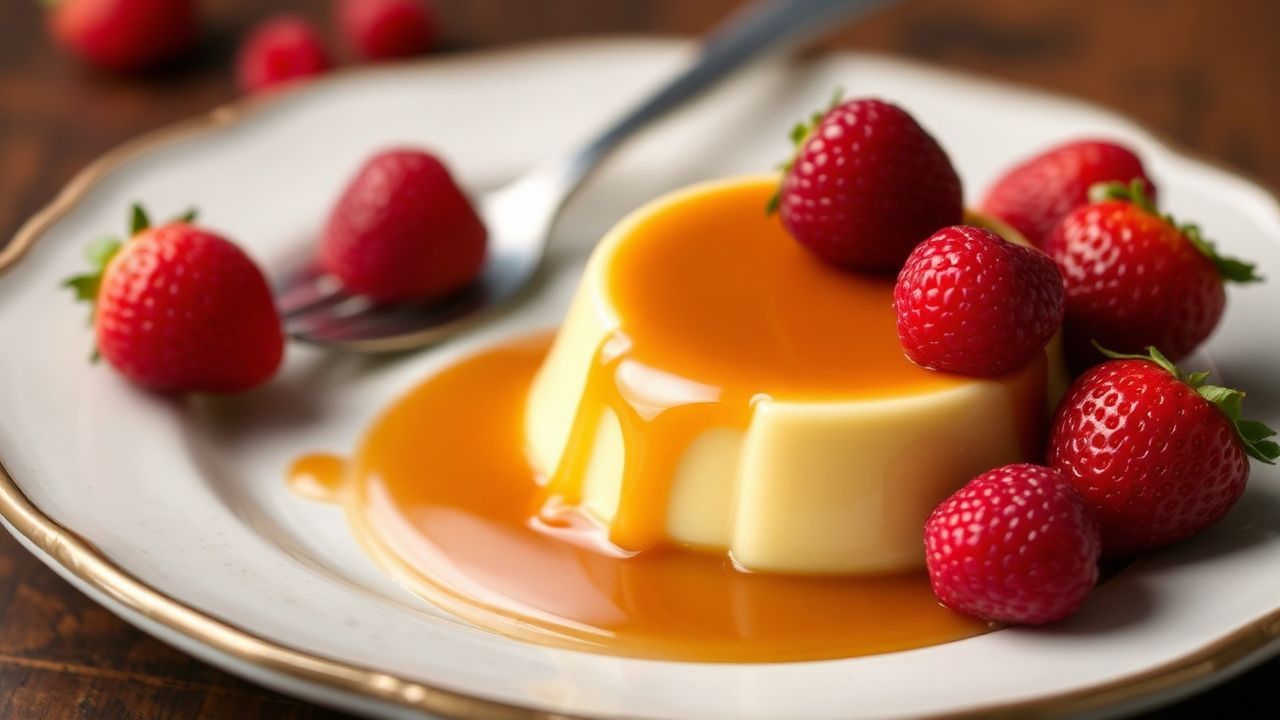
There’s something irresistibly enchanting about caramel custard flan—a dessert that feels both classic and comforting. It pairs a silky baked custard with a rich caramel layer, so every slice delivers contrast in texture and flavor. Many cultures claim their own roots for flan, but the core idea stays the same: simple ingredients, gentle heat, and patient chilling.
- Prep and Cook Time
- Yield and Difficulty
- Ingredients for Caramel Custard Flan
- Step-by-Step Instructions
- 1) Make the Caramel
- 2) Warm the Milk and Cream
- 3) Mix and Temper the Custard
- 4) Add Vanilla and Salt
- 5) Strain for a Velvet Finish
- 6) Bake in a Water Bath
- 7) Cool and Chill
- 8) Unmold and Serve
- Tips for Success (Velvet Texture + Smooth Caramel)
- Serving Suggestions
- Nutritional Details (per serving)
- Q&A
- What makes caramel custard a timeless dessert?
- How do I get that signature velvety texture in caramel custard?
- Should I caramelize the sugar myself or use store-bought caramel?
- Can caramel custard be adapted for lactose-free or vegan diets?
- How far in advance can I make caramel custard?
- Conclusion
At a Glance
- Texture comes from gentle baking: a water bath (bain-marie) prevents curdling.
- Caramel needs timing: cook to amber for bittersweet depth.
- Chill for clean slices: firm custard and stable caramel release.
- Strain for velvet: remove egg strands for a smooth finish.
If you want a dessert that looks like it took hours yet stays doable, caramel custard flan fits the bill. You can serve it for holidays, dinner parties, or a calm weeknight treat. Once you master the method, the results feel repeatable.
Caramel custard flan is the epitome of classic dessert elegance. The custard base stays creamy because you bake it slowly, and the caramel layer forms from sugar melted into an amber syrup. For background on the dessert tradition, see flan.
Prep and Cook Time
Plan your schedule so the chilling step gets enough time. Most failures happen because people cut the fridge wait short, then the custard breaks when you unmold.
Here are practical timings for caramel custard flan: prepping takes about 20 minutes, baking takes about 45–50 minutes, and chilling takes at least 4 hours (overnight works best). Chilling also improves flavor blend between custard and caramel.
- Readiness: 20 minutes
- Cooking: 50 minutes (baking time; chilling separate)
- Chilling: Minimum 4 hours, overnight for best texture
Yield and Difficulty
This recipe yields about 6–8 portions, depending on your mold size and how thick you cut slices. Use smaller ramekins if you prefer quicker portioning and faster chilling.
Difficulty stays medium because timing matters in two spots: caramel color and custard set. Once you follow the steps closely, the method becomes straightforward.
Pro Tip: Keep your oven and water bath organized before you start mixing. You’ll work faster and reduce the risk of overcooking.
Ingredients for Caramel Custard Flan
Measure ingredients carefully. Caramel reacts quickly, and the custard ratio needs consistency to set properly without turning rubbery.
For more context on custard science, you can review custard. Then use this ingredient list for a classic, creamy result.
Caramel Layer
- 1 cup granulated sugar
Custard Base
- 4 large eggs, at room temperature
- 2 cups whole milk, warmed
- 1 cup heavy cream
- 1/2 cup granulated sugar
- 1 teaspoon pure vanilla extract
- Pinch fine sea salt
Step-by-Step Instructions
Work in order. First you make caramel, then you prepare the custard base, then you bake it gently in a water bath. This sequence helps prevent custard overmixing and keeps caramel from hardening while you wait.
For related technique context, check bain-marie. Now follow the method below exactly.
1) Make the Caramel
In a medium, heavy-bottomed saucepan, spread 1 cup sugar evenly across the base. Heat over medium and avoid stirring. As the sugar melts, swirl the pan gently so the melting stays even.
Cook until the sugar turns a deep amber color, roughly 8–10 minutes. Immediately pour the caramel into a round 8-inch flan mold or evenly into ramekins, tilting to coat the bottom.
2) Warm the Milk and Cream
In a separate saucepan, combine whole milk and heavy cream. Warm over low until steaming and fragrant, not boiling.
Gentle heat helps you temper the eggs without scrambling. If you’ve ever seen grainy custard, it usually starts with eggs hitting too much direct heat too fast.
3) Mix and Temper the Custard
In a large bowl, whisk 4 eggs and 1/2 cup sugar until lighter in color, but do not whip into foam. Slowly pour the warm milk mixture into the eggs while whisking steadily.
This tempering step keeps the custard smooth. If the liquid goes in too fast, the eggs can thicken in pockets.
4) Add Vanilla and Salt
Stir in vanilla and a pinch of sea salt. Salt tightens flavor and makes caramel taste less flat.
After mixing, stop whisking. Overmixing can introduce bubbles that rise and spoil the mirror-like surface.
5) Strain for a Velvet Finish
Pour the custard mixture through a fine sieve into the caramel-coated mold. This removes egg strands and any small bits that could make the texture uneven.
For eggs and proteins, eggs provide a useful overview. In practice, straining is the easiest way to control smoothness.
6) Bake in a Water Bath
Place the mold into a larger baking dish. Add hot water to the outer dish until it comes halfway up the sides of the mold.
Bake at 325°F (160°C) for about 45–50 minutes. Test doneness by gently shaking: the center should jiggle slightly, not slosh.
7) Cool and Chill
Remove the flan from the water bath and cool to room temperature. Then refrigerate uncovered for at least 4 hours, ideally overnight.
Chilling lets the custard set fully and makes unmolding cleaner. It also gives caramel time to slightly soften into a glossy sauce.
8) Unmold and Serve
Run a thin knife around the edges to loosen. Invert onto a serving plate and let the caramel drizzle settle over the custard.
If caramel sticks too much, warm the bottom of the mold briefly with your hands or a warm damp towel. Then try again gently.
Also avoid rushing the bake. A custard that sets fully in the oven can turn dense, while an underbaked custard can collapse when you unmold.
Tips for Success (Velvet Texture + Smooth Caramel)
Small adjustments matter with caramel custard flan. Use medium heat for caramel, then keep the water bath hot but not boiling. This balance gives you caramel depth and custard softness.
When you refine your technique, you’ll notice better slice lines, cleaner edges, and more consistent caramel coverage. For a broader caramel overview, review caramel.
- Patience is key: aim for amber, not dark brown.
- Room-temperature eggs: tempering stays smoother.
- Strain the custard: removes lumps and egg strands.
- Control water bath heat: use hot water so the bake stays gentle.
- Chill overnight: improves flavor and firmness.
Want a richer profile? Add lemon zest to the warm dairy for a brighter finish, or a touch of cinnamon for warmth. Keep flavors subtle so the caramel remains the star.
Finally, if you prefer individual servings, ramekins help portion control and reduce slice risk. They also chill faster, which can improve texture on tight schedules.
Serving Suggestions
Caramel custard flan tastes best cold, with the caramel slightly softened into a spoonable glaze. Serve slices with a clean plate so caramel doesn’t spread too far.
For contrast, add fresh berries or a small citrus garnish. Tart fruit cuts the sweetness and makes caramel taste more layered. If you want a classic pairing, serve with coffee or a mild tea.
Simple Garnish Ideas
- Fresh berries (raspberries or blackberries)
- Orange zest or a light dusting of cinnamon
- Toasted nuts for crunch
- Whipped cream in small accents, not a layer
Nutritional Details (per serving)
Nutrition varies based on mold size and ingredient brands, so treat these numbers as estimates. For consistent results, portion evenly and use the same measured pan size each time.
This version estimates about 230 kcal per serving, with approximately 6 g protein, 28 g carbs, and 10 g fat. For more on how nutrition labels work, you can consult nutrition.
| Calories | Protein | Carbs | Fat |
|---|---|---|---|
| 230 kcal | 6 g | 28 g | 10 g |
Want to experiment? Adjust sweetness carefully and keep the dairy-to-egg ratio stable for a reliable set. If you change too many variables, the bake time will shift.
Q&A
If you still have questions, these answers cover the most common issues with caramel custard flan—set, texture, and unmolding. Use them to troubleshoot quickly.
Each point ties back to the method above, so you keep the velvet texture and glossy caramel finish.
What makes caramel custard a timeless dessert?
Caramel custard (often called flan) stays popular because it balances creamy custard with a bittersweet caramel top. The baked custard delivers a tender bite, while the caramel adds depth and aroma. That combination works across many cuisines.
How do I get that signature velvety texture in caramel custard?
Use gentle heat and strain the custard. Baking in a water bath stabilizes temperature so eggs set smoothly instead of curdling. Room-temperature eggs and slow tempering also keep the texture silky.
Should I caramelize the sugar myself or use store-bought caramel?
Homemade caramel usually tastes brighter and more nuanced because you control the amber stage. Store-bought caramel can work for convenience, but the flavor may differ and the sweetness can shift. If you do use it, choose a caramel that pours well and isn’t too thick.
Can caramel custard be adapted for lactose-free or vegan diets?
Lactose-free versions use lactose-free milk and compatible substitutes for cream, so the custard still sets. For vegan flan, you can’t replace eggs one-to-one; many vegan recipes rely on plant thickeners that set differently. Texture will change, so expect a different mouthfeel.
How far in advance can I make caramel custard?
You can prepare it a day ahead and chill overnight. That timing improves flavor blend and gives the custard a stable set for clean unmolding. For best results, invert right before serving.
Conclusion
Caramel custard flan earns its reputation because the method produces reliable results when you respect two temperatures: caramel heat and custard baking heat. When you bake gently and chill fully, you get a smooth custard with a glossy caramel layer.
Make this classic dessert once, then refine your process. After that, it becomes a go-to recipe for celebrations, guests, or any night you want an elegant finish.
See also: caramel custard