

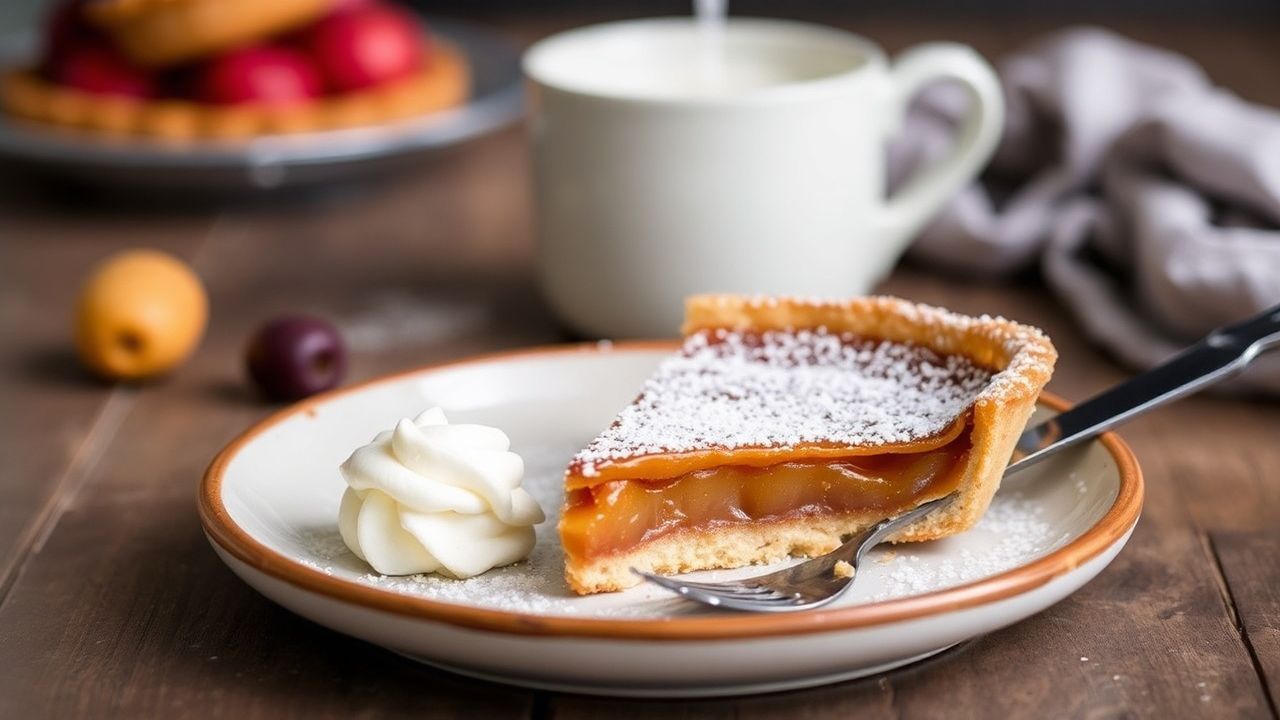
Treacle tart is a classic British dessert that turns simple store-cupboard ingredients into a glossy, sweet pie. You get a crisp shortcrust base, then a jammy filling made from golden syrup, breadcrumbs, and lemon. It feels traditional because it is: this tart has long served as an everyday teatime treat across the UK.
- Treacle Tart: A Sweet Slice of British Tradition
- Prep and Cook Time
- Yield and Difficulty
- Ingredients (Treacle Tart)
- Instructions (Best Treacle Tart Method)
- Tips for Success (Repeatable Results)
- Serving Suggestions (Best Pairings)
- Q&A: Treacle Tart
- 1) What exactly is treacle tart?
- 2) Where does treacle tart come from?
- 3) Why do you blind bake the pastry?
- 4) Can I make treacle tart ahead of time?
- 5) How do I know when the filling is done?
- In Retrospect
- Focus: Golden syrup + breadcrumbs + lemon create the signature texture.
- Key step: Blind bake helps prevent a soggy bottom.
- Best texture: Bake until set but still softly wobbly.
- Serving: Warm or room temperature with cream or custard.
If you want the “best treacle tart,” you should treat it like a pastry-and-custard hybrid. The crumbs thicken the filling, while lemon lifts the sweetness. That balance—sticky, buttery, and citrus-bright—is why this dessert stays popular.
Treacle Tart: A Sweet Slice of British Tradition
Treacle tart belongs to the wider family of treacle-based desserts in Britain. It uses golden syrup (often called light treacle), which tastes buttery and sweet compared with darker treacles. You’ll see similar syrup desserts in old cookery styles, where home cooks relied on shelf-stable pantry items.
Historically, British baking often made use of sugar and syrup to stretch flavour and budget. Treacle tart fits that logic perfectly: breadcrumbs add structure and absorb the syrup, so the filling holds without needing complex custards. For extra background on syrup and its role in baking, see golden syrup.
What makes treacle tart taste like treacle tart?
The flavour starts with golden syrup’s caramel notes. Next comes breadcrumbs, which soak up liquid and set into a sliceable, spoonable filling. Lemon zest and juice then cut through the sweetness with a clean citrus edge.
The crust matters just as much. A shortcrust pastry base needs enough fat to stay tender, but enough structure to hold the dense filling. If you learn the pastry principles of shortcrust pastry, your bake becomes more consistent.
Prep and Cook Time
Plan your timing so the pastry chills long enough to bake up crisp. Then give the filling time to set while staying slightly soft in the middle.
Preparation: 20 minutes
Chilling: 30 minutes
Cooking: 35-40 minutes
Total time: about 1 hour 30 minutes
When you should start blind baking
Start blind baking as soon as the pastry has chilled and is fitted into the tin. This step reduces moisture contact between the filling and the dough.
If you want a sturdier base, bake a few minutes longer and look for a light golden colour. You can also review general blind baking technique through blind baking.
Yield and Difficulty
This recipe makes 8 slices, ideal for a small family tea or a bake sale.
Difficulty: Medium. You’ll get the best results if you keep pastry cold and avoid over-mixing the dough.
Ingredients (Treacle Tart)
Use fresh, properly measured ingredients for repeatable results. Golden syrup and breadcrumbs drive the filling’s texture, so buy them from reliable sources.
Below is a practical ingredient list that fits a 9-inch (23 cm) tart tin.
For the Pastry
- 1 ½ cups (190 g) all-purpose flour, sifted
- 3 tbsp granulated sugar
- 125 g unsalted butter, chilled and diced
- 1 large egg yolk
- 2–3 tbsp cold water
- Pinch of salt
For the Filling
- 1 cup golden syrup (or light treacle)
- 1 cup fresh white breadcrumbs from crustless white bread
- 2 large eggs, beaten
- 1 tbsp freshly grated lemon zest
- 1 tsp freshly squeezed lemon juice
- 1 tsp ground ginger (optional, for warmth)
- ½ tsp ground cinnamon
For more context on how wheat-based crumbs behave in baking, you can read about breadcrumbs.
Instructions (Best Treacle Tart Method)
Follow each step in order. Most errors come from rushing chill times or skipping blind baking.
Step 1: Make the pastry. Rub chilled butter into flour, sugar, and salt until it looks like fine crumbs. Add the egg yolk and cold water, then mix just until the dough forms. Wrap and chill for at least 30 minutes.
Step-by-step baking
- Roll and fit the tart shell: Roll chilled pastry to fit a 9-inch (23 cm) tart tin. Press gently into the tin, trim edges, then chill 15 minutes.
- Blind bake: Preheat oven to 375°F (190°C). Line the shell with parchment and fill with baking beans or rice. Bake 15 minutes, remove weights and paper, then bake 5 more minutes until lightly golden.
- Mix the filling: Stir golden syrup into breadcrumbs until evenly combined. Add beaten eggs, lemon zest, lemon juice, ginger, and cinnamon. Mix thoroughly until smooth and thick.
- Fill and bake: Pour filling into the warm, par-baked shell. Bake 25–30 minutes, until the filling is set at the edges and still softly wobbly in the center.
- Cool and slice: Cool in the tin for at least 15 minutes before removing the rim. Serve for the cleanest slice after the tart firms up.
You’ll notice the filling thickens as it cools. That’s why “wobbly center” matters. For general pastry science around starch and setting, see starch.
Also, keep your oven accurate. A small temperature mismatch can change how quickly eggs set. If you bake frequently, calibrate with an oven thermometer.
Then, once you’re ready to serve, pair the tart with the right dairy. Clotted cream adds richness, while custard adds warmth and softness.
If you want to understand the traditional pairing of baked sweets with dairy, review custard for how egg-based sauces set.
Tips for Success (Repeatable Results)
Treacle tart rewards small, practical habits. Keep everything cold during pastry prep, and give the filling time to reach a stable set.
Pastry perfection
- Keep butter cold so the pastry stays flaky.
- Handle briefly to avoid a tough dough.
- Chill again if sticky before rolling.
Breadcrumb choice
Fresh breadcrumbs give the most reliable texture. Coarse or stale crumbs can create uneven thickness and a grainier slice.
If you want to experiment, use white bread crumbs for classic results. The breadcrumb absorbs the syrup and sets into the tart’s signature “jammy” consistency.
Golden syrup alternatives
You can swap in darker treacle for deeper flavour. The colour and taste shift, and you may need to adjust sweetness in your overall balance because darker syrups often feel more robust and slightly less “buttery.”
For the category of syrup-based products, use treacle as a reference for ingredient differences.
Make-ahead and storage
Treacle tart tastes better after it rests. The filling firms as it cools, and flavours mingle so the lemon becomes smoother.
Store covered at room temperature for short periods, or refrigerate if your kitchen runs warm. Rewarm gently in short bursts if you prefer a softer slice.
Serving Suggestions (Best Pairings)
Serve treacle tart warm for a softer centre, or at room temperature for cleaner slicing. The crust should stay crisp, while the filling stays glossy.
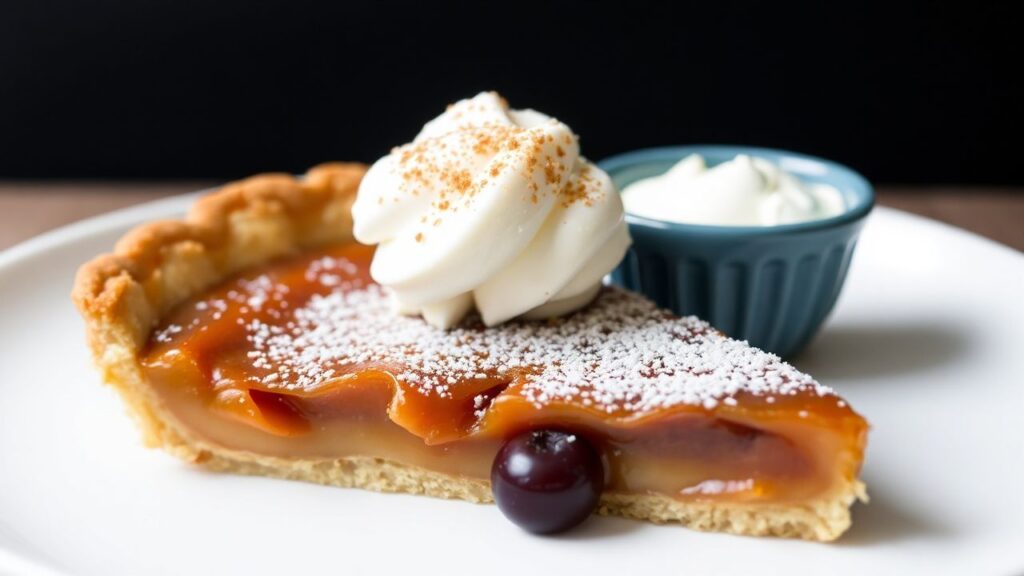
Classic toppings include clotted cream, crème fraîche, or vanilla custard. For a broader guide to dairy sauces, see crème fraîche.
How to plate it well
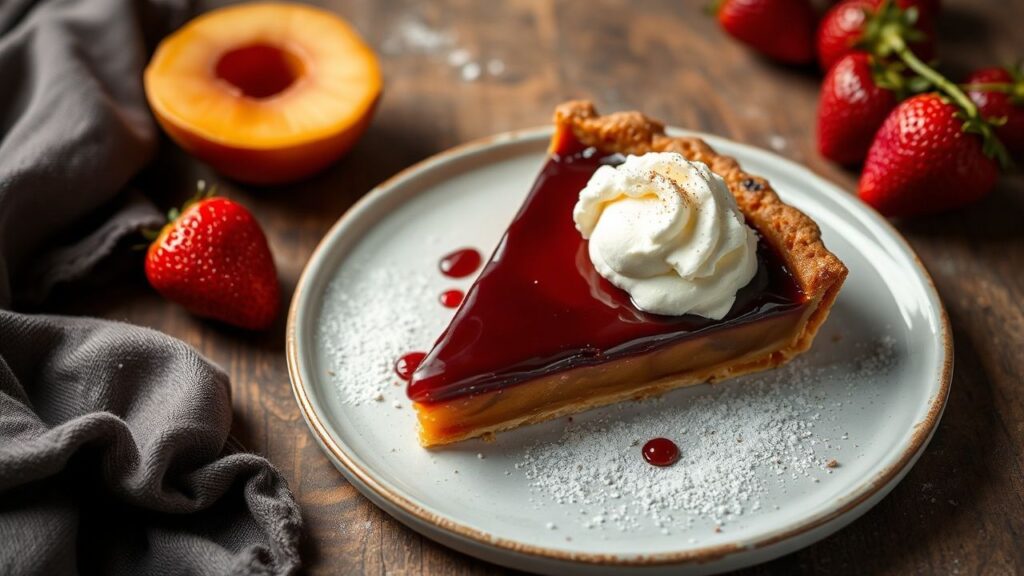
Use a sharp knife and wipe the blade between slices. Dust lightly with powdered sugar if you want a festive look.
You can also add thin lemon slices or a few toasted nuts for texture contrast. Avoid heavy toppings that hide the syrup-and-breadcrumb texture.
Q&A: Treacle Tart
Treacle tart often confuses bakers because it behaves like a tart and a pudding at once. Use these answers to troubleshoot common questions and bake with confidence.
1) What exactly is treacle tart?
Treacle tart is a British dessert made with a shortcrust pastry shell filled with a sticky mixture of golden syrup (light treacle), breadcrumbs, eggs, and lemon zest. Breadcrumbs help the filling set into a sliceable, custard-like texture.
2) Where does treacle tart come from?
Treacle tart grew out of British home baking traditions that used shelf-stable sweeteners like syrup. It became popular because it turns simple pantry staples into a satisfying dessert.
3) Why do you blind bake the pastry?
Blind baking dries and sets the base before the syrup goes in. That reduces sogginess and helps the crust hold up when the filling is dense and moist.
4) Can I make treacle tart ahead of time?
Yes. Let it cool fully, then store covered. Many bakers find the flavour improves after resting because the lemon and syrup taste more balanced.
5) How do I know when the filling is done?
The edges should look set, and the centre should still wobble slightly when you move the tin. If it looks fully firm in the oven, it can become too dry as it cools.
For a final reference on British baking heritage and dessert families, you can read British cuisine. It helps place treacle tart alongside other classic tray bakes, puddings, and teatime sweets.
In Retrospect
When the last spoonful disappears, you’ll taste what makes treacle tart enduring. It’s not a complicated showpiece; it’s comfort built from method, texture, and balance.
Make it once, and you’ll understand why British households keep returning to it. A crisp base, a sticky syrup filling, and bright lemon notes deliver that reliable “tea-table” satisfaction every time.
See also: treacle tart