
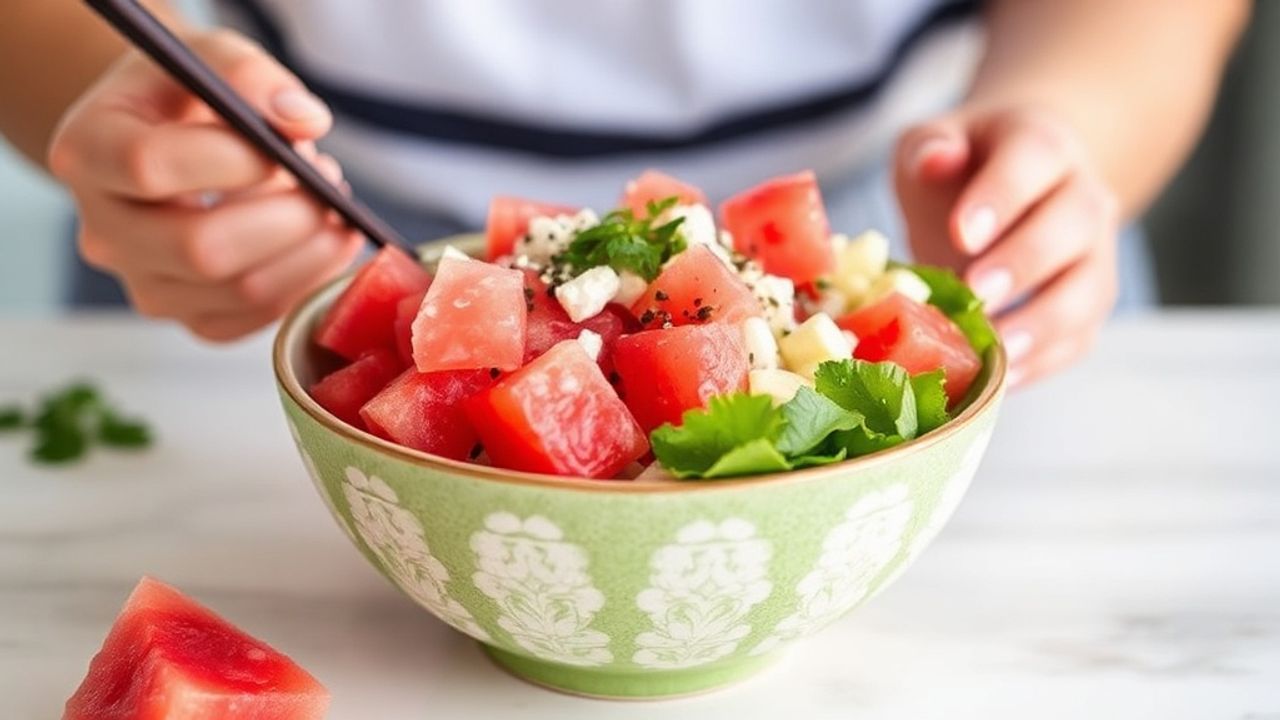
In a culinary world where freshness and convenience win, watermelon poke bowls have become a standout twist on classic poke. They blend sweet, juicy fruit with savory, umami seasonings for a bowl that tastes bright and feels light. You can build one at home with common ingredients, and the flavor stays bold from the first bite to the last.
- Why Watermelon Poke Bowls Are Taking Over
- Key Components for a Perfect Bowl
- Watermelon Selection and Prep
- Watermelon Poke Bowls: Prep and Cook Time
- Yield and Difficulty
- Ingredients
- Instructions
- Expert Insight: Get the Sweet-Savory Ratio Right
- Chef’s Notes: Tips for Success
- Pro-Caution: Avoid Soggy Bowls
- Serving Suggestions
- More Variations on Watermelon Poke Bowls
- Q&A
- What exactly is a watermelon poke bowl?
- Do watermelon poke bowls use raw fish?
- How do I keep watermelon from turning the bowl soggy?
- What dressing works best for watermelon poke bowls?
- Can I make watermelon poke bowls meal prep-friendly?
- To Wrap It Up
At a Glance
- Watermelon poke bowls swap raw fish for marinated watermelon cubes while keeping poke-style flavors.
- Sushi rice adds body; mixed greens cut carbs and boost crunch.
- A simple soy-sesame dressing balances sweet, salty, and tangy notes.
- Chop and assemble fast for best texture.
Watermelon’s high water content creates a refreshing bite, especially when you pair it with soy sauce, rice vinegar, and sesame oil. This contrast matters because poke relies on layered textures: soft grains, crisp veggies, and a “fresh” topper. To understand why the balance works, it helps to know the science behind fruit flavor and hydration.
Watermelon is also rich in naturally occurring compounds that support a hydrating profile, which fits the “lighter meal” mood behind poke bars. If you want a quick primer, read more about watermelon and what makes it taste sweet and clean. From there, you’ll see why watermelon works so well in savory applications.
Why Watermelon Poke Bowls Are Taking Over
People love poke because it’s customizable, fast, and built for fresh ingredients. Watermelon poke bowls build on that idea by adding a sweet fruit component that still pairs well with salty sauces. The result feels modern, but the method stays grounded in traditional poke concepts.
Classic poke often features a salty base (like soy sauce) and an aromatic layer (like sesame and ginger). When you use watermelon, the fruit’s mild sweetness softens the sharpness of vinegar while still letting umami flavors stand out. For background on the original dish, see poke.
Key Components for a Perfect Bowl
A strong watermelon poke bowl starts with a clean foundation: rice or greens. From there, you add colorful toppings—watermelon, cucumber, avocado, and crunchy elements—so each bite has contrast. Finally, you finish with a dressing that links everything together.
Think of the bowl as a system. The base provides structure, while watermelon supplies juice, crunch, and sweetness. For the flavor “bridge,” rely on savory liquids like soy sauce and a tangy element like rice vinegar, then seal the aroma with sesame oil. For general culinary basics like emulsions and seasoning, you can reference dressing.
Watermelon Selection and Prep
Your watermelon choice affects texture more than most people expect. Pick a firm fruit with a deep red or pink interior and minimal mushiness. Seedless mini watermelons can reduce prep time, especially when you’re chopping cubes for multiple bowls.
After you dice the fruit, chill it briefly so it stays crisp. Then, keep handling light to avoid crushing the cubes. If you want a guide to fruit ripeness and storage principles, refer to ripeness and basic produce handling ideas.
Watermelon Poke Bowls: Prep and Cook Time
This recipe focuses on fast assembly, so you get maximum freshness with minimal kitchen time. Most of your work is chopping and mixing, then layering into bowls.
Preparation: 15 minutes
Cook Time: 0 minutes (assemble only, rice if already cooked)
Yield and Difficulty
This bowl style scales easily for lunch, dinner, or meal prep. It also works for guests because the build is quick and visually appealing.
Yield: Serves 2 generous bowls
Difficulty Level: Easy
Ingredients
Gather ingredients first so you can assemble smoothly. Keep toppings separate until the final step to preserve crunch.
Base and Toppings
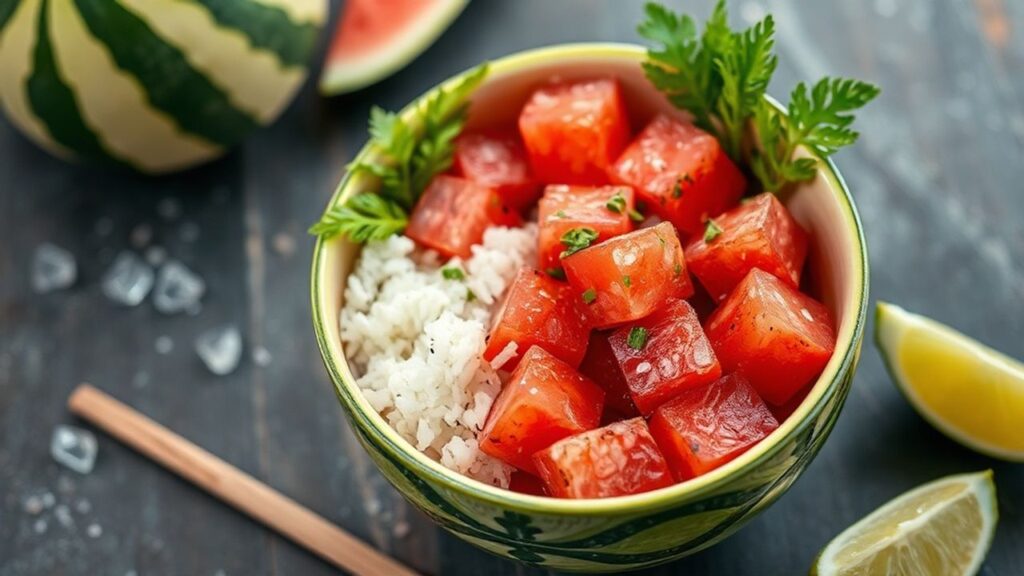
- 2 cups sushi rice, cooked and cooled
- 1 cup watermelon, diced into 1/2-inch cubes
- 1/2 cup cucumber, thinly sliced
- 1/4 cup edamame, shelled and steamed
- 1 ripe avocado, cubed
- 2 tbsp pickled ginger, finely chopped
- 2 tbsp toasted sesame seeds
- 2 green onions, thinly sliced
- 1 small red chili, deseeded and finely chopped (optional, for heat)
- 1/4 cup fresh cilantro, chopped
Dressing
- 3 tbsp soy sauce or tamari
- 1 tbsp rice vinegar
- 1 tsp sesame oil
- 1 tsp honey or agave syrup
- 1 tsp freshly grated ginger
- 1/2 tsp lime zest
Instructions
Follow these steps in order so the dressing coats the toppings evenly. Taste as you go, because fruit sweetness and salt levels vary by brand and ripeness.
Step-by-step
- Prepare the dressing: In a small bowl, whisk together soy sauce, rice vinegar, sesame oil, honey, grated ginger, and lime zest until smooth. Let it sit for 3–5 minutes so the flavors meld.
- Prepare sushi rice: If you cooked it fresh, let it cool fully for the best texture. If it’s already cooked, fluff it gently so it stays light.
- Assemble the bowl base: Divide the cooled sushi rice into two bowls. Press lightly so the topping holds without becoming dense.
- Add watermelon and veggies: Layer watermelon cubes, cucumber, edamame, and avocado over the rice. Arrange for contrast—green, pink, and creamy tones look best and taste best.
- Scatter ginger and herbs: Add pickled ginger, toasted sesame seeds, green onions, chili (optional), and cilantro across the top.
- Drizzle dressing: Spoon or drizzle dressing over each bowl. Start with about 2–3 tbsp per bowl, then add more if you prefer a stronger umami hit.
- Serve instantly: Eat right away for peak crunch and juiciness. If you wait too long, the fruit juices will soften the rice and herbs.
[TIP]Expert Insight: Get the Sweet-Savory Ratio Right
Fruit sweetness changes with ripeness, so your dressing needs room to adjust. Start slightly under-dressed, then add more after the first taste. This approach prevents a bowl that turns too salty or too sharp.
If your watermelon tastes very sweet, reduce honey by half. If it tastes more mild, keep the honey and consider adding a tiny pinch of salt to the dressing. For more context on how sugars and acids shape flavor, you can reference sweetness and acids in food.
Chef’s Notes: Tips for Success
Small adjustments improve both texture and taste. Use these notes as your checklist, especially if you’re serving a crowd or meal prepping for lunch.
- Watermelon selection: Choose a firm, juicy watermelon with uniform pink to deep red flesh. Seedless types make cube prep faster and cleaner.
- Texture balance: Add thin radish slices or extra cucumber if you want a sharper crunch. Toasted seeds already add crunch, so you don’t need many extras.
- Make-ahead: Mix dressing up to 2 days ahead and refrigerate. Chop toppings, but assemble close to serving time.
- Substitutions: For a lower-carb option, swap sushi rice for cauliflower rice. You can also replace edamame with lightly marinated tofu cubes.
- Flavor tip: A final squeeze of lime right before eating boosts brightness and makes the watermelon taste even fresher.
[WARNING]Pro-Caution: Avoid Soggy Bowls
Watermelon releases juice, especially once it meets salt and time. If you assemble too far ahead, the rice can become wet and the herbs lose their punch.
To prevent that, keep watermelon chilled, drain any excess liquid after dicing, and dress only right before serving. If you must prep ahead, store toppings separately and assemble at the last moment.
Serving Suggestions
Presentation helps with appetite and dwell time, so treat serving like a part of the recipe. Chilled bowls keep the bowl cool longer and support the refreshing feel.
Pair watermelon poke bowls with jasmine tea or sparkling citrus water. If you like heat, add wasabi on the side and serve pickled daikon or extra ginger for a tangy finish. For more on why tea pairs well with salty foods, see jasmine tea.
| Nutrient | Amount Per Serving |
|---|---|
| Calories | 350 kcal |
| Protein | 8 g |
| Carbohydrates | 65 g |
| Fat | 7 g |
More Variations on Watermelon Poke Bowls
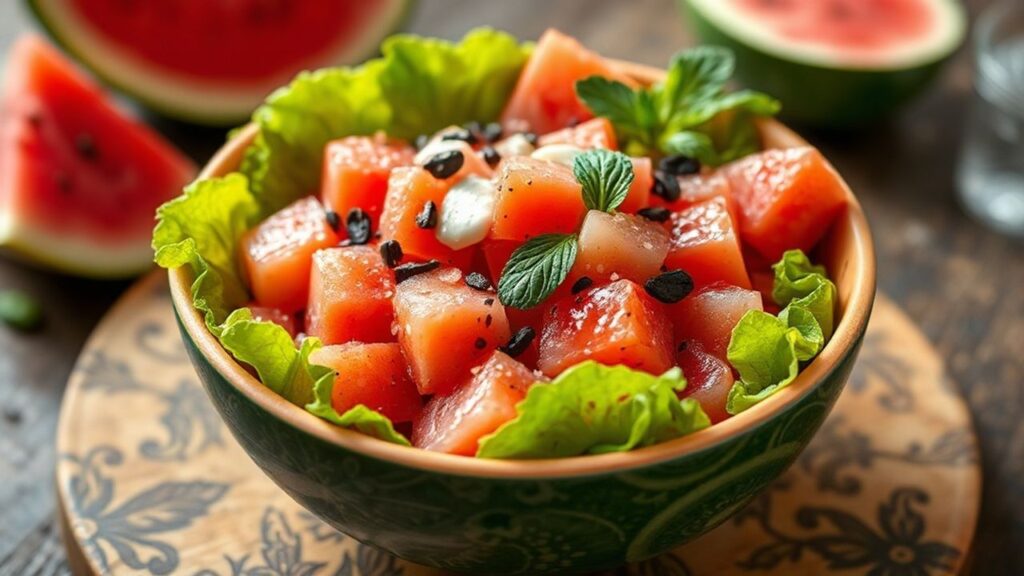
You can keep the same method and change the topping mix. Try swapping cucumber for shredded jicama for a crisp crunch, or add a small handful of seaweed salad for a stronger ocean note. These changes help you match flavors to your pantry.
For inspiration, treat these variations like building blocks: fruit + savory dressing + crunchy greens. If you want the broader flavor science behind umami, reference umami. It helps you understand why soy sauce, sesame, and ginger make watermelon feel more “poke-like.”
Q&A
What exactly is a watermelon poke bowl?
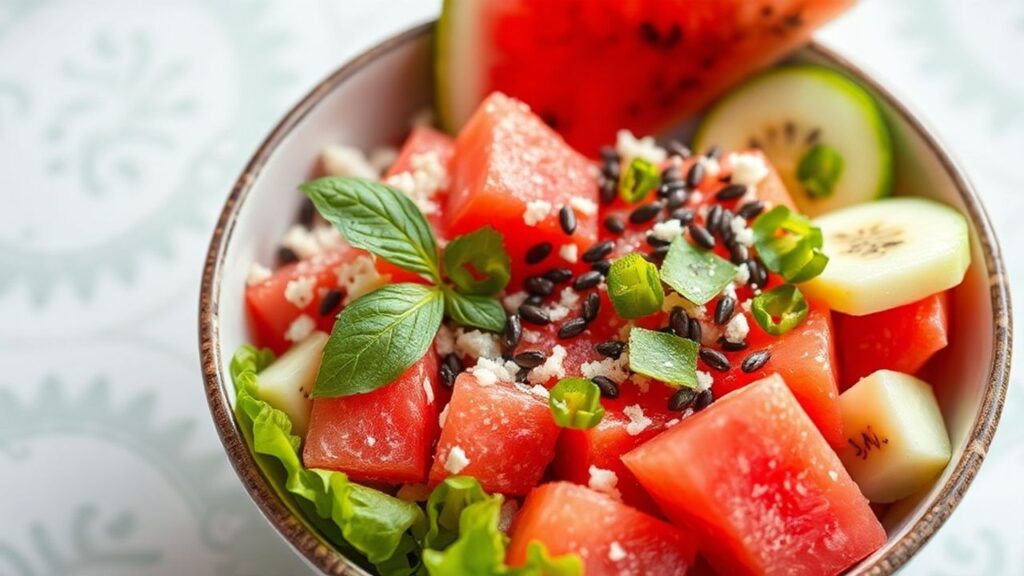
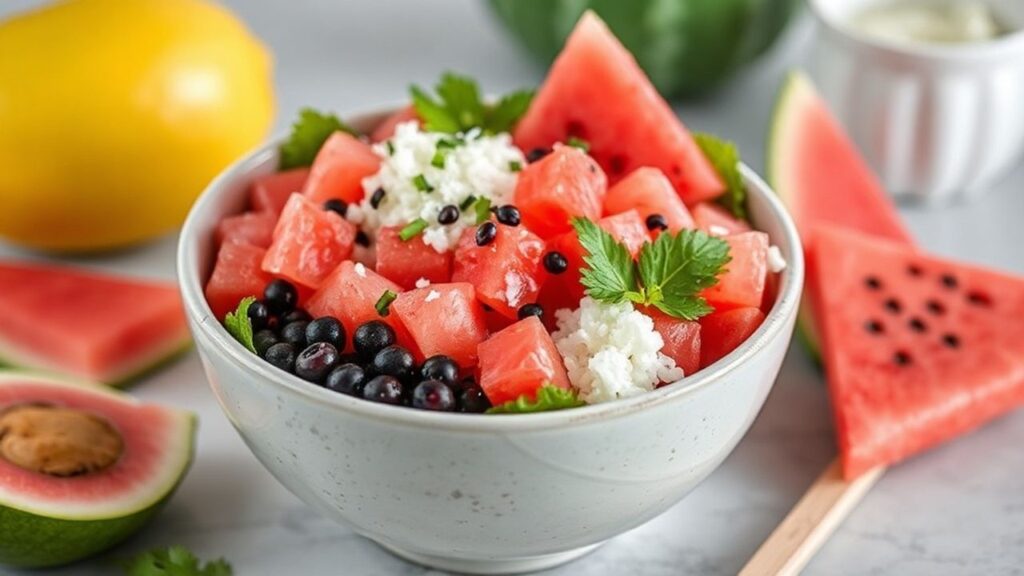
A watermelon poke bowl follows poke-style assembly, but it uses watermelon cubes as the fresh topping. You pair the fruit with savory seasonings like soy sauce and sesame oil, plus classic add-ins such as cucumber, avocado, and pickled ginger.
This swap keeps the “fresh + flavorful” concept of poke while offering a plant-based, juice-forward texture.
Do watermelon poke bowls use raw fish?
This recipe style does not require raw fish. Instead, it relies on watermelon’s crisp, hydrating bite and a poke-like dressing for flavor depth.
If you do add seafood, you should follow safe handling practices for raw ingredients and keep toppings separate until serving.
How do I keep watermelon from turning the bowl soggy?
Chill watermelon, drain any excess juice after dicing, and dress right before eating. Use firm fruit and assemble in layers to protect texture.
Also, keep herbs and crunchy toppings separate until the final step for maximum freshness.
What dressing works best for watermelon poke bowls?
Use a simple mix of soy sauce (or tamari), rice vinegar, sesame oil, ginger, and a small amount of sweetener like honey. Lime zest adds a clean citrus aroma that matches watermelon well.
If you want to fine-tune, adjust sweetness first, then salt. For general ideas on vinegar and fermentation-based acidity, see vinegar.
Can I make watermelon poke bowls meal prep-friendly?
Yes, but plan for separation. Prep the rice and dressing ahead, then store watermelon, veggies, and herbs separately so each topping stays crisp.
Assemble the bowls within 10–15 minutes of serving to protect texture and flavor brightness.
To Wrap It Up
Watermelon poke bowls deliver a fast, fresh meal that still feels bold and satisfying. The key is balance: sweet fruit, savory umami, and bright tang, all anchored by a sturdy base like sushi rice.
When you choose ripe watermelon, keep toppings cool, and dress at the last moment, you get that clean poke-style experience with a summer twist you can make any time. Build one today and adjust the dressing to your taste—sweet, salty, and tangy should all show up clearly in every bite.
See also: watermelon poke bowls