
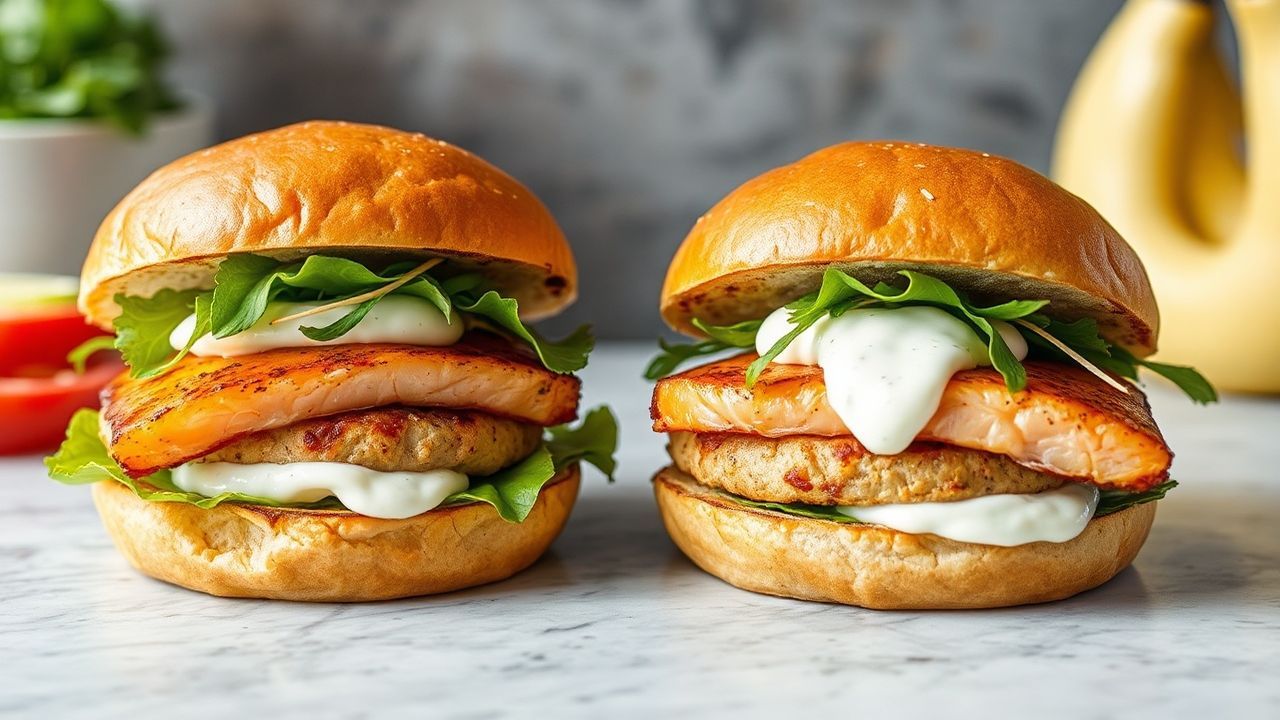
There’s something undeniably satisfying about a burger—the right balance of hearty flavor, tender bites, and a handheld shape. When you swap a conventional beef patty for salmon burgers with a cool dill yogurt sauce, the meal shifts from heavy to light while keeping that satisfying crunch.
- Prep and Cook Time
- Yield
- Difficulty Level
- Ingredients
- Step-by-Step Instructions
- 1) Prepare the Salmon Patties
- 2) Shape Patties
- 3) Make the Dill Yogurt Sauce
- 4) Cook the Patties
- 5) Assemble the Burgers
- Tips for Success
- Serving Suggestions: Elevate Your Meal
- Q&A
- What makes salmon a great choice for burgers?
- How do you keep salmon burgers from falling apart?
- What role does the dill yogurt sauce play in this dish?
- Can I customize the salmon burgers for different tastes?
- What’s the best way to cook these salmon burgers?
- Can I make the dill yogurt sauce ahead?
- To Conclude
This guide walks you through making salmon burgers with refreshing dill yogurt sauce: flaky patties with a crisp golden exterior, plus a tangy, herby sauce that brightens every forkful. You’ll also learn how to hold the patty together, time the cook, and build a burger that tastes fresh even if you make components ahead.
At a Glance
- Flavor: Salmon’s natural richness pairs with lemon, dill, and yogurt tang.
- Texture: A brief chill firms the patties for a clean sear.
- Control: Panko and gentle mixing prevent a crumbly patty.
- Build: Layer greens and sauce at the right moment to avoid sogginess.
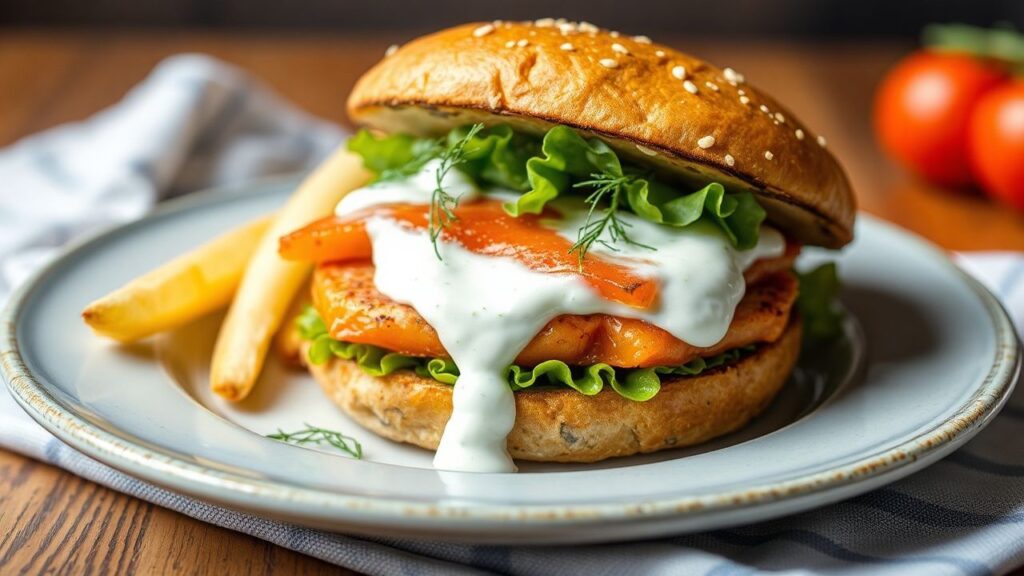
Irresistible Salmon Burgers with Refreshing Dill Yogurt Sauce
Few dishes feel as comforting as a burger, and few feel as refreshing as a salmon patty topped with yogurt sauce. These salmon burgers combine delicate flakiness with herbs and spices, then finish with a dill-forward sauce that adds brightness and creamy bite.
You can keep the recipe simple, yet still make it feel “restaurant.” Use quality salmon, season with lemon and smoked paprika, and cook until the center flakes easily. If you want background on salmon nutrition and fat composition, see Salmon for a useful reference on species and general nutrition patterns.
Prep and Cook Time
You can prepare everything in under an hour, including the brief chilling window that improves searing. Plan your timing so the sauce chills while you shape and rest the patties.
- Preparation: 15 minutes
- Cooking: 12 minutes
- Total: 27 minutes
Yield
This recipe makes four burgers, which suits a family meal or a small dinner party. If you want leftovers, cook extra patties and refrigerate them for quick reheat.
- Serves 4 (four burgers)
Difficulty Level
The process stays beginner-friendly because the patties use simple binding and straightforward pan cooking. The main skill is gentle handling—mix just enough to combine.
- Easy to Medium
Ingredients
Good salmon burgers start with good ingredients: finely chopped salmon, a binder that holds texture, and seasonings that taste bright rather than dull. Choose fresh dill for the best aroma.
If you like to understand the science behind binding, Panko offers a clear look at why breadcrumbs create structure during cooking.
For the Salmon Patties
- 1 lb fresh wild-caught salmon fillet, skin removed and finely chopped
- 1/2 cup panko breadcrumbs
- 2 tablespoons finely chopped fresh parsley
- 1/4 cup finely diced red onion
- 1 large egg, lightly beaten
- 1 tablespoon Dijon mustard
- 1 teaspoon lemon zest
- 2 teaspoons fresh lemon juice
- 1/2 teaspoon smoked paprika
- Salt and freshly ground black pepper, to taste
- 2 tablespoons olive oil, for frying
For the Dill Yogurt Sauce
- 1/2 cup Greek yogurt (full fat recommended)
- 2 tablespoons fresh dill, finely chopped
- 1 tablespoon fresh lemon juice
- 1 small garlic clove, minced
- Salt and pepper to taste
- Optional: 1 teaspoon honey for subtle sweetness
Additional
- 4 whole grain burger buns, lightly toasted
- Mixed greens (arugula or baby spinach)
- Thinly sliced cucumber and ripe tomato slices
Step-by-Step Instructions
Follow the order closely: mix, shape, chill, cook, then assemble. When you respect that flow, the patties hold together and the sauce stays creamy.
For background on safe fish cooking and doneness concepts, you can refer to fish processing for general handling ideas. Use your senses and thermometer, and cook until the center flakes.
1) Prepare the Salmon Patties
In a large bowl, gently combine the finely chopped salmon, panko, parsley, diced red onion, egg, Dijon mustard, lemon zest, lemon juice, smoked paprika, and a pinch of salt and pepper. Mix just until the ingredients come together.
Overmixing breaks the salmon structure too far, so stop as soon as you don’t see dry panko. The goal is a cohesive mix that still feels light.
2) Shape Patties
Divide the mixture into four equal portions. With wet hands, shape each into a firm patty about 3/4 inch thick.
Set the patties on parchment-lined plates and refrigerate for 10 minutes. That short rest firms the surface so the patties sear rather than steam.
3) Make the Dill Yogurt Sauce
While the patties chill, whisk Greek yogurt, fresh dill, lemon juice, and minced garlic with salt and pepper in a small bowl. Add honey if you want a softer edge to the tang.
Cover and refrigerate until serving. Chilling helps the flavors meld and keeps the sauce cool against the hot patty.
4) Cook the Patties
Heat olive oil in a large non-stick skillet over medium heat. Place the salmon patties in the pan and cook for 5–6 minutes per side, or until golden and cooked through.
Flip gently to avoid tearing. If you use a thermometer, aim for an internal temperature of 145°F (63°C), which aligns with widely used food-safety guidance for fish.
5) Assemble the Burgers
Lightly toast the burger buns. Layer greens on the bottom bun, then add a salmon patty.
Spoon the dill yogurt sauce over the patty, then top with cucumber and tomato slices. Cap with the top bun right before eating for the best texture.
Tips for Success
These details separate a “good” salmon burger from a memorable one. Keep your hands gentle, watch moisture, and time your chill.
For an overview of how fats and flavor compounds behave in cooking, olive oil provides helpful context on why oil supports browning and mouthfeel.
- Freshness is key: Use fresh salmon for best flavor and texture. If you use frozen, thaw in the fridge and drain excess moisture.
- Don’t skip the chill: Refrigerating the patties helps maintain shape and encourages crisp edges.
- Adjust texture: If the mix feels too wet, add panko one tablespoon at a time. If it feels dry, add a small splash of olive oil or a touch more beaten egg.
- Make ahead: You can prepare patties and sauce separately. Refrigerate patties up to 24 hours, and keep the sauce for up to 2 days.
- Enhance with spices: Add cayenne or crushed red pepper for a gentle kick that cuts through richness.
If your patties tear when you flip them, reduce heat slightly and flip only once. Also make sure the patties have chilled long enough before cooking.
For more about herbs and flavor balance, you can review dill. It’s a useful reference for understanding why dill tastes bright and slightly anise-like in creamy sauces.
When you build the burger, keep the sauce on the hot patty but don’t soak the buns. Toasting adds a thin crisp layer that holds up better to yogurt than soft buns.
Serving Suggestions: Elevate Your Meal
Pair these salmon burgers with sides that match their light, herby profile. You want crunch, freshness, and a little acidity.
Sweet potato fries bring mild sweetness, while a crisp quinoa salad adds chew. If you want a quick reference on quinoa’s nutrition profile, see Quinoa.
Try a simple plate: mixed greens, thin cucumber ribbons, and tomato slices. Garnish with extra dill and a lemon wedge so guests can brighten flavors at the table.
For drinks, serve sparkling water with cucumber and mint. The bubbles cut through salmon’s richness and keep your palate fresh between bites.
| Nutrient | per Serving |
|---|---|
| Calories | 380 kcal |
| Protein | 34 g |
| Carbohydrates | 24 g |
| Fat | 15 g |
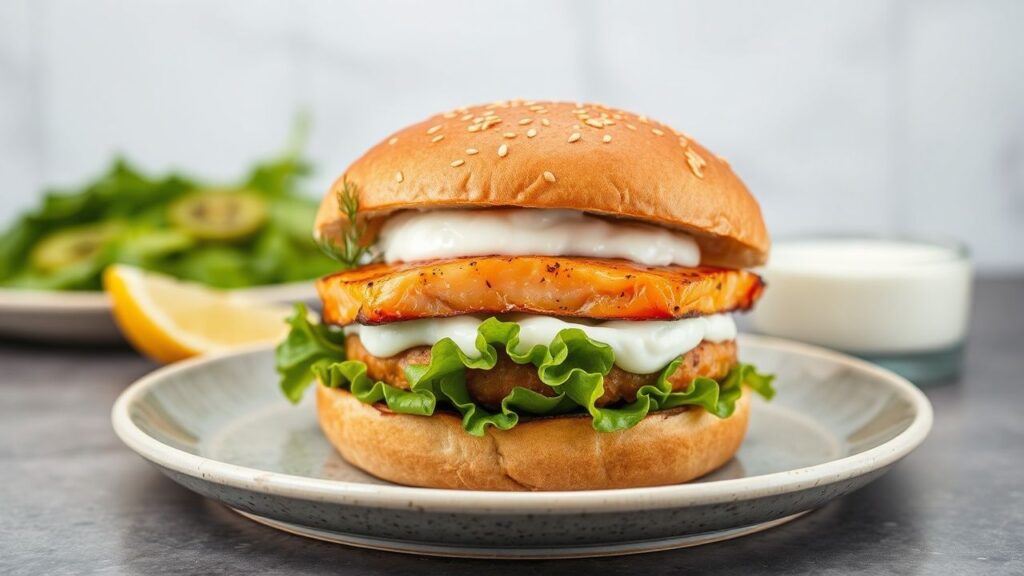
If you want to explore more seafood-forward meals, keep the same flavor logic: pair fish with acid, herbs, and creamy elements. Yogurt sauces work especially well when you season them with lemon and salt.
For a broader look at how food acidity affects flavor perception, read aqueous solution isn’t food-specific, so use it carefully; instead, rely on practical cooking—taste the sauce and adjust lemon and salt until it pops.
Q&A
Quick answers help you troubleshoot and personalize your burgers. Use these notes to nail texture, storage, and sauce balance on your first attempt.
If you want more reading on seafood basics and preparation, Seafood offers general background on categories of seafood you can use in home cooking.
What makes salmon a great choice for burgers?
Salmon’s natural fat and delicate texture make it juicy when cooked correctly. It also flakes nicely, so each bite feels tender rather than chewy.
When you season with lemon zest and herbs, you boost aroma without covering the fish. That’s why salmon burgers pair so well with dill yogurt sauce.
How do you keep salmon burgers from falling apart?
Use panko as a binder, mix gently, and chill the patties before cooking. Those steps help the proteins set and the crumb structure hold.
Also avoid pressing patties in the skillet. If the pan runs too hot, the outside can brown before the center sets, which can worsen breakage.
What role does the dill yogurt sauce play in this dish?
The sauce adds tang and cooling contrast to the savory, slightly crisp patty. Dill brings a fresh herbal aroma that complements salmon’s richness.
Yogurt adds creaminess while keeping the flavor clean. Adjust lemon juice and salt so the sauce tastes bright, not flat.
Can I customize the salmon burgers for different tastes?
Yes. Add minced shallot or a touch more garlic for depth, or increase smoked paprika for a smoky edge. You can also swap parsley for cilantro if you prefer a bolder herb profile.
For spice, sprinkle in crushed red pepper, then taste the sauce before adding more. Keep heat balanced so yogurt still shines.
What’s the best way to cook these salmon burgers?
Pan-searing works best for crisp edges and a tender interior. Use medium heat and cook until the patty flakes easily and looks set in the center.
For extra control, cook in batches so the pan stays at steady temperature. If you prefer grilling, use a preheated grill and handle patties carefully.
Can I make the dill yogurt sauce ahead?
Absolutely. Make the sauce up to 2 days in advance and refrigerate it. Chilling improves flavor melding so dill tastes fuller and lemon comes through more clearly.
Stir well before serving, especially if honey separates slightly or the yogurt thickens in the cold.
To Conclude
These salmon burgers deliver the comfort of a classic burger with a lighter, fresher twist. The patties taste savory and tender, while the dill yogurt sauce brings bright tang that lifts every bite.
Follow the process—mix gently, chill briefly, sear at medium heat, and assemble right before eating. Do that, and you’ll get crisp edges, juicy salmon, and a sauce that keeps guests asking for one more burger.
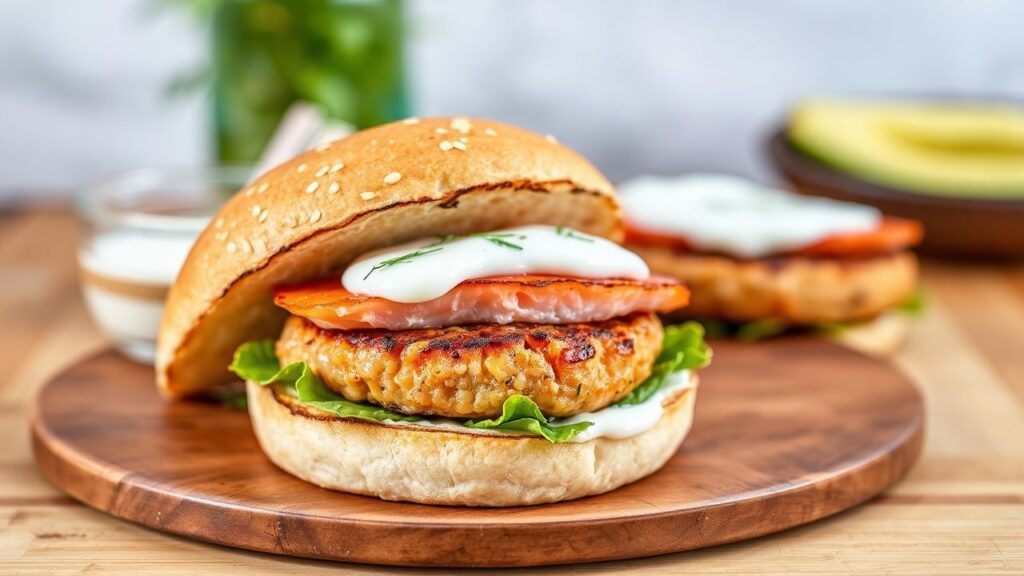
See also: salmon burgers