

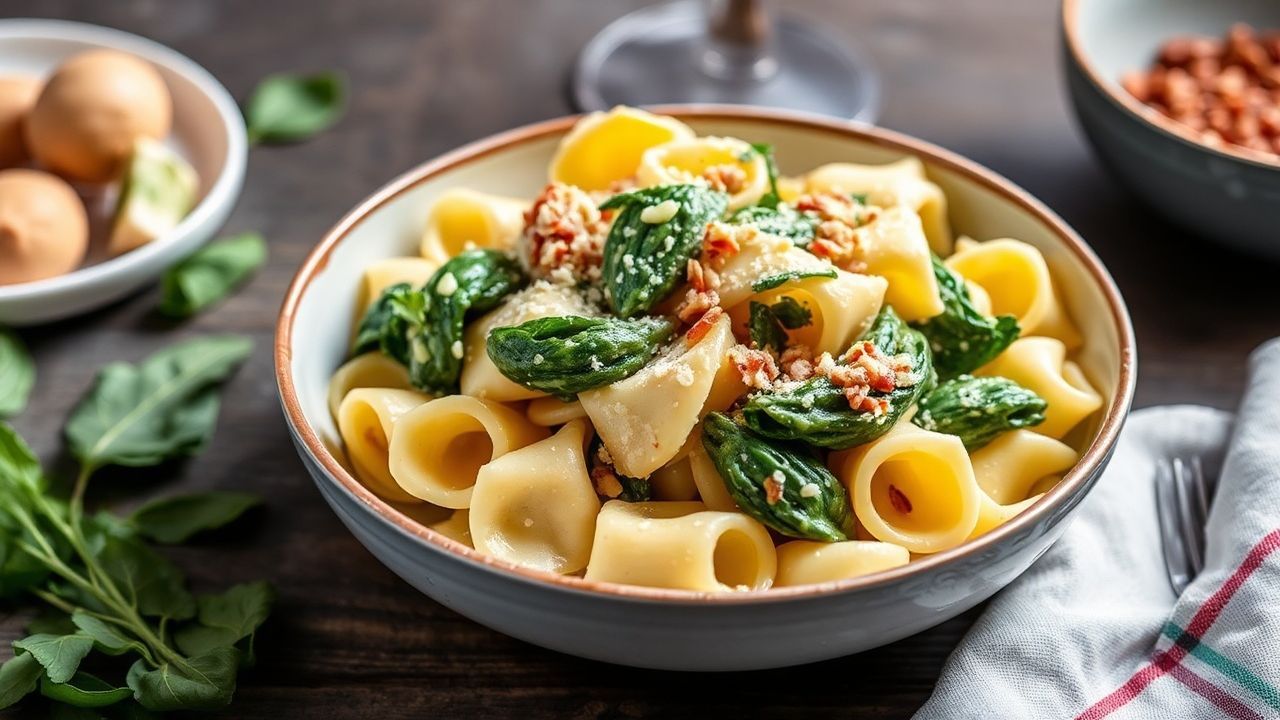
There’s something undeniably comforting about a bowl of pasta that wraps you in warmth and flavor with every bite. This Creamy Spinach & artichoke farfalle in Parmesan sauce turns simple pantry staples into a rich, restaurant-worthy meal. You get silky cheese sauce, tender greens, and pasta that clings to every bite.
- Creamy Spinach & Artichoke Farfalle in Parmesan Sauce: What Makes It Special
- Prep and Cook Time
- Yield and Difficulty
- Ingredients
- Instructions
- Tips for Success
- Serving Suggestions
- Nutritional Details (Per Serving)
- Q&A
- What makes Creamy Spinach & Artichoke Farfalle work so well?
- How do I keep the Parmesan sauce from turning grainy?
- Can I make this dish ahead and reheat it?
- What if I can’t find fresh spinach?
- Are there lighter ways to enjoy this recipe?
- Final Thoughts
At a Glance
- Total time: about 35 minutes for a full, hot dinner.
- Texture control: use reserved pasta water to tune thickness.
- Flavor balance: Parmesan depth + spinach earthiness + artichoke tang.
- Make-ahead friendly: reheat gently to keep the sauce smooth.
Imagine tender farfalle dancing in a rich, velvety Parmesan sauce. Then vibrant spinach and artichoke hearts bring fresh, earthy notes that cut through the richness. Together, they create a creamy pasta experience that feels both cozy and polished.
This recipe combines creamy indulgence with a garden-fresh twist. It works for a busy weeknight dinner and also holds its own when you serve guests. Focus on low heat, slow cheese melting, and just-right cooking times.
Creamy Spinach & Artichoke Farfalle in Parmesan Sauce: What Makes It Special
This dish stays comforting because it balances richness with bright, vegetal flavor. The sauce starts with a roux-thickened dairy base, so it coats farfalle instead of pooling. Then Parmesan melts into a silky emulsion that clings to every bow-tie fold.
Spinach adds mild earthiness and color, while artichoke hearts bring a gentle tang. If you’re curious about the pasta format, farfalle is designed with ridges and folds that capture sauce well. That shape helps each bite taste fully sauced.
For the cheese foundation, Parmesan (Parmigiano-Reggiano) brings a nutty, salty depth. Its grainy texture risk drops when you melt it slowly over low heat. This simple control step makes the difference between smooth and grainy sauce.
Prep and Cook Time
You can make this meal in one main pot and one skillet. That means less cleanup and a steady workflow from boiling pasta to finishing sauce.
Readiness: 15 minutes. Cooking: 20 minutes. Total: 35 minutes. If you prep spinach and open artichokes first, the recipe flows fast.
Yield and Difficulty
This recipe makes enough for 4 generous portions. The sauce-to-pasta ratio stays creamy without becoming heavy.
Difficulty Level: Easy to Medium. You only need basic skills like whisking and gentle simmering. Most steps rely on timing, not advanced technique.
Ingredients
Use high-quality dairy and freshly grated Parmesan for the smoothest results. For pasta, choose farfalle and cook it al dente so it finishes in the sauce.
Here’s everything you need:
- 12 oz farfalle pasta (bow-tie shape)
- 2 tbsp unsalted butter
- 3 cloves garlic, finely minced
- 1 cup fresh spinach, roughly chopped
- 1 can (14 oz) artichoke hearts, drained and quartered
- 1 ½ cups whole milk
- 1 cup heavy cream
- 1 ¼ cups freshly grated Parmesan cheese
- 2 tbsp all-purpose flour
- Salt and black pepper, to taste
- 1 tsp lemon zest (optional, for brightness)
- Fresh parsley, chopped, for garnish
Instructions
Start by cooking pasta until just al dente. Then reserve a bit of pasta water so you can adjust sauce thickness at the end.
Follow these steps closely:
- Boil and cook the farfalle. Bring a large pot of salted water to a boil. Cook the farfalle until al dente (about 10–11 minutes). Reserve ½ cup pasta water, then drain and set aside.
- Build the base. In a large skillet, melt butter over medium heat. Add garlic and sauté for about 1 minute, just until fragrant (avoid browning).
- Cook a roux. Sprinkle flour over the butter and garlic. Stir constantly for 2 minutes until lightly golden and bubbling. This step thickens the sauce without floury taste.
- Whisk in dairy slowly. Gradually whisk in milk and heavy cream until smooth. Simmer gently for about 5 minutes, stirring often.
- Melt Parmesan over low heat. Lower heat to low. Stir in Parmesan and cook until melted and silky. Season with salt and black pepper. If sauce feels too thick, whisk in reserved pasta water a little at a time.
- Wilt spinach and warm artichokes. Add spinach and artichoke hearts. Cook 3–4 minutes, stirring occasionally, until spinach wilts and artichokes heat through while staying tender.
- Toss pasta to coat. Add drained farfalle and toss until each piece gets sauce. Add lemon zest if using, for a bright finish that balances dairy richness.
- Serve immediately. Turn off the heat. Garnish with parsley and serve right away. For extra depth, add more Parmesan or a final crack of black pepper.
Tips for Success
Small choices decide whether the sauce turns glossy and smooth or turns dull. Follow these tweaks for consistent results every time.
- Choose freshly grated Parmesan: Pre-grated cheese often contains anti-caking agents that can affect melting. Freshly grated melts more reliably.
- Don’t overcook farfalle: Slightly undercooking helps the pasta finish in the warm sauce.
- Use spinach with timing: Baby spinach wilts fast, while larger spinach leaves may need a brief extra minute. Chop for even melting.
- Dry artichokes: Drain well and pat gently if they feel wet. Less moisture keeps the sauce creamy.
- Adjust thickness intentionally: Add pasta water by tablespoons, tasting after each addition.
To understand why a gentle heat matters, it helps to know how cheese behaves. When you melt dairy proteins slowly, they form a stable texture instead of separating. If you want background on the science of emulsions, emulsion explains how fat and water can stay combined.
Keep your whisking steady when you add flour and dairy. Then stay patient during Parmesan melting. Those two habits protect the sauce texture and keep it glossy.
If you like learning beyond the recipe, roux is the classic thickener technique used here. Flour cooked briefly in fat boosts thickening power and reduces raw flour taste.
Serving Suggestions
Serve this pasta in shallow bowls so the sauce sheen shows. A little height looks great, and it also helps you portion sauce evenly.
Garnish with chopped parsley and an optional lemon zest sprinkle. Pair with a simple side salad for crunch, such as a light vinaigrette on crisp greens. If you want more texture, toast pine nuts or add a few extra Parmesan flakes right before serving.
For bread, choose something crusty so diners can scoop sauce. Classic pairings work because creamy pasta needs a crunchy or sturdy contrast. If you want a quick science-backed pairing idea, consider how texture contrast improves perceived flavor, as described in taste research on how the mouth combines flavor and texture.
Nutritional Details (Per Serving)
Nutritional needs vary by ingredient brand, portion size, and exact cheese amount. The numbers below match typical ingredient proportions for a 4-serving batch.
Estimated nutritional details per serving:
| Calories | Protein | Carbohydrates | Fat |
|---|---|---|---|
| 480 kcal | 22 g | 52 g | 18 g |
If you want to tailor the meal, you can adjust spinach and cheese amounts slightly. Keep in mind that extra Parmesan increases salt and fat, while additional dairy changes calorie density.
For ingredient background, spinach and artichoke both contribute distinct flavors and micronutrients. Their natural taste helps the creamy sauce feel balanced rather than flat.
Q&A
What makes Creamy Spinach & Artichoke Farfalle work so well?
Farfalle holds sauce because of its shape. The sauce clings thanks to starch from pasta water and the emulsion created as Parmesan melts into dairy.
How do I keep the Parmesan sauce from turning grainy?
Lower the heat before adding Parmesan, then melt slowly. Also use freshly grated Parmesan and whisk steadily so the cheese melts evenly.
Can I make this dish ahead and reheat it?
Yes. Cool the pasta and sauce, then refrigerate. Reheat gently on low heat, and add a splash of milk or reserved pasta water to restore creaminess.
What if I can’t find fresh spinach?
Frozen spinach works if you thaw and squeeze out water first. Add it when you would normally wilt fresh spinach so it heats through without watering down the sauce.
Are there lighter ways to enjoy this recipe?
You can reduce heavy cream and rely more on milk, but the sauce may feel less rich. If you want dairy-free, use a tested plant-based cream and melt it slowly so the texture stays stable.
Final Thoughts
When the last bite disappears, you should taste more than comfort—you should taste balance. Creamy Parmesan sauce, tender farfalle, earthy spinach, and tangy artichokes work as a unified flavor set.
This recipe helps you build restaurant-level pasta at home with simple technique. If you manage heat, melt Parmesan patiently, and adjust sauce thickness with pasta water, the result stays creamy and satisfying every time.
See also: Creamy Spinach