

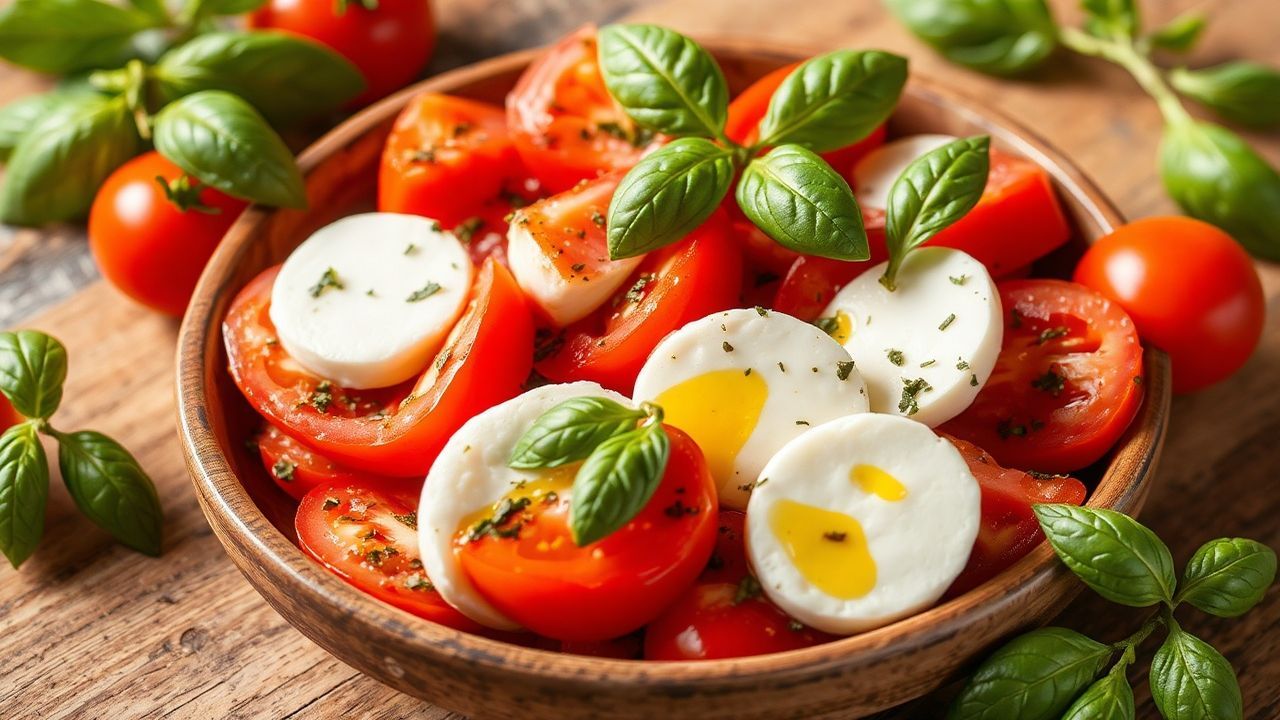
The Classic Caprese Salad stays popular because it follows one rule: use the best ingredients and let them speak. You get bold flavor from tomatoes, creamy richness from mozzarella, and a bright aroma from fresh basil.
- Prep and Cook Time
- Yield
- Difficulty Level
- Ingredients
- Instructions
- Chef’s Notes: Tips for Success
- Serving Suggestions to Elevate Your Classic Caprese Salad
- Master the Art of Layering in Your Classic Caprese Salad
- Elevating Your Salad with Dressing and Seasoning Tips
- Presentation Secrets to Showcase the Timeless Elegance of Caprese
- FAQ
- What makes a Classic Caprese Salad taste truly timeless?
- Which tomatoes should I buy for the best Classic Caprese Salad?
- Is fresh mozzarella required, or can I use another cheese?
- Should I add balsamic vinegar to a Classic Caprese Salad?
- How do I prevent a watery Classic Caprese Salad?
- Recommended Reading:
- Time target: plan for 15 minutes from prep to plate.
- Flavor formula: ripe tomatoes + fresh mozzarella + basil.
- Dress lightly: a thin, even olive oil drizzle prevents sogginess.
- Assemble close to serving: keeps basil vivid and mozzarella tender.
Caprese belongs to Italy’s everyday cooking culture. It fits the logic of Mediterranean simplicity: few ingredients, careful timing, and strong flavor contrast.
For a refresher on tomato structure and why ripeness changes taste, read about tomatoes. Then use that knowledge when you buy, slice, and plate.
Below you’ll find a reliable method plus practical choices for extra-virgin olive oil, optional balsamic, and fresh basil. Follow the steps and you’ll get a balanced plate that tastes like tradition, not improvisation.
Classic Caprese Salad begins with ingredient quality and smart assembly. Start with ripe tomatoes, use fresh mozzarella, and choose basil that smells sweet and green. This approach works because each component has a clear flavor job.
When the slices meet on the plate, the salad becomes a simple composition. You control sweetness with tomatoes, creaminess with mozzarella, and herb brightness with basil. Then you finish with a thin, even layer of extra-virgin olive oil so flavors merge into one bite.
Prep and Cook Time
This recipe needs almost no cooking. Most of your work comes from slicing and layering for clean, predictable flavor distribution.
Readiness: 15 minutes | Cooking: None required | Total Time: 15 minutes.
Yield
This quantity serves 4 people. Treat it as an appetizer, starter, or a light main alongside bread.
If you host friends, scale up the ingredients evenly. Keep the tomato-to-mozzarella ratio steady so the salad stays balanced instead of watery.
Difficulty Level
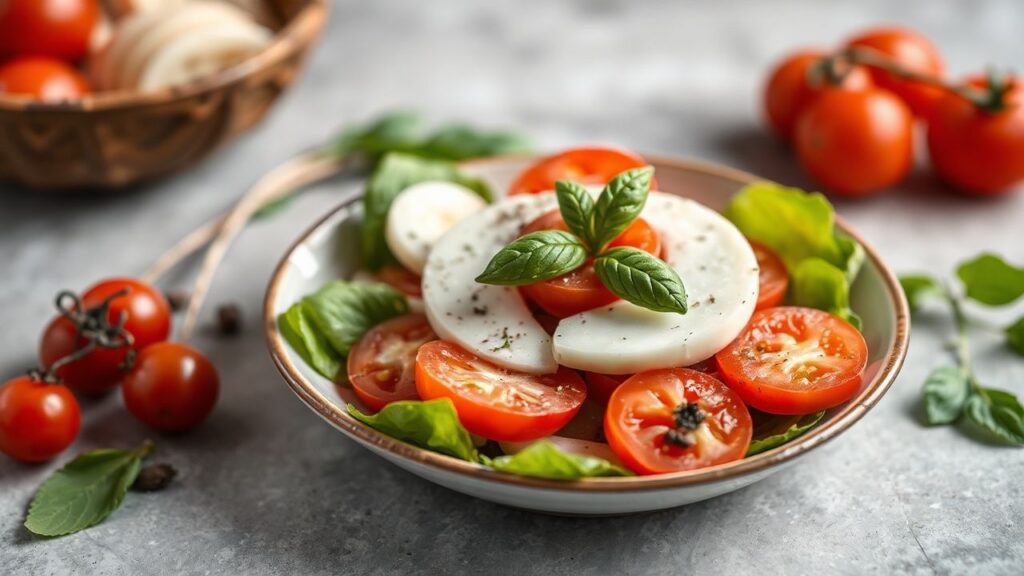
This is an easy recipe. It rewards focus more than technique, so beginners can deliver restaurant-level results with practice.
You only need a sharp knife, a clean platter, and a light hand with dressing. For safer prep with fresh produce, review food safety basics like washing and safe storage.
Ingredients
- 4 large ripe tomatoes, sliced into 1/4-inch rounds
- 12 oz fresh mozzarella (di bufala or high-quality whole-milk), sliced
- 1 cup fresh basil leaves, washed and dried
- 3 tbsp extra-virgin olive oil, cold-pressed and fruity
- 1 tbsp aged balsamic vinegar (optional)
- Sea salt flakes, to taste
- Freshly cracked black pepper, to taste
Pick basil with intact leaves and a strong aroma. For background on herb flavor behavior, explore herbs and how aroma drives perception.
If you use balsamic, choose an aged style. It tastes rounded instead of sharp, and it blends better with tomato sweetness.
Instructions
- Set up the platter: slice tomatoes and mozzarella first. Lay half the tomato slices on a large flat plate, then alternate mozzarella so the pattern looks even.
- Build the basil layer: tuck basil leaves between tomato and mozzarella slices. Use whole leaves so aroma stays vivid.
- Finish with olive oil: drizzle extra-virgin olive oil evenly across the surface. Add balsamic only if you want extra depth.
- Season carefully: sprinkle sea salt lightly, then add fresh black pepper. Season near the end so flavors pop.
- Let it rest briefly: rest at room temperature for about 5 minutes, then serve.
This short rest helps tomato juices redistribute and lets oil coat cut surfaces. Keep it brief so basil stays green and mozzarella stays tender.
For a deeper look at the cheese style, read about mozzarella. Fresh mozzarella tends to be milder and softer than aged cheeses, which supports Caprese’s clean flavor balance.
Chef’s Notes: Tips for Success
Start with ripe fruit. A ripe tomato gives slightly to touch and smells like tomato. If tomatoes lack aroma, the salad will taste flat even with high-quality mozzarella.
Use mozzarella that looks moist and feels soft. Avoid very dry or rubbery slices because they resist melt-like tenderness in cold service.
Buffalo mozzarella can add a distinct, dairy-rich character. Whole-milk mozzarella still works well, as long as it tastes fresh and clean.
- Ingredient selection is paramount. Aim for tomatoes that taste sweet, not watery.
- Basil integrity matters. Dry leaves prevent watery pooling.
- Olive oil quality can transform the salad. Use extra-virgin for fruitiness and a peppery finish.
- Balsamic vinegar is optional but effective. Use a small amount for gentle rounding.
- Assemble close to serving. Prepping too early can soften basil and loosen mozzarella texture.
Olive oil matters because it carries fat-soluble aroma and helps unify the flavor of tomato, basil, and cheese. If you want a quick refresher, explore olive oil.
For best texture, keep slicing consistent. Uneven thickness creates uneven salt uptake and oil coverage, so each forkful tastes different.
Small changes shift flavor balance. Keep balsamic optional, keep salt modest, and use freshly cracked pepper so the salad stays bright instead of heavy.
Also watch timing. Basil darkens after long exposure, and warmed mozzarella loses its best texture. Serve soon after you finish plating.
When you reduce surface moisture, salt and olive oil spread more evenly. That helps the classic trio taste balanced in the same forkful.
If you want to understand why acidity changes the feel of dairy, review acidity. In Caprese, tomato acidity and optional balsamic provide the “lift” that keeps cheese from tasting dull.
Serving Suggestions to Elevate Your Classic Caprese Salad
Serve on a wide plate so the slices stay visible. A white ceramic platter helps the red, white, and green color pop without extra garnish.
For extra crunch, add toasted pine nuts at the edges. If you prefer freshness, use microgreens sparingly so they don’t overpower basil’s aroma. Serve with crusty bread or warm focaccia for easy scooping.
If you want a scientific angle on aroma, note that herb compounds rise more easily when food sits around cool room temperature. That timing can change how bright basil tastes. For general background, read about flavor.
Master the Art of Layering in Your Classic Caprese Salad
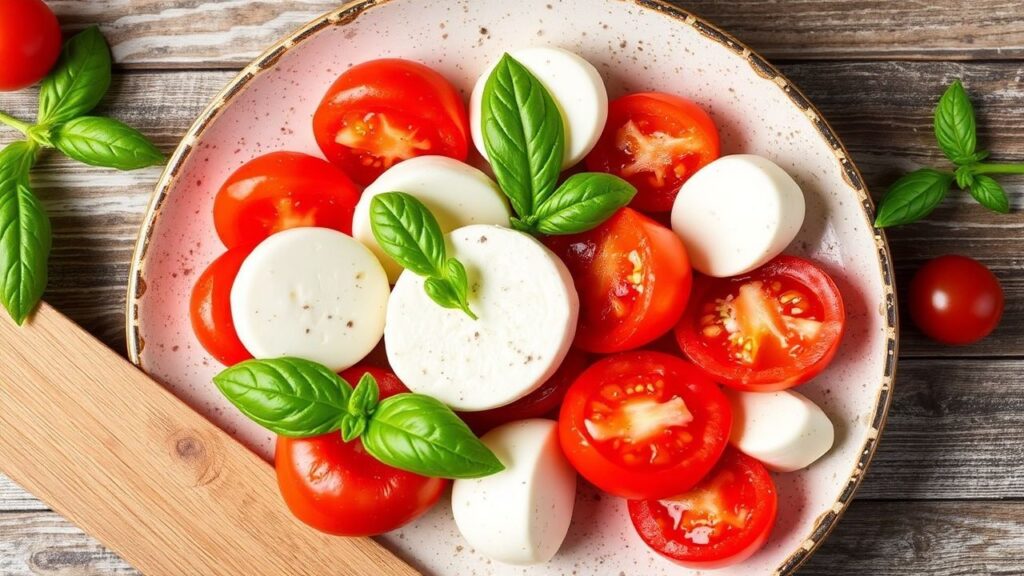
Layering affects more than looks. It controls how often you get tomato acidity, basil aroma, and mozzarella cream in the same forkful.
Use alternating slices to build a repeat pattern: tomato, mozzarella, basil, then repeat. Keep slice thickness similar so each bite lands with the same balance.
Placement also matters for seasoning. When salt and pepper land on moist tomato surfaces, they dissolve and spread. Even distribution helps you avoid one salty bite and one bland bite.
Elevating Your Salad with Dressing and Seasoning Tips
The dressing should feel light, not heavy. Extra-virgin olive oil adds fruitiness and a peppery finish, while salt and pepper sharpen the natural sweetness and richness.
Season in layers: first with a light sprinkle of salt, then add pepper after. If you use balsamic, use thin lines or tiny dots so it works as an accent, not a coating.
Oil texture and acidity influence how flavors register on your palate. When acidity cuts through fat, you taste more tomato and basil per bite instead of just dairy.
Presentation Secrets to Showcase the Timeless Elegance of Caprese
Good presentation keeps the salad inviting and appetite-ready. Keep basil leaves whole and tucked between slices so the salad looks intentional.
Create a slight height effect by stacking gently and spacing tomato slices so mozzarella stays visible. Add any garnish at the edges, not in the center, so the classic trio stays the focus.
Serve immediately after dressing. When basil sits too long, it darkens and becomes less aromatic. When mozzarella warms too much, it softens beyond its best texture.
If you want context for Italian culinary simplicity, read about Italian cuisine. Caprese reflects seasonal cooking and minimal techniques that let fresh produce lead.
FAQ
What makes a Classic Caprese Salad taste truly timeless?
A timeless Caprese tastes balanced: sweet tomatoes, creamy mozzarella, and bright basil, finished with olive oil. The classic formula works because each ingredient plays a distinct flavor role.
You also taste freshness because assembly stays quick. When you plate within minutes, you keep basil vibrant and avoid watery pooling.
Which tomatoes should I buy for the best Classic Caprese Salad?
Choose ripe tomatoes with strong aroma and a firm-but-yielding feel. Heirloom or vine-ripened varieties often bring better sweetness, which pairs with mild mozzarella.
Look for tomatoes that feel heavy for their size and smell fresh. If they smell weak, your salad will taste weak too.
Is fresh mozzarella required, or can I use another cheese?
Fresh mozzarella fits best for the classic texture and mild flavor. Hard or aged cheeses can dominate the salad and reduce the light, clean Caprese character.
If you substitute cheese, aim for a mild taste and a soft, sliceable texture. That keeps the balance closer to traditional Caprese.
Should I add balsamic vinegar to a Classic Caprese Salad?
Balsamic is optional. If you use it, apply a small amount so it supports the tomatoes instead of turning the salad vinegar-forward.
Aged balsamic tends to taste smoother than cheaper, sharper versions. Use it as a subtle accent.
How do I prevent a watery Classic Caprese Salad?
Pat very wet tomatoes lightly, slice consistently, and assemble close to serving. Serve quickly after dressing so basil and mozzarella keep their best textures.
Also drain and dry basil well. Water on basil can dilute olive oil and make the salad feel soggy within minutes.
See also: Classic Caprese