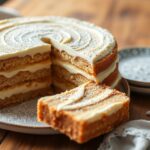

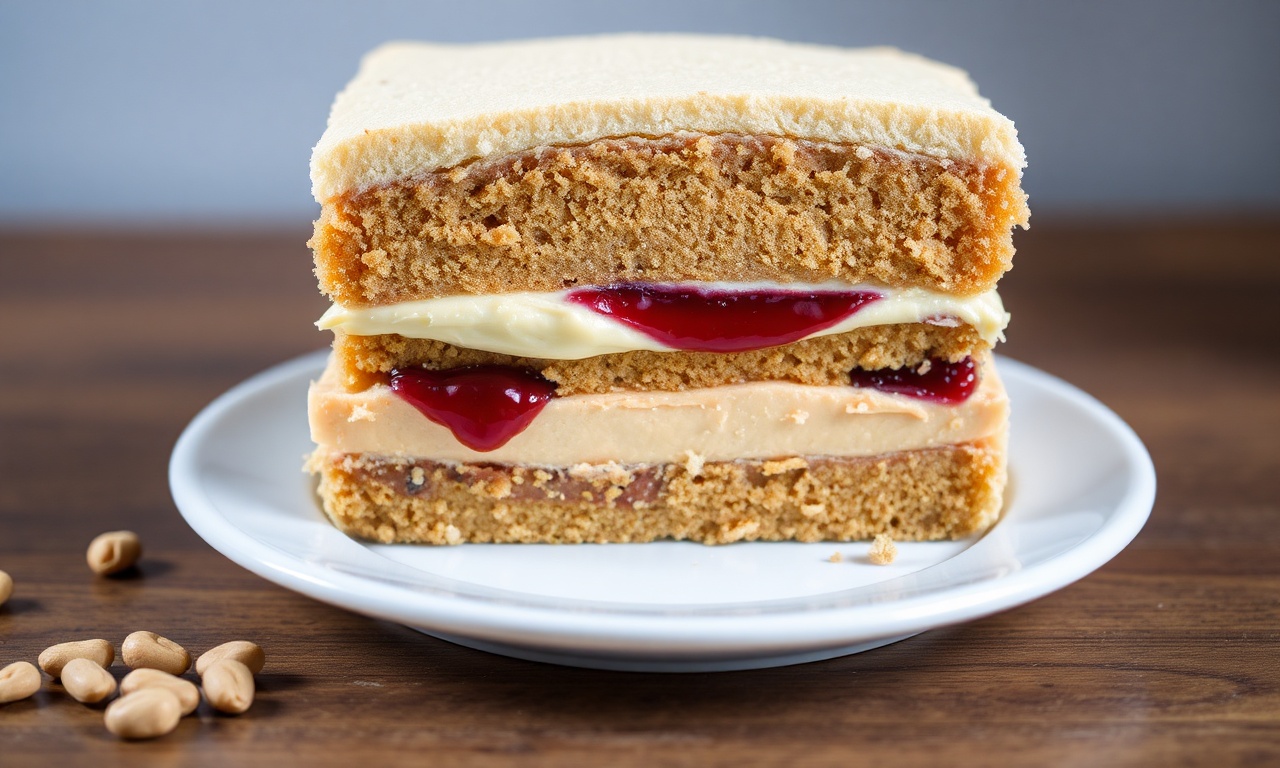
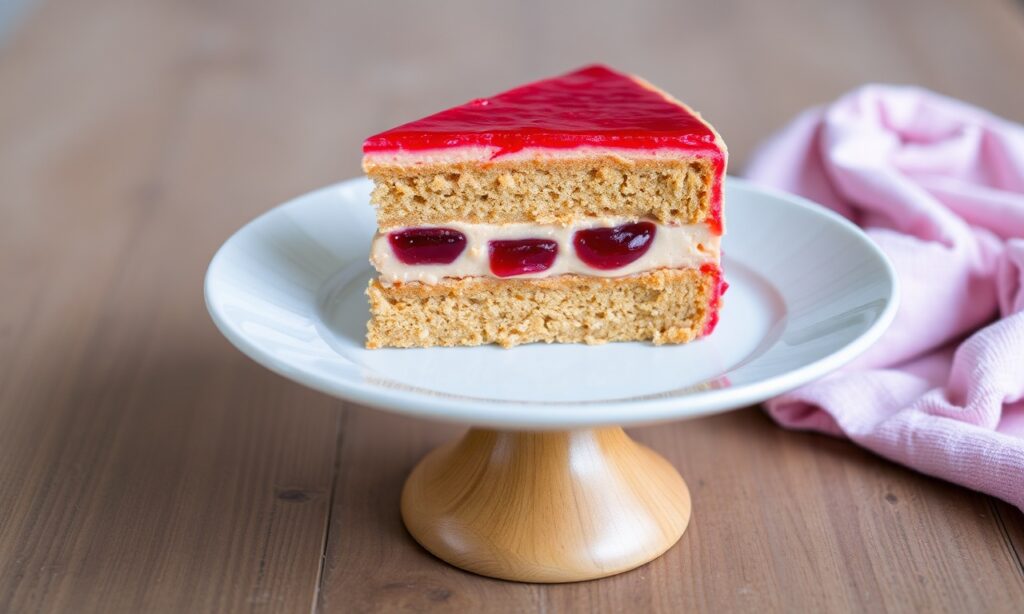
Few flavor pairings feel as familiar as peanut butter and jelly. This recipe turns that classic taste into a tall, bakery-style peanut butter & jelly layer cake with tender crumb, rich frosting, and a glossy fruit center.
- Why Peanut Butter & Jelly Works as a Layer Cake
- Prep and Cook Time
- Yield
- Difficulty Level
- Ingredients
- Instructions
- Tips for Success
- Serving Suggestions
- Q&A
- How do I keep the jelly layer from soaking into the cake?
- What peanut butter works best for frosting?
- Can I use grape jelly instead of strawberry?
- Why do I need room-temperature eggs and buttermilk?
- How should I store leftovers?
- In Retrospect
At a Glance
- Layered texture: frosting seals in moisture and keeps the jelly from bleeding.
- Balanced sweetness: peanut butter adds depth while jelly brings bright fruit tang.
- Better slices: chill time firms the frosting for clean cuts.
- Easy upgrades: use thicker jelly and optional chocolate accents.
In this peanut butter & jelly layer cake, you bake three round cake layers, then stack them with a creamy peanut butter frosting and a smooth jelly layer. Each bite delivers soft cake, buttery nut flavor, and sweet-fruity contrast—like a grown-up version of the sandwich you loved.
To build the right structure, focus on three things: room-temperature ingredients, evenly mixed batter, and proper chilling. If you nail those steps, the jelly stays vivid and the layers stay neat.
Why Peanut Butter & Jelly Works as a Layer Cake
Peanut butter and jelly already pair well because they balance fat and fruit. Peanut butter carries nutty richness and a slightly salty edge, while jelly supplies concentrated sweetness and tang.
When you turn the combo into layers, you create more surface area for each flavor. The frosting acts as a bridge between the cake and jelly, improving bite consistency and preventing soggy zones.
Prep and Cook Time
Planning Time: 35 minutes
Cook Time: 25 minutes
Total Time: 1 hour 10 minutes
Yield
This recipe yields 12 to 14 slices depending on how thick you cut.
Three 8-inch layers give a tall cake with enough frosting for smooth sides and a clear jelly stripe.
Difficulty Level
Medium—ideal if you can follow baking steps and you’ve made frosting before.
You don’t need special tools. A hand mixer or stand mixer helps with texture, but the method stays straightforward.
Ingredients
Use fresh baking powder and check that your jelly is spreadable. Thick jelly works best because it holds shape between layers.
For peanut butter, choose a creamy style. If you use a natural brand, stir well so the texture stays uniform.
- 2 ½ cups all-purpose flour, sifted
- 1 tbsp baking powder
- ½ tsp baking soda
- ½ tsp fine sea salt
- ¾ cup unsalted butter, softened
- 1 cup creamy peanut butter (natural, unsweetened for depth)
- 1 ¼ cups granulated sugar
- ¾ cup light brown sugar, packed
- 4 large eggs, room temperature
- 1 tbsp pure vanilla extract
- 1 cup buttermilk, room temperature
- 1 cup strawberry jelly, smooth
- 1 ½ cups peanut butter frosting (recipe below)
Peanut Butter Frosting
- 1 cup unsalted butter, softened
- 1 cup creamy peanut butter
- 4 cups powdered sugar, sifted
- ¼ cup whole milk (plus more if needed)
- 1 tsp pure vanilla extract
- Pinch of salt
Instructions
Read the full method first, then bake and cool the layers before stacking. The main risk is rushing cooling—warm cake can loosen frosting and thin the jelly layer.
Follow each mixing step closely. Overmixing after adding flour can make cake layers tough, especially in a dense peanut butter batter.
- Preheat your oven to 350°F (175°C). Prepare three 8-inch round cake pans by greasing and lining with parchment.
- Whisk flour, baking powder, baking soda, and salt in a medium bowl. Set aside to keep dry ingredients evenly distributed.
- Cream softened butter and creamy peanut butter with an electric mixer until light and fluffy, about 3 minutes.
- Add granulated sugar and brown sugar gradually, beating until smooth and airy.
- Incorporate eggs one at a time, mixing just until combined after each addition.
- Blend in vanilla for warm aroma and a rounded sweetness.
- Alternate adding the dry ingredients and buttermilk in three parts, beginning and ending with dry. Mix on low speed until just combined.
- Divide batter evenly among the pans. Smooth tops with a spatula.
- Bake for 22 to 25 minutes. The cakes should spring back lightly, and a toothpick should come out clean or with a few moist crumbs.
- Cool cakes in pans for 10 minutes, then turn out onto wire racks to cool completely.
- Prepare frosting: beat butter and peanut butter until smooth. Add powdered sugar gradually and mix until thick.
- Adjust texture: add milk and vanilla, then mix until creamy and spreadable. If it feels loose, add a bit more powdered sugar.
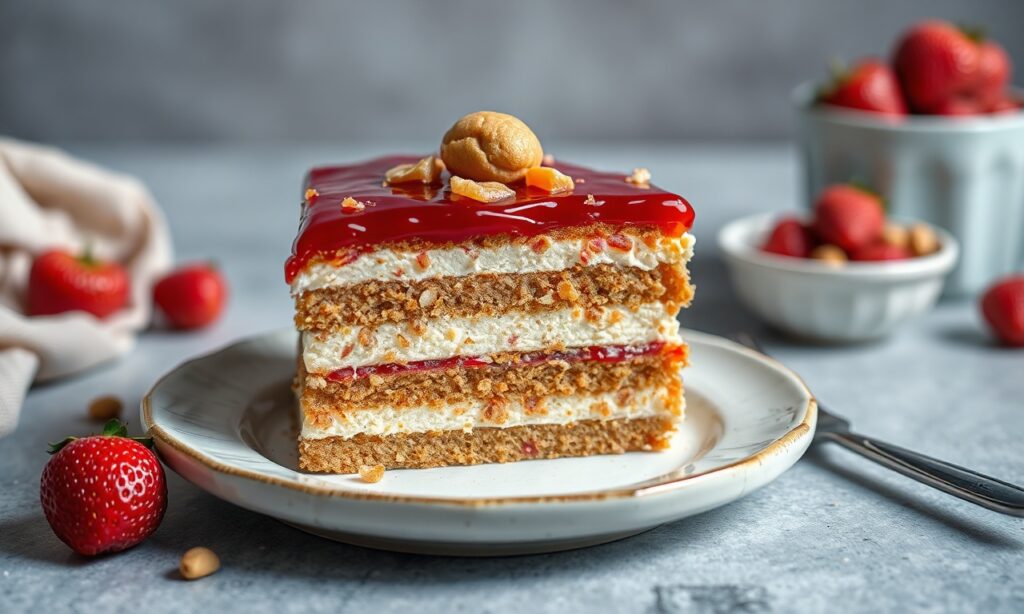
- Assemble the cake: spread a generous layer of peanut butter frosting on the first cake layer. Spoon and smooth the strawberry jelly over the frosting.
- Repeat with the second layer, then top with the final cake layer. Frost the top and sides with remaining frosting.
- Chill for 30 minutes so the frosting firms and the jelly layer sets before slicing.
Tips for Success
Small choices make a big difference in a layered cake. Use room-temperature dairy so batter emulsifies smoothly, and keep your jelly layer thin but even.
If you want extra topical depth, fruit chemistry matters too. Jelly sets thanks to gelling agents and dissolved sugars, which is why thick jelly behaves better between cake layers.
Jelly keeps its shape due to gelling properties, so thicker products reduce the chance of runny pooling. For the cleanest slices, aim for an even layer thickness.
- Flavor Pairing: Choose quality peanut butter and jelly with contrasting textures. Creamy peanut butter plus smooth jelly gives the most even mouthfeel.
- Moist Layers: Buttermilk adds tang and tenderness. Keep it at room temperature so it blends without lumps.
- Frosting Texture: Sift powdered sugar for fewer lumps. If frosting looks grainy, keep mixing—then correct with a small splash of milk.
- Jelly Layer: Warm jelly slightly so it spreads easily. Use short heating bursts so it doesn’t thin too much.
- Make Ahead: Bake layers up to 2 days ahead. Wrap tightly and refrigerate, then bring layers to cool room temperature before stacking.
- Substitutions: Smooth almond butter can replace peanut butter for a different nut profile. Keep the same frosting method for consistent structure.
Emulsion is the reason room-temperature butter and eggs mix better. When fats and liquids combine smoothly, the cake batter bakes with a more uniform crumb.
Butter contributes flavor and structure in both cake and frosting. Soft butter creams better, traps air, and supports a stable crumb.
Once the cake chills, the frosting firms and the jelly layer behaves like a set filling. That step helps you slice cleanly with less mess.
Serving Suggestions
Slice the cake into wedges and wipe your knife between cuts for sharp edges. For a quick upgrade, add a thin drizzle of melted dark chocolate on top.
You can also garnish with crushed roasted peanuts for crunch. If you prefer freshness, add a few berries around each plate.
For drink pairing, cold milk balances the sweet and nutty flavors. If you prefer coffee, choose a medium roast to avoid overpowering the peanut note.
| Nutrient | Per Serving |
|---|---|
| Calories | 420 kcal |
| Protein | 8 g |
| Carbohydrates | 48 g |
| Fat | 22 g |
Cake relies on structure from flour proteins and eggs. When you mix gently after adding flour, you preserve a tender crumb that holds up under frosting and filling.
Q&A
Use these answers to troubleshoot common issues with layered desserts. They focus on flavor, texture, and clean slicing.
Adjust techniques based on your jelly thickness and your peanut butter brand.
How do I keep the jelly layer from soaking into the cake?
Spread frosting on the cake before adding jelly. Then chill the assembled cake long enough for frosting to firm and act like a barrier between layers.
What peanut butter works best for frosting?
Use creamy peanut butter for the smoothest frosting. If you choose natural peanut butter, stir thoroughly so oil separation doesn’t create a thin or grainy frosting.
Can I use grape jelly instead of strawberry?
Yes. Swap in grape jelly or raspberry jelly, but keep the texture similar. Thick, smooth jelly gives the cleanest jelly stripe.
Why do I need room-temperature eggs and buttermilk?
Room-temperature ingredients blend more evenly. Better mixing improves emulsion, which helps the batter bake into a consistent crumb.
How should I store leftovers?
Store the cake covered in the refrigerator for up to 3 days. For best texture, let slices sit at cool room temperature for 10 minutes before serving.
In Retrospect
This peanut butter & jelly layer cake takes a childhood classic and turns it into a showpiece you can slice and serve with confidence. The method stays practical, but the results feel special.
When you balance tender layers with thick frosting and a vibrant jelly stripe, you get a dessert that tastes familiar and new at the same time. Bake it for a party, bring it to a gathering, or keep it for your next dessert craving.
See also: peanut butter