
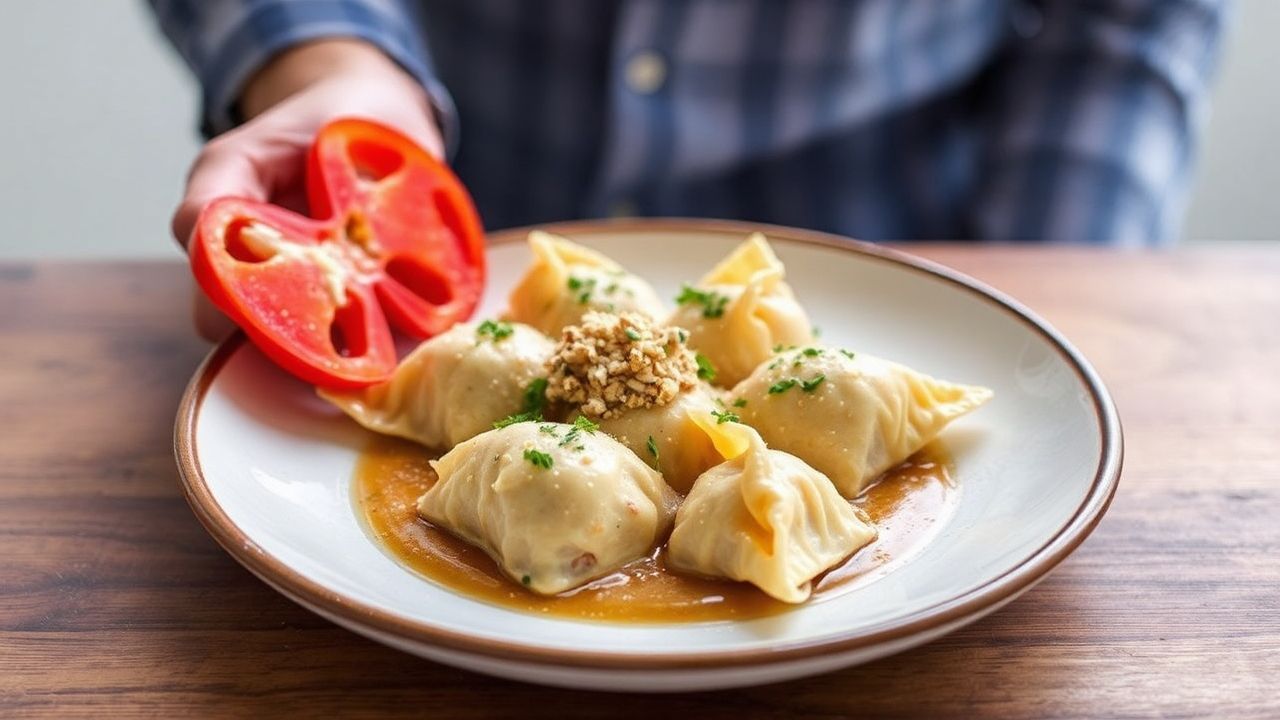
Hidden along the Liguria coast and its inland hills, Pansotti in Salsa di Noci bring together two Ligurian hallmarks: fresh herbs and walnuts. These small, filled pasta parcels sit in a creamy walnut sauce that tastes nutty, savory, and gently sweet. For many cooks, this dish also feels like a warm snapshot of Northern Italian home cooking.
- Pansotti are herb-and-ricotta stuffed pasta dumplings from Liguria.
- Salsa di noci gets its silkiness from walnuts, soaked bread, and olive oil.
- Small technique choices—toast level, blending time, and sauce thickness—matter.
- You can serve it with simple wine pairings or a light salad for balance.
More than a recipe, this is a flavor system built around the region’s ingredients. The Ligurian climate supports many garden herbs and nut trees, while traditional cooking favors flexible sauces that coat pasta well. That balance helps you taste the filling and the sauce in every bite.
This guide keeps the process practical. You’ll learn how to make the stuffed pasta, how to build a classic walnut sauce texture, and how to serve the dish so it stays glossy instead of heavy.
Origins and Tradition of Pansotti in Ligurian Cuisine
Creamy walnut pasta from Liguria starts with pansotti, a stuffed pasta associated with the Italian Riviera. Liguria sits between sea and mountains, so cooks often blend garden produce with pantry staples like nuts and cheese. That mix shaped a tradition where herbs and dairy work together.
Herbs like parsing-friendly greens (chard, borage, parsley) commonly appear in Ligurian fillings because they grow well in the region. For broader context on stuffed pasta and regional variations, see Italian pasta. Local forms differ, but the goal stays the same: protect delicate filling inside thin pasta.
Walnuts also carry cultural weight in Northern Italy. You’ll find them used in sauces where a nut base replaces creaminess from dairy alone. If you want background on the nut itself, review walnut to understand why flavor and oil content change with freshness.
A common pattern in Ligurian cooking uses simple steps, then refines texture. Pansotti dough stays thin and pliable, while the sauce becomes smooth enough to coat but still thick enough to cling. That texture logic explains why salsa di noci tastes rich yet not oily when you blend correctly.
Crafting the Perfect Salsa di Noci: Ingredients and Techniques
The sauce for Pansotti in Salsa di Noci depends on texture control. Toast the walnuts to bring out aroma, then blend until creamy, using soaked bread as the thickening agent. Finally, emulsify with olive oil so the sauce coats pasta rather than pooling.
Start with fresh walnuts and high-quality extra virgin olive oil. Add garlic for a light punch and use Parmigiano-Reggiano for savory depth. If you want a primer on the broader ingredient role of olive oil in Mediterranean cooking, see olive oil. Proper emulsification keeps the sauce stable from first bite to last.
The bread step matters because it absorbs moisture and starches soften harsh nut notes. Use day-old bread, soak it briefly, then squeeze out extra water. That lets you reach a creamy consistency without turning the sauce thin or watery.
Blend in short pulses, then scrape the bowl. This helps the mixture turn uniform, especially if the walnuts include small pieces. For science-backed cooking fundamentals around sauces and emulsions, you can also review emulsion.
After blending, stir in cream if you choose the classic creamy version. If you prefer lighter richness, you can reduce cream and rely on blending quality plus olive oil. Either way, taste and adjust salt and pepper before you toss the pasta.
One more detail: avoid over-browning the walnuts. Dark toast adds bitterness and can overpower the herb filling. Gentle toasting also keeps the sauce’s nut aroma clean and pleasant.
Step-by-Step Guide to Making Authentic Creamy Walnut Pasta
This section builds the full dish. You’ll make the pansotti dough, prepare the herb-and-ricotta filling, cook the pasta, then coat it in creamy walnut pasta from Liguria style.
Prep time stretches because stuffed pasta needs rest and shaping. Still, the steps stay straightforward. Use your pasta machine if you have one, but a rolling pin works if you keep the dough thin and even.
Prep and Cook Overview
Prep and Cook Time: about 2 hours (resting + filling + cooking)
Yield: 4 servings • Difficulty: Medium
Ingredients
For the pansotti dough
- 2 cups all-purpose flour, sifted
- 2 large eggs, room temperature
- 1 tbsp olive oil
- 1/2 tsp salt
For the filling
- 1 cup ricotta cheese, well drained
- 1 cup mixed wild herbs (borage, parsley, chard), finely chopped
- 1/4 cup grated Parmigiano-Reggiano
- 1 garlic clove, minced
- Salt and freshly ground black pepper, to taste
For the walnut sauce
- 1 1/2 cups shelled walnuts, lightly toasted
- 1 slice day-old rustic bread, crust removed and soaked in water
- 1 small garlic clove
- 1/2 cup extra virgin olive oil
- 1/2 cup heavy cream (or plant-based cream for dairy-free)
- 1/3 cup grated Parmigiano-Reggiano
- Salt and pepper, to taste
Instructions
- Make the dough: Mound flour, make a well, add eggs, olive oil, and salt. Knead until smooth and elastic, then wrap and rest 30–40 minutes.
- Prepare the filling: Mix ricotta, chopped herbs, Parmigiano-Reggiano, and minced garlic. Season with salt and pepper. Chill until ready to use.
- Roll and cut: Roll dough thin (about 1/16 inch). Cut into 2×2 inch squares.
- Fill and shape pansotti: Place about a teaspoon filling in the center. Fold into a triangle or half-moon and seal firmly.
- Cook: Boil salted water. Cook pansotti 4–5 minutes until they float. Remove gently and keep warm.
- Blend the walnut sauce: Drain and squeeze soaked bread. Blend walnuts, bread, garlic, Parmigiano, and olive oil until creamy with light texture. Stir in cream and adjust seasoning.
- Toss and serve: Toss pansotti gently with sauce so each piece gets coated. Add a splash of pasta water if needed for silkiness.
For best texture, serve right after coating. If you must hold the dish, cover lightly and re-warm gently, then add a touch of pasta water to restore gloss.
Tips for Success
- Use fresh, in-season herbs to keep the filling fragrant.
- Toast walnuts gently to avoid bitterness.
- If sauce feels too thick, loosen with pasta water.
- Knead dough until elastic but not sticky; use flour sparingly.
- Freeze shaped pansotti on a tray, then cook from frozen and add about 1 extra minute.
If you want a quick look at how stuffed pasta forms vary regionally, browse ravioli. Even when names differ, the sealing principle stays consistent: keep filling contained and pasta thin.
Pairing Suggestions and Serving Tips for an Unforgettable Meal
When you serve Pansotti in Salsa di Noci, you want the meal to support the nutty, herb-filled flavor. A crisp white wine works well because acidity lifts the sauce instead of making it feel heavy.
Try a Ligurian-style white such as Vermentino (often called Vermentino in regions outside Italy) or other fresh, dry whites. If you want general background on wine styles and how acidity affects food pairing, see wine. For non-alcoholic pairing, use sparkling water with lemon and a pinch of salt to mimic the lift.
Plate pansotti in shallow bowls so the sauce spreads, then drizzle extra walnut sauce over the top. Finish with grated Parmigiano-Reggiano and a few herb leaves for a clean, fresh aroma.
Serve with a light side like arugula or a simple mixed salad. Keep the salad dressing simple—lemon and olive oil—so it doesn’t compete with walnuts. If you prefer vegetables, roast zucchini or fennel with olive oil and salt to add sweetness without adding creaminess.
Also focus on timing. Pasta picks up sauce as it warms, and the goal is a glossy finish. A quick toss right before plating gives you the best mouthfeel.
| Nutritional Info (per serving) | Calories | Protein | Carbs | Fat |
|---|---|---|---|---|
| Pansotti with Walnut Sauce | 480 kcal | 18 g | 45 g | 22 g |
For more background on the region’s food identity, you can explore Liguria. It helps explain why nuts, herbs, and olive oil show up across so many classic dishes.
FAQ
What are pansotti, and where do they come from?
Pansotti are stuffed pasta parcels linked to Liguria. They’re typically filled with herbs and ricotta, then folded and sealed before boiling. Because Liguria uses many herbs in home cooking, the filling stays fragrant and savory.
For a wider view of similar stuffed pastas, consult stuffed pasta. The key difference with pansotti comes from the herb-forward Ligurian filling and the walnut sauce pairing.
How do I keep the salsa di noci smooth instead of grainy?
Toast walnuts lightly, soak and squeeze bread well, then blend thoroughly using pulses. Scrape the blender bowl during mixing so no dry walnut bits remain. Finish by emulsifying with olive oil and adjusting with cream and seasoning.
If your sauce still feels rough, blend longer and add a teaspoon of warm water for easier emulsification. The sauce should look glossy and pourable, not thick and sandy.
Can I make pansotti ahead or freeze them?
Yes. You can shape pansotti and freeze them in a single layer before cooking. When cooking from frozen, boil them as usual and add about 1 extra minute to reach the same doneness.
For best results, keep the coating and sauce timing tight. Coat right before serving so the pasta stays tender rather than drying out.
Are there vegetarian options in this recipe?
Traditionally, pansotti with salsa di noci uses no meat. The classic filling blends ricotta and herbs, while the sauce relies on walnuts, bread, olive oil, and cheese (or cream, depending on style). That makes it a natural vegetarian choice.
If you want dairy-free, use a plant-based cream and skip or replace cheese consistently, then taste to rebalance salt and flavor.
What’s the best way to serve creamy walnut pasta from Liguria?
Serve hot pansotti in shallow bowls, then drizzle sauce on top. Finish with grated Parmigiano-Reggiano and a few fresh herb leaves for aroma. Pair with a crisp dry white or sparkling water with lemon.
Keep the dish moving from pan to plate. Fresh coating keeps the sauce glossy and helps you taste both herb and walnut notes clearly.
See also: pansotti