
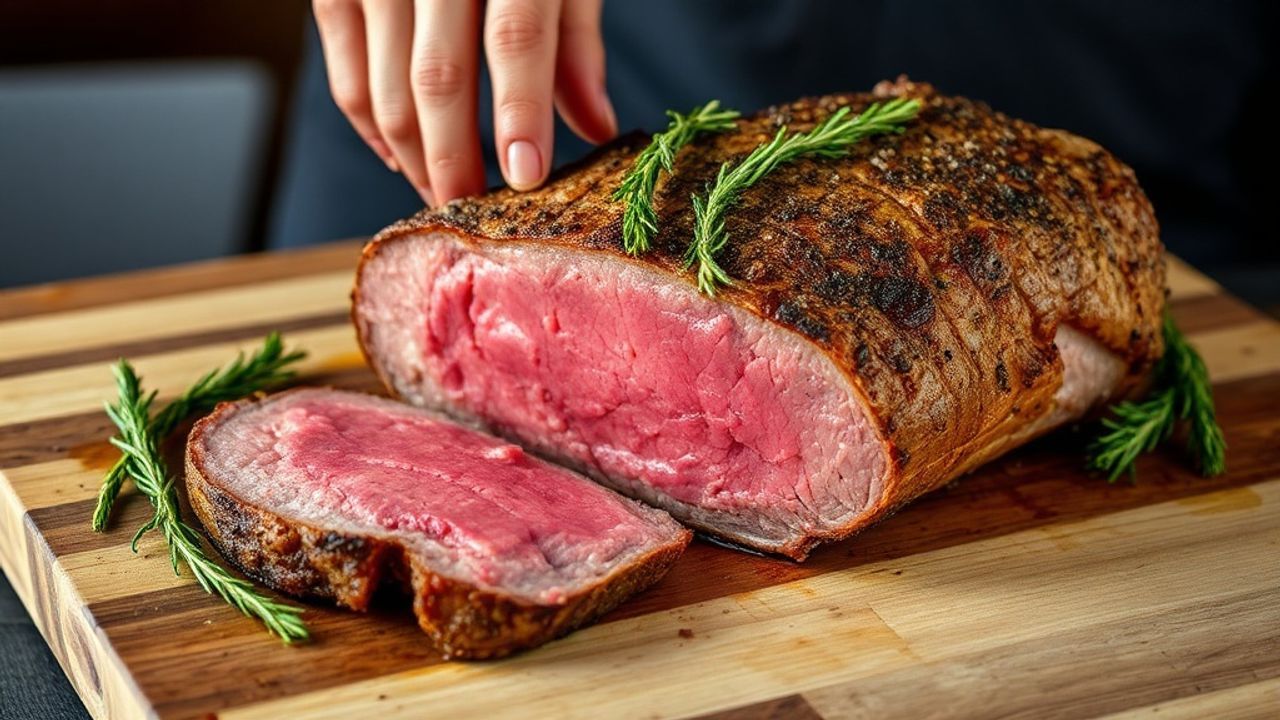
Beef porchetta captures the Italian porchetta tradition applied to well-selected beef: long slow roast, aromatic herb rub, and a golden crackling skin. This recipe-level guide focuses on technique, timing, and practical corrections so cooks can produce reliable, restaurant-quality results.
- Key result: Tender, herb-studded beef with crisp skin.
- Timing: Marinate overnight; roast low 3–4 hours then sear
- Tools: Rack, thermometer, and a sharp knife for carving.
Beef porchetta: Why this approach works
Porchetta traditionally uses pork, but the same method gives beef a deep, layered flavor when you choose fatty, well-marbled cuts. The process relies on controlled collagen breakdown and fat rendering to produce a tender interior and crisp exterior.
Understanding muscle and fat behavior matters. Consult the general beef science overview on Beef for context and the porchetta tradition at Porchetta.
Ingredients and proportion strategy for Beef porchetta
Use a combination of beef belly (for fat and skin) and a leaner center like loin or top round for texture contrast. A 2.5–3 lb belly wrapped around a 2 lb loin balances fat and meat for 6–8 servings.
Key aromatics are rosemary, sage, thyme, fennel seed, garlic, lemon zest, salt, and pepper. For reference on classic herbs, see Rosemary and Fennel.
- 2.5–3 lb beef belly, skin on, butterflied
- 2 lb beef loin, trimmed
- Herb rub: garlic, rosemary, sage, thyme, fennel seed, lemon zest
- Salt & pepper to taste; olive oil; kitchen twine
Equipment, hygiene, and prep essentials
A good rack, a heavy roasting pan, instant-read thermometer, sharp knife, and kitchen twine are non-negotiable. A wire rack promotes even air circulation and consistent crackle development.
Sanitation and dry skin are crucial. Pat the skin bone-dry and optionally air-dry uncovered in the refrigerator for several hours or overnight to remove surface moisture.
Scoring, seasoning, and assembly
Score the skin in a shallow crosshatch; avoid cutting into meat. Scoring helps fat render and produces even blistering during the high-heat finish.
Spread the herb rub under the meat surface and on the exposed loin before rolling. Roll skin out, tie tightly every 1–1.5 inches, and refrigerate to firm the shape before roasting.
Step-by-step cooking process for consistent Beef porchetta
Remove the porchetta from the fridge 30–45 minutes before roasting so it loses chill and cooks evenly. Preheat the oven to a low setting (275°F / 135°C) to render fat gradually and prevent toughness.
Place the roll on a rack inside a roasting pan, skin side up. Roast low until internal temperature reaches 155–160°F (68–71°C) for medium; time typically falls between 3 and 4 hours depending on mass and oven variability.
Low-and-slow phase (rendering)
During the low phase, the goal is to convert collagen into gelatin while keeping juices. Baste sparingly to avoid cooling the surface; allow rendered fat to pool in the pan for flavor and moisture.
Use an instant-read thermometer inserted into the center. Temperature, not time, determines doneness and texture when rendering sizable roasts.
High-heat finish (crisping the skin)
After the roast reaches target internal temp, increase the oven to 475°F (245°C) or use the broiler in short bursts to blister the skin. Monitor constantly; blistering can turn to burning within minutes.
If the skin is not blistering evenly, rotate the pan and move the rack position. Rest the roast for 10–15 minutes tented in foil to let juices redistribute before slicing.
Common faults and corrections
Soggy skin is almost always due to retained surface moisture or insufficient final heat. Dry the skin in the fridge and finish at very high heat to force rapid evaporation and puffing.
Tough meat results from high initial temperatures or under-prolonged rendering. Keep the oven low and extend time rather than increasing temperature during the render phase.
After you apply the warning advice, allow the roast to rest. Resting keeps the slices juicy and avoids a dry presentation.
Serving, carving, and storage
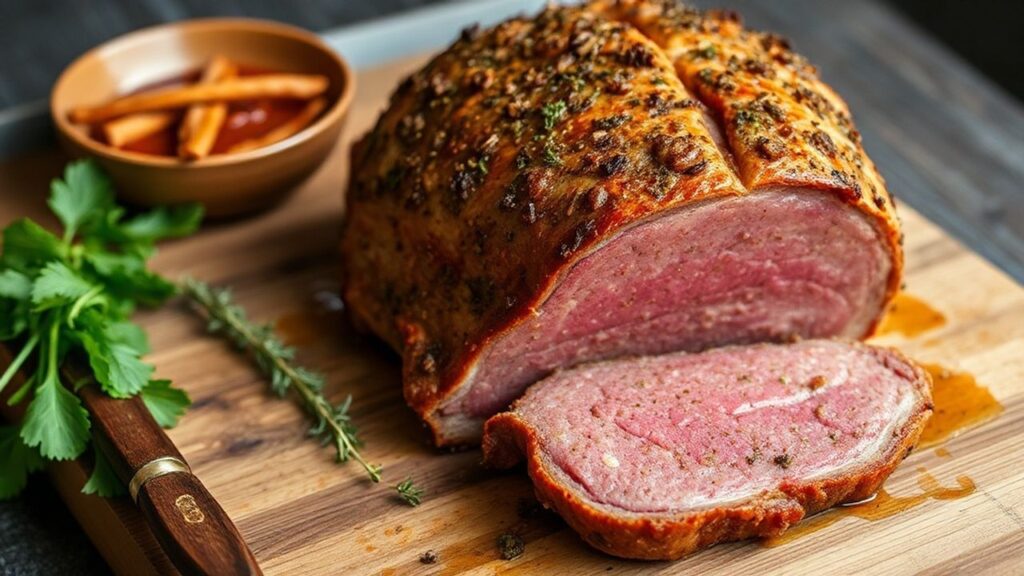
Carve with a sharp knife into thick, rustic slices to showcase the herb-studded center and crackling. Serve immediately for maximum textural contrast between crisp skin and tender meat.
Leftovers reheat gently in a low oven to avoid softening the crackle. Cold sliced porchetta also makes excellent sandwiches; layer with pickled vegetables or salsa verde.
For complementary flavors and regional herb blends, see the Italian Herb Blends Guide and consider reviewing our Slow Roast Techniques reference for oven profiles and timing adjustments.
Technical notes: temperature and food safety
Internal temperature targets depend on desired doneness. For well-rendered, safe porchetta, 155–160°F (68–71°C) provides a balance of safety and tenderness while allowing residual carryover to reach final safe range.
Use a calibrated probe thermometer and test multiple points in the roast. Carryover heat will raise internal temperature 5–10°F after removing from the oven, so remove just shy of your target.
FAQ
What cut is best for Beef porchetta?
Choose a fatty, skin-on belly for exterior crackle and a lean, flavorful loin for the center. A combination lets you create a classic roll with interior bite and exterior fat to render.
How long should I marinate the porchetta?
Marinate or rest the tied roll at least 4 hours; overnight is ideal. This lets salt and aromatics penetrate and firms the roll for even cooking.
Can I swap herbs or spices?
Yes. Classic combos center on rosemary, fennel, garlic, and lemon zest, but sage, thyme, or marjoram work well. Match herbs to your sides and wine for a cohesive meal.
How do I re-crisp the skin on leftovers?
Reheat gently in a 300°F oven until warm, then blast under a hot broiler or 500°F oven for a few minutes while watching closely. Use a rack so air flows under the roast to avoid steaming.
Where can I learn more about porchetta history?
Explore the culinary and cultural roots of porchetta at the comprehensive Porchetta page and regional traditions such as Umbria on Umbria.
Final practical checklist: dry skin, tight roll, low-and-slow render, high-heat finish, rest before carving. Follow these steps and you will consistently produce Beef porchetta with both juicy interior and golden, crackling skin.
If you want deeper technique notes on herb ratios and brine options, consult the linked herb guide and slow-roast techniques above for tested weight-to-time tables and bracketed oven profiles.
See also: Beef porchetta