
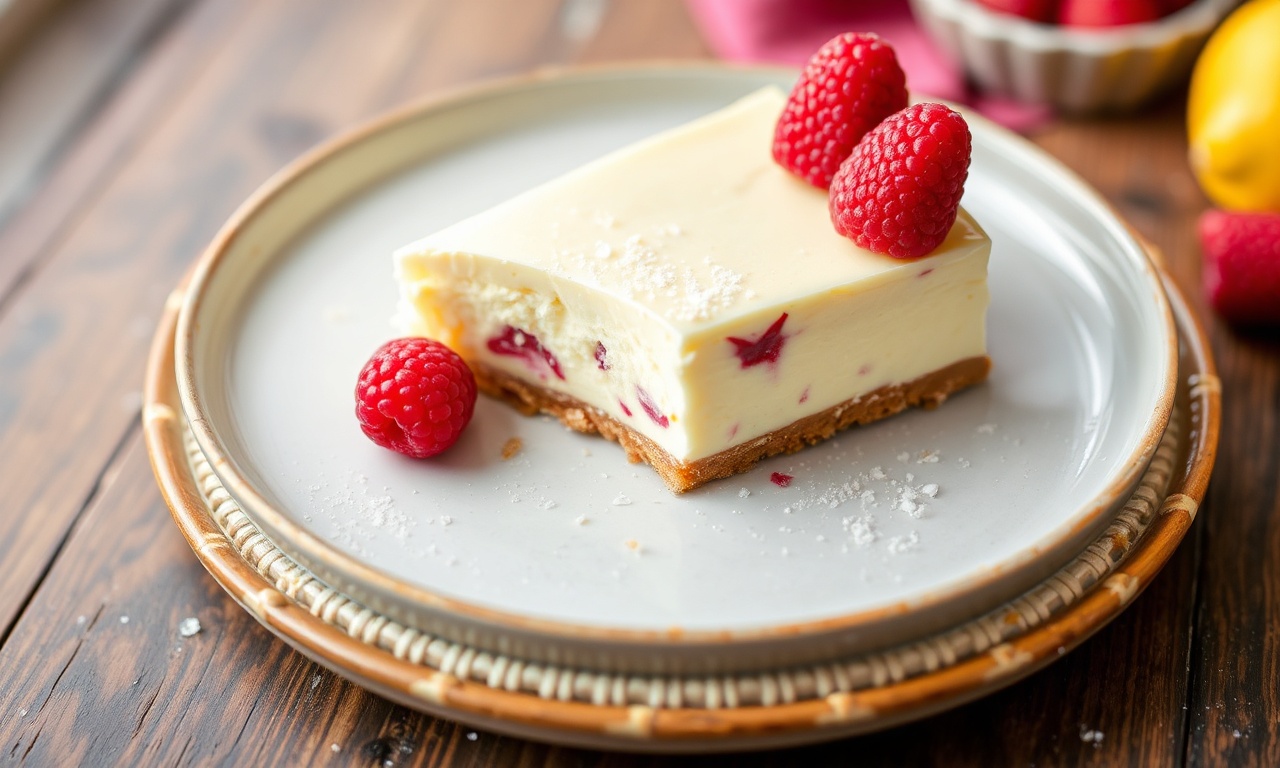
If you want a cheesecake that looks restaurant-worthy and slices cleanly, this zesty lemon raspberry cheesecake on a buttery shortbread crust delivers. You get bright citrus aroma, tangy fruit pockets, and a custard that sets silky—not dry. Better yet, the shortbread base stays crisp and buttery even after hours in the fridge.
- Why Zesty Lemon + Raspberry Works in Cheesecake
- Flavor and Texture Targets (So You Know What “Right” Looks Like)
- Ingredients You Need (With the Why Behind Each One)
- Exact Recipe (12 Slices) + Timing
- Prep, Bake, Chill
- Buttery Shortbread Crust (9-inch springform)
- Lower the Oven (Key for a Silky Set)
- Zesty Lemon Raspberry Cheesecake Filling
- Bake for Creaminess (No Overbaking)
- Cool, Then Chill
- Raspberry Drizzle
- Pro Troubleshooting (Cracks, Soggy Crust, Lumpy Batter)
- Serving Like a Pro (Presentation + Slice Technique)
- Make-Ahead, Storage, and Freezing
- FAQ
- Shortbread crust bakes into a firm, sliceable foundation that resists sogginess.
- Gentle baking at lower temperature protects texture and reduces cracks.
- Room-temperature ingredients blend smoothly for a stable custard set.
- Overnight chilling improves flavor and firms the slice for cleaner cuts.
Why Zesty Lemon + Raspberry Works in Cheesecake
This flavor pairing works because lemon and raspberry each bring something the other needs. Lemon adds sharp, aromatic brightness (especially from zest oils), while raspberries add fruit acidity and a gentle sweetness that rounds out cream cheese.
Cheesecake is basically a controlled coagulation process. As eggs warm in the oven, milk proteins and egg proteins form a stable network that sets as it cools. Lemon and berry acidity can slightly affect setting, so you want steady baking and a balanced batter.
What the Shortbread Crust Contributes
A shortbread crust uses butter-coated crumbs that bake into a dense layer. That density matters because it gives the custard support and prevents the base from turning gummy.
You can think of shortbread as a “moisture buffer.” Once it bakes through, it holds up against the cheesecake filling during baking and chilling. For a broader look at the science behind fat-rich pastry structures, see shortbread.
Flavor and Texture Targets (So You Know What “Right” Looks Like)
Great cheesecake doesn’t just taste good—it has a predictable texture. This recipe aims for a custard that jiggles softly in the center, fully sets at the edges, and stays creamy after chilling.
When you remove it from the oven, the center should still wobble like a thick custard. If it looks fully firm, you likely baked too long and risk a drier bite.
How Zest Builds Aroma Better Than Juice Alone
Lemon zest contains aromatic oils that taste stronger and more “fresh” than juice. Juice adds acidity and flavor, but zest carries much of the perceived citrus punch.
That’s why this cheesecake uses both. If you want to understand why citrus aroma behaves differently than juice flavor, review citrus and its oil-rich peel compounds.
Where Raspberry Flavor Lives (Fresh vs. Cooked)
Raspberry flavor is delicate. If you cook the berries too much inside the batter, you’ll mute brightness and deepen sweetness.
That’s why you fold raspberries at the end and bake gently. The goal is “fruit pockets,” not berry jam. For botanical background on raspberries and their characteristic flavor profile, see raspberry.
Ingredients You Need (With the Why Behind Each One)
Good cheesecake starts with ingredient temperature and balance. Use room-temperature cream cheese and eggs so the batter blends without lumps. Lumps usually bake into uneven texture.
Also, measure carefully. Baking is chemistry, and cheesecake punishes guesswork—especially when acidity and dairy meet.
Buttery Shortbread Crust
- All-purpose flour for structure
- Granulated sugar for tenderness and browning
- Cold unsalted butter for crumbly, bake-stable texture
- Salt + vanilla to deepen butter aroma
Cold butter keeps dough pieces from melting too early. That helps the crust bake into a cohesive layer instead of a greasy base.
If you want extra insurance, press the crust firmly into the pan so it bakes as one sheet. This prevents cracks in the crust when you slice.
Zesty Lemon Raspberry Cheesecake Filling
- Cream cheese (8 oz blocks) for the creamy custard base
- Sugar for sweetness and smoothness
- Eggs for the set
- Sour cream for tang and velvety texture
- Flour for stability (reduces grainy collapse)
- Lemon juice + lemon zest for brightness
- Fresh raspberries folded in gently
Eggs provide structure through protein coagulation. For a deeper understanding of how proteins behave with heat, you may find the basics at protein helpful.
Raspberry Drizzle
- Fresh raspberries
- Powdered sugar for a smooth pour
- Lemon juice to keep the sauce bright
This topping should feel glossy, not watery. Mash thoroughly, stir until smooth, and drizzle right before serving.
Exact Recipe (12 Slices) + Timing
Plan for chilling time. Cheesecake improves in the fridge because the custard fully hydrates and firms as it cools.
Total time looks long, but active work stays fairly short.
Prep, Bake, Chill
- Prep: 30 minutes
- Crust bake: 15 minutes
- Cheesecake bake: 50–55 minutes
- Oven rest: ~1 hour
- Chill: 6 hours minimum, overnight preferred
Buttery Shortbread Crust (9-inch springform)
Preheat oven to 350°F (175°C). Line the bottom of a 9-inch springform pan with parchment if needed for easy release.
In a bowl, mix 1 ¾ cups flour, ½ cup sugar, and ¼ tsp salt. Add 1 cup cold diced butter and cut it in until you get coarse crumbs. Mix in 1 tsp vanilla.
Press dough firmly into the pan. Bake 15 minutes until lightly golden and fragrant.
Lower the Oven (Key for a Silky Set)
After crust bakes, reduce oven temperature to 325°F (160°C). This gentler heat helps the custard set without drying out.
Place the pan on a baking sheet. A sheet catches drips and helps distribute heat more evenly.
Zesty Lemon Raspberry Cheesecake Filling
Beat 4 (8 oz) packages cream cheese on medium speed until smooth, about 2–3 minutes. Stop to scrape the bowl so you don’t leave pockets of unmixed cream cheese.
Gradually add 1 cup sugar. Keep mixing until creamy. Add 3 large eggs one at a time, mixing on low after each egg so you don’t whip in too much air.
Mix in ½ cup sour cream, 2 tbsp flour, ⅓ cup lemon juice, and 2 tsp lemon zest until just combined. Stop as soon as the batter looks uniform.
Fold in 1 ½ cups fresh raspberries gently. You want them intact for fruit pockets in every slice.
Pour filling over the crust and smooth the top.
Bake for Creaminess (No Overbaking)
Bake at 325°F (160°C) for 50–55 minutes. The edges should look set while the center jiggles slightly when you nudge the pan.
Turn off the oven. Crack the oven door open and let the cheesecake sit for 1 hour. This slow temperature drop reduces stress and cracking.
Cool, Then Chill
Cool at room temperature until no longer warm. Then cover and refrigerate for at least 6 hours, ideally overnight.
Chilling turns the cheesecake from “soft custard” into “clean slices.” If you rush, you’ll fight smearing and loose structure.
Raspberry Drizzle
Mash ½ cup raspberries with 2 tbsp powdered sugar and 1 tsp lemon juice until pourable. If you prefer a chunkier drizzle, mash less aggressively.
Drizzle just before serving. Cold topping clings better and doesn’t flood the surface.
Pro Troubleshooting (Cracks, Soggy Crust, Lumpy Batter)
Cheesecake failures usually share the same causes: too much heat, too much air, or rushing the cooling process. Fixing one step often fixes multiple problems.
Use this checklist before you blame the recipe.
Cracked Top
Cracks happen when the custard sets too fast while the inside still moves. High heat speeds evaporation and expands the protein network unevenly.
Reduce baking time, use the lower temperature, and always do the oven-door rest. Slow cooling helps the custard relax instead of splitting.
Soggy Crust
A soggy base usually means the crust under-baked or the pan didn’t seal well. If the crust stays pale and soft, it can’t form its stable, butter-rich structure.
Bake the crust until lightly golden. Also, keep the cheesecake covered in the fridge to prevent condensation from adding moisture to the surface.
Lumpy Filling
Lumps often come from cold cream cheese. Cold dairy resists blending and leaves dense bits that never fully smooth out.
Soften cream cheese until it bends when pressed. Then beat until smooth and scrape the bowl.
Serving Like a Pro (Presentation + Slice Technique)
Cheesecake tastes best chilled, but slicing works best when the surface settles. Let the cheesecake sit in the fridge until firm, then slice with a warm knife.
You’ll get sharper edges and cleaner fruit placement.
Best Time to Slice
Pull the cheesecake from the fridge 10–15 minutes before cutting. That short window slightly softens the top so the knife glides without tearing.
After slicing, return any leftover pieces to the fridge quickly to maintain structure.
Garnish for Bright Color
Serve with a controlled drizzle, not a flood. A few spoonfuls per slice keeps the custard clean and prevents pooling that can blur the base crust.
If you use mint, keep it minimal. The goal stays citrus and raspberry—not herb dominance.
Pairing Ideas
Lemon and berries pair naturally with beverages that cut fat. Try unsweetened iced tea, sparkling water, or a citrus-forward soda.
If you like wine, choose something crisp with acidity to match the fruit tartness. The contrast makes each bite feel lighter.
Make-Ahead, Storage, and Freezing
This cheesecake holds up well because it relies on a stable dairy set. Flavor improves after chilling, especially the lemon zest aroma.
Follow the storage steps closely to keep texture smooth.
Refrigerator Storage
Cover the cheesecake and store in the fridge. Keep it for up to 3 days for the brightest lemon and best fruit flavor.
Condensation can soften toppings, so keep the lid tight and avoid leaving it uncovered.
Freezing (Best Practices)
You can freeze slices for future dessert moments. Wrap individual slices tightly in plastic wrap, then add foil or place in a freezer container.
Freeze up to 2 months. Thaw in the fridge overnight for the smoothest texture.
FAQ
What makes a cheesecake “zesty” instead of just lemon-flavored?
Zest creates aroma because it holds essential oils. Juice adds acidity and taste, but zest builds the bright “lemon smell” that signals freshness.
How do I know when the cheesecake is done?
The edges should look set while the center jiggles slightly. If the center appears fully firm, you likely overbaked and may end up with a drier slice.
Can I use frozen raspberries?
Yes, but thaw and drain them well. Excess liquid can thin the batter and blur fruit pockets, especially if you fold them in while still icy.
Why do room-temperature ingredients matter so much?
Cold cream cheese resists blending, creating lumps. Room-temperature dairy mixes more evenly, which helps the custard set smoothly.
What’s the best way to prevent cracks?
Use a lower bake temperature, avoid overmixing, and cool slowly with the oven-door rest. Rapid temperature changes create stress in the custard that can split the surface.
See also: Zesty Lemon