

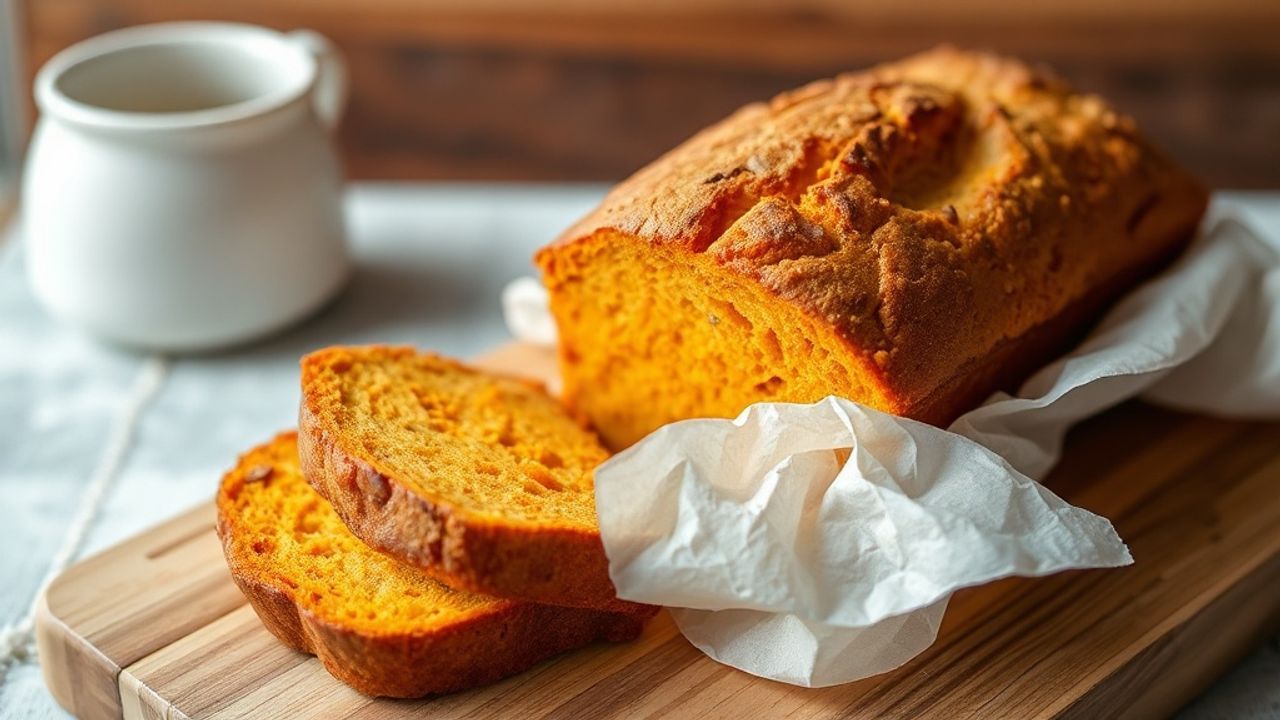
There is nothing more inviting than the scent of freshly baked sweet potato bread filling the kitchen. This guide explains how to build flavor, control moisture, and develop structure so each loaf turns out tender, flavorful, and consistent.
- Choosing the Perfect Sweet Potatoes for Maximum Flavor and Texture
- Mastering the Art of Dough Preparation for Fluffy Sweet Potato Bread
- Baking Techniques to Achieve the Ideal Crust and Moist Interior
- Creative Variations and Serving Suggestions to Elevate Your Sweet Potato Bread
- Prep and Cook Time
- Yield
- Difficulty Level
- Ingredients
- Instructions
- Tips for Success
- Storage and Shelf Life
- Practical Troubleshooting
- FAQ
- Key:** Roast sweet potatoes for concentrated flavor and predictable moisture.
- Key: Use warmed liquids and proofed yeast for reliable rise.
- Key: Knead to a clear gluten window and allow a gentle first fermentation for best crumb.
- Key: Adjust spices, add-ins, and resting methods to match your taste and schedule.
Choosing the Perfect Sweet Potatoes for Maximum Flavor and Texture
Begin with quality tubers: firm, medium-sized, and free from bruises. Orange-fleshed varieties deliver the classic sweetness and vibrant color most bakers expect.
For predictable results, roast the tubers instead of boiling them. Roasting concentrates sugars and reduces excess moisture, which helps you control dough hydration.
Mastering the Art of Dough Preparation for Fluffy Sweet Potato Bread
Use room-temperature ingredients to promote even yeast activity and gluten development. Start by combining mashed roasted sweet potato with warm milk, sugar, and a properly proofed yeast.
Fold in sifted flour and spices gradually. Knead on a lightly floured surface for 8–10 minutes until the dough becomes elastic and passes a small windowpane test.
[TIP]Expert Insight: You can replace up to 25% of the flour with sweet potato solids without losing structure if you increase kneading time and control hydration carefully. Test one loaf before scaling the substitution.
Baking Techniques to Achieve the Ideal Crust and Moist Interior
Preheat the oven to 375°F (190°C) to set the crust quickly and avoid an overly dense crumb. An egg wash produces a glossy, golden surface that improves presentation and mouthfeel.
Place the shaped dough in a greased 9×5-inch pan and bake 35–40 minutes. Tap the pan bottom; a hollow sound indicates doneness. Then cool on a rack to stabilize the crumb and prevent sogginess.
[WARNING]Pro-Caution: Do not overbake to chase a deep color. Because sweet potato increases sugar content, loaves brown faster; use foil to tent if the crust darkens too soon.
Creative Variations and Serving Suggestions to Elevate Your Sweet Potato Bread
Introduce texture and depth with mix-ins such as toasted pecans, dried fruit, or a cinnamon swirl. Try warming spices like nutmeg and ginger for seasonal nuance.
Serve slices warm with honey butter, cream cheese, or savory toppings like smoked salmon. For nutrition context, note that orange sweet potatoes contain high beta-carotene, which adds both color and micronutrients.
Prep and Cook Time
- Prep time: 20 minutes (plus 1.5 hours rising time)
- Cook time: 35–40 minutes
- Total time: Approximately 2 hours
Yield
Makes one standard 9×5-inch loaf, roughly 8–10 slices depending on thickness.
Difficulty Level
Medium: requires basic yeast handling and a modest kneading window. Beginners can follow each step and still achieve a reliable loaf.
Ingredients
- 1 cup mashed roasted sweet potatoes (about 2 medium tubers)
- 3 cups all-purpose flour, sifted
- 1/2 cup whole milk, warmed (about 110°F / 43°C)
- 2 1/4 tsp active dry yeast (one packet)
- 1/4 cup granulated sugar
- 1/4 cup unsalted butter, softened
- 1 tsp ground cinnamon
- 1/2 tsp ground nutmeg
- 1 tsp fine salt
- 1 large egg, beaten (plus one egg for egg wash)
Instructions
- Activate the yeast: Combine warm milk, yeast, and 1 tablespoon sugar. Rest 5–7 minutes until frothy.
- Mix wet ingredients: In a bowl, blend mashed sweet potato, remaining sugar, softened butter, and beaten egg. Add cinnamon, nutmeg, and salt.
- Combine: Stir the yeast mixture into the sweet potato mix until evenly incorporated.
- Add flour: Incorporate flour gradually, one cup at a time, until a sticky dough forms.
- Knead: Turn dough onto a floured surface and knead 8–10 minutes until smooth and elastic. Use minimal extra flour.
- First rise: Place in a greased bowl, cover, and let rise 1–1.5 hours in a warm area until doubled.
- Shape and second rise: Punch down, shape into a loaf, and place in a greased 9×5 pan. Let rise 30–40 minutes.
- Prepare to bake: Preheat oven to 375°F (190°C). Brush the loaf with egg wash for shine.
- Bake: Bake 35–40 minutes until golden and hollow-sounding when tapped. Tent with foil if browning too fast.
- Cool: Transfer immediately to a wire rack and cool completely before slicing to set the crumb.
Tips for Success
- Roast sweet potatoes at 400°F for 40–50 minutes until tender to concentrate flavor and limit water content.
- Keep additional flour minimal during kneading to preserve tenderness and avoid a dense loaf.
- Substitute half the milk with buttermilk for added tang and extended shelf life.
- Allow an overnight cold fermentation after the first rise to deepen flavor and improve digestibility.
Storage and Shelf Life
Wrap cooled bread tightly in plastic or store in an airtight container. At room temperature it keeps well for 2–3 days.
For longer storage, freeze individual slices on a tray, then transfer to a freezer bag for up to three months. Thaw or toast from frozen as needed.
Practical Troubleshooting
If the dough is sticky, lightly oil your hands rather than adding flour; this preserves the crumb. Conversely, if the loaf collapses, check that yeast activity and proofing environment were appropriate.
If the bread browns too quickly, lower oven rack or tent with foil. If the loaf is dry, reduce baking time slightly or verify your mashed sweet potato moisture before mixing.
FAQ
What makes sweet potato bread different from regular bread?
Sweet potato bread incorporates mashed sweet potato, which increases moisture and adds a subtle sweetness and color. The result is a tender crumb that differs from lean artisan loaves.
Can I use any type of sweet potato?
Yes. Orange varieties give classic color and beta-carotene content; purple or white types change hue and deliver subtle flavor differences. Adjust sugar to taste.
Do I need to cook the sweet potatoes before adding them?
Always cook and mash the sweet potatoes first. Roasting is preferred for flavor concentration and moisture control; steaming or boiling will work but may add more water to the dough.
Can I make this bread gluten-free or vegan?
Yes. Use a tested gluten-free flour blend and binders, and replace eggs with flax or chia egg substitutes. Note: texture and hydration requirements will change, so trial small batches first.
How should I store leftover bread?
Store at room temperature for 2–3 days wrapped tightly. Refrigeration can extend life to a week but may firm the crumb; freezing preserves quality for up to three months.
For technical context on baking fundamentals consult the broader baking literature and resources such as the baking overview or key entries on bread and sweet potato for ingredient background and variations.
Final note: Follow the steps methodically, measure ingredients accurately, and record any adjustments. That practice builds repeatable results and helps you tune the loaf to your kitchen conditions and taste.
See also: Sweet Potato