

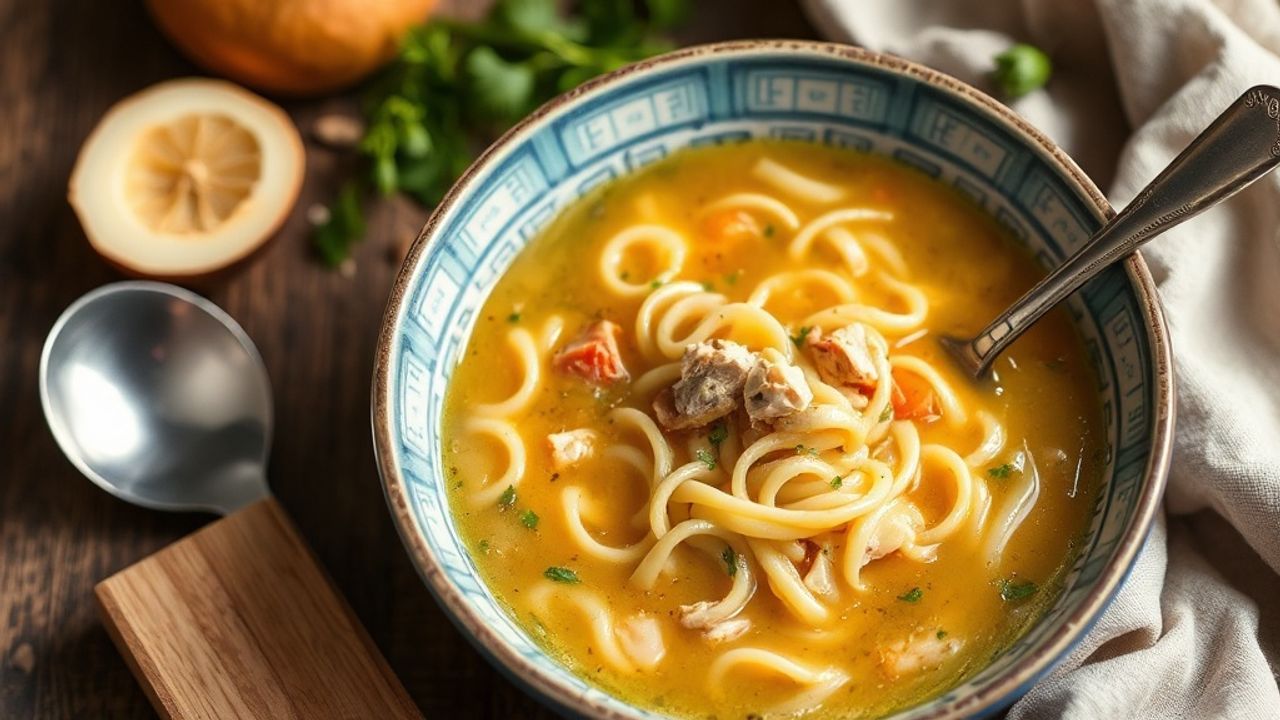
Chicken soup is a timeless remedy and a staple of home cooking that soothes both body and mood. A well-made bowl balances a clear, gelatinous broth, tender shredded meat, and noodles that hold their texture. Follow focused techniques and ingredient choices to make a restorative, flavorful pot every time.
- Selecting the Freshest Ingredients for Chicken Soup Flavor
- Mastering the Broth for Chicken Soup: The Base of Flavor
- Noodles and Chicken in Chicken Soup: Texture and Timing
- Final Touches and Serving for the Best Chicken Soup
- Recipe Details: Prep, Yield, and Timing for Chicken Soup
- Chef’s Notes and Practical Variations for Chicken Soup
- Nutrition Snapshot for Chicken Soup
- FAQ
- Key takeaway: Slow-simmered broth builds depth and body.
- Key takeaway: Cook noodles separately to avoid mushy texture.
- Key takeaway: Fresh herbs and acid brighten the final bowl.
Selecting the Freshest Ingredients for Chicken Soup Flavor
Start with high-quality poultry and crisp vegetables to maximize both nutrition and aroma. Choosing the right chicken impacts gelatin extraction and the ultimate mouthfeel of the broth.
Prefer a whole bird or bone-in parts for richer stock. Learn why bone and connective tissue matter by reviewing the science behind chicken as food at chicken as food.
Mastering the Broth for Chicken Soup: The Base of Flavor
The broth defines the bowl. Roast or brown bones and aromatics first for Maillard-driven depth, then simmer gently with mirepoix and herbs to extract flavor without clouding the stock.
Slow simmering draws collagen and minerals from bones, producing body and mouth-coating texture. For background on the culinary and nutritional role of broth, consult the broth entry, and read about connective tissue at collagen.
Noodles and Chicken in Chicken Soup: Texture and Timing
Noodle choice dictates mouthfeel. Wide egg noodles provide a tender chew and stay distinct in hot liquid when cooked correctly. For background on traditional noodle varieties, see noodle.
Cook noodles separately to al dente and add them at service to prevent sogginess. Shred or chop chicken after poaching; this preserves tenderness and disperses protein evenly through the bowl.
Final Touches and Serving for the Best Chicken Soup
Finish with acid, fresh herbs, and precise seasoning. A squeeze of lemon or a splash of vinegar lifts flavors and counterbalances fat. Fresh parsley, thyme, or chives add aromatic brightness at the last minute.
Serve piping hot with crusty bread for soaking. Adjust seasoning just before plating to account for any concentration from reduction during reheating.
Recipe Details: Prep, Yield, and Timing for Chicken Soup
This recipe scales and stores well. Plan time for roasting (optional) and a long, gentle simmer to build a robust, clarifying stock.
Below are practical details so you can execute the process without guesswork. Note the short active work time and longer passive simmering time.
Prep and Cook Time
Planning Time: 20 minutes.
Cook Time: 2 hours 30 minutes (passive simmering).
Total Time: 2 hours 50 minutes.
Yield
Serves: 6 hearty portions.
Difficulty: Medium — ideal for confident home cooks who want a reliable result.
Ingredients
- 1 whole free-range chicken (about 4 lb), halved or cut into pieces
- 3 large carrots, peeled and chopped
- 3 celery stalks, chopped
- 1 large yellow onion, quartered
- 4 garlic cloves, smashed
- 3 sprigs fresh thyme
- 2 bay leaves
- Salt and freshly ground black pepper, to taste
- 8 cups filtered water (adjust for pot size)
- 2 cups wide egg noodles (cook separately)
- Fresh parsley, chopped, for garnish
- Lemon wedges, optional for finishing
Instructions
- Roast (optional): Place bones and vegetables on a sheet, roast at 425°F until caramelized, 25–35 minutes. This concentrates flavor.
- Build the stock: Transfer bones and aromatics to a large stockpot, add water to cover, and bring to a gentle boil. Reduce to a low simmer.
- Simmer gently: Keep the surface barely moving; skim foam every 20 minutes. Maintain a low temperature to keep the broth clear.
- Strain and cool: After 2 hours, remove solids and strain through a fine sieve. Cool slightly, then remove meat from bones and shred.
- Cook noodles: Boil noodles in a separate pot until al dente, 6–8 minutes. Drain and rinse briefly to stop cooking.
- Combine to serve: Reheat broth, add shredded chicken and warm noodles, and finish with lemon and parsley. Season to taste.
Chef’s Notes and Practical Variations for Chicken Soup
Small technique changes yield different results. Roasting intensifies color and umami while a raw-simmer method produces a cleaner, lighter broth.
Swap noodles for rice or spiralized vegetables for a gluten-free bowl. Add turmeric for color and mild anti-inflammatory benefit; add leafy greens near the end for tender texture.
- Make-ahead: Store broth and solids separately; refrigerate broth up to 3 days or freeze up to 3 months.
- Clarity: For crystal-clear stock, chill and remove congealed fat or strain through cheesecloth.
- Flavor boost: Finish with a teaspoon of high-quality finishing oil or a small pinch of crushed red pepper.
Nutrition Snapshot for Chicken Soup
The numbers below estimate a balanced macro profile per serving when using wide egg noodles and skin-removed chicken meat.
| Nutrient | Per serving |
|---|---|
| Calories | ~320 kcal |
| Protein | ~28 g |
| Carbohydrates | ~30 g |
| Fat | ~8 g |
FAQ
Is chicken soup really beneficial when I’m sick?
Warm broth hydrates, the steam can ease congestion, and the nutrients provide easy-to-digest energy. The comfort factor also supports recovery through reduced stress.
Can I use parts instead of a whole chicken?
Yes. Thighs and drumsticks provide excellent flavor and gelatin. Include some bone for body; boneless cuts yield less collagen in the finished broth.
How do I prevent cloudy broth?
Control the simmering temperature and skim foam regularly. Roasting increases color but careful simmering and straining yield a clear stock.
What is the best way to store leftovers?
Cool quickly, refrigerate within two hours, and store components separately. Reheat gently and add noodles just before serving for optimal texture.
Can I make chicken soup faster?
Yes. Use bone-in pieces and simmer for 60–90 minutes, or pressure-cook broth for concentrated flavor in under an hour. Adjust aromatics and finish carefully.
Crafting chicken soup rewards patience. Follow these steps and you will consistently produce a bowl that comforts, nourishes, and tastes like home.
See also: chicken soup