
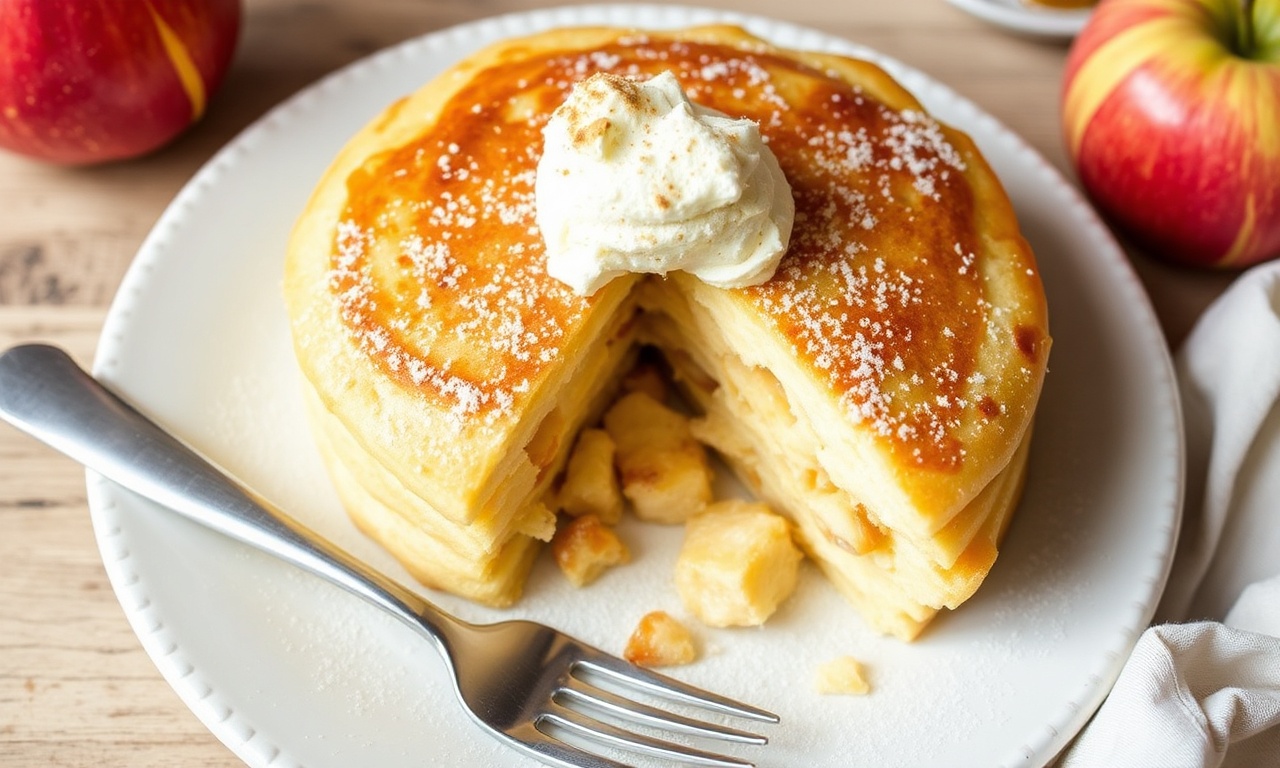
If you want a breakfast that looks impressive but fits a busy schedule, a fluffy German apple pancake delivers. It bakes in a hot skillet, balloons fast, then sets into a tender, custard-like center dotted with caramelized apple.
- What a Fluffy German Apple Pancake Really Is (and Why It Rises)
- Ingredients That Create the “Custard Center” and Golden Edges
- Apples: pick for structure, not just sweetness
- Batter: flour thinness and smooth mixing
- Spices: use them like seasoning, not a sauce
- Step-by-Step: The Method for a Big, Fast Puff
- Step 1: Preheat the skillet (don’t skip)
- Step 2: Sauté apples quickly, then cool slightly
- Step 3: Blend batter until smooth and pourable
- Step 4: Butter the hot pan, pour, add apples, bake
- Step 5: Serve immediately for maximum height
- Recipe: Fluffy German Apple Pancake (Serves 4, 25 Minutes Baking)
- Troubleshooting: Fix Common Problems Fast
- Problem: pancake didn’t puff
- Problem: gummy or under-set center
- Problem: apples released too much liquid
- Problem: edges browned too fast
- Best Toppings and Apple Pairings (That Don’t Flatten the Texture)
- Classic: powdered sugar + warm maple syrup
- Creamy: vanilla whipped cream
- Crunch: toasted nuts
- Alternative fruit: pears
- Storage, Reheating, and Make-Ahead Reality
- Nutrition Snapshot (Approximate)
- FAQ
You’ll get that signature puff because the oven heat drives steam formation while the egg batter sets quickly. Timing matters, but the method stays simple enough for beginners.
- Preheat the skillet hard to trigger rapid steam and lift.
- Blend for smooth batter so the center sets like a light custard.
- Sauté firm apples briefly so they caramelize without turning watery.
- Serve immediately for maximum height and best texture.
What a Fluffy German Apple Pancake Really Is (and Why It Rises)
A German apple pancake sits in the same family as the oven-baked puff pancake style often called a Dutch baby. The names vary by region, but the physics stays consistent: hot metal + egg batter = fast steam and rapid setting.
When batter hits a screaming-hot, buttered skillet, it spreads instantly. Steam forms early, lifting the surface before the outside browns and the inside coagulates into a soft, custardy texture.
If you like understanding the “why,” egg structure matters. Egg proteins denature and coagulate as temperature rises, creating a stable yet tender crumb. For background, see egg.
Once sugar and milk solids warm in the oven, browning reactions deepen flavor. That golden edge aroma comes from non-enzymatic browning (commonly discussed as Maillard chemistry). Learn more at Maillard reaction.
Ingredients That Create the “Custard Center” and Golden Edges
This pancake works because the batter has the right balance: enough egg to set, enough flour to structure, and enough liquid to stay pourable. If batter gets too thick, it can’t spread and trap steam evenly.
Most recipes use a thin batter similar to crêpe or Dutch baby style. You’ll whisk or blend until smooth, then bake right away so the puff timing stays predictable.
Apples: pick for structure, not just sweetness
Your apple choice affects both flavor and texture. Use apples that stay firm when heated, so slices hold their shape while they soften and caramelize.
Great options include Granny Smith, Honeycrisp, Braeburn, and similar varieties with a firm bite. Tart apples also cut through butter richness. For fruit chemistry basics, review apple.
Batter: flour thinness and smooth mixing
Flour contributes to the set. Milk adds moisture and helps create a creamy center. Butter in the pan creates a crispy edge and adds flavor.
For best results, aim for a batter that pours like heavy cream. If it clings too much, the pancake will puff less and the center may feel more “bready” than custardy.
Spices: use them like seasoning, not a sauce
Cinnamon and nutmeg pair naturally with apples and warm notes from oven browning. Use measured spices so the flavor stays clear, not muddled.
Cook apples with a small amount of cinnamon and then use the rest lightly, if you want, at the topping stage.
Expert Insight: Measure flour by weight if you can. Even small volume differences can thicken the batter, and thick batter reduces steam lift—so your pancake may rise less and set less like custard.
Step-by-Step: The Method for a Big, Fast Puff
There are two critical windows: skillet preheat and bake time. Nail those, and the pancake becomes reliable.
Plan your prep so batter and apples finish at nearly the same time. When you pour into the hot pan, you want the steam cycle to start immediately.
Step 1: Preheat the skillet (don’t skip)
Preheat your oven to 425°F (220°C). Put a 10-inch oven-safe cast-iron skillet inside for at least 15 minutes so it reaches full temperature.
Cast iron holds heat well, which helps the batter spread rapidly and brown evenly at the edges. If you use a different pan, preheat longer to compensate.
Step 2: Sauté apples quickly, then cool slightly
While the skillet heats, melt butter in a pan. Sauté sliced apples with cinnamon and a pinch of nutmeg for about 4–7 minutes, until they soften but still look distinct.
Cooking too long makes apples release more liquid, which can pool and soften the pancake. Let the apples sit 2 minutes so they don’t dump excess moisture into the batter.
Step 3: Blend batter until smooth and pourable
In a blender, combine eggs, milk, sugar, vanilla, and sifted flour. Blend until smooth and lightly foamy, around 30–45 seconds.
Don’t overthink the foam. What matters is smooth batter and correct viscosity. Use a spatula to scrape thick bits from the blender wall.
Step 4: Butter the hot pan, pour, add apples, bake
Carefully remove the skillet. Add butter and swirl to coat the base and sides, then pour the batter in one steady motion.
Scatter sautéed apples on top. Bake for 18–25 minutes, until the pancake rises and the center looks set (not wet).
Step 5: Serve immediately for maximum height
The pancake begins to relax as steam escapes after baking. That means “wait and hope” will cost you height.
Plate and serve right away. If you need to portion for a crowd, plan toppings in advance so the pancake doesn’t sit.
Pro-Caution: Avoid opening the oven door while it bakes. Heat loss reduces steam production and can cause uneven setting or a weaker puff.
Recipe: Fluffy German Apple Pancake (Serves 4, 25 Minutes Baking)
This version focuses on a clean rise, a tender center, and even apple distribution. It also keeps the ingredient list classic.
Start-to-finish timing depends on how fast your apples slice. The bake window stays consistent.
Ingredients
Batter
- 3 large eggs
- 1 cup all-purpose flour, sifted (about 120 g if weighing)
- 1 cup whole milk
- 2 tbsp granulated sugar
- 1 tsp vanilla extract
- Pinch of salt (optional but recommended)
Apples
- 2 medium apples (Granny Smith, Honeycrisp, or Braeburn), peeled and thinly sliced
- 2 tbsp unsalted butter
- 1 1/2 tsp ground cinnamon (divided)
- 1/4 tsp nutmeg
For the pan
- 2 tbsp unsalted butter
Serving
- Powdered sugar and maple syrup
Instructions
1) Preheat: Heat oven to 425°F (220°C). Place a 10-inch skillet inside for at least 15 minutes.
2) Sauté apples: In a skillet, melt 2 tbsp butter. Add apples, 1 tsp cinnamon, and nutmeg. Sauté 4–7 minutes until softened but still holding shape. Rest 2 minutes.
3) Blend batter: Blend eggs, milk, sugar, vanilla, salt, and sifted flour until smooth and lightly foamy (30–45 seconds).
4) Assemble: Remove hot skillet. Add 2 tbsp butter and swirl to coat. Pour batter in. Scatter apples over the top.
5) Bake: Bake 18–25 minutes until puffed and golden. The center should look set, not jiggly-wet.
6) Serve: Dust with powdered sugar and drizzle maple syrup immediately.
Troubleshooting: Fix Common Problems Fast
Most failures come from heat timing, batter thickness, or watery apples. Here’s how to diagnose and correct each issue quickly.
Use these checks while you bake so you don’t repeat the same mistake next time.
Problem: pancake didn’t puff
If the rise looks flat, the batter likely went into a pan that wasn’t hot enough, or the batter sat too long before baking.
Next time, preheat longer, pour immediately, and keep batter pourable. If you measured flour loosely, reduce flour by a tablespoon and blend again.
Problem: gummy or under-set center
A wet center usually means the pancake needs more bake time or the oven runs cool.
Try 2–4 extra minutes. If your oven is inconsistent, use an oven thermometer. Pancake-style bakes rely heavily on temperature accuracy.
Problem: apples released too much liquid
If you see pools around the edges, apples may have been sautéed too long or cut too thick.
Sauté just until flexible, then rest briefly. Cut slices evenly so they finish together.
Problem: edges browned too fast
If the top browns early and the center lags, your pan might be hotter than expected or your oven runs strong.
Lower to 415°F (215°C) after the first 8–10 minutes, or tent lightly with foil if the color gets too dark.
Best Toppings and Apple Pairings (That Don’t Flatten the Texture)
Toppings should complement the caramel edge without turning the pancake soggy. Because the pancake holds steam briefly, choose toppings you can add right at serving.
Warm syrup works especially well because it amplifies browned sugar notes and cinnamon warmth.
Classic: powdered sugar + warm maple syrup
Dust with powdered sugar for a light snow effect. Then drizzle warm maple syrup so it soaks into apple corners instead of soaking the entire base.
If you want extra brightness, stir a tiny pinch of salt into the syrup.
Creamy: vanilla whipped cream
Whipped cream adds contrast to the pancake’s custardy center. Use lightly sweetened cream so apple flavor stays clear.
For a quick flavor boost, add vanilla and a spoon of Greek yogurt to your whipped cream.
Crunch: toasted nuts
Toasted pecans or sliced almonds add crunch and reduce “soft-only” texture. Sprinkle right after baking so they stay crisp.
Nuts pair well with caramel notes from browning. For general fat and texture background, see nut.
Alternative fruit: pears
Firm pears behave similarly to apples when sliced thin and sautéed briefly. Use the same method and keep cooking time short.
Pears hold sweetness differently, so consider slightly less sugar in the batter if they taste very ripe.
Storage, Reheating, and Make-Ahead Reality
This pancake tastes best fresh from the oven. Still, you can plan ahead for easier brunch without ruining the core texture.
Think in terms of “prep components early,” not “bake and wait hours.”
Can you refrigerate leftovers?
Yes. Cool completely, then cover and refrigerate up to 2 days.
Expect the puff to fade. The center will stay tasty, just less airy.
How to reheat for better texture
Reheat in an oven or toaster oven at 325°F (160°C) for 8–12 minutes. This helps the edges re-crisp slightly.
Microwave reheating works but softens the crust more.
Make-ahead tips that actually help
You can slice apples and mix dry ingredients ahead. You can also preheat pans for batching if you cook multiple portions.
Hold batter and apples until you’re ready to bake. Fresh batter performs best because steam timing starts immediately in the oven.
Nutrition Snapshot (Approximate)
Nutrition changes with apple size, butter amount, and how much syrup you drizzle. Still, this gives you a realistic target for planning.
A typical serving lands around the low-to-mid 300 calories range when served with light syrup and sugar.
Approx per serving (1/4 of recipe): 300–350 kcal, with roughly 8–10 g protein depending on egg size.
FAQ
Is a fluffy German apple pancake the same as a Dutch baby?
They’re closely related. Many people use “Dutch baby” to describe the baked puff pancake method, while “German apple pancake” emphasizes the apple topping variation. The shared foundation is egg-based batter poured into a preheated, buttered skillet and baked at high heat.
Why does the center turn custardy instead of staying like cake?
The center custard forms because eggs coagulate quickly in the hot oven while steam lifts the batter early. Flour adds structure, but the batter stays thin enough to set into a tender, creamy middle rather than a dry crumb.
What are the best apples for this pancake?
Use firm apples that stay structured during baking, such as Granny Smith or Honeycrisp. Thin slices sauté briefly so they caramelize without releasing too much liquid, which keeps the base from getting soggy.
Can I make it gluten-free?
Yes, but the outcome depends on the gluten-free flour blend. Choose a blend intended for baking with a similar starch-to-protein balance, then check batter thinness. You may need to adjust slightly so batter pours smoothly.
Why did my pancake deflate after baking?
Puffed pancakes deflate naturally as steam escapes. For the tallest look and best texture, serve within minutes of removing it from the oven. If you need to hold it, keep it warm briefly, but don’t expect the same rise.
What pan should I use?
Use a heavy, oven-safe skillet like cast iron for strong heat retention. That helps fast batter spread and edge browning. A lighter pan can work, but you’ll need longer preheat and careful bake monitoring.
See also: Fluffy German Apple Pancake