

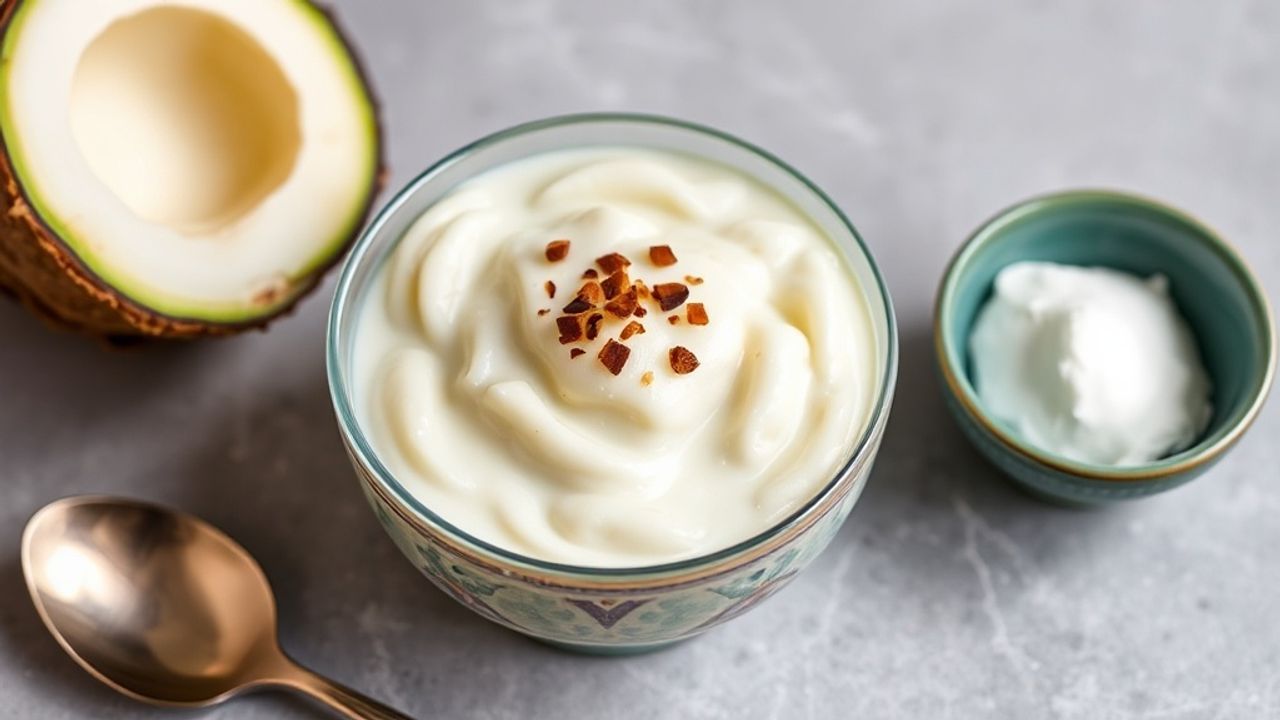
Decadent taro pudding delivers a silky, tropical dessert built from mashed taro and rich coconut milk. This recipe emphasizes texture control, heat management, and balanced sweetness so the pudding turns out smooth and flavorful every time.
- Prep and Cook time for taro pudding
- Yield and difficulty for taro pudding
- Ingredients for taro pudding
- Step-by-Step Instructions for taro pudding
- Chef’s notes & Tips for Success
- Serving suggestions for taro pudding
- Nutrition per serving
- FAQ
- What makes taro pudding different from other puddings?
- Can I make taro pudding vegan or gluten-free?
- How do I fix lumps in the pudding?
- Can I prepare taro pudding ahead of time?
- What are common regional variations?
- Final notes and outlook
- Key takeaway: Use fully cooked, well-drained taro for the smoothest finish.
- Quick tip: Tapioca starch yields the most stable set without cloudiness.
- Serving idea: Chill before serving and garnish with toasted coconut for contrast.
Prep and Cook time for taro pudding
Readiness: 15 minutes active prep, 30 minutes cooking, 2+ hours chilling.
Simple timing helps you plan: boiling or steaming the taro properly is the first critical step. Proper cooling and setting time produce the pudding’s characteristic glossy surface and clean mouthfeel.
Yield and difficulty for taro pudding
This recipe yields 4–6 generous servings, suitable for family meals or small gatherings. The technique rates as easy-to-medium; it requires attention to heat and stirring but no advanced skills.
Beginner cooks achieve success by following the recommended starch ratios and by tasting as they go. Experienced cooks will find room to adjust richness with coconut cream or flavor with pandan infusion.
Ingredients for taro pudding
Gather quality components for predictable results: fresh taro, full-fat coconut milk, granulated sugar, a small pinch of salt, and a thickener such as tapioca starch.
Note that taro is a starchy tuber with distinct flavor and texture; more on taro here: Taro on Wikipedia. For coconut milk characteristics see Coconut milk on Wikipedia.
- 400g fresh taro root, peeled and cubed
- 400ml canned coconut milk (full fat for richness)
- 3/4 cup granulated sugar (adjust to taste)
- 1/4 teaspoon salt
- 1 cup water
- 2 tablespoons tapioca starch (or cornstarch as alternative)
- 1 teaspoon pure vanilla extract
- Optional garnish: toasted coconut flakes, mint leaves, or small edible flowers
Step-by-Step Instructions for taro pudding
Follow the sequence below closely. Each stage controls texture: cook taro fully, dissolve sugar, incorporate starch, then finish with low heat.
Use medium-low heat when thickening to avoid curdling the coconut milk and to allow starch to hydrate evenly. Stir constantly at the starch stage to prevent lumps.
1. Prepare the taro
Rinse peeled taro cubes under cold water to remove surface starch, then boil or steam until fork-tender (about 15 minutes). Drain thoroughly to avoid excess water diluting the pudding.
Mash the taro to a coarse purée for rustic texture, or blend for a silky finish. If you want an extra-smooth result, pass the mash through a fine sieve.
2. Create the coconut base
Warm coconut milk with sugar and salt in a medium saucepan over medium heat. Stir until the sugar dissolves and the mixture becomes aromatic; do not allow a rapid boil.
If you use pandan for fragrance, steep a tied pandan leaf briefly in the warm milk and remove it before adding starch. Reference on pandan: Pandanus on Wikipedia.
3. Thicken the pudding
Whisk tapioca starch with 1/4 cup cool water until smooth. Slowly stream this slurry into the simmering coconut milk while stirring vigorously to avoid lumps.
Continue cooking on low heat until the mixture thickens to a spoon-coating consistency, typically 6–12 minutes. Tapioca provides translucency and a pleasant gel; see tapioca details: Tapioca on Wikipedia.
4. Incorporate taro and finish
Fold in the mashed taro and simmer gently to marry flavors and reach a cohesive texture. Remove from heat and stir in vanilla to lift the overall profile.
Transfer the pudding into serving vessels. Press plastic wrap directly onto the surface to prevent a skin. Chill for at least two hours for the best set and mouthfeel.
Chef’s notes & Tips for Success
Small adjustments yield major improvements. Using canned full-fat coconut milk and controlling starch ratio ensure a creamy, stable pudding.
Adjust sugar to match the natural sweetness of your taro, and consider coconut cream for extra richness while reducing added sugar slightly to balance fat and sweetness.
Texture tip: For a very smooth body, puree the cooked taro and pass it through a sieve. For rustic appeal, keep small curds of taro in the mix.
Store leftovers refrigerated up to three days and stir gently before serving to restore creaminess. Freezing is not recommended because coconut fat can separate.
When substituting arrowroot or cornstarch, reduce the quantity slightly and add it later in the process to avoid excessive gelatinization. Arrowroot works well for clarified, glossy puddings.
Serving suggestions for taro pudding
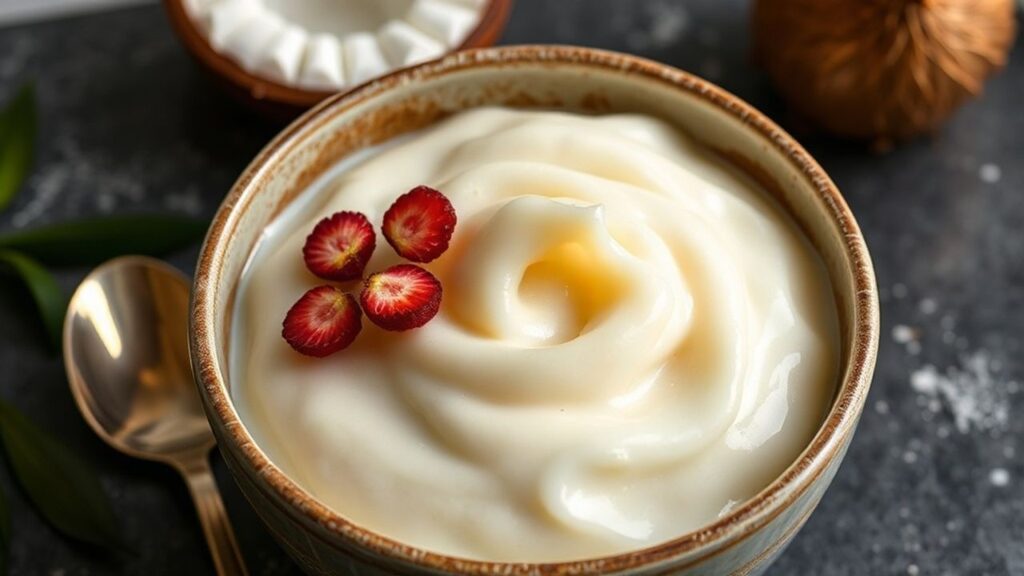
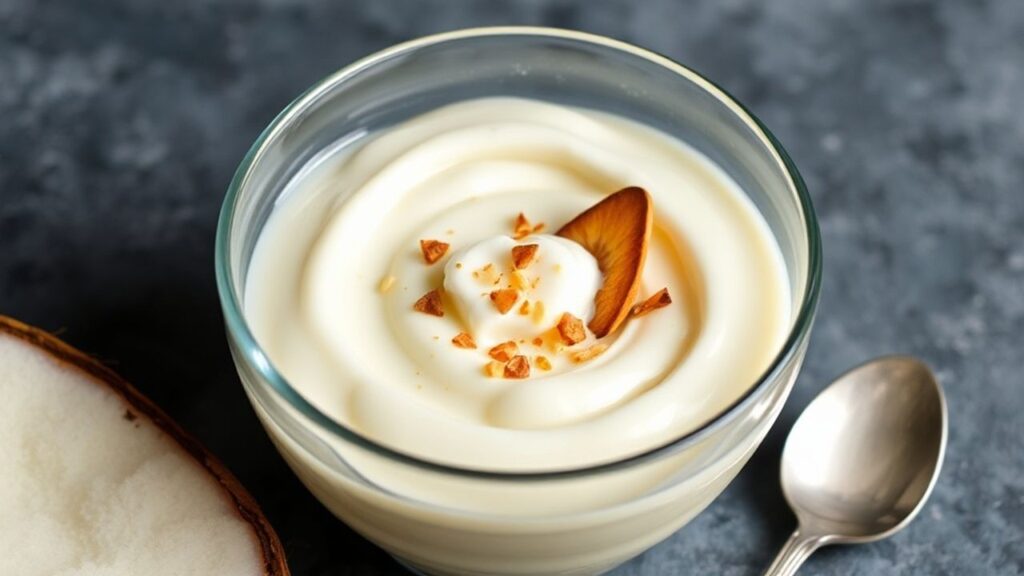
Serve the pudding chilled to highlight its silky texture and floral coconut notes. A scatter of toasted coconut provides a contrasting crunch and flavor lift.
Pair with light teas such as jasmine or green tea to cut richness. For color and acidity, add a few fresh berries or a drizzle of palm sugar syrup.
Present in clear glassware to showcase the pudding’s pale lilac hue. For more coconut dessert ideas visit our internal page: Creamy Coconut Desserts.
Explore additional taro recipes and regional variations on our site: Taro Recipes. These internal links help you expand menu options quickly.
Nutrition per serving
Approximate values depend on portion size and ingredient brands. The table below gives a practical estimate for standard servings.
| Nutrient | Per Serving (approx.) |
|---|---|
| Calories | 220 kcal |
| Protein | 2 g |
| Carbohydrates | 32 g |
| Fat | 9 g |
FAQ
What makes taro pudding different from other puddings?
Taro pudding uses starchy tuber paste rather than dairy alone, producing a distinct, slightly nutty flavor and a denser, more satisfying texture. Coconut milk supplies richness without dairy.
The combination of mashed taro and a starch-thickened coconut base creates a dessert that stands apart from milk-based custards and gelatin desserts.
Can I make taro pudding vegan or gluten-free?
Yes. The core recipe is naturally gluten-free and can be vegan if you use plant-based sweeteners and ensure any optional add-ins are vegan. Coconut milk replaces dairy entirely.
For a gluten-free thickener, tapioca and arrowroot are excellent. Avoid starch mixes containing wheat thickeners.
How do I fix lumps in the pudding?
If small lumps form, pass the warm mixture through a fine sieve or use an immersion blender briefly off heat. Preventative stirring while adding the starch prevents most lumps.
Do not overblend hot coconut milk aggressively; gentle, short pulses yield smoothness without aerating the pudding excessively.
Can I prepare taro pudding ahead of time?
Yes. Make the pudding up to 48–72 hours in advance and store refrigerated. Stir gently before serving to restore creaminess and redistribute any separation that may occur.
Do not freeze, as freezing can change the texture of coconut fat and the starch matrix, producing graininess.
What are common regional variations?
Regional recipes may add ingredients like pandan for fragrance, palm sugar for depth, or tapioca pearls for chew. Hawaiian and Filipino versions each emphasize local flavor balance.
Adjustments typically center on sweetness level, coconut richness, and whether the taro is mashed fully or left with texture.
Final notes and outlook
Taro pudding balances starch science with flavor layering; control over heat and starch addition yields a reliable, silky dessert. This approach makes the dish suitable for menus ranging from casual dinner parties to refined dessert courses.
Try small batch tests when substituting ingredients to maintain texture and flavor. With these practical techniques, you can reproduce a consistent, crowd-pleasing taro pudding every time.
See also: taro pudding