
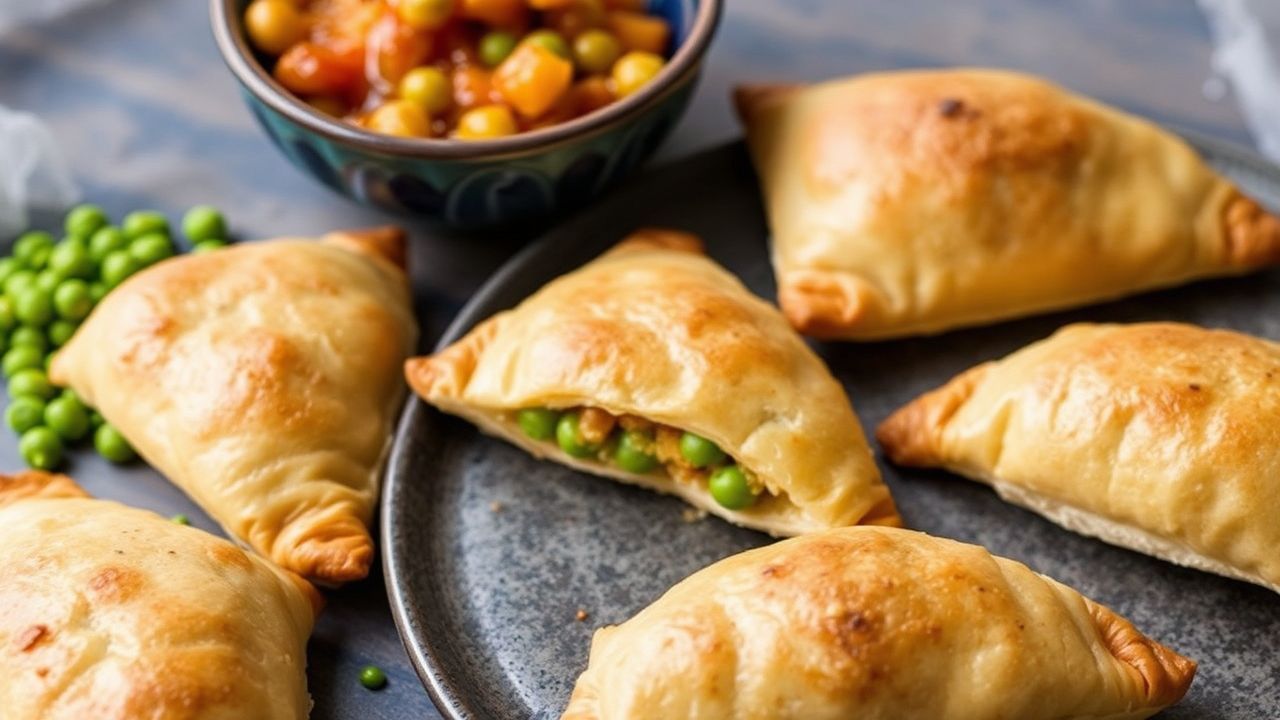
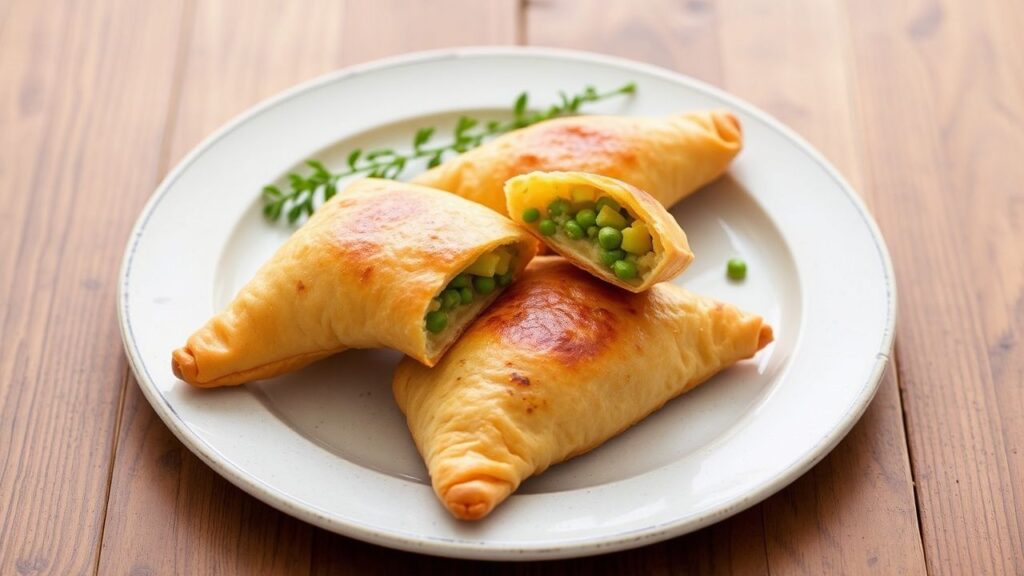
Golden Crispy Potato & Pea Turnovers are a handheld comfort food built on contrast: shatter-crisp edges and a soft, spiced filling. When you nail the dough thickness and cool the filling fully, these turnovers cook evenly and stay crisp after frying.
- Prep and Cook Time
- Yield
- Difficulty Level
- Ingredients
- Instructions
- Prepare the filling
- Build the spiced base
- Make the dough
- Shape and fry (or bake)
- Pro-Caution: Don’t fry with hot filling
- Tips for Success
- Serving Suggestions and Pairings to Complement Your Savory Turnovers
- Q&A
- What makes Golden Crispy Potato & Pea Turnovers so special?
- Can I use any type of potato for the filling?
- What spices elevate the flavor the most?
- How do I ensure the turnovers stay crisp and not soggy?
- Can I make these vegan?
- The Way Forward
At a Glance
- Chill the dough so the butter sets and the pastry turns flaky.
- Cook and cool the filling to prevent soggy centers.
- Seal seams firmly to stop oil and steam from leaking.
- Fry at a steady 350°F / 175°C for consistent browning.
If you like samosa-style flavors, these turnovers deliver that same spiced potato-and-pea comfort in an easier, pocket-shaped format. They work as an appetizer, a party snack, or a satisfying lunch component alongside a fresh salad.
In this recipe, you’ll learn a practical method for a flaky pastry, a flavorful filling, and a reliable crisping process. You’ll also get substitution notes for spice levels and a clear path to baking if you prefer less oil.
Golden Crispy Potato & Pea Turnovers combine classic Indian-inspired stuffing logic with a crisp-turnover method that cooks fast. Potatoes add body and creaminess, while green peas bring natural sweetness and bright color. The pastry becomes golden because cold butter creates steam pockets during frying, so the layers expand instead of collapsing.
Prep and Cook Time
Plan your workflow so the dough rests while you prepare the filling. That timing matters for texture: a rested dough stretches less and releases steam more evenly.
For best results, cool the filling to room temperature before assembling. If the filling stays hot, it will soften the dough and increase the chance of leaks.
- Planning: 25 minutes
- Cooking: 20 minutes
- Total Time: 45 minutes
Yield
This recipe makes 12 turnovers, which usually serves 4–6 depending on portion size. If you’re serving guests, plan on 2 per person plus one extra batch of dipping sauce.
Turnovers reheat well in an oven or air fryer, so you can cook some now and keep the rest for later. For crispness, avoid microwaving.
- Output: Makes 12 turnovers (serves 4–6)
Difficulty Level
The technique sits at a medium level. You’ll handle simple frying control, and you’ll practice sealing the seams, which gets easier after the first 2 turnovers.
If you’ve made dumplings or turnovers before, you already have the core skill. If not, follow the instructions closely and keep the dough chilled.
- Difficulty: Medium (great for enthusiastic home cooks)
Ingredients
Measure accurately for consistent pastry texture. For the filling, focus on cooking potatoes just until tender, then mash lightly so you keep some bite.
For spice science, remember that ground spices bloom in oil when heated briefly. This is the same principle behind many spice-forward cuisines described in references like spices.
For the filling
- 2 cups peeled and diced potatoes (about 3 medium-size)
- 1 cup fresh or frozen green peas
- 2 tablespoons vegetable oil or ghee
- 1 teaspoon cumin seeds
- 1 teaspoon mustard seeds
- 1 medium onion, finely chopped
- 2 cloves garlic, minced
- 1 teaspoon freshly grated ginger
- 1 green chili, finely chopped (optional)
- 1 teaspoon ground coriander
- 1 teaspoon garam masala
- ½ teaspoon turmeric powder
- ½ teaspoon red chili powder (adjust to taste)
- Salt to taste
- Fresh cilantro, chopped (about 2 tablespoons)
For the turnover pastry
- 2 cups all-purpose flour, sifted
- ½ teaspoon salt
- ½ cup cold unsalted butter, cut into cubes
- ⅓ cup ice-cold water (adjust as needed)
- 1 tablespoon oil (for brushing)
For frying
- Vegetable oil (enough for shallow frying)
Instructions
Follow this order for the best texture. First make the filling, then cool it, then make and rest the dough. Finally, assemble and fry or bake.
Steam control matters because turnovers can turn greasy or burst if the filling stays wet. Use a thermometer if you have one to keep oil temperature stable.
Prepare the filling
- Cook potatoes: Boil diced potatoes until just tender but still firm, about 8 minutes. Drain and set aside.
- Prep peas: If using frozen peas, blanch in hot water for about 2 minutes. Drain and set aside.
Build the spiced base
- Bloom spices: Heat 2 tablespoons oil in a skillet over medium heat. Add cumin and mustard seeds and sauté until they begin to pop, about 30 seconds.
- Sauté aromatics: Add onion, garlic, ginger, and chili. Cook until onions turn golden, 5–6 minutes, stirring to prevent burning.
- Toast spices: Mix in ground coriander, garam masala, turmeric, red chili powder, and salt. Cook 1 minute to release aroma.
- Combine filling: Add potatoes and peas. Mash lightly with a spoon while stirring so everything binds but you keep texture. Cook 5 more minutes.
- Cool fully: Stir in cilantro, then remove from heat. Cool the filling to room temperature before assembling.
Cooling prevents the pastry from softening and keeps the layers crisp. This approach aligns with pastry principles described in resources like puff pastry, where cold fat and controlled steam drive flakiness.
Make the dough
- Mix dry: Combine flour and salt in a large bowl.
- Cut in butter: Rub butter into flour with fingertips or a pastry cutter until the mixture looks like coarse crumbs.
- Add water: Gradually add ice-cold water, mixing gently until the dough just comes together. Stop as soon as it holds.
- Rest: Form into a smooth ball, wrap, and refrigerate at least 30 minutes.
If the dough feels warm while you work, it’s likely butter softens too early. Keep the dough chilled so the pastry layers bake or fry separately.
Shape and fry (or bake)
- Roll: Roll dough into a 12-inch circle on a lightly floured surface. Cut into 12 equal segments.
- Fill: Place about 1 heaping tablespoon filling on the wide end of each segment.
- Seal: Brush edges lightly with water. Fold into a triangle and crimp firmly to seal.
- Fry: Heat enough oil in a heavy-bottomed pan over medium heat. When oil reaches about 350°F (175°C), fry in batches until golden and crisp, about 3–4 minutes per side.
- Drain: Transfer to paper towels and serve warm.
For crispness, don’t overload the pan. Crowding drops oil temperature and can create uneven browning. If you want a bake option, use the temperature guidance below.
Pro-Caution: Don’t fry with hot filling
[WARNING]Pro-Caution: If your filling is still warm, the pastry can soften before the fat sets. That increases the odds of leaks and a less crisp crust. Cool the filling fully, then assemble.
Oil is a heat-transfer medium, so stable temperature keeps moisture behavior consistent across batches. For general background on cooking fats, see frying.
Tips for Success
You can improve results quickly with a few targeted adjustments. Treat pastry texture like a system: cold ingredients, minimal handling, and correct cooking heat.
Use these tips as a checklist while you cook. If anything feels off, pause and adjust before continuing.
- Flakier pastry: Keep ingredients cold and handle dough lightly. Resting time helps relax gluten.
- Spice customization: Add a small pinch of amchur or nutmeg for extra depth. Taste the filling before assembling.
- Make-ahead: Prepare filling and dough up to a day ahead. Assemble and fry on the day for top crunch.
- Baking alternative: Bake at 400°F (200°C) for about 20 minutes, turning halfway. Brush with oil for better browning.
- Troubleshooting: If pastry turns tough, rest dough longer. Overworked gluten leads to chewiness.
For spice balance, remember that salt draws out moisture from ingredients. Cooking the filling long enough and cooling it helps keep the final turnovers from feeling damp.
Short resting times can also work, but chilling longer usually gives you better shaping and cleaner crimps. Consistency is the goal.
Serving Suggestions and Pairings to Complement Your Savory Turnovers
Serve Golden Crispy Potato & Pea Turnovers hot so the crust stays crisp. Warm turnovers taste best with cool, acidic dips that cut through the richness of butter and potato.
For a refreshing match, try a mint-cilantro chutney or a tamarind dip. Both add brightness and help the spices taste more vivid.
If you want a creamy counterbalance, add raita made with yogurt, cucumber, and a pinch of salt. The dairy smooths heat and supports the filling’s earthy cumin notes.
Build a simple platter
Arrange turnovers on a board and garnish with cilantro. Add thin-sliced radishes or pickled onions for crunch and tang.
Place lemon wedges at the side. A quick squeeze right before eating boosts the overall flavor lift.
Pair with sides
A light mixed-greens salad with a citrus vinaigrette works well because it stays crisp while the turnovers shine as the warm centerpiece. If you prefer something more filling, serve with a mild lentil soup.
Keep soups not too thick so your turnovers stay crisp and do not soak up liquid during serving.
| Nutrient | Per Serving (2 pcs) |
|---|---|
| Calories | 320 kcal |
| Protein | 6 g |
| Carbohydrates | 44 g |
| Fat | 12 g |
If you enjoy stuffed pastry formats, you may also like learning about other fried turnover styles and their dough behavior. For deeper reading on pastry types, explore dumplings and empanadas.
These references help you understand why sealing and moisture control decide whether a filling stays tender or turns watery.
Q&A
Here are common questions about Golden Crispy Potato & Pea Turnovers. Use these answers to troubleshoot texture, flavor, and storage.
Short fixes often solve issues fast, especially when the cause is temperature or moisture.
What makes Golden Crispy Potato & Pea Turnovers so special?
The key difference lies in contrast. A crisp, golden crust forms around a spiced potato-and-pea filling that stays soft and cohesive. That balance comes from chilling the dough and fully cooling the filling.
Can I use any type of potato for the filling?
Yes, but texture changes with variety. Starchy potatoes mash smoothly for a more cohesive filling, while waxy types hold more shape. Either works if you cook until tender and mash lightly.
What spices elevate the flavor the most?
Cumin, coriander, turmeric, and garam masala create a warm, earthy base. Ginger and green chili add freshness and heat. For context on how herbs and spices differ, see herbs and spices.
How do I ensure the turnovers stay crisp and not soggy?
Cool the filling completely before assembly, and keep the oil temperature steady. Also, avoid crowding the pan so moisture can evaporate properly. After cooking, drain on paper towels briefly.
Can I make these vegan?
You can. Use a plant-based butter or neutral oil in the dough, and skip any dairy-based brushing. The filling already works naturally with potatoes and peas.
The Way Forward
Golden Crispy Potato & Pea Turnovers fit many moments—snack time, appetizer service, or a quick meal with a fresh side. When you follow the cooling and sealing steps, the crust stays crisp and the filling stays flavorful.
Make them once, then refine your process. Adjust spice heat, experiment with baking versus frying, and track what gives your best crisp level.
After a few batches, you’ll shape evenly, fry confidently, and get a uniform golden finish. That’s the real reward: a repeatable, crispy turnover you can serve any day.
See also: Golden Crispy