
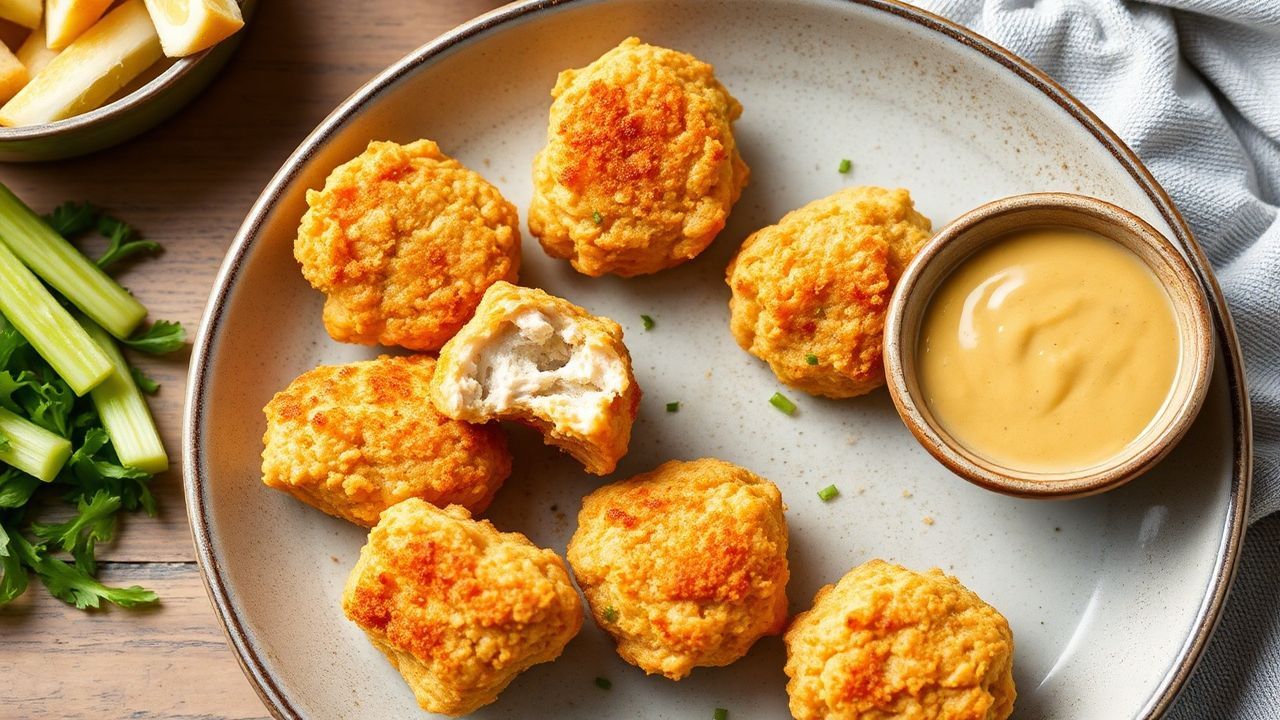
Oven-baked chicken nuggets can hit that same crackle you expect from fried food—if you control moisture, coating structure, and airflow. Most “soft” results come from one thing: steam gets trapped under the crust, so the breading never dries into a crisp shell.
- Why Oven Nuggets Go Crispy (and Store-Bought Often Doesn’t)
- The crust becomes a barrier, not a sponge
- Panko’s structure supports rapid browning
- Heat transfer matters more than people think
- The 20-Minute Nugget Texture Formula (Moisture → Set → Crisp)
- 1) Marinate just long enough
- 2) Build a dry crumb layer for crisping
- 3) Use oil as a browning helper, not a deep-fry replacement
- Ingredients for Maximum Crunch (with Smart Options)
- Step-by-Step: Crispy Oven Nuggets That Actually Crack
- 1) Preheat fully and set up airflow
- 2) Marinate and then dry the surface
- 3) Create a three-part coating station
- 4) Coat in this order (and press correctly)
- 5) Bake with a light oil mist
- 6) Bake to temperature, not just color
- 7) Rest briefly for a firmer shell
- How to Get Extra “Crackle”: Advanced Crispness Tweaks
- Troubleshooting: Fix Soft, Pale, or Loose Coatings Fast
- Serving Ideas That Preserve Crunch
- Make-Ahead and Freezing (Bake From Frozen)
- Nutrition Snapshot (Estimated)
- FAQ
- Airflow wins: a wire rack lets heat dry the coating from all sides.
- Panko + Parmesan: more surface area for fast browning and crunch.
- Dry-to-the-touch coating: excess marinade ruins adhesion and crisping.
- Thermometer over guessing: cook to 75°C/165°F for juicy centers, not brittle meat.
This method takes you to ultra-golden nuggets in about 20 minutes by using fast heat transfer and a texture “sequence” that food science supports. You’ll marinate for tenderness, but you’ll coat dry for crunch. Then you’ll bake long enough to set the breading, not just brown it.
Why Oven Nuggets Go Crispy (and Store-Bought Often Doesn’t)
Crunch comes from a crust that turns dry and rigid while the inside stays moist. When the coating stays wet—due to trapped steam, crowded pans, or wet crumb mixtures—the crust softens instead of crisping.
At home, you can control the entire “moisture journey.” Heat drives water out of the chicken surface and then out through the breading. If airflow keeps that surface from re-wetting, the crust dries enough to brown and become crisp.
The crust becomes a barrier, not a sponge
A crispy nugget behaves like a small protective shell. As the surface dehydrates, starches gelatinize and proteins set, which helps the coating hold shape instead of collapsing.
This is why nuggets baked on a wire rack stay snappier than nuggets baked directly on a solid sheet. The rack reduces contact steam and improves heat circulation around the entire crust.
For a deeper look at the chemistry behind browning, review Maillard reaction. Your goal is a crust that browns because it’s dry enough for those reactions to run, not just because the oven is hot.
Panko’s structure supports rapid browning
Panko is lighter and flakier than many standard breadcrumbs. Those irregular flakes create more edges and micro-porosity, so hot air reaches more surface area quickly.
When you add Parmesan, you improve both flavor and crust integrity. Parmesan contains proteins and fat that help the coating brown and bind as moisture leaves.
If you’re curious how water behavior affects crispness, you can also connect this to water activity. Lower surface water activity helps food stay dry and crisp instead of soft and gummy.
Heat transfer matters more than people think
Most home crisping failures happen because heat doesn’t reach the underside well. A solid pan keeps the bottom moist longer, so the crust never fully dehydrates.
A wire rack creates a convection-like effect: airflow reaches the bottom and sides, so the whole nugget crust dries and browns more evenly.
The 20-Minute Nugget Texture Formula (Moisture → Set → Crisp)
Your best results come from a repeatable sequence: tender meat from marination, adhesion from a structured coating, and crisp shell from drying and browning.
Follow the order closely. If you coat while chicken surfaces stay wet, crumbs slide and steam forms under the crust. That’s the fastest path to soft nuggets.
1) Marinate just long enough
Marination should boost juiciness without turning the exterior wet. A buttermilk-style soak works well because it tenderizes and improves flavor while still allowing you to dry the surface afterward.
Use 30 to 60 minutes. If you go much longer, especially with acidic versions, the meat texture can shift and the coating can suffer during baking.
If you want background on dairy acidity and fermentation concepts, search buttermilk for foundational info.
2) Build a dry crumb layer for crisping
Your coating must stay dry enough to dehydrate into a crisp crust. Flour helps with adhesion and adds body, while panko delivers the crunch structure.
Keep your crumb mix free from added liquid sauces. Even “small” wet additions can create steam pockets and weaken the final shell.
3) Use oil as a browning helper, not a deep-fry replacement
Oil improves surface browning because it helps conduct heat and encourages crust color. But too much oil can cause uneven pooling, which can soften sections of the crust.
Use a light mist or thin drizzle so oil coats the crumbs without saturating them.
Ingredients for Maximum Crunch (with Smart Options)
This formula targets a crispy exterior with a juicy center. It also stays practical: most ingredients live in your kitchen, and the method works with either chicken breast or thighs.
Choose nugget sizes that match. Uniform pieces cook at the same rate, which protects the crust from overbaking while ensuring safe doneness inside.
Core ingredient list
Use boneless, skinless chicken and cut into 2–3 cm chunks. That size bakes fast enough for the 20-minute goal while still giving you a real nugget bite.
For the crust, combine panko and Parmesan, then add seasonings. A light dusting of oil before baking helps you reach deep gold without sogginess.
Chicken
500 g (1 lb) boneless, skinless chicken breast or thighs, cut into 2–3 cm chunks
Marinade
1 cup buttermilk (or plain yogurt + 1 tbsp lemon juice)
1 tsp garlic powder
1 tsp smoked paprika
Salt and black pepper
Coating
1 cup all-purpose flour (sifted)
2 large eggs
1 cup panko breadcrumbs
1/2 cup grated Parmesan
1 tsp onion powder
1/2 tsp cayenne (optional)
Pinch salt and pepper
Baking
Cooking spray or 1–2 tbsp olive oil (for misting)
Substitutions that won’t destroy crunch
If you need a gluten-free version, use certified gluten-free flour and gluten-free panko. The key is dryness: avoid gluten-free crumbs that already contain wet additives or seasoning pastes.
For a lower-dairy option, you can swap Parmesan with another hard, finely grated cheese that browns well. If you use a softer cheese, it may melt into the coating and reduce crispness.
Step-by-Step: Crispy Oven Nuggets That Actually Crack
These steps focus on texture control. Each move reduces steam and improves crust set, so you get crunch on the first bite.
Work in batches so coating stays tight. Cold chicken and dry crumbs stick better because the egg coating sets quickly on contact.
1) Preheat fully and set up airflow
Preheat the oven to 200°C / 400°F. Place a wire rack on a parchment-lined sheet pan.
Leave space between nuggets. Crowding traps steam, and steam is the enemy of crisp crust.
If you’re wondering why airflow changes texture, you can connect this to convection. Convection increases heat transfer and speeds drying at the surface.
2) Marinate and then dry the surface
Whisk buttermilk, garlic powder, smoked paprika, salt, and pepper. Toss chicken until coated, then refrigerate 30 to 60 minutes.
After marinating, remove pieces and let them drain for 5 to 10 seconds. This short drain matters: you want chicken surface-wetness to help adhesion, not create steam.
3) Create a three-part coating station
Set up three shallow bowls: flour, beaten eggs, and the panko-Parmesan mix. Keep crumb mix dry and avoid adding liquid seasoning sauces.
Using a clean station also prevents gluey clumps. Those clumps can bake into thick, soft patches instead of crisp flakes.
For a food-structure reference, it helps to know that proteins and starches behave differently as they heat. If you like background, read starch to understand why flour contributes to crust setting.
4) Coat in this order (and press correctly)
Dredge chicken in flour first, shake off excess. Then dip into egg wash, letting excess drip.
Finally, press into panko-Parmesan. Press firmly but don’t smash. You want crumbs to adhere, but you also want air pockets for crispness.
5) Bake with a light oil mist
Arrange nuggets on the wire rack with space between pieces. Mist lightly with oil for browning.
Bake 10 minutes, then flip. Flip again at the same time if you stacked pieces imperfectly—turning keeps browning even.
6) Bake to temperature, not just color
For food safety and juiciness, cook until the thickest nugget reaches 75°C / 165°F. A probe thermometer removes guesswork.
Color can mislead because breading browns faster than meat heats through. Temperature keeps the inside tender while the outside crisps.
If you want general safety guidance and background on safe internal temps, check food safety as a baseline concept.
7) Rest briefly for a firmer shell
Rest nuggets on the rack for about 3 minutes. This lets juices redistribute and lets the crust firm up slightly.
Serve right away for maximum crunch. Nuggets will soften if they sit stacked in steam.
How to Get Extra “Crackle”: Advanced Crispness Tweaks
If you want a stronger snap, you’ll usually get it by adjusting oil coverage, bake timing, and size uniformity. Small changes make a big difference once your core method already works.
Skip gimmicks like soaking crumbs or adding wet sauces. Crisping still depends on drying and browning.
Oil strategy: thin and even
Use a fine mist or a light drizzle. Aim for coverage that glints, not pooling.
Too little oil can leave nuggets pale. Too much oil can soften the crumb layer or cause uneven browning.
Flip at the right time
Flip around 7–10 minutes into baking. By then, one side has started to set and dry.
Without flipping, one side often steams and becomes the first side to lose crispness.
Cut for uniform thickness
If pieces vary, thin nuggets overcook and thick nuggets undercook. Either outcome harms texture—overcooked chicken dries out, while undercooked chicken keeps steam higher under the crust.
Cut a “template” chunk first, then match the rest. Uniformity wins every time.
Chicken breast vs. thighs
Breast nuggets have that classic lean bite. Thigh nuggets offer richer flavor and slightly better moisture retention, which can help them stay tender even if you bake a minute longer.
Both work with this airflow-and-drying approach. Just rely on temperature, not time alone.
Troubleshooting: Fix Soft, Pale, or Loose Coatings Fast
If your nuggets don’t crisp, diagnose the root cause quickly. Most issues fall into three buckets: coating won’t stick, crust browns poorly, or crust softens after baking.
Fix the cause, and the texture improves immediately next batch.
Coating falls off
Crumbs fall off when chicken surfaces stay too wet or when you skip flour or egg steps. Excess marinade also interferes, especially during dredging.
Drain longer (5–10 seconds), shake off flour excess, then press panko gently but firmly. Coat in smaller batches so everything stays cold and consistent.
Nuggets look pale
Paleness usually means your crust didn’t get enough browning conditions. That can come from low oil coverage, uneven airflow, or an oven that wasn’t fully preheated.
Preheat longer, mist more lightly but evenly, and confirm the oven temperature with an oven thermometer if you bake often.
Crust is crisp at first, then soft
That pattern signals steam exposure after baking. If you stack nuggets on a plate, steam rises and rehydrates the crust surface.
Rest on the rack and serve on a ventilated surface. If you must hold them briefly, keep them spread out and avoid covering.
Serving Ideas That Preserve Crunch
Dips should add flavor without steaming the crust. Thick dips can still work, but you need smart portioning and plating.
Serve dips on the side and avoid pouring sauce over nuggets. Keep portions small so the crust stays dry.
Best dip styles
Try honey mustard, sriracha mayo, or a classic ranch-style dip. For a lighter option, use a yogurt-lime sauce.
When the dip stays separate from the nugget, you keep that dry, crisp shell intact.
Side dishes that don’t steal the snap
Go with crunchy sides like cucumber rounds, carrot sticks, or a crisp salad. Avoid very wet sides near serving time.
If you plate for a crowd, consider keeping nuggets on the rack while guests assemble their plates.
Make-Ahead and Freezing (Bake From Frozen)
You can prep nuggets ahead and still get strong crunch. Freezing works best when nuggets freeze individually and don’t fuse into a single block.
Then you bake straight from frozen using the same rack setup and temperature targets.
Freeze coated nuggets properly
After coating, arrange nuggets on a wire rack or parchment-lined tray with space between pieces. Freeze until solid, then transfer to a bag.
Label with the date and a reminder: bake time varies by size, so use temperature checks.
Reheat without losing crispness
Bake from frozen at 200°C / 400°F on the wire rack. Expect a few extra minutes compared with fresh nuggets.
Always confirm internal temperature reaches 75°C / 165°F at the thickest point.
Nutrition Snapshot (Estimated)
Nutrition depends on nugget size, chicken type, Parmesan amount, and how much oil you mist. This estimate assumes roughly the ingredient quantities listed and typical oil spray coverage.
If you want a lighter version, use a smaller Parmesan amount and mist with less oil while keeping panko as the main crunch base.
Estimated per serving (about 10 nuggets, varies by size)
Calories: ~320
Protein: ~35 g
Carbs: ~18 g
Fat: ~9 g
FAQ
Can I make these nuggets without Parmesan?
Yes. Replace Parmesan with an equal amount of extra panko or a hard, finely grated cheese that browns well. Parmesan helps with both flavor and structure, so you may need slightly more even oil mist for deeper color.
What oven temperature gives the best crunch?
Bake at 200°C / 400°F. Then cook until the thickest nugget reaches 75°C / 165°F. Temperature matters because it supports drying and crust setting—not just surface browning.
Why do my nuggets turn soggy after baking?
Soggy nuggets usually come from trapped steam: baking on a solid pan, overcrowding the rack, or holding nuggets stacked on a plate. Rest on the rack and serve quickly for the best snap.
How do I keep the breading from getting wet?
Drain marinated chicken 5–10 seconds before coating. Also press crumbs into egg wash, and coat in smaller batches so the coating stays cold and adheres before baking.
Can I use chicken thighs instead of breasts?
Yes. Thigh nuggets taste richer and often stay juicier. Use the same coating and rack method, but rely on internal temperature for timing since thigh pieces can vary slightly in density.
See also: crispy oven nuggets