
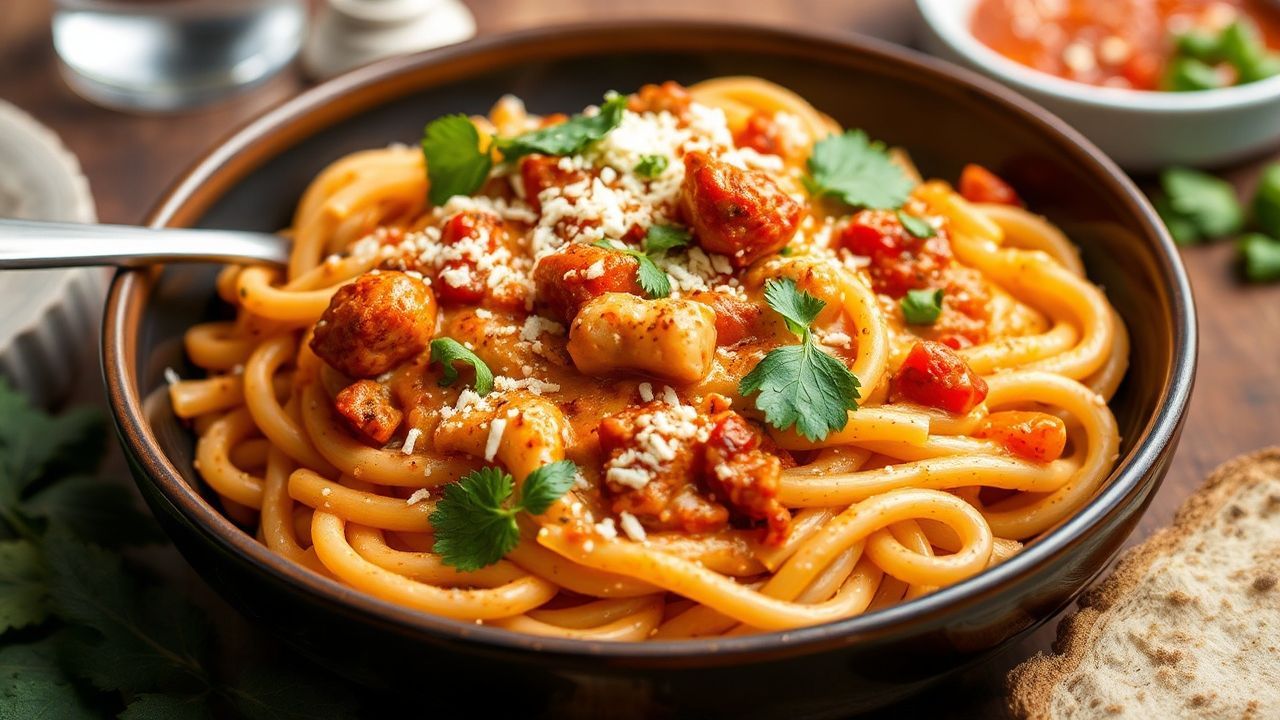
Dive into Creamy Vegan Cajun Pasta with smoky paprika flair, where plant-based creaminess meets classic Cajun heat. This recipe builds a rich, dairy-free sauce that clings to pasta and tastes balanced from first bite.
- Why Creamy Vegan Cajun Pasta Works
- Ingredients for Creamy Vegan Cajun Pasta
- Prep and Cook Time
- Step-by-Step Instructions
- 1) Cook the pasta
- 2) Sauté aromatics
- 3) Blend the creamy base
- 4) Simmer and adjust texture
- 5) Fold in pasta and serve
- Tips for Achieving Luscious Texture
- Crafting the Perfect Spice Blend for Bold Cajun Flavors
- Serving Suggestions
- Nutritional Snapshot (Per Serving)
- Chef’s Notes
- Q&A: Creamy Vegan Cajun Pasta
- What makes creamy vegan Cajun pasta taste authentic?
- How do you get a dairy-free creamy texture?
- Can I make this recipe gluten-free?
- What vegetables work best in this dish?
- How can I boost protein while keeping it vegan?
- FAQ
- Can I use a different pasta shape for Creamy Vegan Cajun Pasta?
- How can I make the sauce thicker without changing flavor?
- What if my cashew sauce turns grainy?
- How long can I store leftovers?
- Can I make this Creamy Vegan Cajun Pasta less spicy?
- Closing Remarks
At a Glance
- Creamy texture: Cashew cream forms a smooth Cajun sauce base.
- Smoky depth: Smoked paprika adds warmth, color, and aroma.
- Easy heat control: Adjust cayenne for mild or spicy bowls.
- Silky finish: Reserve pasta water to tune thickness.
Why Creamy Vegan Cajun Pasta Works
Creamy Vegan Cajun Pasta succeeds because it treats creaminess and Cajun flavor as two linked systems. First, you blend soaked cashews into a stable emulsion. Next, you develop savory depth with aromatics, spices, and gentle simmering.
Smoked paprika drives a barbecue-style warmth that feels bold but not harsh. Cajun seasoning rounds out the flavor with a practical mix of salt, herbs, and heat, so every bite tastes seasoned, not flat.
If you want a quick framework for flavor, review Cajun cuisine. It shows why bold seasoning and aromatic cooking matter in the final profile. That logic carries directly into this recipe.
Ingredients for Creamy Vegan Cajun Pasta
Gather simple staples, then focus on two key drivers: cashews for texture and smoked paprika for smoky depth. When those two ingredients perform, the sauce reads “comfort-food” even without dairy.
Use 12 oz penne (or another sturdy pasta) so the sauce clings well. Choose raw cashews and soak them at least 2 hours for smooth blending, then prep onions and bell pepper for a steady flavor foundation.
For clarity on spice behavior, see paprika. Smoked paprika differs from sweet or hot varieties, and that difference shapes the smoky finish in your bowl.
Core sauce ingredients
Soaked cashews create the cream matrix. Almond milk or another unsweetened plant milk keeps the sauce light while still tasting rich. Then lemon juice sharpens flavor and prevents the sauce from feeling heavy.
For savory depth, blend soy sauce or tamari with Cajun seasoning, then add thyme and oregano. This blend gives the sauce an herbal backbone that supports smoky paprika’s warmth.
Spice blend and heat control
Cayenne controls heat. Start with a small amount, then taste after simmering, because heat and aroma grow as the sauce warms.
If you want a milder dish, keep cayenne low and let smoked paprika carry most of the flavor. For extra bite, you can add more cayenne gradually or add a pinch of chipotle-style smoke.
To understand why “toast and simmer” changes aroma, read spices on Wikipedia. Heat helps release aroma compounds, which is exactly what you want here.
Prep and Cook Time
This pasta fits a normal cooking rhythm. You prep while water boils, then you build the sauce while the pasta cooks. You can move fast without losing control of texture.
Planning: 15 minutes
Cooking: 25 minutes
Total: 40 minutes
Yield and difficulty
This recipe serves 4 generous portions. It stays approachable because each step follows a clear order: cook pasta, sauté aromatics, blend sauce, then simmer and toss.
Difficulty Level: Medium—best for home cooks who enjoy quick blending and basic skillet work.
Step-by-Step Instructions
Follow these steps to protect sauce texture. Smooth sauce needs smooth blending, and rich thickness improves after simmering with pasta water. You can plan each step so the sauce stays glossy.
Keep heat moderate during sautéing and gentle during simmering. This prevents scorching and helps spices taste balanced instead of sharp.
1) Cook the pasta
Bring a large pot of salted water to a boil. Cook pasta until al dente, then drain and reserve 1/2 cup pasta water.
Reserved water carries starch, which helps the sauce bind to pasta. This often decides whether vegan sauce feels silky or loose.
2) Sauté aromatics
Heat olive oil in a large skillet over medium heat. Add onion and sauté until translucent and lightly golden, about 5 minutes.
Next, add garlic and diced red bell pepper. Cook 3–4 minutes until softened and fragrant, then keep moving so nothing browns too fast.
For the heat-and-time logic behind aromatic release, see sauté. Short, controlled cooking helps build depth without burning garlic.
3) Blend the creamy base
In a high-speed blender, combine soaked cashews, almond milk, lemon juice, soy sauce or tamari, smoked paprika, thyme, oregano, Cajun seasoning, and cayenne. Blend until fully smooth.
If your blender struggles, blend in short bursts and scrape down the sides. Smooth texture should look uniform, not grainy.
💡 Expert Insight
Expert Insight: For the silkiest finish, blend cashews until they look like a smooth “cream.” Then simmer just until glossy—long enough to integrate flavor, not long enough to dull aroma.
4) Simmer and adjust texture
Pour the blended mixture into the skillet. Stir well, then simmer on low until the sauce thickens and smells cohesive.
If the sauce gets too thick, add reserved pasta water a little at a time. Taste after each addition so seasoning stays on point.
5) Fold in pasta and serve
Add pasta to the sauce and toss until every piece gets coated. Serve immediately so the pasta keeps its al dente bite and the sauce stays creamy.
Garnish with chopped parsley or chives for fresh lift. If you like a brighter Cajun edge, add a final squeeze of lemon.
⚠️ Pro-Caution
Pro-Caution: Do not boil the sauce aggressively after blending. High heat can break some plant-based emulsions and make the sauce feel less creamy.
Tips for Achieving Luscious Texture
Texture comes from three controllable points: soaking, blending, and starch bonding. Soaked cashews soften fully, which supports creamy emulsification when you blend.
When you add pasta water gradually, you rebuild viscosity. That step also helps flavors fuse, so sauce tastes integrated rather than separate from the pasta.
Soak cashews correctly
Soak raw cashews for at least 2 hours, or overnight for extra smoothness. Drain well before blending to avoid thinning the sauce too much.
Thorough soaking reduces graininess. It also helps the sauce emulsify without relying on heavy additives.
Blend with the right liquid ratio
Use enough plant milk for smooth flow, then adjust later with pasta water. This sequence gives you control over thickness at the end.
Pouring milk in too fast can overshoot thinness. A careful ratio helps the sauce simmer into the ideal coating texture.
Let onions cook for flavor
Lightly golden onions deliver sweetness that balances smoked paprika and cayenne. Rushing this step often makes the final sauce taste sharp.
Stir often so onions cook evenly and don’t scorch. Scorched garlic tastes bitter, and that fights the creamy finish you worked to build.
Crafting the Perfect Spice Blend for Bold Cajun Flavors
Use store-bought Cajun seasoning for speed, or build your own for tighter flavor control. Either way, smoked paprika should anchor the flavor so the dish stays unmistakably smoky.
To customize heat, pair smoked paprika with herbs like thyme and oregano, plus black pepper for bite. Then add cayenne gradually until the sauce tastes lively and warm.
For more context on seasoning flavor development, see spice mix. It helps explain why balanced blends taste “finished” instead of random.
Homemade spice option
If you build your blend, aim for balance: warm paprika, savory onion-garlic notes, and dried herbs. This delivers the same southern comfort effect without meat-based flavor.
Freshly ground pepper can brighten the finish. Spices release more aroma when they sit briefly in warm fat during sautéing.
Smoky flair boosters
If you want extra smoky nuance, add a pinch of smoked sea salt or chipotle-style powder. Keep it small so it doesn’t overpower the Cajun herbs.
Always taste after simmering. Smoke notes can intensify as the sauce reduces, so you avoid going overboard.
If you want the science of smoke flavor and preservation in plain terms, review smoked food. That context clarifies why smoky paprika feels “smoked” even without a grill.
Serving Suggestions
Serve this creamy vegan Cajun pasta hot with crunchy or fresh sides that cut through richness. A simple pairing increases meal satisfaction and keeps flavors balanced.
Use toppings for texture contrast. That move helps the creamy sauce feel exciting rather than heavy.
Best topping ideas
Add toasted pine nuts or chopped pecans for crunch. They also bring a nutty flavor that pairs naturally with cashew cream.
Finish with sliced avocado or a spoon of vegan sour cream if you like extra creaminess. A sprinkle of lemon zest can also lift smoked paprika’s warmth.
Side dishes that match
A crisp green salad with bright vinaigrette gives a refreshing contrast. Choose something acidic so it cleans the palate after each forkful.
Warm crusty bread works well too. Use it to scoop sauce and stretch the meal without extra cooking stress.
Nutritional Snapshot (Per Serving)
These values reflect a typical serving size for this ingredient set. Actual numbers change based on pasta brand and the exact amounts of plant milk and oil you use.
Use this as a planning guide, not a strict medical measure.
| Nutrient | Per Serving |
|---|---|
| Calories | 420 kcal |
| Protein | 14 g |
| Carbohydrates | 55 g |
| Fat | 14 g |
Chef’s Notes
Small adjustments help Creamy Vegan Cajun Pasta stay smooth and flavorful across cooking styles. Make ahead for convenience, swap ingredients for dietary needs, and control heat for guests.
These notes keep the recipe flexible while protecting the Cajun flavor profile you want: smoky, savory, and lightly spicy.
Make ahead and storage
Prepare the sauce in advance and store it in an airtight container for up to 3 days. Reheat gently and add reserved pasta water if the sauce thickens.
For best texture, cook pasta fresh or combine right before serving. Pasta absorbs sauce as it sits, which can reduce creaminess.
Substitutions
Macadamia nuts or blanched almonds can replace cashews. Each option changes flavor slightly, so taste and adjust lemon or salt.
Use gluten-free pasta if needed. Choose a pasta format that holds sauce well to keep the bite satisfying.
Heat level guidance
Adjust cayenne and smoked paprika amounts based on spice tolerance. Start low, then build to your preferred warmth after simmering.
This approach protects flavor balance and keeps guests comfortable with the heat level.
Q&A: Creamy Vegan Cajun Pasta
What makes creamy vegan Cajun pasta taste authentic?
Smoked paprika and Cajun seasoning deliver the same warm spice direction found in classic Cajun seasoning styles. The onion-garlic sauté also provides a savory base that supports cashew cream sauce.
Lemon juice adds brightness, so spices taste vivid instead of heavy. That balance is key to an authentic-tasting bowl.
How do you get a dairy-free creamy texture?
Soaked cashews blended with unsweetened plant milk create a smooth emulsion that coats pasta well. Soy sauce or tamari adds savory depth so the sauce tastes complete, not bland.
Pasta water then ties everything together. Starch helps the sauce cling to pasta and feel thick without extra dairy.
Can I make this recipe gluten-free?
Yes. Swap regular penne with gluten-free pasta made for best texture retention. Then follow the same simmer and toss steps so the sauce bonds properly.
Always check package instructions since gluten-free pasta can cook differently.
What vegetables work best in this dish?
Bell pepper adds sweetness and color, while mushrooms bring an earthy, savory note. Spinach also works because it wilts quickly and keeps the dish lively.
Cherry tomatoes add acidity and freshness, which balances smoked paprika’s warmth.
How can I boost protein while keeping it vegan?
Add crispy tofu, tempeh cubes, or sautéed chickpeas. These toppings bring texture contrast and absorb Cajun spices well.
To increase protein density in the sauce itself, blend in a small amount of silken tofu or extra cashews, then adjust lemon and salt.
FAQ
Can I use a different pasta shape for Creamy Vegan Cajun Pasta?
Yes. Choose shapes with good surface area like rigatoni, fusilli, or penne. They hold sauce better than smooth strands, especially with cashew cream.
If you switch to delicate pasta, shorten cooking time and watch texture closely. Delicate noodles can overcook fast and thin the final sauce effect.
How can I make the sauce thicker without changing flavor?
Simmer on low until glossy, then add small splashes of reserved pasta water only when needed. This keeps the sauce thick while protecting spice balance.
You can also blend an extra spoonful of soaked cashews with a bit of plant milk. Add it gradually so the sauce stays smooth.
What if my cashew sauce turns grainy?
Graininess usually comes from under-soaked cashews or insufficient blending time. Soak longer next time and blend until truly smooth.
Right now, add a splash of warm plant milk and blend again. Re-simmer gently to re-emulsify.
How long can I store leftovers?
Store leftovers in an airtight container in the refrigerator for up to 3 days. Reheat gently over low heat to protect texture.
Add reserved pasta water or a small splash of plant milk if the sauce thickens. Toss to recoat pasta evenly.
Can I make this Creamy Vegan Cajun Pasta less spicy?
Yes. Reduce cayenne first, then taste after simmering. Smoked paprika still provides warmth and character without heavy heat.
You can also use mild Cajun seasoning and skip chipotle-style smoke. Keep lemon and herbs steady to maintain brightness.
Closing Remarks
When you finish a bowl of Creamy Vegan Cajun Pasta, smoky paprika warmth should linger while cashew cream stays smooth and coat-like. That combo comes from careful blending, gentle simmering, and the smart use of reserved pasta water.
Serve it proudly for bold, dairy-free comfort. With controlled heat and a rich, flavorful sauce, this pasta fits weeknights, gatherings, and meal prep alike.
For a final flavor lens, revisit how spices work with heat and aroma. It explains why your sauce tastes deeper after simmering.
See also: Creamy Vegan Pasta