
Creamy macaroni salad can taste like a deli version—or turn gummy, watery, or flat—depending on a few controllable food-physics details. You don’t need fancy equipment. You need a repeatable method that controls starch release, builds a stable mayo emulsion, and locks in texture with the right chill time.
- What “Deli-Style Creamy” Actually Means (Texture First)
- The Zero-Gummy Method: Control Starch and Cooling
- Build a Stable Mayo Dressing (Glossy, Not Streaky)
- Vegetable Crunch Without Watery Salad
- Timing for Flavor + Texture: When to Chill (and Why)
- 30-Minute Deli-Style Recipe (Works Every Time)
- Fix It Fast: Troubleshooting by Symptom
- Make Ahead, Storage, and Serving Like a Pro
- Flavor Variations That Still Stay Deli-Creamy
- FAQ
At a Glance
- Cook al dente and rinse fast to stop starch that thickens the dressing.
- Whisk your dressing until smooth so mayo coats evenly (no streaks, no separation).
- Chill 2–4 hours so flavors blend and the salad firms without going paste-like.
- Dry + dice vegetables small to keep crunch crisp and prevent watery pooling.
What “Deli-Style Creamy” Actually Means (Texture First)
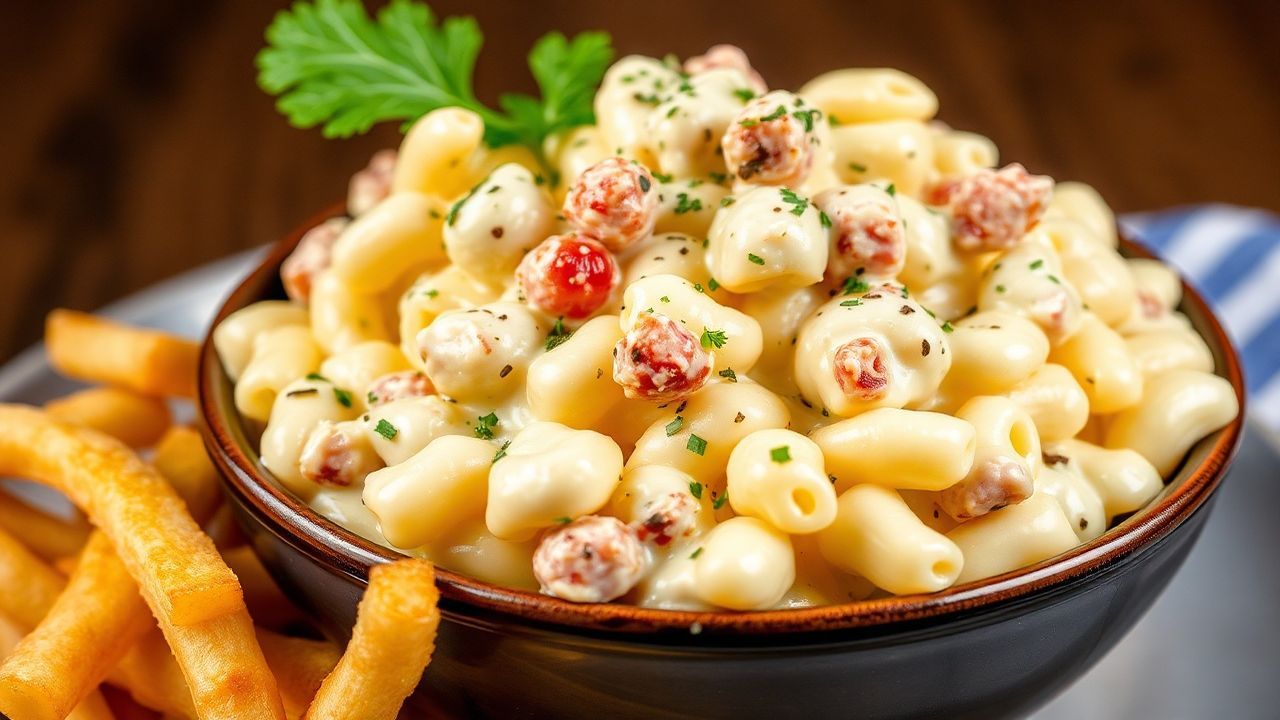
Deli-style macaroni salad has a specific mouthfeel: the pasta pieces stay separate, and each bite carries a glossy, creamy coating. It feels scoopable and thick, not stiff. It never tastes like paste, and it never turns into a thin, runny puddle.
That texture comes from how pasta starch behaves after cooking. When pasta cooks past al dente or cools slowly, more starch leaches into the surrounding liquid. Then the dressing thickens in an uneven, sometimes gummy way as the salad chills.
If you want background on why noodles behave this way, pasta and starch chemistry connect to the broader topic of starch.
The 3 Texture Targets You Can Check
Before you chill, your dressing should look smooth and glossy, not separated or oily. After chilling, it should scoop cleanly and cling to the pasta. You should still see visible pasta shells/elbows—not mushy bits that blend into one mass.
If your salad fails, it usually fails in one of three ways: (1) gummy from too much starch, (2) watery from moisture-rich add-ins or under-chilling, or (3) flat from weak seasoning or acid balance.
Keep these targets in mind because each step in the method supports one of them.
The Zero-Gummy Method: Control Starch and Cooling
Most gummy macaroni salad starts at the stove. Pasta needs enough time to cook through, but not so much time that it releases excessive starch. Aim for al dente: tender at the bite, firm in the center.
Then you stop the starch story by rinsing immediately with cool water. This rinsing doesn’t just cool the pasta. It removes surface starch and reduces the thickening that happens when you mix everything with mayo.
Pasta structure and cooking behavior connect to pasta in general terms, but your practical control point is timing. Start checking early.
Cook Less Than You Think (and Check Twice)
For elbow macaroni, typical cooking time falls around 8–10 minutes depending on brand. Start tasting at minute 7. Pull the pasta when it still feels slightly firm inside.
Remember: pasta keeps cooking for a short time after you drain it. That “carryover” is why people overshoot and end up with gummy salad later.
Rinse Hard, Then Rinse Until Cool
Drain pasta, then rinse under cold running water for 60–90 seconds. Stir the pasta in the colander while rinsing so every surface gets cooled quickly.
Drying matters too. After rinsing, shake off excess water. Let it sit in the colander for 2 minutes while you prep the dressing.
Build a Stable Mayo Dressing (Glossy, Not Streaky)
Mayonnaise is an emulsion—oil dispersed in water—stabilized by egg components. When you whisk it with mustard and acid, you help it blend into a smooth coating that clings to pasta surfaces.
For the underlying concept of emulsions, see emulsion. The practical takeaway: your dressing must look uniform before it meets pasta.
Whisk the Dressing in the Right Order
Start with mayonnaise in a large bowl. Add Dijon mustard and whisk until smooth. Then add vinegar (or another acid), followed by a small amount of sugar to balance sharpness.
Finally, whisk in celery seed (optional but classic). Whisk another 30–45 seconds after the last ingredient so no streaks remain.
Why the Acid Matters for “Deli” Flavor
Acid doesn’t just make the salad taste brighter. It also changes how you perceive richness, so the mayo feels creamy rather than heavy. Use apple cider vinegar or distilled white vinegar for predictable results.
For wider context, you can review vinegar and how it functions as an acid source in cooking.
Vegetable Crunch Without Watery Salad
Vegetables add the deli crunch, but they also bring moisture. The fix is simple: dice small and dry your pieces so they don’t leak into the dressing.
Crunchy add-ins include celery stalk, red bell pepper, and red onion. Onion adds bite, but if you chop it too big, you get raw onion bursts instead of balanced flavor.
Chop Small. Chop Uniform.
Dice bell pepper and celery into pieces around 1/8 inch. Chop onion finely. Uniform small cuts blend better and create even distribution.
If your vegetables look wet, pat them dry with paper towels. This one step prevents the “watery in the bottom” problem that shows up after refrigeration.
Eggs: Fold Gently for Creamy Pockets
Hard-boiled eggs contribute rich protein and a deli-like creaminess. Chop them after cooling. Fold gently so you don’t mash them into the salad.
Egg pieces should stay distinct. That texture contrast makes the salad feel more premium than plain macaroni with dressing.
Timing for Flavor + Texture: When to Chill (and Why)
Chilling does more than cool the salad. It lets flavors distribute evenly across pasta surfaces and it lets the dressing cling. If you rush, you miss that “deli” blend.
In most kitchens, chilling between 2 and 4 hours delivers the best balance: creamy coating, firm pasta bite, and flavors that taste integrated.
Food texture under cold storage also connects to food storage principles like moisture movement and ingredient hydration.
Recommended Chill Schedule
For best results, refrigerate after mixing and folding. Then stir once at the halfway mark if you want extra even coating.
Don’t skip the wait. Taste too early and the dressing may feel sharp or under-seasoned. Chill time rounds out the flavor.
How to Stir Right Before Serving
When you’re ready to serve, stir gently. Scoop from the bottom and fold up so the dressing that settles redistributes.
Over-stirring can break pasta edges and release more starch, which can nudge texture toward gummy. Gentle wins.
30-Minute Deli-Style Recipe (Works Every Time)
This method keeps active work fast while giving your fridge the time it needs. You’ll spend most of the “30 minutes” on cooking and prep, then chill for texture.
Yield: serves 6–8.
Ingredients
Pasta
2 cups elbow macaroni (or shells), uncooked
Dressing
1 cup full-fat mayonnaise
2 tbsp Dijon mustard
1 tbsp apple cider vinegar
1 tsp granulated sugar
1/2 tsp celery seed
Salt + black pepper to taste
Mix-ins
1/2 cup finely diced red bell pepper
1/2 cup finely chopped celery stalk
1/3 cup finely chopped red onion
2 hard-boiled eggs, chopped
Optional: chopped parsley or chives
Step-by-Step Method
1) Bring a large pot of salted water to a boil. Cook macaroni about 1–2 minutes less than package timing. Taste for al dente.
2) Drain and rinse immediately under cold running water. Stir in the colander so cooling happens fast. Let it drain 2 minutes.
3) In a large bowl, whisk mayonnaise, Dijon, vinegar, sugar, and celery seed until fully smooth. Scrape the bowl so the dressing looks even.
4) Add vegetables and eggs. Fold gently. If vegetables feel wet, pat dry first.
5) Add macaroni. Fold using a light lift-and-fold motion until every piece looks coated.
6) Season with salt and black pepper. Cover and refrigerate 2–4 hours.
Fix It Fast: Troubleshooting by Symptom
Don’t throw out a batch. Diagnose the texture and adjust the right lever. Most fixes happen early—before the salad spends too long in the fridge.
Use these guidelines to recover flavor and texture without starting over.
If It’s Gummy
Gummy macaroni salad usually means pasta released too much starch. Next time, cook more al dente and rinse faster. For a current batch, try loosening and resetting texture.
Stir in 1–2 tablespoons of vinegar (or a vinegar-dill brine) mixed with 1–2 tablespoons of mayonnaise. Fold gently and chill an additional 30–60 minutes.
If It’s Watery
Watery salad comes from moisture-rich vegetables or under-chilling. Check your mix-ins first: were they wet, or did you dice too large?
For now, drain off any pooled liquid. Stir in an extra spoonful of mayonnaise and chill longer (up to 4 hours). Next time, pat vegetables dry and chop smaller.
If It Tastes Flat
Flat flavor usually means insufficient salt or acid. Cold temp dulls some flavor notes, so wait until after chilling before final seasoning.
For now, add salt a pinch at a time and then add tiny splashes of vinegar. Mix, wait 10 minutes, and taste again.
If It Separates or Looks Oily
Separation usually comes from incomplete whisking or too much extra liquid at once. Your dressing should look smooth before you combine with pasta.
To recover, whisk 2–3 tablespoons of mayonnaise in a small bowl and slowly blend it into the salad. Fold gently, then chill 30 minutes.
Make Ahead, Storage, and Serving Like a Pro
Creamy macaroni salad improves with time. For parties, mixing a day ahead often tastes better because flavors blend and the dressing settles into a consistent coating.
Still, you want texture to stay “scoopable,” not paste-like. Use airtight storage and stir before serving.
Storage Guidelines
Store in an airtight container in the refrigerator for 3–5 days. Press plastic wrap directly on the surface if you want to reduce drying.
When you remove it, stir gently to redistribute dressing that may settle.
Serving Temperature
Serve straight from the fridge for the classic deli experience. If it warms too much, pasta absorbs dressing and texture can feel heavier.
If you must serve later, keep it chilled in a cooler or on ice, then stir right before plating.
Flavor Variations That Still Stay Deli-Creamy
You can customize this recipe without breaking the texture rules. The safest variations use flavor boosters that don’t add lots of liquid.
Keep the pasta-to-dressing ratio similar and avoid watery add-ins like fresh tomatoes or large chunks of cucumber.
Pickle-Forward Version
Add 1–2 tablespoons finely chopped dill pickles or sweet relish. Reduce vinegar slightly (about 1 teaspoon) so tang doesn’t overpower.
Because pickles add moisture, dice small and fold gently to keep the salad consistent.
Extra Mustard Depth
Swap a portion of Dijon for whole-grain mustard if you like visible mustard seeds. Keep total mustard in a similar range to maintain emulsion stability.
Let it chill longer for flavors to fully meld.
Herb Upgrade
Add chopped parsley or chives right before serving if you want fresher aroma. Herbs lose brightness after long chilling.
Mix herbs lightly so they don’t stain the pasta too quickly.
FAQ
How long can I store creamy deli-style macaroni salad?
Store it in an airtight container in the refrigerator for 3–5 days. Stir gently before serving to redistribute dressing and maintain a consistent coating.
Can I make it ahead for a party?
Yes. Make it the day before for best texture and flavor blend. Chill at least 2 hours, and ideally 4–24 hours, then stir once before serving.
Why does my macaroni salad turn gummy in the fridge?
Most gummy issues come from overcooked pasta, slow cooling, or not rinsing. Cook al dente, rinse immediately under cold water, then chill promptly after mixing.
What pasta shape works best for deli-style macaroni salad?
Elbow macaroni is classic because it traps dressing. Shells and cavatappi also work well, as long as you cook them al dente and rinse thoroughly.
How can I make it creamier without adding more mayonnaise?
Use the small pasta-water emulsification trick: whisk 2–3 tablespoons of reserved cooking water into the dressing before combining. Keep it small to avoid adding extra liquid that can thin the salad.
See also: creamy macaroni salad