

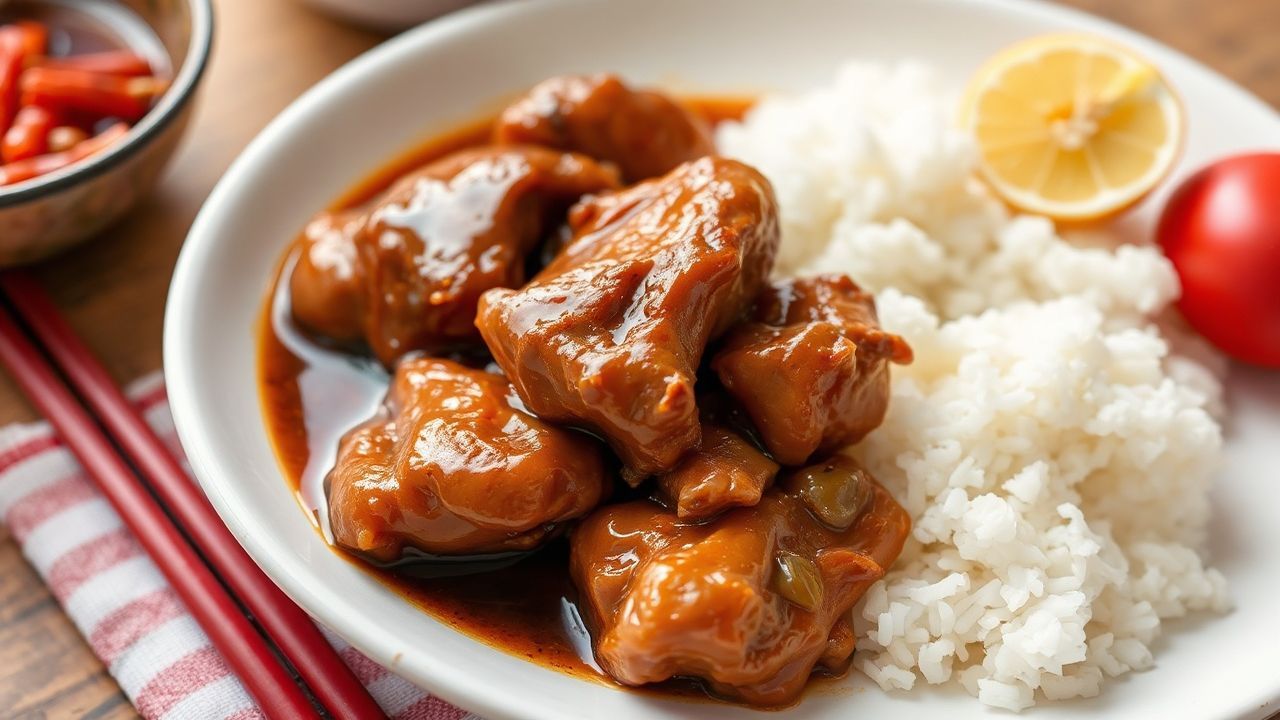
Chicken Adobo brings Filipino flavor tradition to the table with a simple method and bold, balanced seasoning. You get savory depth from soy sauce and brightness from vinegar, plus aroma from garlic and bay leaves. This is comfort food, but it cooks with discipline: marinate, sear, then simmer until tender.
- Chicken Adobo at a Glance: What Makes It Filipino
- Prep and Cook Time
- Yield and Difficulty Level
- Essential Ingredients and Their Role in Authentic Flavor
- Step-by-Step Techniques for Tender, Savory Chicken Adobo
- Chef’s Notes for Better Results
- Creative Twists and Serving Suggestions
- Nutritional Information (Per Serving)
- Q&A: Chicken Adobo FAQ
- What is Chicken Adobo, and why is it considered a quintessential Filipino dish?
- How did Chicken Adobo originate?
- What makes Chicken Adobo’s flavor profile distinctive?
- Are there regional variations of Chicken Adobo?
- How do you store and reheat Chicken Adobo?
- Concluding Remarks
- Focus flavor: tangy vinegar + savory soy sauce + garlic aroma.
- Best texture: simmer until the chicken turns fork-tender.
- Flavor build: sear first, then reduce the sauce at the end.
- Make-ahead advantage: day-two adobo tastes deeper.
Chicken adobo also reflects how Filipino home cooks adapt ingredients to taste and climate. Many households rely on vinegar and salt-based marinades because they help concentrate flavor during cooking. If you want to understand the method behind the dish, read about the wider idea of adobo in the Philippines.
First, gather your core aromatics and liquids, then work in stages. Marination boosts seasoning inside the meat, while searing improves color and adds roasted notes. Finally, simmering merges vinegar tang, soy umami, and pepper warmth into one sauce.
Chicken Adobo at a Glance: What Makes It Filipino
Chicken Adobo earns its place in Filipino kitchens because it tastes familiar, yet it stays flexible. Most versions share the same backbone—soy sauce, vinegar, garlic, bay leaf, and black pepper—then they vary in sweetness, thickness, and added aromatics. For historical context on how vinegar-based cookery became common, see vinegar.
You also get a distinct balance: salty-savoriness from soy sauce, sharp brightness from vinegar, and a gentle roundness from simmering. Garlic and bay leaves add an herbal, warm aroma that carries through the sauce. That balance is why Chicken Adobo shows up in family meals and festive gatherings.
Even the cooking rhythm follows a clear logic. Searing builds surface flavor, then the stew phase turns marinade into a sauce. As the liquid reduces, the sauce clings to chicken and boosts every bite.
To keep the dish faithful, measure your liquids and don’t rush the simmer. If you reduce too early, the vinegar can taste sharp and thin. If you simmer too long at high heat, the sauce can break or turn overly salty.
Prep and Cook Time
This recipe fits busy schedules because it uses practical prep and predictable cooking steps. You can marinate in about an hour minimum, and you can also marinate overnight for deeper seasoning. Total cook time stays manageable once you set up your pot.
- Planning Time: 10–15 minutes
- Marinating Time: 1 hour (overnight optional)
- Cooking Time: 35–45 minutes
- Total Time: about 1 hour 45 minutes to 2 hours 10 minutes
Choose bone-in chicken thighs for the best texture. Thigh meat stays juicy during simmering and releases natural richness into the sauce. If you prefer breast, lower the simmer time and check for fork tenderness early.
When you plan your serving, cook rice alongside adobo. You’ll finish the sauce by the time the rice turns ready, which helps your meal timing. Serve hot so the sauce stays glossy and aromatic.
Yield and Difficulty Level
This batch makes enough for family dinner and leftovers. You’ll get about 4 hearty servings, depending on portion size and how much sauce you like. Leftovers help the flavor deepen, so extra servings work in your favor.
Difficulty stays in a beginner-friendly range. You just follow one order of operations: marinate, sear, then simmer. As long as you don’t boil aggressively after vinegar goes in, you’ll get stable flavor and a smooth braise.
Difficulty: Easy to Medium.
What you control: simmer time, sauce reduction, and final seasoning. Taste near the end and adjust with a small amount of soy sauce or a touch of sugar if needed.
Essential Ingredients and Their Role in Authentic Flavor
Chicken Adobo works because each ingredient has a job. Soy sauce adds salt and fermented umami notes, while vinegar contributes acidity that brightens the entire dish. If you want more background on how soy sauce functions, review soy sauce.
Garlic and bay leaves build aroma during simmering. Black pepper adds gentle warmth and sensory contrast to vinegar tang. For the role of bay leaves in cooking, see bay leaf.
- 2 lbs (900 g) bone-in chicken thighs — tender meat that braises well.
- 1/2 cup soy sauce — salty backbone and umami depth.
- 1/2 cup cane vinegar — characteristic tang and acidity.
- 1 cup water — braising liquid to balance intensity.
- 6 cloves garlic, crushed — pungent aroma that infuses sauce.
- 3 bay leaves — herbal, warm background notes.
- 1 tsp whole black peppercorns — peppery warmth without harshness.
- 2 tbsp brown sugar (optional) — balances sharp vinegar if you prefer it.
- 2 tbsp cooking oil — for browning and surface flavor.
Step-by-Step Techniques for Tender, Savory Chicken Adobo
Adobo succeeds when you treat each step as a separate flavor stage. Marinating seasons the chicken, searing improves color and aroma, and simmering transforms liquids into a cohesive sauce. Keep the heat controlled after adding vinegar so the tang stays pleasant.
Before you start, crush garlic rather than mincing. Crushed garlic releases oils faster, and you get more aromatic depth. Garlic also cooks down without turning bitter when you simmer at low heat. For general background on garlic, use garlic.
- Marinate the chicken: Combine chicken thighs, soy sauce, and crushed garlic in a covered bowl. Refrigerate at least 1 hour, or overnight for deeper flavor.
- Sear for color: Heat cooking oil in a large skillet or Dutch oven over medium heat. Remove chicken from marinade and sear skin-side down until golden, about 4–6 minutes. Flip and brown the other side for 2–4 minutes.
- Build the sauce: Pour reserved marinade into the pot. Add vinegar, water, bay leaves, and peppercorns. Bring to a gentle boil, then reduce immediately to low.
- Simmer until fork-tender: Cover and simmer for 30–40 minutes, stirring occasionally. Cook until chicken is tender and the sauce tastes balanced.
- Optional sweetness and thickening: Stir in brown sugar during the last 8–10 minutes if you want a rounder tang. Uncover for 5–8 minutes to reduce and thicken.
- Final seasoning: Taste the sauce. Add a small splash more soy sauce for salt, or simmer longer for reduced intensity.
- Rest and serve: Rest the pot for 5 minutes. This helps the sauce cling to chicken when you plate.
When you taste, aim for harmony rather than extremes. If the vinegar hits too hard, simmer uncovered briefly to reduce the sharpness. If the sauce feels flat, add a small amount of soy sauce and simmer for a few more minutes.
Let your simmer do the work. A steady low temperature helps garlic aroma stay fragrant, not scorched. It also keeps the sauce stable so you can reduce it to the right thickness.
For safety and tenderness, check the chicken in the thickest part. The goal is fork tenderness and a sauce that coats the spoon. If you need extra time, cover and simmer in 5-minute increments.
Common Variations (Keep the Core Balance)
Some cooks add potatoes, others include hard-boiled eggs, and some use a sweeter approach with extra sugar. These changes can work as long as you keep the core balance of vinegar acidity and soy salt. In most Filipino homes, variation reflects what’s available and what each family prefers.
For another flavor direction, you can add coconut milk. This softens vinegar sharpness and makes the sauce taste creamier. If you choose that option, add coconut milk late in the simmer so it doesn’t split.
Chef’s Notes for Better Results
Small choices change the final bite. Bone-in cuts retain moisture and collagen, which contributes to tender texture during braising. Skin-on thighs also give better browning, and that surface color improves overall aroma.
For the vinegar, use a cane vinegar style when you can. Different vinegars vary in sharpness, and the final taste depends on that acidity level. If you switch vinegars, adjust by tasting near the end.
- Cut preference: choose bone-in thighs for tenderness.
- Vinegar choice: use cane vinegar for mellow tang.
- Garlic intensity: crush garlic for stronger aroma.
- Make-ahead: refrigerate overnight for best flavor fusion.
- Storage: keep leftovers in the fridge up to 3 days.
If you freeze portions, cool the adobo first, then store in airtight containers. Reheat gently on the stove and add a splash of water if the sauce thickens too much. This method protects the sauce from drying out.
Creative Twists and Serving Suggestions
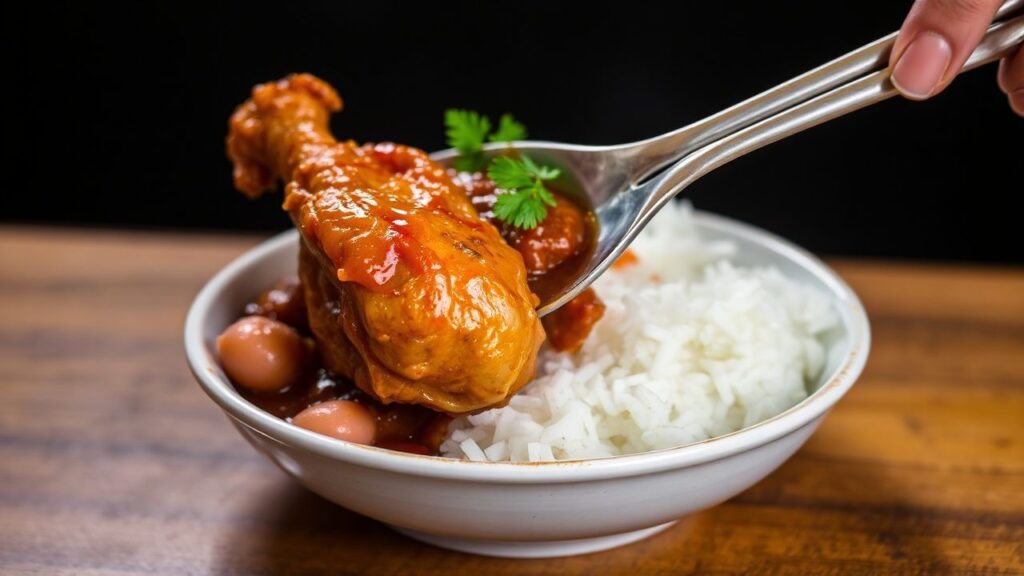
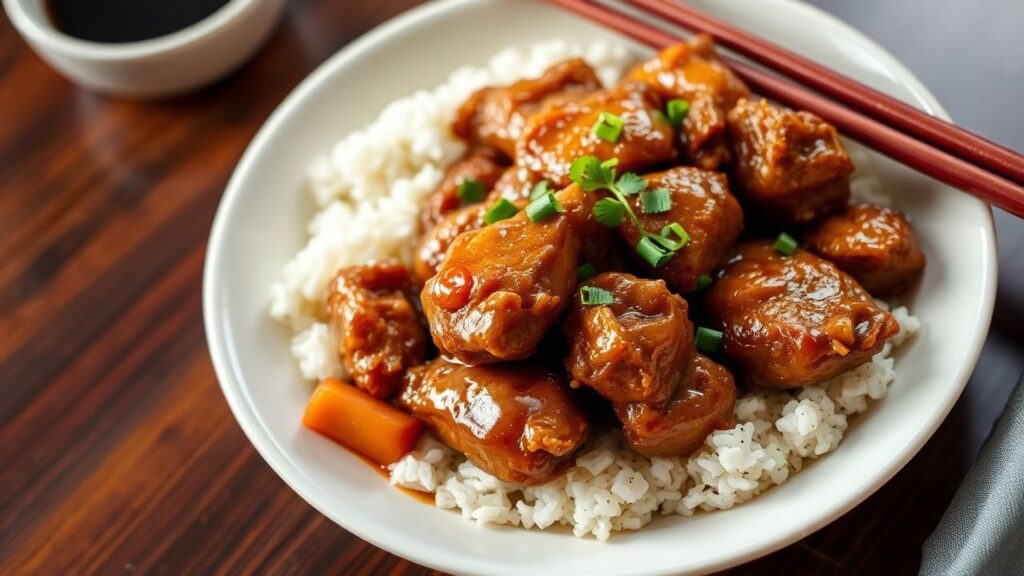
Chicken Adobo tastes best when you pair it with food that absorbs sauce. Serve it over hot steamed jasmine rice or garlic fried rice so each grain catches vinegar-soy flavor. Garnish with chopped green onions for fresh aroma.
If you want a citrus lift, add a squeeze of calamansi at the table. This keeps the bright flavor lively without changing the core cooking method. For citrus background, see calamansi.
For a more playful spread, serve alongside atchara or pickled papaya to contrast richness with crunch. If you enjoy fusion ideas, you can also tuck adobo chicken into bao buns for a handheld meal. Keep the sauce moderately thick so it stays inside the bun.
For a quick upgrade, spoon extra sauce over rice right before serving. This boosts aroma and makes the meal feel fuller. Also, keep peppercorns in the dish for bursts of warmth when you bite.
Nutritional Information (Per Serving)
Nutritional values can vary based on chicken size and how much sauce reduction you do. The estimate below assumes bone-in thighs, moderate oil use, and a typical portion size. Use it as a guide, not a strict medical measure.
If you want a lighter version, reduce oil during searing and consider using less sugar. You can also use low-sodium soy sauce, then adjust the final seasoning after the sauce reduces. For general macronutrient context, see macronutrients.
| Calories | Protein | Carbohydrates | Fat |
|---|---|---|---|
| 320 kcal | 28 g | 6 g | 18 g |
If your serving includes more rice or uses extra sauce, calories will rise. Measure portions for consistent results. For most families, the biggest driver of calorie changes is rice quantity and added sugar.
Q&A: Chicken Adobo FAQ
What is Chicken Adobo, and why is it considered a quintessential Filipino dish?
Chicken Adobo is a savory stew where chicken simmers in vinegar, soy sauce, garlic, bay leaves, and black pepper. It stands out because the flavor balance—tangy, salty, and aromatic—fits everyday Filipino eating. Many Filipino households consider it a staple because it works for both weeknight meals and special occasions.
Historically, the cooking style connects to preservation and flavor-building methods that fit tropical climates. Learn more about the concept in adobo (Philippines) for a wider overview.
How did Chicken Adobo originate?
Adobo cooking predates Spanish colonization in many regions as a way to preserve and flavor food with sour and salty ingredients. The term “adobo” also reflects Spanish influence, while the cooking logic grew from local practice. Over time, Filipino families refined techniques into what many recognize as classic adobo.
The vinegar-and-spice method also fits the broader idea of using acidity in cooking. For background on vinegar as an ingredient, see vinegar.
What makes Chicken Adobo’s flavor profile distinctive?
The signature taste comes from the mix of vinegar acidity and soy sauce salinity, supported by garlic and bay leaf aroma. Peppercorns add a warm, subtle heat that balances the tang. When the chicken simmers, the sauce thickens and the flavors blend into a cohesive coating.
To keep the profile right, avoid skipping the sear and keep the simmer gentle after adding vinegar. Those two choices protect flavor smoothness and texture.
Are there regional variations of Chicken Adobo?
Yes. Families and regions adjust sweetness, thickness, and add-ins based on local preferences. Some versions add coconut milk for creaminess, while others include eggs or potatoes for extra body. The core remains the same: vinegar, soy, garlic, and aromatics.
For deeper context on how adobo differs across the Philippines, consult adobo (Philippines).
How do you store and reheat Chicken Adobo?
Cool the adobo within a short time, then refrigerate in a sealed container. Store it up to 3 days in the fridge. When you reheat, warm it gently and stir so the sauce coats the chicken evenly.
If the sauce thickens in the fridge, add a splash of water and simmer briefly until glossy. This keeps the vinegar-soy balance consistent.
Concluding Remarks
Chicken Adobo remains a clear expression of Filipino flavor tradition because it pairs simple ingredients with a reliable cooking method. You build flavor through marination, deepen it with searing, and unify it with a controlled simmer. The result tastes confident, not complicated.
When you make it at home, you also gain control over thickness, sweetness, and tang. Taste near the end, adjust lightly, and let the pot rest so the sauce clings to every piece of chicken. That final step turns a good batch into a meal your family will ask for again.
See also: Chicken Adobo