

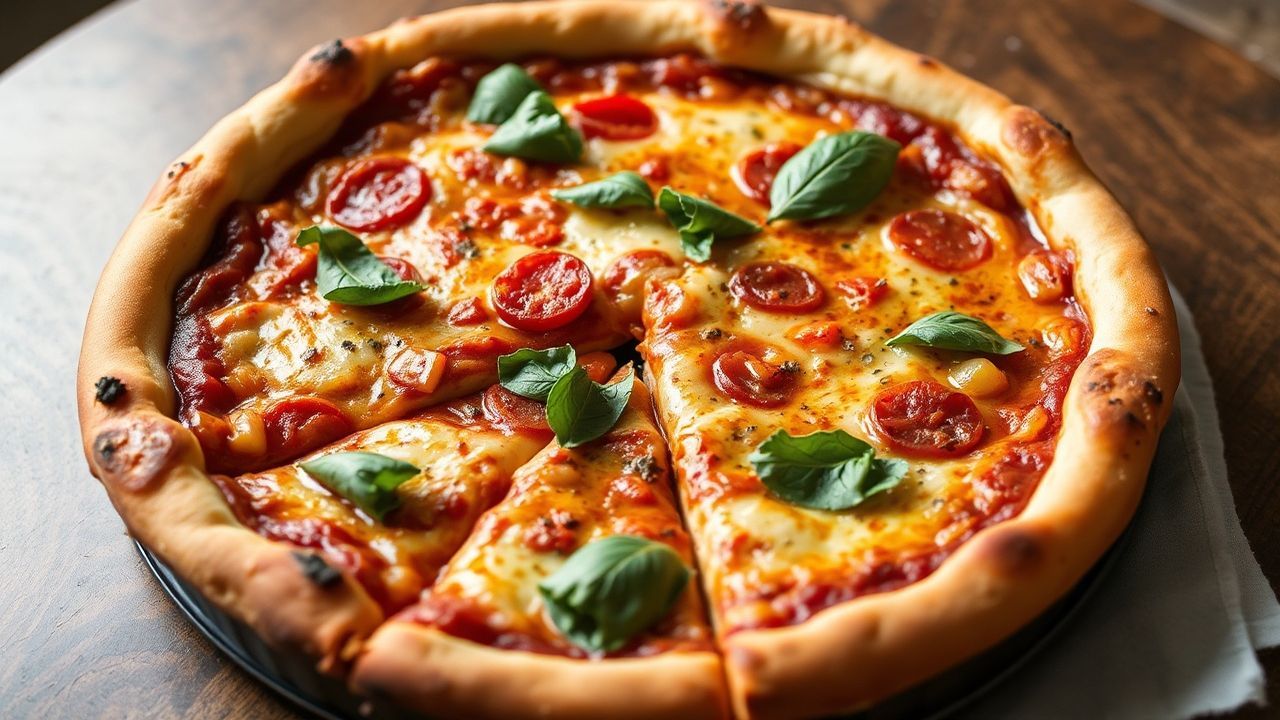
There’s something irresistibly satisfying about Chicago-style deep dish pizza. The thick, buttery crust forms tall sides that hold layers of melted cheese, tangy tomato sauce, and hearty toppings. You slice it like a pie, usually with a fork, because the structure is meant to be dense and filling.
Mastering Chicago-style deep dish pizza at home takes patience and simple, repeatable technique. Follow this step-by-step guide to turn everyday ingredients into a rich, bakery-style result. You’ll shape the dough, build the layers the right way, and bake for a crisp base and bubbling topping.
At a Glance
- Layer cheese first to protect the crust from moisture.
- Use a deep pan so the dough bakes tall and crisp.
- Bake until golden and let the pizza rest before slicing.
- Choose quality mozzarella for proper melt and texture.
What Makes Chicago-Style Deep Dish Different
Chicago-style deep dish pizza relies on a deep pan and a thick dough wall. That pan shape drives the signature “pie-like” structure, with toppings stacked to stay stable during baking. You get a crust that tastes buttery and bakes crisp, even under sauce.
Another key difference sits in the build. Deep dish places cheese directly on the crust, then toppings, then chunky tomato sauce on top. This reversed layering helps moisture stay controlled and keeps the base from turning soggy.
To understand the texture goal, it helps to know how dough structure and browning work. When flour hydrates and the dough bakes, starches gelatinize and the surface browns, creating flavor and firmness. For background on bread science, see Maillard reaction.
Prep and Bake Timing You Can Plan
Set aside enough time for dough hydration, proofing, and oven heat to do their job. Deep dish timing also affects crust texture, because a thicker dough needs full bake-through. If you rush, the center stays underdone.
Use these estimates as a practical baseline. Your exact time varies by pan material, dough temperature, and oven accuracy. Aim for golden edges, bubbling sauce, and a cooked base.
- Readiness: 30 minutes
- Rising Time: 1 hour
- Cooking: 40–45 minutes
- Total Time: about 2 hours 15 minutes
Yield and Difficulty Level
This recipe yields 1 deep dish pizza in an 8–10 inch pan that serves 4. It’s sized for thick layers, so plan for hearty portions. If you want bigger servings, use a larger pan and adjust thickness.
Difficulty stays Medium. You’ll handle dough shaping and careful layering, but the method stays straightforward. You don’t need special equipment beyond a deep, oven-safe pan.
For dough fundamentals, you can review yeast to understand why proofing builds structure and flavor. Active dry yeast produces gas that expands the dough.
Ingredients for Chicago-Style Deep Dish Pizza
Gather ingredients before you start. Deep dish works best when you follow a tight sequence: bloom yeast, mix dough, let it rise, prep sauce and vegetables, then assemble. That order keeps your bake consistent.
Measure carefully. Small changes in flour, water temperature, or salt can shift dough hydration and how the crust holds its tall shape.
Dough Ingredients
- Yeast: 2 1/4 teaspoons (1 packet) active dry yeast
- Warm water: 1 1/2 cups (105°F–115°F)
- Flour: 3 1/4 cups all-purpose flour, sifted
- Cornmeal: 1/2 cup yellow cornmeal
- Salt: 1 1/2 teaspoons kosher salt
- Butter: 1/2 cup unsalted butter, melted and slightly cooled
- Sugar: 1 tablespoon sugar
Filling and Topping Ingredients
- Cheese: 3 cups shredded whole milk mozzarella
- Crushed tomatoes: 3 cups San Marzano tomatoes
- Tomato paste: 2 tablespoons
- Oregano: 1 teaspoon dried oregano
- Garlic powder: 1 teaspoon
- Olive oil: 1 tablespoon
- Vegetables: 1 cup sliced mushrooms
- Green bell pepper: 1, thinly sliced
- Red onion: 1 small, thinly sliced
- Basil: fresh leaves for garnish
- Seasoning: salt and freshly ground black pepper
San Marzano tomatoes get prized for their flavor profile. If you want a quick reference on tomato types and cultivation, see San Marzano.
Step-by-Step Instructions (Build the Layers Correctly)
Keep your workflow tight. You’ll bloom yeast, make and proof dough, prep sauce and vegetables, then assemble in the right order. That sequence protects your crust and helps the bake finish evenly.
Read each step fully before you move on. Deep dish rewards consistency, especially during layering and baking.
1) Activate the Yeast
In a small bowl, combine warm water and sugar. Sprinkle yeast over the top and wait 5–7 minutes until it looks foamy. That foam signals active fermentation.
If the yeast stays inactive, your water may be too hot or too cool. Start again rather than forcing the dough to rise.
2) Make the Dough
In a large bowl, whisk flour, cornmeal, and salt. Add melted butter and the yeast mixture, then stir until you form a rough dough.
Don’t worry about perfect smoothness yet. Once you knead, gluten develops and the dough becomes elastic.
3) Knead and Proof
Knead on a floured surface for 8–10 minutes until the dough feels smooth and elastic. Place it in a lightly oiled bowl and cover with a damp cloth.
Let it rise in a warm spot for about 1 hour, or until it doubles in size. For a general overview of gluten structure, you can review gluten.
4) Prepare the Sauce
In a medium bowl, mix crushed tomatoes, tomato paste, oregano, garlic powder, olive oil, salt, and pepper. Stir until the paste dissolves into the liquid.
Set aside so flavors meld while you prep vegetables. Tomato sauces taste better after a short rest because herbs hydrate and distribute.
5) Sauté the Vegetables
Sauté mushrooms, bell pepper, and onion over medium heat in 1 tablespoon olive oil. Cook about 5 minutes until they soften and release some moisture.
Set aside to cool slightly. Cooler vegetables reduce steam build-up when you assemble the pie.
6) Shape the Dough in a Deep Pan
Punch down the dough and transfer it to a deep 9-inch pan. Press dough evenly onto the bottom and up the sides to create a thick wall.
Use your fingers to smooth the surface so the base bakes evenly. If the dough springs back, give it 5 minutes to relax before continuing.
7) Layer Cheese First
Spread shredded mozzarella evenly on the crust. This acts as a moisture barrier and supports a tender, crisp base.
Don’t press cheese too hard into one spot. Even coverage helps each slice hold together.
8) Add Toppings
Distribute sautéed vegetables over the cheese layer. Keep toppings in an even distribution so the bake doesn’t create thick and thin pockets.
If you like extra toppings, add more vegetables rather than adding wet sauces. Deep dish needs balance, not excess liquid.
9) Pour Sauce on Top
Ladle tomato sauce gently over the vegetables. Pouring slowly helps prevent displacement of the cheese layer below.
The sauce should cover most of the top without drowning the dough edges. Aim for a thick, chunky layer.
10) Bake, Rest, and Garnish
Bake in a preheated oven at 425°F (220°C) for 40–45 minutes. Bake until crust edges turn golden and sauce bubbles at the center.
Let the pizza rest for 10 minutes before slicing. Resting sets cheese and sauce so slices come out clean.
Tips for Success (Small Changes, Big Results)
Chicago deep dish comes down to texture. Cornmeal adds a mild grit that gives crust structure, and whole milk mozzarella supports proper melt. Together they create that firm-yet-tender bite.
Also focus on layer order. Cheese first, toppings second, sauce last. That build keeps the base crisp while the top stays saucy.
- Cornmeal Magic: Add cornmeal for that slightly flaky, sturdy crust texture.
- Use Whole Milk Mozzarella: It melts smoothly and keeps the pie rich.
- Layering Order: cheese → toppings → sauce to prevent soggy bottoms.
- Grease the pan well: Butter or oil helps release and browns edges.
For an ingredient-related reference, whole-milk mozzarella is linked to dairy fat and moisture behavior. If you want a quick learning path on dairy proteins and cooking, see milk.
Serving Suggestions That Match the Style
Serve hot deep dish pizza with a crisp salad to cut through richness. A simple green salad with vinaigrette works well because acidity balances fatty cheese and buttery dough.
Garnish right before serving. Fresh basil adds aroma, and a drizzle of olive oil makes the top shine. For extra heat, offer crushed red pepper flakes at the table.
If you want quick context on why acidity helps balance rich foods, you can review vinaigrette for a basic understanding of dressing components.
Nutrition Snapshot (Per Serving)
Nutrition can vary by pan size and ingredient brands. Treat the values below as a planning estimate, not a medical measure.
For most home builds, one slice from a 1-pie batch lands in the mid-to-high calorie range due to cheese, butter, and crust thickness.
| Nutrient | Per serving (1/4 pizza) |
|---|---|
| Calories | 650 kcal |
| Protein | 28 g |
| Carbohydrates | 72 g |
| Fat | 28 g |
For dough troubleshooting and fermentation ideas, you can also look up bread as a general reference. Bread science overlaps with pizza dough hydration, fermentation, and bake outcomes.
FAQ
What pan is best for Chicago-style deep dish?
Use a deep, oven-safe pan or skillet with sturdy sides. Cast iron and heavy steel distribute heat well, which helps the thick crust bake through. If your pan is shallow, the crust won’t rise tall enough.
Before assembly, grease the pan thoroughly. That step helps release and keeps the edges from sticking during the long bake.
Why do I need to layer cheese before toppings?
Cheese first creates a moisture barrier between crust and sauce. The cheese melts and forms a protective layer that slows sogginess. Then the toppings and sauce sit on top without soaking straight down.
This structure matches the deep dish “pie” method, where the base stays firm even under chunky tomato.
How can I get a crispy yet tender crust?
Press the dough evenly into the pan so the base contacts heat across the full surface. A proper bake time at 425°F (220°C) also matters because thick dough needs time to cook through.
Let the pizza rest before slicing. Resting firms the crumb so the crust feels crisp instead of wet.
Can I make the dough ahead of time?
Yes. You can refrigerate the dough after mixing and shaping. Cold fermentation improves flavor and relaxes gluten, which makes shaping easier.
When ready to bake, bring dough to workable temperature for easier pressing. Then assemble and bake as directed.
How do I store and reheat leftovers?
Cool the pizza completely, then cover and refrigerate. Reheat in an oven or toaster oven to re-crisp the crust instead of steaming it like a microwave.
Heat until the center warms and the cheese bubbles again. For best texture, eat within 2–3 days.
In Retrospect
Chicago-style deep dish pizza succeeds when you respect the layers and the bake. A tall, buttery crust, cheese that protects the base, and sauce that finishes on top give you the classic pie structure. When you time your proofing and rest your pizza, each slice holds together.
Use this step-by-step method as your repeatable template. With the right dough hydration, balanced toppings, and steady oven heat, you’ll turn a home kitchen bake into a recognizable Chicago-style result.
To keep improving, track what you change each time: pan type, dough thickness, and bake duration. Pizza rewards measured adjustments, not guesswork.
See also: Chicago-style deep dish
- What Makes Chicago-Style Deep Dish Different
- Prep and Bake Timing You Can Plan
- Yield and Difficulty Level
- Ingredients for Chicago-Style Deep Dish Pizza
- Step-by-Step Instructions (Build the Layers Correctly)
- 1) Activate the Yeast
- 2) Make the Dough
- 3) Knead and Proof
- 4) Prepare the Sauce
- 5) Sauté the Vegetables
- 6) Shape the Dough in a Deep Pan
- 7) Layer Cheese First
- 8) Add Toppings
- 9) Pour Sauce on Top
- 10) Bake, Rest, and Garnish
- Tips for Success (Small Changes, Big Results)
- Serving Suggestions That Match the Style
- Nutrition Snapshot (Per Serving)
- FAQ
- What pan is best for Chicago-style deep dish?
- Why do I need to layer cheese before toppings?
- How can I get a crispy yet tender crust?
- Can I make the dough ahead of time?
- How do I store and reheat leftovers?
- In Retrospect