
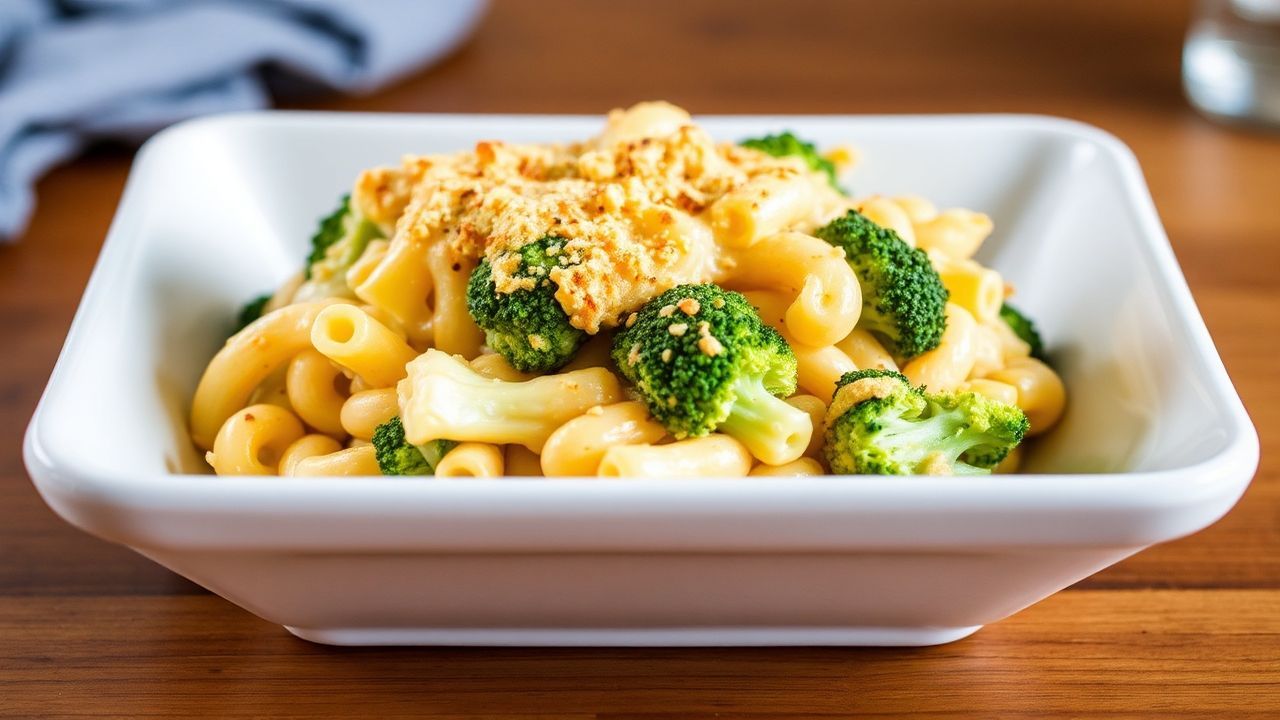
Cheesy broccoli mac and cheese delivers the same comfort as classic mac, but with brighter flavor and extra fiber from broccoli. This ultimate cheesy broccoli mac and cheese recipe builds a smooth cheddar sauce, then bakes it for a golden top that actually sets.
- Ultimate Cheesy Broccoli Mac and Cheese Recipe: The Core Flavor Plan
- The Perfect Cheese Blend for Creamy Richness
- Choosing the Ideal Broccoli for Texture and Flavor
- Step-by-Step Guide to Achieving the Ultimate Cheesy Broccoli Mac and Cheese
- 1) Cook the Pasta
- 2) Blanch the Broccoli
- 3) Sauté Aromatics (Optional but Flavorful)
- 4) Make the Roux
- 5) Add Milk Gradually
- 6) Melt the Cheese the Right Way
- 7) Combine Pasta, Broccoli, and Sauce
- 8) Bake for the Golden Finish
- Expert Tips for Baking and Serving Your Cheesy Broccoli Mac and Cheese
- Q&A
- 1) What makes this cheesy broccoli mac and cheese “ultimate”?
- 2) Can I use frozen broccoli instead of fresh?
- 3) How do I prevent a grainy cheese sauce?
- 4) What pasta shape works best?
- 5) How long should I bake, and when is it done?
- The Way Forward
At a Glance
- Silky sauce: roux + warm milk + cheese off the heat.
- Broccoli texture: blanch briefly for tender-crisp florets.
- Best bake: 375°F (190°C) until bubbling and golden.
- Make-ahead friendly: assemble, chill, then bake fresh.
If you want a dish that feeds a crowd and tastes like it took hours, this method works fast. You can also swap in frozen broccoli with the same steps, as long as you drain well.
Ultimate Cheesy Broccoli Mac and Cheese Recipe: The Core Flavor Plan
The sauce uses a classic base for dependable melt: a butter–flour roux thickens the milk into a stable cheese sauce. Then you melt the cheeses gently so the proteins form a smooth emulsion instead of a grainy texture.
Broccoli supports the richness when you treat it like a fresh vegetable, not a canned add-in. Blanching locks in color and improves bite, while baking warms everything to a cohesive casserole.
The Perfect Cheese Blend for Creamy Richness
A good cheesy broccoli mac and cheese depends on cheese chemistry. Use a blend so flavor stays bold while texture stays creamy, especially after baking.
Start with sharp white cheddar for tang and strong melt. Add Gruyère for nutty depth, then Monterey Jack to smooth out the body. Finish with Parmesan for savory flavor and a lightly crisp crust on top.
For readers who want the why behind the melt, cheese flavor and melting behavior connect to how cheese is made and how proteins respond to heat. This recipe uses controlled heat to keep that process predictable.
Also keep your shred size consistent. Finer shreds melt faster and blend more evenly, which helps the sauce cling to every pasta curve.
Choosing the Ideal Broccoli for Texture and Flavor
Broccoli can turn great mac and cheese bland or watery if you cook it wrong. Choose heads with tight, dark green florets and firm stems for the best tender-crisp result.
If you use frozen florets, cook them according to the bag, then cool and drain well. Excess moisture steams the casserole and dulls the cheesy top.
Short blanching matters because broccoli is high in water, so quick par-cooking protects texture. The vegetable’s cell structure changes as it heats, which is why blanching supports even cooking; see Brassica oleracea for background on this crop family.
Cut florets into bite-size pieces so each spoonful gets broccoli and sauce together. That balance is the difference between “cheesy pasta with broccoli” and a true casserole.
Step-by-Step Guide to Achieving the Ultimate Cheesy Broccoli Mac and Cheese
Follow each step in order and your sauce stays smooth. Work at a steady pace: pasta first, roux second, cheese last.
Use this timeline: cook pasta, blanch broccoli, build roux, whisk in warm milk, melt cheeses off heat, combine, then bake. Your oven does the final texture work.
1) Cook the Pasta
Boil elbow macaroni in salted water until just al dente, about 7 minutes. Drain thoroughly.
Toss with a small drizzle of olive oil to reduce sticking. Al dente pasta finishes cooking in the oven without becoming mushy.
2) Blanch the Broccoli
Blanch broccoli florets in boiling salted water for about 2 minutes. Immediately move them into an ice bath to stop cooking.
Drain well, then pat lightly if you see surface moisture. Dry broccoli helps the sauce cling instead of pooling.
3) Sauté Aromatics (Optional but Flavorful)
Melt butter in a heavy-bottomed pan. Add minced onion and garlic and cook until soft and fragrant, around 3–4 minutes.
These aromatics add a savory base so the cheese tastes richer, even with the same amount of cheese.
4) Make the Roux
Sprinkle in all-purpose flour and whisk constantly for about 2 minutes. Cook the roux until it loses the raw flour smell.
This step thickens the milk evenly, which supports a stable cheese sauce during baking.
5) Add Milk Gradually
Whisk in warm whole milk slowly to prevent lumps. Simmer until thick enough to coat a spoon.
Warm milk speeds melting and reduces the risk of a broken sauce. If you notice lumps, whisk more firmly until smooth.
6) Melt the Cheese the Right Way
Turn off the heat, then add cheddar, Gruyère, Monterey Jack, and Parmesan. Stir until the sauce turns smooth and glossy.
Season with black pepper, a pinch of smoked paprika, and Dijon mustard. The mustard brightens flavor without tasting like mustard.
7) Combine Pasta, Broccoli, and Sauce
Stir pasta and broccoli into the cheese sauce. Mix gently so the florets stay intact.
For the best coverage, fold rather than stir hard. This keeps broccoli from breaking apart.
8) Bake for the Golden Finish
Transfer to a buttered casserole dish. For a crisp top, mix panko with melted butter and spread evenly.
Bake at 375°F (190°C) for 20–25 minutes until bubbling. Rest 5 minutes before serving so the sauce thickens.
For readers tracking the science of dairy, cheese melting links to heat effects on milk proteins; see casein for basic protein behavior.
Expert Tips for Baking and Serving Your Cheesy Broccoli Mac and Cheese
The baked crust adds contrast to the creamy interior. Panko works because its texture holds up under heat, giving you a crisp, flavorful layer.
You can tint and perfume the topping with paprika or a little Parmesan. Bake until the edges look set and the center bubbles steadily.
Serve promptly while the sauce stays creamy. A quick garnish of parsley or chives adds color, and lemon wedges brighten rich flavors without adding sweetness.
For make-ahead, assemble through the cheese-and-broccoli step. Cover and refrigerate up to 24 hours, then add topping and bake when ready.
If the casserole looks tight after chilling, loosen the interior by stirring in a splash of warm milk before baking. This restores smoothness and helps the center heat through.
For dietary options, you can use half-and-half or a milk-and-cream mix for extra richness. If you choose lactose-free milk, keep the cheese blend the same for flavor continuity.
Prep and Cook Time
- Prep time: 15 minutes
- Cook time: 35 minutes
- Total time: 50 minutes
Yield
- Serves 6 generous portions
Difficulty Level
- Medium—best for cooks who enjoy careful sauce steps
Ingredients
- 1 lb (450g) elbow macaroni
- 4 cups fresh broccoli florets
- 4 cups whole milk, warmed
- 4 tbsp unsalted butter
- 1/4 cup all-purpose flour, sifted
- 1 1/2 cups sharp white cheddar cheese, shredded
- 1 cup Gruyère cheese, shredded
- 1 cup Monterey Jack cheese, shredded
- 1/2 cup freshly grated Parmesan cheese
- 1/2 cup panko breadcrumbs
- 2 cloves garlic, minced
- 1 small onion, finely chopped
- 1 tsp Dijon mustard
- 1/2 tsp smoked paprika
- Salt and freshly ground black pepper, to taste
- 2 tbsp olive oil
- Fresh chopped parsley or chives, for garnish
- Lemon wedges, optional for serving
Instructions
- Boil the pasta: Bring a large pot of salted water to a boil. Cook macaroni until just al dente, about 7 minutes. Drain well and toss with olive oil.
- Blanch broccoli: Boil florets for 2 minutes in salted water. Transfer to an ice bath, then drain and pat lightly if needed.
- Sauté aromatics: Melt butter in a saucepan over medium heat. Cook onion and garlic until translucent and fragrant, about 4 minutes.
- Create roux: Whisk in flour and cook 2 minutes, stirring constantly.
- Add milk: Whisk in warm milk gradually. Simmer until the sauce thickens, 5–7 minutes, then remove from heat.
- Melt cheese: Stir in shredded cheeses, Dijon mustard, smoked paprika, salt, and pepper until smooth.
- Combine: Fold in pasta and broccoli until evenly coated.
- Transfer to dish: Spoon into a buttered 9×13-inch casserole dish.
- Add topping: Mix panko with 2 tbsp melted butter and sprinkle evenly over the casserole.
- Bake: Bake at 375°F (190°C) for 20–25 minutes until bubbling and crisp on top.
- Garnish and serve: Rest 5–10 minutes, then garnish with parsley or chives. Serve with lemon wedges if desired.
Chef’s Notes
- For extra creaminess, replace part of the milk with half-and-half or heavy cream.
- For a smoky edge, add a pinch of smoked gouda to the cheese mix or extra paprika to the topping.
- To keep pasta from overcooking, undercook by about 1 minute during boiling.
- Make-ahead: assemble through step 6, refrigerate, then add topping and bake when ready.
Serving Suggestions
Cheesy broccoli mac and cheese works as a hearty main or a side. Pair it with a crisp green salad dressed with lemon vinaigrette to cut through richness.
Roasted cherry tomatoes or steamed green beans also balance the casserole well. If you want extra crunch, serve with garlic bread from a bakery or your own oven.
For background on pasta texture and cooking behavior, see al dente to understand why undercooking helps baked pasta turn tender instead of soft.
Q&A
Quick answers help you troubleshoot common issues before they ruin the texture. Use these notes to keep your cheesy broccoli mac and cheese creamy and sliceable.
These answers focus on realistic home cooking variables like broccoli moisture, sauce thickness, and bake timing.
1) What makes this cheesy broccoli mac and cheese “ultimate”?
The sauce uses a roux-thickened base plus a blend of cheeses melted off heat. That combination gives you a smooth, stable sauce that stays creamy after baking.
2) Can I use frozen broccoli instead of fresh?
Yes. Blanch or steam according to package directions, then cool and drain extremely well. Frozen broccoli can release extra water, so draining and patting matter.
3) How do I prevent a grainy cheese sauce?
Keep the sauce at a gentle heat until thick, then turn off the burner before adding shredded cheese. Stir until melted, then bake right away.
4) What pasta shape works best?
Elbow macaroni delivers classic texture, but shells and cavatappi also hold sauce well. The key is to cook pasta just al dente so it finishes in the oven.
5) How long should I bake, and when is it done?
Bake at 375°F (190°C) for 20–25 minutes. It’s done when the edges bubble and the topping turns golden, then rest 5–10 minutes for the sauce to set.
The Way Forward
Cheesy broccoli mac and cheese should feel rich, cohesive, and comforting, not watery or oily. When you use a roux, melt cheese off heat, and blanch broccoli briefly, you get a sauce that coats every bite.
Make it for weeknights, holidays, or potlucks. This method gives you a consistent result with a crisp top and a creamy center that holds up when you scoop it.
See also: cheesy broccoli