
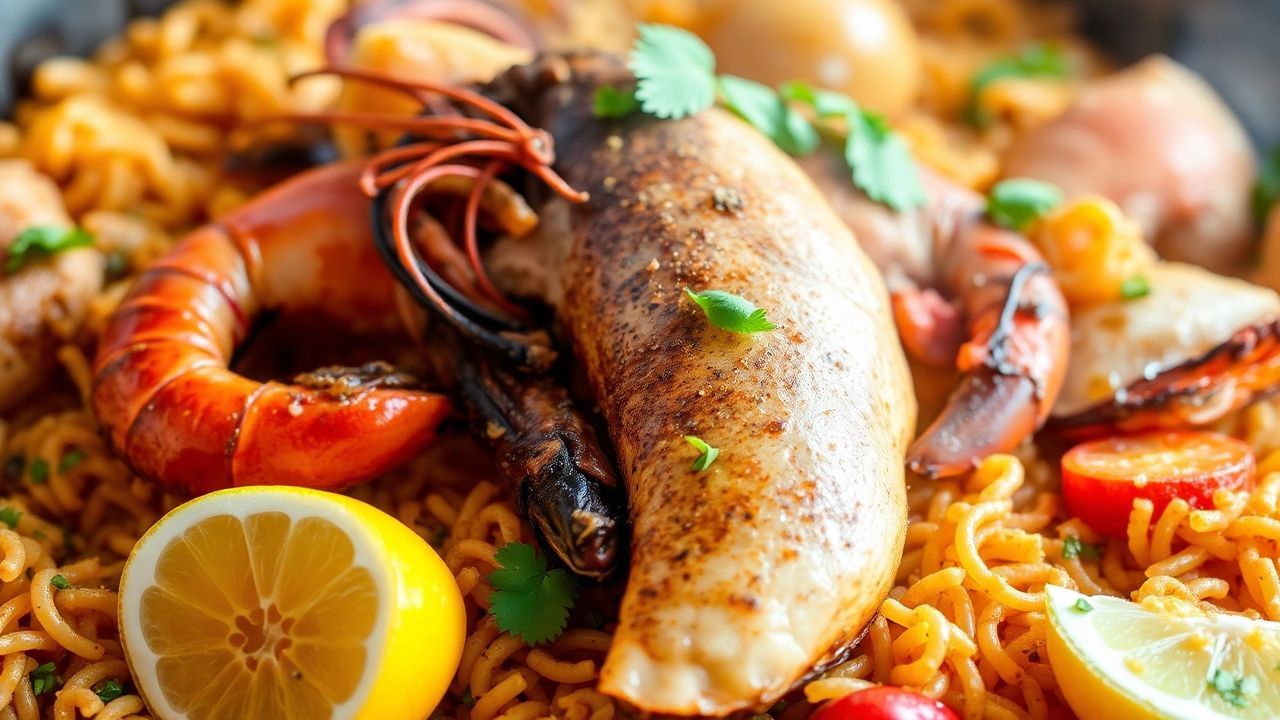
Seafood and chicken paella brings Spain to the table with bold saffron aroma, briny seafood, and hearty chicken. This dish rewards focus: build a deep base, cook rice evenly, then finish with the prized crust called socarrat.
- Why Seafood and Chicken Paella Works So Well
- Essential Ingredients for Authentic Paella Flavor
- Prep and Cook Time
- Yield
- Difficulty Level
- Ingredients
- Instructions
- Chef’s Notes: Tips for Success
- Serving Suggestions
- Seafood and Chicken Paella Q&A
- 1) What makes seafood and chicken paella a beloved dish?
- 2) How do seafood and chicken work together in the same pan?
- 3) Which ingredients matter most for authentic taste?
- 4) How can I achieve the perfect socarrat?
- 5) Can I make this paella year-round?
- The Conclusion
At a Glance
- Rice choice matters: bomba or short-grain rice so grains absorb broth without turning mushy.
- Saffron sets the tone: it drives color, fragrance, and that classic paella profile.
- Layering wins: toast, simmer, then add chicken and seafood at the right times.
- Socarrat takes heat control: the last minutes crisp the bottom—don’t stir.
There’s real structure behind the romance. Paella starts with a sofrito—slow-cooked onion, garlic, and pepper—then uses a hot, wide pan to drive evaporation and even cooking. When you time the seafood right, you keep it tender and bright instead of rubbery.
In Spain, paella isn’t just a recipe; it’s a cooking method built for sharing. Valencia traditions emphasize local ingredients and open heat, so the flavors stay clean and direct. If you want a home version that tastes like the real deal, aim for consistent broth absorption and gentle, steady simmering.
Why Seafood and Chicken Paella Works So Well
Seafood and chicken paella balances two kinds of richness. Chicken adds a savory backbone that holds up during simmering, while seafood brings fresh salinity and delicate texture at the end.
That pairing also protects your final result. Chicken stays juicy when you cut it into bite-size pieces and brown it first. Seafood finishes fast, so it stays sweet and springy when you add it after the rice has built its base.
To understand the flavor logic, focus on the Spanish rice-and-saffron style described in Paella. The dish depends on short-grain rice and a broth that cooks down to a cohesive result, not a soupy porridge.
For the seafood component, use quality sources and good handling. Seafood flavor drops fast when it sits warm too long. If you store it properly and add it at the correct time, your paella keeps a clean coastal taste.
Essential Ingredients for Authentic Paella Flavor
Authentic seafood and chicken paella relies on a short list of ingredients, but each one has a job. Olive oil builds a fragrant base. Onion and pepper create the sweet, cooked backbone. Garlic adds sharp depth without overpowering.
Next comes the rice and broth system. Choose bomba or another short-grain option so the grains absorb liquid and stay firm. For background on rice types, see Rice.
Saffron is non-negotiable for the signature aroma, even if you use a light hand. It infuses the broth and colors the rice. Learn more about saffron’s origin and properties through Saffron.
Smoked paprika adds warmth and a subtle smoky note. Tomatoes bring acidity, which helps the dish taste balanced instead of heavy. For a quick refresher on tomato chemistry and flavor, you can refer to Tomato.
Use seafood that matches the cook time. Shrimp, mussels, clams, and squid cook differently, so timing matters. If you keep seafood portions consistent and avoid overcooking, the whole pan tastes cohesive.
Prep and Cook Time
Readiness: 20 minutes
Cooking: 45 minutes
Total Time: 65 minutes
Yield
This recipe makes about serves 6. It works well for a family-style meal where everyone shares from the same pan.
If you need to scale, keep the pan size in mind. Paella relies on wide surface area, so doubling ingredients in a small pan often leads to uneven cooking and weaker crust.
Difficulty Level
Medium—you need timing and careful heat control, not advanced technique. Once you follow the sequence, the steps become repeatable.
Pay extra attention when the broth reduces. That’s where the rice locks in flavor and where socarrat starts to form.
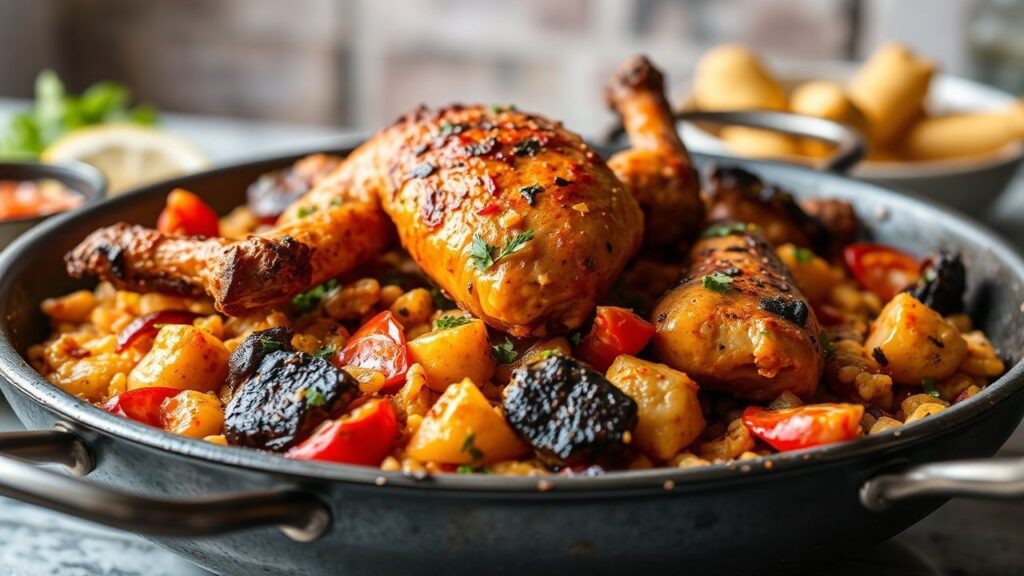
Ingredients
- 2 tbsp olive oil — for a fragrant golden base
- 1 large onion, finely chopped
- 3 garlic cloves, minced
- 1 red bell pepper, diced
- 1 lb chicken thighs, skin-on, boneless, cut into bite-sized pieces
- 12 oz mixed seafood (shrimp, mussels, clams, squid)
- 2 cups bomba or short-grain rice — for proper texture
- 4 cups chicken broth, warmed
- 1 tsp smoked paprika — smoky depth
- Pinch of saffron threads, soaked in 2 tbsp warm water
- 1 cup diced tomatoes, drained
- 1 cup frozen peas, thawed
- Salt and freshly ground black pepper, to taste
- Fresh parsley, chopped for garnish
- Lemon wedges, for serving
Warm broth helps the rice start cooking immediately. Cold liquid can slow the simmer and throw off absorption, which affects both texture and crust.
Keep seafood dry before adding it. Moisture from thawing can dilute the broth and reduce flavor intensity at the finish.
Instructions
- Brown the chicken: Heat olive oil in a wide, heavy-bottomed paella pan or large skillet over medium heat. Add chicken pieces and sauté until golden and crisp on all sides, about 7 minutes. Remove and set aside.
- Build the sofrito: In the same pan, add onion, garlic, and red bell pepper. Sauté until softened and fragrant, about 5 minutes, stirring occasionally to prevent sticking.
- Toast the rice: Stir in rice and smoked paprika. Cook for 2 minutes so the grains toast lightly and smell nutty.
- Simmer with broth: Pour in warmed chicken broth, saffron with its water, and diced tomatoes. Add salt and pepper. Bring to a steady simmer.
- Return chicken: Nestle chicken into the rice. Do not stir after this point to encourage the socarrat crust.
- Add seafood at the right moment: Cook uncovered over medium heat for 15 minutes. Then distribute seafood evenly on top and cook 10–15 minutes more until the rice is tender and mussels or clams open.
- Finish with peas: Add peas during the last 5 minutes.
- Rest: Remove from heat and cover loosely with foil or a clean kitchen towel. Rest 5 minutes before serving.
- Garnish and serve: Sprinkle with parsley and serve with lemon wedges.
When you stop stirring, you protect grain integrity. That also helps the bottom layer develop a browned crust.
For seafood timing, keep a simple rule: add delicate seafood later if you notice the pan cooking too hot. The goal is even doneness without losing flavor.
Chef’s Notes: Tips for Success
- Saffron: Though optional, saffron drives the classic paella fragrance and golden tone. Soak threads in warm water for better distribution.
- Rice: Use short-grain varieties like bomba or calasparra for a creamy but firm texture. This matters because short-grain rice absorbs broth differently than long-grain rice.
- Seafood: Choose fresh or properly frozen seafood. Add it when the rice has partially cooked so it turns tender, not tough.
- Socarrat: For a crisp bottom, hold a gentle heat near the end without stirring. Watch closely so it browns, not burns.
- Make-ahead: Chop onion, pepper, and garlic ahead. You can also cut chicken in advance. Keep seafood refrigerated until the final cooking stage.
To connect the method to fundamentals, paella depends on heat, evaporation, and rice absorption. For more on cooking rice at a process level, review Cooking rice.
If you want to understand why crust forms, remember that moisture must reduce enough for the starch-rich rice layer to brown. That’s why the last minutes need attention.
Also avoid crowding the pan. A narrow pan traps too much moisture and increases steaming, which makes the crust less likely and can dull flavor.
Finally, keep your heat consistent. If you crank the flame all at once, the bottom can burn before the rice fully absorbs the broth.
Serving Suggestions
Serve seafood and chicken paella straight from the pan. This keeps the rice aromatic and helps the bottom crust stay crisp. Place lemon wedges on the side so each diner can brighten the bite they like.
Pair the pan with a simple salad dressed in olive oil and a light splash of vinegar. The acidity cuts richness and balances seafood sweetness. If you serve bread, choose a crusty loaf for soaking only the flavorful broth pockets.
For drinks, serve chilled water with citrus slices or a light Spanish-style fruit juice. Avoid heavy, sweet cocktails that overpower saffron and smoked paprika.
For background on regional Spanish dining style, you can reference Spanish cuisine. Paella fits the larger pattern of sharing meals that center on regional ingredients.
| Nutrient | Per Serving |
|---|---|
| Calories | 480 kcal |
| Protein | 38 g |
| Carbohydrates | 50 g |
| Fat | 12 g |
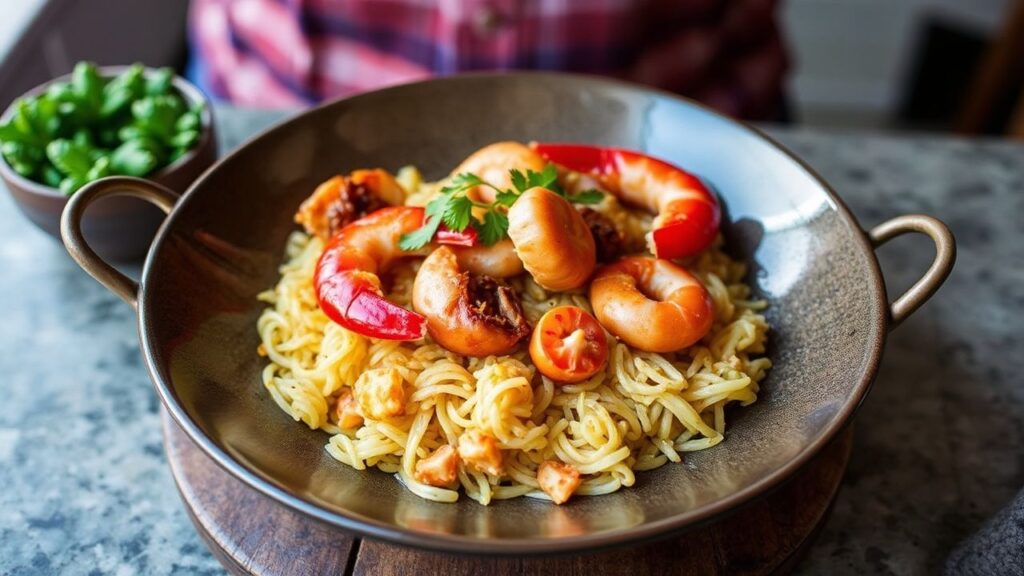
Seafood and Chicken Paella Q&A
Use these answers to troubleshoot your next pan. Most issues come from heat control, rice type, or timing—so adjust one variable at a time.
1) What makes seafood and chicken paella a beloved dish?
It combines bold saffron aroma with layered flavors from chicken and coastal seafood. The wide pan also creates a variety of textures, from tender rice to the crisp socarrat.
Because it cooks as one shared pan meal, paella naturally fits gathering-style dining. That communal format drives the dish’s popularity in Spain and beyond.
2) How do seafood and chicken work together in the same pan?
Chicken browns first, which adds savory depth. Later, seafood goes on top so it finishes quickly without drying out.
This sequence protects texture. The rice absorbs chicken and sofrito flavors while the seafood delivers fresh, briny notes right near the end.
3) Which ingredients matter most for authentic taste?
Short-grain rice and saffron lead the flavor profile. Bomba rice helps absorption without turning mushy.
Smoked paprika, tomatoes, and a well-cooked sofrito round out the balance. Quality olive oil also matters because it carries aroma into the hot broth.
4) How can I achieve the perfect socarrat?
Don’t stir after you add chicken back to the pan. Keep the simmer steady, then watch the final minutes so the bottom browns evenly.
If the pan looks too wet, keep heat slightly higher for a short window. If you see smoke, reduce heat immediately to prevent burning.
5) Can I make this paella year-round?
Yes. The dish works in every season because you can use frozen seafood safely if you manage timing and thawing.
In colder months, a warm broth and steady simmer make it feel comforting. In warmer months, paella still shines as a bright, sharing meal.
The Conclusion
Seafood and chicken paella delivers a true taste journey when you respect three fundamentals: build a flavorful sofrito, cook short-grain rice with properly balanced broth, and time the seafood for tender results.
When you finish with socarrat and rest the pan before serving, the flavors come together in one cohesive, memorable bite. Make it for family or friends, then serve it straight from the pan so the aroma stays front and center.
See also: seafood and chicken paella