

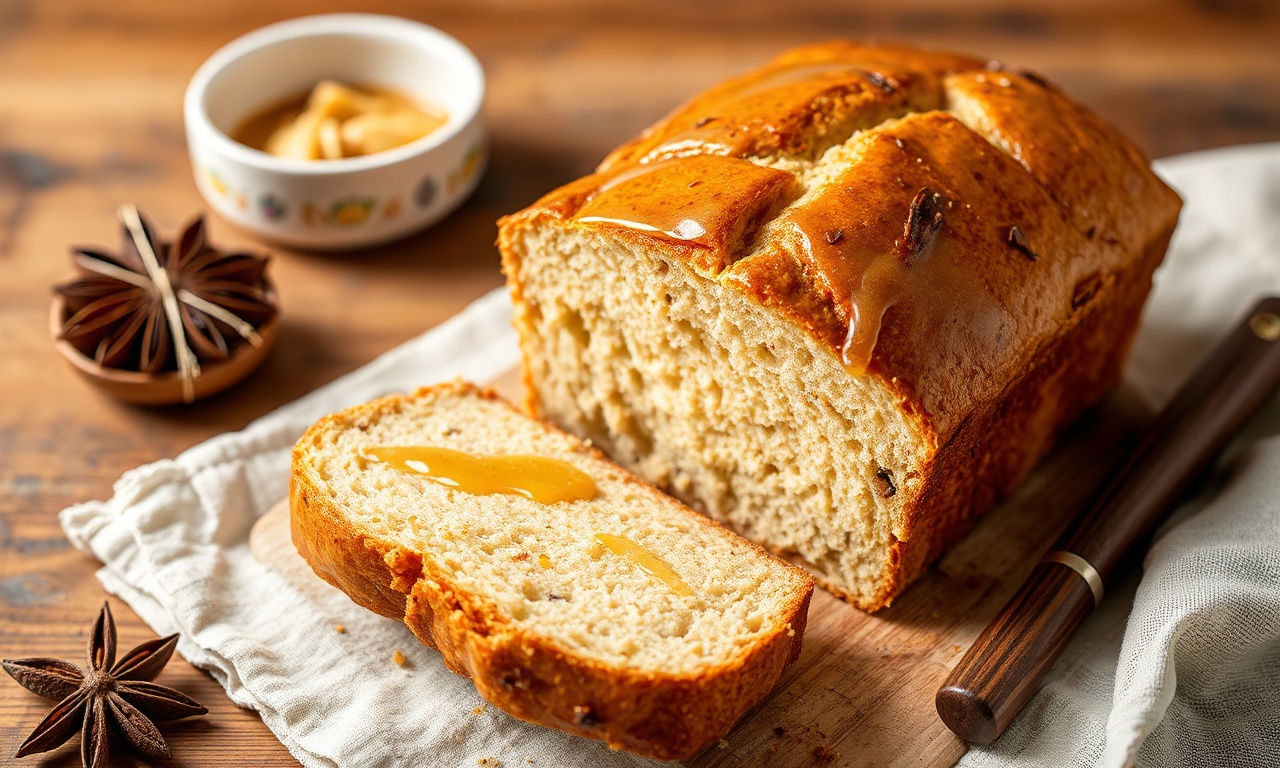
Fresh aromatic sweet bread should hit your senses fast: warm yeast notes, soft sweetness, and fragrant anise. This recipe adds a zesty spiced anise glaze with orange juice and zest, so every slice tastes bright, spiced, and gently licorice-like.
- Signature flavor: anise seeds plus cinnamon and clove.
- Glaze that clings: citrus juice + orange zest for a glossy finish.
- Texture goal: a soft crumb from proper kneading and a full rise.
- Best timing: glaze while warm, not piping hot.
Expect a loaf that smells like a bakery window—sweet, spiced, and uplifting. You’ll also get a repeatable method for shaping, proofing, baking, and glazing so the result stays consistent from batch to batch.
Aromatic Sweet Bread with Zesty Spiced Anise Glaze
Aromatic sweet bread pairs tender yeast dough with warm spices. Here, the dough uses crushed anise seeds, while the topping brings a zesty spiced anise glaze that balances sweetness with citrus brightness.
Traditional sweet breads often rely on regional spice blends and fragrant seeds. Anise has a long food history, especially in Mediterranean and Middle Eastern-style baking, where it adds that recognizable licorice aroma. If you want background on the spice itself, see anise.
Prep and Cook Time
Plan your day around three moments: blooming yeast, proofing the dough, and glazing after baking. This keeps the dough from over-proofing and helps the glaze absorb evenly.
Below are the standard timings for one braided loaf. Your room temperature will affect rise time slightly, so watch dough size, not just the clock.
- Prep time: 25 minutes
- Rise time: 1 hour 30 minutes
- Cook time: 25 minutes
- Cooling time: 30 minutes
Yield and Difficulty
This recipe makes one beautifully braided loaf, typically slicing into 8–10 portions. Each slice stays aromatic because the crumb traps steam during baking.
The dough handles best at a medium skill level. If you’ve kneaded yeast dough before, you’ll move smoothly through mixing, gluten development, and shaping.
Yield: 1 loaf (8–10 slices)
Difficulty level: Medium
Ingredients for Aromatic Sweet Bread with Zesty Spiced Anise Glaze
Use fresh, high-quality spices. Spices lose intensity over time, and anise flavor depends on aromatic oils, not just sweetness.
For spice background, cinnamon explains why it always pairs well with sweet dough. Clove brings warmth, while anise seeds add that licorice-like top note.
For the Bread
- 3 cups all-purpose flour, sifted
- 1 packet (2 1/4 tsp) active dry yeast
- 1/2 cup whole milk, warm (110°F)
- 1/4 cup granulated sugar
- 1/4 cup unsalted butter, softened
- 2 large eggs, room temperature
- 1 tsp pure vanilla extract
- 1 tsp ground cinnamon
- 1/2 tsp ground cloves
- 1/2 tsp kosher salt
- 1 tsp anise seeds, lightly crushed
For the Zesty Spiced Anise Glaze
- 1 cup powdered sugar, sifted
- 2 tbsp freshly squeezed orange juice
- 1 tsp finely grated orange zest
- 1/4 tsp ground anise seed
- 1/4 tsp ground cinnamon
- 1–2 tbsp hot water (to thin glaze as needed)
Instructions
Work in a steady sequence. First, activate yeast. Next, build gluten through kneading. Then, proof the dough until it doubles before shaping.
After baking, glaze while the bread stays warm. That timing lets the glaze soak slightly and set into a glossy finish instead of staying wet on top.
- Activate the yeast: Combine warm milk and sugar in a small bowl. Stir until dissolved. Sprinkle yeast over the surface and rest 5–7 minutes until foamy.
- Mix dry ingredients: Whisk flour, cinnamon, cloves, crushed anise seeds, and salt in a large bowl.
- Combine wet ingredients: Beat eggs, softened butter, and vanilla until smooth.
- Form the dough: Add yeast mixture and egg mixture to the dry ingredients. Stir until you form a shaggy dough. Turn it onto a lightly floured surface.
- Knead the dough: Knead 8–10 minutes until smooth and elastic. It should feel slightly tacky, not sticky. Add flour a teaspoon at a time only if needed.
- First rise: Place dough in a greased bowl. Cover with a warm, damp towel. Rise 1 hour or until doubled.
- Shape the loaf: Gently punch down. Divide into three equal pieces. Roll each into long strands about 12 inches. Braid tightly.
- Second rise: Set the braid on parchment-lined baking sheet. Cover loosely and proof 30 minutes until puffed.
- Preheat oven: Heat oven to 350°F (175°C).
- Bake: Bake 20–25 minutes until golden. Tap the loaf; it should sound hollow. If needed, rotate the pan halfway for even browning.
- Prepare the glaze: Whisk powdered sugar, orange juice, orange zest, ground anise, and cinnamon. Add hot water gradually until it coats the back of a spoon.
- Apply glaze: Drizzle glaze over the warm loaf (warm, not scorching). Let it cascade down the sides for a glossy finish.
- Cool & serve: Cool on a wire rack before slicing. Cooling helps the crumb set and keeps aromas from escaping too fast.
Tips for Success: Mastering Aromatic Sweet Bread
Small process details make a big difference. When yeast and gluten develop correctly, you get a soft crumb that supports the glaze without collapsing.
For the science behind gluten structure, gluten helps explain why kneading and hydration matter. Don’t rush kneading, and don’t add too much flour.
- Use fresh yeast: Old yeast may not bloom, which slows rise and affects loaf volume.
- Crush anise seeds: Light crushing releases more fragrance. Keep it gentle so you don’t turn everything into dust.
- Rise in a warm place: Aim for 75–80°F (24–27°C). An oven with the light on works well.
- Glaze timing: Glaze while warm for best absorption. Cold bread can make the glaze sit on top.
- Make-ahead option: Bake the bread ahead, store airtight, and glaze right before serving.
- Texture control: If your dough feels sticky, add flour in tiny amounts. If it feels dry, knead in a teaspoon of milk.
For flavor balance, use both crushed seeds and ground anise in the glaze. That mix gives you a fragrant top note plus a steady background flavor through the slice.
WARNING: Common Glaze Mistakes to Avoid
Glaze problems usually come from heat, thickness, or timing. If your loaf is piping hot, glaze can run off fast and look patchy.
Thin glaze also changes how it sets. Aim for a spoon-coating consistency and add hot water only in small steps so you don’t overshoot.
If your glaze turns grainy, warm orange juice can help. Whisk until smooth and check texture before drizzling.
Serving Suggestions for a Bright, Spiced Slice
Serve this aromatic sweet bread slightly warm or at room temperature. Warm slices bring out anise and cinnamon, while the orange zest keeps the flavor lively.
Try a spread like mascarpone, cream cheese, or honey butter. For texture, add toasted almonds or crushed pistachios on top.
You can also pair it with spiced chai or black tea. The tannins in black tea match sweet spice notes well, which makes the glaze taste less sugary.
For a festive look, add thin orange segments or a light dusting of cinnamon. When you plate, wipe off any glaze pooling on the board so the presentation stays clean and appetizing.
| Nutrient | Per Serving (1 slice) |
|---|---|
| Calories | 220 kcal |
| Protein | 5 g |
| Carbohydrates | 35 g |
| Fat | 6 g |
If you like learning where flavors come from, explore citrus for why zest and juice act differently in baked goods. Zest boosts aroma; juice adds moisture and a bright, tangy sweetness.
For more bread inspiration, keep your focus on yeast doughs and sweet glazes. You’ll reuse the same skills—mixing, proofing, and finishing—to bake new flavor variations with confidence.
Q&A
What makes this bread “aromatic”?
This bread tastes aromatic because it uses both warm spices and fragrant anise seeds. The dough carries those notes throughout the crumb, while the glaze adds a fresh, citrus-bright top layer.
Spices release aroma during proofing and baking as heat wakes up volatile oils. That’s why fresh spices and properly crushed anise matter.
How do I keep the zesty glaze from sliding off?
Wait for the loaf to rest 5–10 minutes after baking. Warm bread holds glaze better than hot bread, which can melt sugar and cause pooling.
Also, thicken the glaze slightly by using less hot water. You want drizzle flow that coats, not a watery pour.
Can I swap anise if I dislike licorice notes?
Yes. You can use fennel seeds for a milder licorice flavor or lean into cardamom plus orange zest for a different aromatic profile.
For spice substitution ideas, review cardamom and how it behaves in sweet baking. Then taste-test a small glaze batch before committing.
Why did my dough rise slowly?
Slow rise usually comes from yeast temperature or yeast age. Warm milk should feel comfortably warm, not hot, so yeast stays active.
If your kitchen stays cool, extend the first rise. Dough should double in size, even if the clock runs long.
How should I store the bread?
Store cooled bread airtight at room temperature for up to 2–3 days. That keeps the crumb soft and protects the spice aroma from drying out.
For the best “just baked” shine, glaze right before serving. Reheat a slice gently if you want extra fragrance.
Can I make this ahead using an overnight fermentation?
Yes. If you want deeper flavor, cover the dough after mixing and refrigerate overnight. Then shape and proof at room temperature until puffed.
Overnight fermentation supports more complex flavor development in yeast doughs, which fits well with aromatic spices like anise and cinnamon.
See also: aromatic sweet bread