

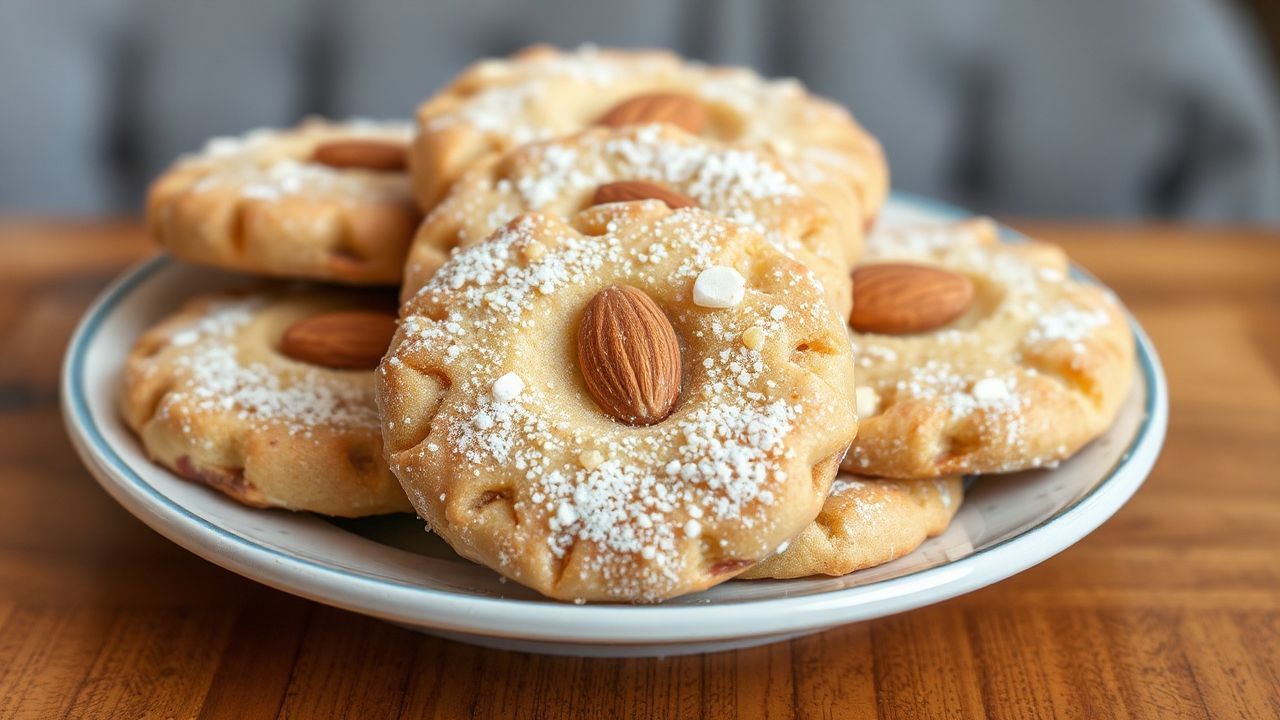
Acıbadem Kurabiyesi is a classic Turkish cookie known for its bitter almond aroma, delicate crunch, and crackled top. This recipe keeps the flavor profile authentic while staying practical for home bakers.
- Focus: almond flavor from bitter almond essence/extract, plus egg-white structure
- Texture: crackled exterior with a soft, chewy center
- Method: whip to stiff meringue, then fold gently to keep air
- Safety: avoid raw bitter almonds; use food-safe extract/approved preparations
Origins and Cultural Significance of Acıbadem Kurabiyesi
Acıbadem Kurabiyesi belongs to Turkey’s broader tradition of şekerlemeler and confectionery, where nuts, sugar, and egg whites shape tender pastries. Many Turkish homes serve these cookies with tea or coffee, especially during visits and festive tables.
While the exact origin story varies by region and family, the cookie’s character fits long-standing Ottoman and Mediterranean dessert practices. Almond-based sweets spread widely across trade routes, and Turkish bakers refined them into distinct home-style recipes over time.
To understand the ingredient culture, it helps to connect the cookie to almonds as a global staple. Turkey’s use of nuts in desserts also reflects how preservation and storage shaped ingredient choices in traditional kitchens.
Why Almond Desserts Became a Signature
Almond desserts stay popular because almond flavor stays clear even with simple recipes. In Acıbadem Kurabiyesi, the nut taste carries through without heavy spice, so the quality of almond essence matters.
Egg whites also help create a light structure. That technique connects the cookie to meringue-style cooking principles used in many cuisines.
You can also link the method to meringue chemistry: whipped egg proteins trap air, then set during baking to form a crisp surface.
Unique Ingredients and the Art of Balancing Bitter Almond Flavor
The defining flavor in Acıbadem Kurabiyesi comes from bitter almond essence or extract, not from regular sweet almond. The goal is a controlled “bitter” note that reads as aromatic, not harsh.
This cookie balances three elements: almond meal for body, egg whites for lift and chew, and sugar for sweetness and browning. When you keep the ratio right, the bitterness sits underneath the sweetness and stays elegant.
Because bitter almonds can be unsafe when eaten raw, home bakers should rely on commercial, food-safe extracts or clearly approved preparations. For the ingredient background, review amygdalin and why processing matters.
What “Bitter Almond” Should Mean in Your Kitchen
In practice, “bitter almond” usually means an extract made for culinary use. Look for a product labeled for food baking or confectionery, and follow the dose on the label.
If a recipe calls for a small amount, it typically targets aroma rather than adding more bitterness. More extract does not always improve flavor—it can turn the cookies sharp or too intense.
Texture Control Starts with the Almond Meal
Use finely ground almond meal so it folds smoothly into the meringue. Coarse bits can create uneven texture and reduce that classic crackled finish.
For reference, almond meal quality ties to how fats and moisture behave during baking. Even small differences in grind size and freshness can change softness and surface set.
Prep and Cook Time
Plan your bake like a small project, because resting helps the surface set and crack. The cookie needs time to stabilize before it hits heat.
Keep your oven temperature steady and avoid opening the door too often during baking. That small step protects the meringue structure.
- Prep Time: 20 minutes
- Resting Time: 60 minutes (for best crackle)
- Bake Time: 15 minutes
- Total time: 1 hour 35 minutes
Yield
This recipe yields about 24 cookies, depending on portion size. If you pipe larger mounds, expect fewer cookies.
For consistent results, weigh portions (about 18–22 g each) or use a measured spoon. Uniform size improves doneness and texture.
Difficulty Level
Medium—you need careful folding and accurate baking. The cookie rewards focus because the whipped egg base sets fast.
If you’ve made meringue before, you already have the core skill. If not, follow the step order closely and read the tips below.
Ingredients
Keep ingredients at room temperature. Cold egg whites whip slower and can lead to a less stable foam.
Also, measure your almond meal by volume consistently. If your cups are different sizes, your dough can become too dry or too loose.
- 2 cups almond meal (finely ground blanched almonds)
- 1 cup granulated sugar, plus 2 tbsp for dusting
- 2 large egg whites, room temperature
- 1 tsp food-safe bitter almond extract (follow brand instructions)
- 1/4 tsp fine sea salt
- Whole blanched almonds for topping (optional)
Step-by-Step Guide to Baking Authentic Acıbadem Kurabiyesi at Home
This method uses meringue structure as the backbone, so you must whip and fold gently. Each step protects that airy base and supports the crackled top.
Work in sequence, not in parallel. If you delay, the foam can deflate, and the final cookie texture will lose its signature contrast.
- Prepare your workspace: Line a baking sheet with parchment paper. Preheat the oven to 325°F (160°C).
- Whip the egg whites: In a clean, dry bowl, whip egg whites and sea salt until they form soft peaks. Gradually add sugar, whipping to glossy, stiff peaks (about 5–7 minutes).
- Incorporate almond flavor: Fold in almond meal slowly until no dry pockets remain. Add bitter almond extract last, mixing gently until evenly distributed.
- Shape the cookies: Drop small mounds (about 1.5 inches wide) onto parchment. Leave space so they set without merging.
- Optional topping: Press a blanched almond into the center of each cookie.
- Rest the dough: Let the tray sit at room temperature for 30–60 minutes. The surface should look drier, which supports crackling.
- Bake: Bake for about 15 minutes, until edges look set and tops look light-golden. The centers should not darken.
- Cool: Cool on the tray for 5 minutes, then move to a wire rack. Let cookies cool fully for crisp texture.
Chef’s Notes and Tips for Success
- Almond meal: Use finely ground almond meal. Coarse grind can prevent smooth folding.
- Bitter almond extract: Stick to a reliable food brand. If you substitute, keep the amount small to avoid overpowering bitterness.
- Folding technique: Fold in stages with a light hand. Stop as soon as the mixture looks uniform.
- Resting time: Don’t rush it. Resting helps the surface set so it bakes into a crackled top.
- Storage: Store in an airtight container for up to 5 days. Cookies also freeze well; thaw at room temperature before serving.
For more context on why whipped egg foam behaves this way, you can review egg structure and protein behavior. Understanding proteins helps you troubleshoot when meringue collapses.
Pairing Suggestions and Serving Tips for the Perfect Turkish Treat
Serve Acıbadem Kurabiyesi with Turkish tea or strong Turkish coffee. The drink’s bitterness and warmth lift the cookie’s almond aroma and crackled texture.
If you want an easy dessert plate, add a few dried figs or apricots. A light dusting of powdered sugar also looks traditional and boosts perceived sweetness.
To connect pairings to ingredient science, consider how flavor perception works: aroma drives much of “sweet-bitter” enjoyment. Strong beverages supply aromatics that make the almond note feel brighter.
For deeper reading on Turkish dessert traditions, see Turkish cuisine. It offers useful background on how nuts, syrups, and tea culture shape dessert serving habits.
FAQ
These quick answers cover the most common questions home bakers ask before serving Acıbadem Kurabiyesi.
Use them to troubleshoot texture, flavor intensity, and safety so your next batch comes out consistent.
1) What is Acıbadem Kurabiyesi?
Acıbadem Kurabiyesi is a traditional Turkish cookie made with almond meal, whipped egg whites, sugar, and bitter almond essence/extract. It’s known for a crackled top and a soft, chewy center.
2) Why does Acıbadem Kurabiyesi taste “bitter” but still sweet?
The cookie uses a small amount of bitter almond extract for aroma and depth. Sugar and egg-white structure soften the overall impression, so the bitterness reads as elegant rather than harsh.
3) Is bitter almond extract safe for baking?
Food-safe bitter almond extracts are formulated for culinary use, typically in controlled concentrations. Always follow the label instructions and use products meant for baking.
4) How do I get the crackled top?
You get crackles by whipping stiff peaks and resting the shaped dough at room temperature. Resting dries the surface so it sets and cracks during baking.
5) Can I store Acıbadem Kurabiyesi and keep the texture?
Yes. Keep cookies in an airtight container at room temperature for several days. For longer storage, freeze them and thaw at room temperature before serving.
See also: Acıbadem Kurabiyesi