

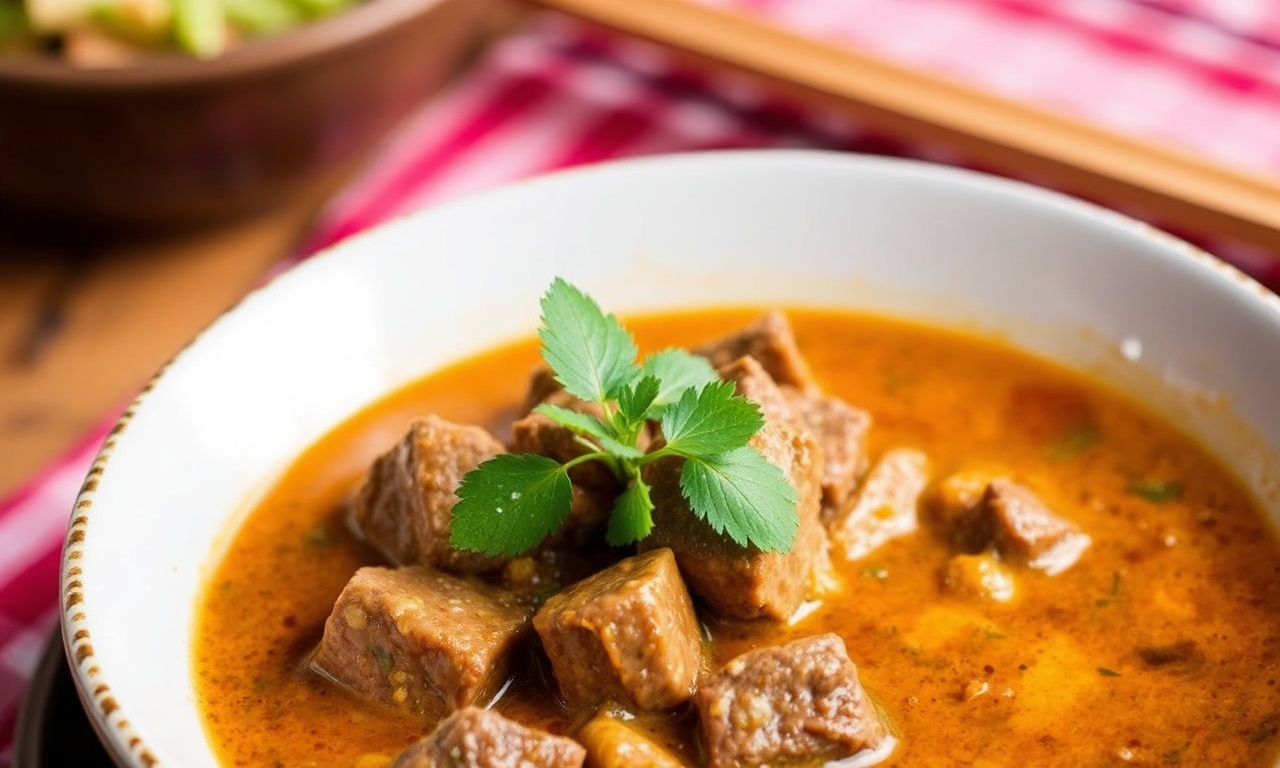
Thai Massaman Beef Curry brings together rich coconut cream, toasted warm spices, and tender beef in one comforting bowl. This dish stands out among Thai curries because its flavor stays mild, sweet, and deeply aromatic instead of purely fiery.
At a Glance
- Massaman tastes mild: it balances sweet, sour, and savory.
- Toasting whole spices boosts fragrance and depth.
- Slow simmering makes beef tender and sauce silky.
- Adjust tamarind and palm sugar for your ideal balance.
As you cook Thai Massaman Beef Curry, you will notice a clear logic in the flavor build. First, spices bloom in fat. Next, curry paste and aromatics create a fragrant base. Finally, gentle simmering turns tough cuts into bite-soft meat.
Origins and Cultural Importance of Massaman Beef Curry
Thai Massaman Beef Curry traces its roots to southern Thailand, where trade and migration shaped food. Many historians link the curry’s spice profile to Middle Eastern and South Asian influences, especially through connections that brought ingredients like cinnamon, cloves, and cardamom.
Its reputation also connects to Muslim-majority communities in the region and to the broader Thai tradition of adapting outside flavors into local cooking. To understand that blend, it helps to review the history of Thailand and the way coastal routes moved spices and cooking methods across centuries.
Why Massaman Feels Different From Other Thai Curries
Most Thai curries rely on intense heat and sharp aromatics. Massaman usually keeps the heat restrained and uses warmth from spice notes instead. Tamarind and palm sugar then add a sweet-sour counterbalance that stays smooth, not aggressive.
If you study curry history, you can see why this approach works. Curry styles evolved as families adjusted spice blends to what each region could grow and import, which matters for a dish like curry in general.
Key Cultural Signals in the Recipe
Many cooks serve Massaman for gatherings because it feeds a group and tastes even better after resting. The dish also invites shared serving, since the sauce coats beef and potatoes in a natural “crowd” format.
Those service choices align with Thai meal culture. For more context on Thai eating traditions, you can reference Thai cuisine, which highlights balancing flavors and using aromatic herbs.
Prep and Cook Time
Set up before you heat the pan. Thai Massaman Beef Curry rewards planning because you will toast spices, brown beef, and build a paste-based sauce in sequence.
- Planning: 20 minutes
- Cooking: 1 hour 30 minutes
- Total Time: 1 hour 50 minutes
Keep your simmer steady rather than rushing high heat. A gentle boil preserves coconut texture and helps beef stay tender without drying.
Yield and Difficulty Level
This recipe makes about 6 servings, which works well for family dinners and meal prep. You can scale it down, but the spice-to-liquid ratio must stay consistent for a stable sauce.
Difficulty stays Medium. You manage multiple steps, but each step remains practical: toast, sauté, sear, simmer, and balance.
What to Expect While Cooking
Early on, the pot may smell strong. That smell turns pleasant once the curry paste cooks and the beef releases savory juices.
Later, the sauce thickens as starch from potatoes blends in. You can adjust it by adding broth if you notice it getting too tight.
Key Ingredients That Define Thai Massaman Beef Curry
Thai Massaman Beef Curry relies on a small set of ingredients that each carry a job. Coconut milk forms body. Curry paste carries spice architecture. Beef and potatoes provide texture and substance.
Use quality ingredients because Massaman tastes subtle. If your curry paste smells bland, your finished curry will taste flat too. For spice background, it helps to know how spices work in cooking through aroma compounds.
Core Flavor Makers
- 2 lbs beef chuck, cut into 1.5-inch cubes
- 3 tablespoons Massaman curry paste
- 1 can (14 oz) coconut milk
- 2 medium potatoes, peeled and cubed
- 1 large onion, sliced
- 1/4 cup roasted peanuts
- 2 tablespoons tamarind paste
- 2 tablespoons palm sugar (or brown sugar)
- 3 kaffir lime leaves
- 4 whole cardamom pods, 2 cinnamon sticks, 4 cloves
- 2 cups beef broth
- 2 tablespoons fish sauce, to taste
- Fresh cilantro or Thai basil for garnish
These ingredients create a layered taste map: warm spice, creamy coconut, nutty crunch, and sweet-sour brightness. When you match the quantities, the sauce lands in that classic Massaman comfort zone.
Protein Choice Matters
Chuck works because it breaks down with slow heat. That breakdown creates tenderness and adds collagen-like body to the sauce.
If you swap cuts, you must adjust simmer time. Lean beef can dry out fast, while tougher cuts can need longer heat exposure.
Step-by-Step Guide to Crafting the Perfect Massaman Beef Curry
Work in order. Thai Massaman Beef Curry depends on heat timing, and each step supports the next one.
Also keep liquids ready. If the sauce thickens too quickly, you can add broth to maintain a steady simmer.
- Toast the whole spices: Toast cardamom pods, cinnamon sticks, and cloves in a dry skillet over medium heat for about 2 minutes. Crush lightly to release oils.
- Sauté the curry paste: Heat 2 tablespoons coconut cream in a heavy pot over medium heat. Add Massaman curry paste and sauté 3–4 minutes, stirring constantly, until aromatic.
- Brown the beef: Add beef and sear until browned on all sides, about 5–7 minutes.
- Add aromatics and liquids: Stir in onion, roasted peanuts, crushed spices, and kaffir lime leaves. Add beef broth and the remaining coconut milk, then bring to a gentle boil.
- Simmer gently: Lower heat, cover, and simmer 1 to 1.5 hours until beef feels very tender.
- Add potatoes and season: Stir in cubed potatoes and simmer uncovered 20–25 minutes.
- Balance the flavors: Mix in tamarind paste, palm sugar, and fish sauce. Taste and adjust sweet, sour, and salty.
- Final touches: Remove from heat. Discard cinnamon sticks and lime leaves. Garnish with cilantro or Thai basil.
Chef’s Notes and Tips for Success
Small adjustments can protect the classic Massaman balance. Focus on taste, not just timing.
Massaman paste intensity varies by brand. If your paste tastes very strong, start with less and add gradually after simmering.
- Substituting beef: Use brisket or cut chuck into smaller pieces for faster tenderization.
- Massaman curry paste: Homemade paste can deepen aroma, but good store-bought paste also works.
- Sautéing the paste: Proper frying helps release oils and spice compounds that build a fuller flavor base.
- Make ahead: The curry often improves the next day as flavors meld in the sauce.
- Spice level: Keep it mild by avoiding extra chilies. You can add Thai chilies only if needed.
- Nut allergy tip: Skip peanuts or replace with roasted cashews for similar crunch.
If you want to build sauce texture, use a heavy-bottom pot. It distributes heat evenly and reduces scorching at the curry paste stage.
Pairing Recommendations and Serving Tips
Serve Thai Massaman Beef Curry with jasmine rice so the grains soak up the sauce. Rice also cools the palate, which makes the sweet-sour-salty balance feel smooth.
For a simple cultural pairing, consider Thai tea, which complements warm spice notes and coconut richness. Learn more about tea history through tea to understand why it pairs well with spiced meals.
Simple Plate Ideas
For contrast, add a crisp cucumber salad with lime. The cool crunch and bright acidity balance the curry’s creamy body.
You can also add pickled vegetables. If you choose fermentation-based sides, refer to fermentation for the basic food science behind tang and depth.
Make It Look and Taste “Curry-Complete”
Finish with herbs like Thai basil or cilantro. Fresh aromatics sit on top of the sauce and make each bite feel lighter.
Garnish peanuts add texture. If you leave them out, use a similar crunch like cashews or toasted sesame to keep mouthfeel satisfying.
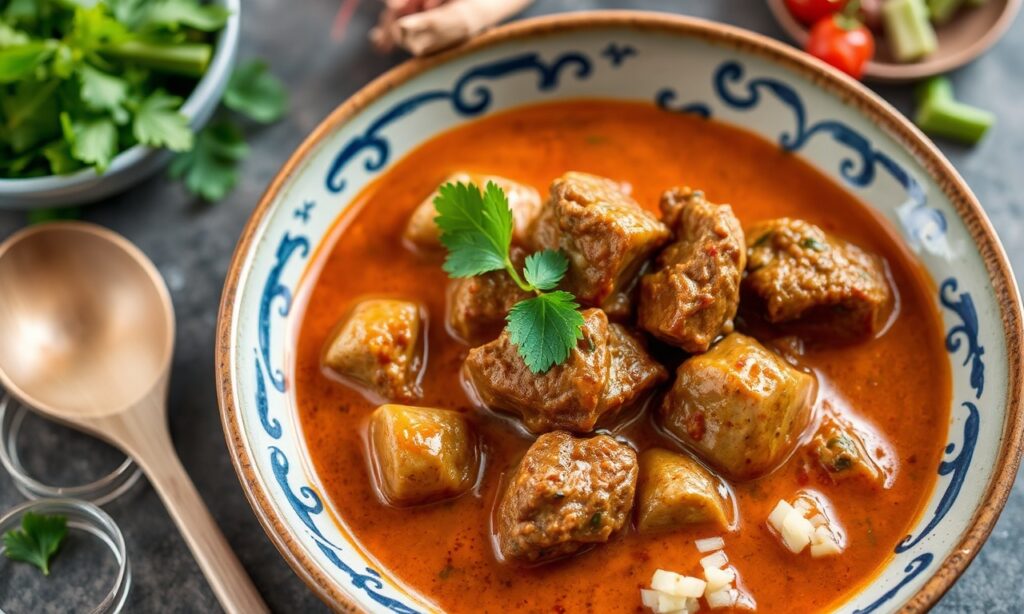
| Nutrient | Per Serving |
|---|---|
| Calories | 450 kcal |
| Protein | 32 g |
| Carbohydrates | 22 g |
| Fat | 28 g |
If you want to deepen your technique, study curry paste methods and spice handling. For general grounding in coconut and dairy-like cooking properties, see coconut.
For a broader overview of Massaman curry, you can also consult Massaman curry to compare how different sources describe key ingredients and regional style.
FAQ
What makes Thai Massaman Beef Curry unique among Thai curries?
Thai Massaman Beef Curry stays mild and aromatic instead of aggressively hot. It balances sweet (palm sugar), sour (tamarind), and savory (fish sauce) with warm spices like cardamom, cinnamon, and cloves.
How do I keep the beef tender without overcooking?
Simmer gently and give the beef time to break down, especially with chuck or brisket. If you notice the sauce getting too thick, add broth so the pot stays moist.
What should I do if my curry tastes too sour or not sweet enough?
Taste as you go. Add a small amount of palm sugar if it tastes too sharp, or add a bit more tamarind if the flavor needs lift.
Can I make Massaman Beef Curry ahead of time?
Yes. Many cooks find Thai Massaman Beef Curry improves after resting because the flavors blend. Reheat on low heat and stir gently to protect coconut texture.
Can I substitute another protein for the beef?
You can use chicken or tofu, but the simmer time will change. Adjust the cooking duration so the protein stays tender and the sauce still thickens naturally with potatoes.
See also: Massaman Beef Curry