
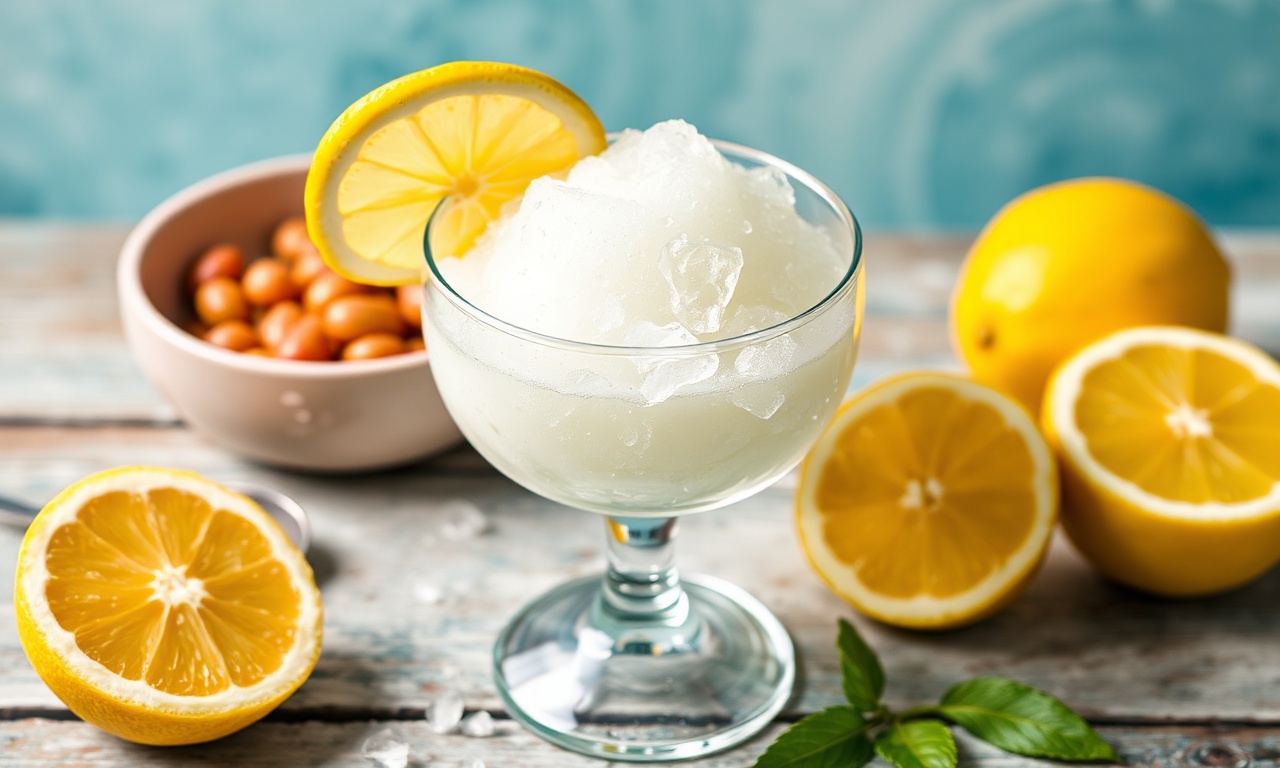
When the Sicilian sun blazes high and the air hums with warmth, nothing refreshes quite like a scoop of Sicilian lemon granita. This vibrant frozen dessert comes from the island’s lemon groves and turns bright citrus into a light, icy spoonful.
- Why Sicilian Lemon Granita Tastes So Bright
- Prep and Cook Time
- Yield and Difficulty
- Ingredients for Refreshing Sicilian Lemon Granita
- Instructions: How to Make Sicilian Lemon Granita
- Tips for Success (Texture, Flavor, and Timing)
- Serving Suggestions: Make It Feel Like Sicily
- Nutritional Snapshot (Per Serving)
- FAQ
- What exactly is Sicilian lemon granita?
- Is Sicilian lemon granita the same as lemon sorbet?
- How do I get the perfect texture?
- Can I adjust sweetness or tartness?
- How should I store Sicilian lemon granita?
- Insights and Conclusions
As you make Refreshing Sicilian lemon granita, you learn the classic method: a lemon-sugar base freezes while you scrape it, so it stays fluffy instead of rock-hard. The result tastes sharp, clean, and deeply summery.
At a Glance
- Texture: Scrape every 30–45 minutes for fine ice crystals.
- Flavor: Fresh juice + zest give the signature Sicilian punch.
- Balance: Sugar controls tartness; start near the standard ratio.
- Serve cold: Scoop straight from the freezer for best melt.
Why Sicilian Lemon Granita Tastes So Bright
Sicilian lemon granita focuses on simple ingredients: lemon juice, zest, sugar, and water. Because the base freezes without cream, lemon stays crisp and vivid rather than muted by dairy fat.
Traditional granita relies on partial freezing and repeated agitation. That method creates a crystalline, slightly granular texture that melts quickly in your mouth, leaving a clean citrus finish. See the general idea of crystalline frozen desserts at https://en.wikipedia.org/wiki/Granita.
Sicilian lemon granita captures the island’s bright character by turning sun-drenched zest and tangy juice into a cooling, textured treat. It works as a palate cleanser after rich meals because the acidity cuts through sweetness and heaviness. For background on Sicilian citrus history, visit https://en.wikipedia.org/wiki/Sicily.
Prep and Cook Time
Preparation: 15 minutes.
Freezing Time: 4 to 5 hours total (with intermittent scraping during freezing).
Yield and Difficulty
Yield: 4 servings.
Difficulty Level: Easy, even if you have never made granita before. You only need patience and a fork.
Ingredients for Refreshing Sicilian Lemon Granita
Use fresh lemons for the cleanest aroma. Sicilian-style lemons are prized for fragrance, but any bright, juicy lemon works if you taste your mix before it freezes.
For the science basics of lemons and acidity, you can review https://en.wikipedia.org/wiki/Lemon. That knowledge helps you adjust sweetness without guessing.
- 1 cup freshly squeezed Sicilian lemon juice (about 5–6 lemons)
- 1 tablespoon finely grated lemon zest
- 1 cup granulated sugar
- 2 cups cold water
- Optional: 1 teaspoon fresh mint leaves, finely chopped (for garnish)
Instructions: How to Make Sicilian Lemon Granita
Follow each step in order so the sugar dissolves fully and the citrus stays vibrant. Then use freezing + scraping to build that signature icy texture.
Granita depends on controlling freezing behavior. For a helpful reference on how freezing works for foods, see https://en.wikipedia.org/wiki/Freezing.
- Prepare the lemon syrup. Combine sugar and water in a small saucepan. Bring to a gentle boil over medium heat, stirring until sugar dissolves. Remove from heat and cool to room temperature.
- Enhance with zest. Stir in the lemon zest. Let it infuse for about 10 minutes. This step lifts aroma so your Sicilian lemon granita tastes “zesty,” not just sour.
- Mix citrus and syrup. Strain if you want to reduce zest bits. Then stir in fresh lemon juice until smooth.
- Freeze and scrape. Pour the mixture into a shallow, freezer-safe metal or glass dish. Freeze for 30 to 45 minutes, then scrape with a fork. Break ice crystals into flakes. Repeat scraping 6 to 8 times until fully frozen and fluffy.
- Plate and serve. Scoop into chilled glasses or bowls. Serve soon, while the texture stays light and the citrus smell pops.
Tips for Success (Texture, Flavor, and Timing)
Small adjustments make a big difference in Refreshing Sicilian lemon granita. Taste your lemon juice and adjust sugar before freezing if needed.
Also, treat zest gently. Too much bitter pith can shift flavor from bright to harsh. If you want a quick fruit reference, read about lemon parts and flavor at https://en.wikipedia.org/wiki/Citrus_fruit.
- Choose lemons wisely. Look for lemons with strong aroma and thin peel. Fresh zest gives the cleanest citrus scent.
- Control your sweetness. If your lemons taste very tart, add a bit more sugar. If they taste mild, keep the standard ratio.
- Freeze gently. Stainless steel trays cool fastest. Shallow dishes freeze more evenly for easier scraping.
- Make ahead. You can prepare granita up to 24 hours in advance. Scrape once more before serving to revive the airy flakes.
- Variations. Infuse the syrup with thyme or lavender during cooling, then strain. Keep herbs light so lemon stays the star.
Serving Suggestions: Make It Feel Like Sicily
Serve Sicilian lemon granita in clear, frosted glasses. The pale yellow color looks elegant, and the cold surface highlights texture when you scoop.
Garnish at the last minute for the best aroma. Mint works well for freshness, while a thin lemon wheel adds a clean visual cue. For more about traditional Italian ingredients like mint and herbs, you can check https://en.wikipedia.org/wiki/Italian_cuisine.
For a classic contrast, pair granita with almond biscotti or a few amaretti cookies. If you prefer drinks, try it with iced espresso. The bitterness of coffee balances the sweetness and makes lemon taste even brighter.
You can also serve it after a light seafood meal as a palate cleanser. The acidity clears your palate, so the next bite tastes crisp instead of heavy. This pairing aligns with how citrus often supports dining rhythm in Mediterranean meals.
Nutritional Snapshot (Per Serving)
Here’s a simple estimate for one serving of this recipe. Actual numbers can vary based on lemon size and sugar level.
Use this table as a guide, not a strict medical value. For broader context on how nutrition labels handle variability, see https://en.wikipedia.org/wiki/Nutrition.
| Nutrient | Per Serving |
|---|---|
| Calories | 110 |
| Protein | 0.2g |
| Carbohydrates | 28g |
| Fat | 0g |
For best texture, keep your granita frozen at a steady temperature. If it sits too long, ice crystals can grow. A quick fork scrape before serving usually fixes the problem.
Quick Moment of Gratification
When you finish scraping, your Sicilian lemon granita should look like fluffy, pale-yellow snow. That look signals the right ice-crystal size and melt behavior.
Then scoop immediately. The flavor tastes brightest at serving time because the cold temperature keeps citrus aroma crisp instead of dull.
FAQ
What exactly is Sicilian lemon granita?
Sicilian lemon granita is a traditional Italian frozen dessert made from lemon juice, sugar, and water. It freezes partially and gets scraped to form a crystalline, icy texture.
Like other granita, it stays light and spoonable rather than creamy. You can read more general background at https://en.wikipedia.org/wiki/Granita.
Is Sicilian lemon granita the same as lemon sorbet?
No. Sorbet uses similar ingredients but typically follows a churn style that produces a smoother texture. Granita relies on scraping during freezing, so it stays more granular and flaky.
Texture comes from process, not just ingredients. If you churn, you shift texture toward sorbet; if you scrape, you keep granita’s ice-shard feel.
How do I get the perfect texture?
Freeze in a shallow pan and scrape every 30 to 45 minutes. Each scraping breaks ice into smaller crystals, so the final result stays airy and melts quickly.
If you skip scrapes, you’ll often get hard blocks. If you scrape too early, the mixture may still be too liquid, so wait until you see ice forming at the edges.
Can I adjust sweetness or tartness?
Yes. Sweetness depends mainly on the sugar-to-liquid ratio. If lemons taste very tart, increase sugar slightly or reduce water a little. If they taste mild, keep the standard ratio.
Do a quick taste test after mixing the syrup and lemon juice. Once frozen, the flavor can taste more muted, so your baseline matters.
How should I store Sicilian lemon granita?
Store it in an airtight container in the freezer. Press parchment or plastic wrap directly onto the surface to reduce large ice formation.
Before serving leftovers, let it sit 5 minutes at room temperature, then scrape with a fork. That step restores the fluffy, flaky texture.
Insights and Conclusions
As the Mediterranean heat eases and the air feels lighter, Refreshing Sicilian lemon granita still delivers that bright, citrus lift. It turns a few pantry ingredients into a dessert that feels both simple and special.
With the right balance of lemon juice, zest, sugar, and repeated scraping, you create a granita that melts fast and tastes crisp. Make it once, then repeat the method and tweak your sweetness until it matches your taste.
See also: Sicilian lemon granita