

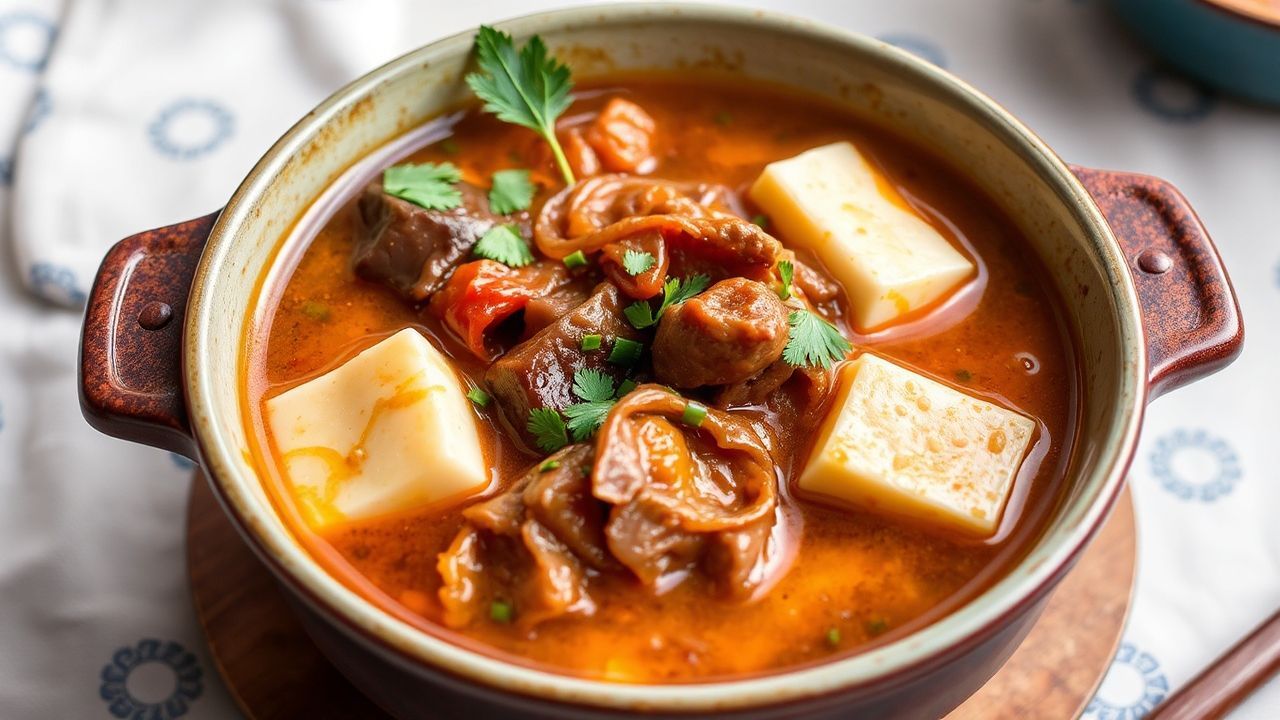
Kimchi beef and tofu stew is one of Korea’s most comforting jjigae dishes. It brings together aged kimchi, savory beef, and soft tofu in a spicy, tangy broth that feels comforting on cold or busy nights. In Korea, people often turn to this stew because it tastes bold without complicated technique.
- Exploring the Rich Flavors Behind Kimchi Beef and Tofu Stew
- Prep and Cook Time
- Yield
- Difficulty Level
- Selecting the Perfect Ingredients for Authentic Taste and Texture
- Ingredients
- Step by Step Guide to Crafting a Comforting Korean Classic
- Tips and Variations to Customize Your Hearty Kimchi Stew
- Serving Suggestions
- FAQ
- What makes Kimchi Beef and Tofu Stew a staple in Korean cuisine?
- Should I use fresh kimchi or aged kimchi?
- Why do you add tofu near the end?
- How can I adjust the spice level?
- Can I make this stew ahead and reheat it?
- In Summary
- Focus flavor: well-fermented kimchi drives the sour, spicy base.
- Best texture: add tofu late to keep it silky, not broken.
- Balanced heat: gochugaru and gochujang let you control spiciness.
- Make-ahead works: flavors deepen after resting in the fridge.
Kimchi Beef and Tofu Stew also fits well into a broader Korean home-cooking rhythm: simmer, taste, adjust, and serve hot with rice. If you like deep umami and a gentle tofu finish, this stew will match your cravings fast. For background on Korean fermented flavors, see Kimchi, which explains why fermentation matters for taste.
Exploring the Rich Flavors Behind Kimchi Beef and Tofu Stew
Kimchi beef and tofu stew balances three core notes: tangy fermentation, meaty umami, and creamy tofu comfort. The stew starts spicy and acidic, then softens as beef and tofu release flavors into the broth. For a wider view of Korean soups, you can also review Jjigae.
Traditional jjigae methods rely on layering. You sauté aromatics, build a chili- and kimchi-based base, then simmer until the broth turns cohesive. After that, you add tofu near the end so it keeps a custardy bite rather than turning grainy.
Prep and Cook Time
Plan for a calm cooking window. This recipe usually needs about 20 minutes prep and 40 minutes simmer to develop flavor. Total time comes to around 1 hour, which works well for weeknight cooking.
If your kimchi is very mild, simmering longer helps concentrate taste. If your kimchi is sharp, taste earlier so the broth doesn’t turn overly sour. That small adjustment keeps the stew balanced.
Yield
This dish makes about 4 generous portions. The bowl-to-bowl serving style matters here because kimchi jjigae thickens slightly as it cools. If you plan to store leftovers, keep that in mind.
Leftovers also reheat well when you warm gently. Stir the pot while heating and stop once the tofu looks tender again.
Difficulty Level
This stew stays medium in difficulty. You only need a good pot, basic knife skills for slicing beef and tofu, and the patience to simmer. Most steps are straightforward and repeatable.
Even so, the timing matters. If you rush tofu or under-simmer the kimchi, you lose the classic stew texture. Follow the steps below and you’ll get consistent results.
Selecting the Perfect Ingredients for Authentic Taste and Texture
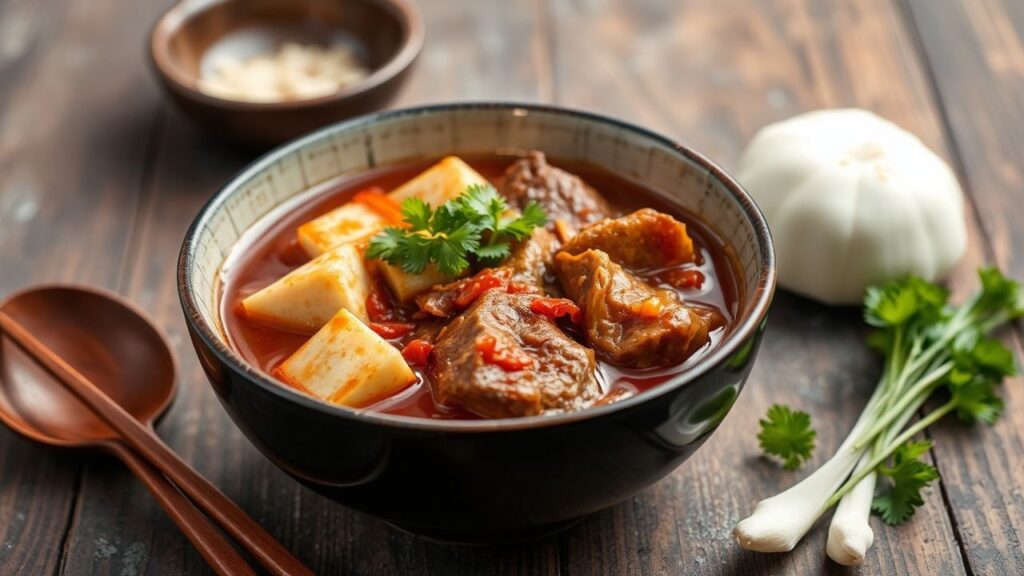
The magic begins with ingredient quality. Use well-fermented kimchi for a deep sour-spicy profile. If your kimchi tastes bright but not sharp, it may need an extra simmer to integrate fully into the broth.
For reference on fermentation and why flavor changes over time, read Fermentation. That knowledge helps you choose kimchi that fits your taste preferences. For beef, thin slices of chuck or brisket often work best because they soften well during simmering.
Tofu texture matters just as much. Choose soft or silken tofu for a gentle, spoonable finish. If you prefer a firmer bite, use firm tofu, but still add it late so the broth coats it without breaking it apart.
Ingredients
- 2 cups kimchi, chopped, with juice reserved
- 300g (10 oz) beef chuck, thinly sliced against the grain
- 1 block (400g) firm or silken tofu, cut into 1-inch cubes
- 1 medium yellow onion, sliced thinly
- 3 cloves garlic, minced
- 1 tablespoon Korean red pepper flakes (gochugaru)
- 1 tablespoon Korean red pepper paste (gochujang)
- 1 tablespoon soy sauce
- 1 teaspoon sesame oil
- 4 cups beef broth or water with bouillon
- 2 green onions, chopped for garnish
- 1 teaspoon sugar (optional, balances kimchi acidity)
- Salt and black pepper, to taste
Step by Step Guide to Crafting a Comforting Korean Classic
- Prepare the beef: Pat the thinly sliced beef dry. Season lightly with salt and black pepper to bring out savory depth.
- Sauté aromatics: Heat a heavy pot over medium heat. Add sesame oil, then sauté garlic and onion until soft and fragrant, about 3 to 4 minutes.
- Brown the beef: Add the beef and stir until it turns mostly brown, about 5 minutes. Browning adds deeper flavor to the broth.
- Build the stew base: Stir in chopped kimchi with its juice, plus gochugaru and gochujang. Cook this for 2 to 3 minutes so the chili paste blooms.
- Simmer the broth: Pour in beef broth. Bring to a gentle boil, then reduce to a steady simmer. Cook uncovered about 30 minutes to develop a cohesive taste.
- Add tofu and finish: Add tofu gently. Stir carefully once, then simmer about 10 more minutes until tofu warms through. Add soy sauce and sugar (if using) to taste.
- Final taste check: Adjust salt, black pepper, and acidity. Add green onions right before serving.
At this point, the stew should smell like cooked kimchi, toasted garlic, and rich beef. The broth should look slightly thicker than plain broth. If it tastes sharp, simmer 5 minutes more. If it tastes too strong, add a splash of broth or water to soften the edges.
After you turn off the heat, let the stew rest for 3 to 5 minutes. That short wait helps flavors settle and improves consistency when you ladle into bowls. Serve right away for the best texture.
Tips and Variations to Customize Your Hearty Kimchi Stew
You can customize kimchi beef and tofu stew while keeping the core flavor profile. Swap proteins, adjust chili levels, or change the tofu type to match your kitchen habits. Still, don’t replace kimchi entirely, because the fermentation tang defines the dish.
Protein swaps: Use thinly sliced chicken if you want a lighter stew. You can also use pork belly for richer mouthfeel. For a vegetarian direction, omit beef and use vegetable broth, then increase mushrooms for umami.
Heat control: Reduce gochugaru for mild heat. If you want a deeper chili flavor without as much spiciness, you can keep gochujang and slightly lower the flakes. Taste early so you can fix seasoning before the simmer finishes.
For extra depth: Add a small spoon of doenjang if you enjoy Korean soybean paste flavors. If you use it, add during the kimchi base step so it dissolves evenly. For background on soybean paste, see Doenjang.
Make-ahead also makes a real difference. After a full cooling, the stew tastes rounder because chili, kimchi acidity, and beef umami blend more evenly. Reheat gently, and add a splash of broth if the pot looks too thick.
Serving Suggestions
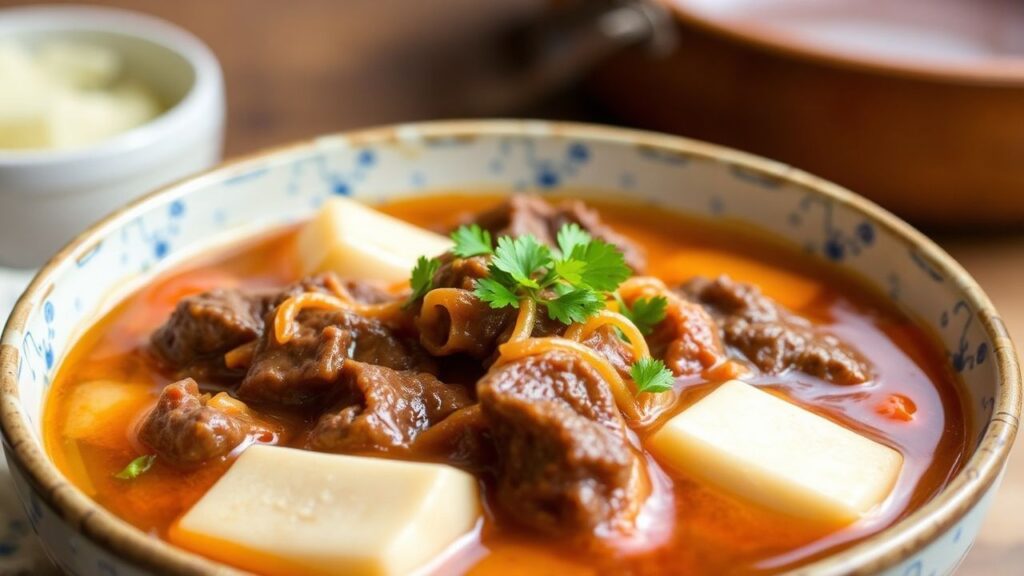
Serve kimchi beef and tofu stew steaming hot. White rice works best because it soaks up the spicy broth and balances the acidity. You can also add simple banchan like seasoned spinach for contrast.
For a classic pairing, serve with kimchi jeon or other savory pancakes. The crispy edges contrast the soft tofu texture. If you like spicy extras, add a little extra sesame oil right before serving.
| Nutrient | Per Serving |
|---|---|
| Calories | 350 kcal |
| Protein | 28 g |
| Carbohydrates | 12 g |
| Fat | 18 g |
If you want more context on Korean fermented foods and their general nutrition relevance, check History of Korean cuisine. It helps explain why fermentation and hearty stews remain popular.
To understand why beef stock and slow simmering create depth, you can also review Broth. A steady simmer lets flavors dissolve and blend, not just sit on top.
FAQ
What makes Kimchi Beef and Tofu Stew a staple in Korean cuisine?
It combines aged kimchi sour heat, beef umami, and soft tofu comfort in one pot. The fermentation tang stands out, while the simmering process smooths sharp notes into a balanced broth. Korean home cooking often values this mix because it tastes rich even with simple pantry tools.
Should I use fresh kimchi or aged kimchi?
Aged kimchi usually makes the best kimchi beef and tofu stew because it has more developed sourness and spice depth. Fresh kimchi can work, but it often tastes brighter and less rounded. If you use fresh kimchi, simmer a bit longer and taste more often to keep the stew balanced.
Why do you add tofu near the end?
Tofu can break down if you simmer it too aggressively. Adding tofu late keeps a silky texture and prevents a cloudy broth. Once tofu warms through, you only need a short additional simmer for even seasoning.
How can I adjust the spice level?
Control spice mainly through gochugaru quantity and how much gochujang you add. For mild heat, reduce gochugaru first, then taste after the base simmers. If it becomes too spicy, a small pinch of sugar can help balance acidity and heat.
Can I make this stew ahead and reheat it?
Yes. Kimchi beef and tofu stew often tastes better after a rest because flavors meld during chilling. Reheat gently on the stovetop and stir carefully. If it thickens too much, add a splash of broth to loosen the texture.
In Summary
Kimchi beef and tofu stew delivers bold Korean comfort in one pot. With the right kimchi, careful simmering, and late tofu timing, you get a broth that feels tangy, savory, and soothing at the same time. The result fits both weeknight cooking and meal prep.
If you cook the base long enough, brown the beef properly, and keep tofu gentle, the stew stays silky and flavorful. Serve it with rice, taste as you go, and enjoy the satisfying warmth of a classic Korean jjigae bowl.
See also: kimchi beef