
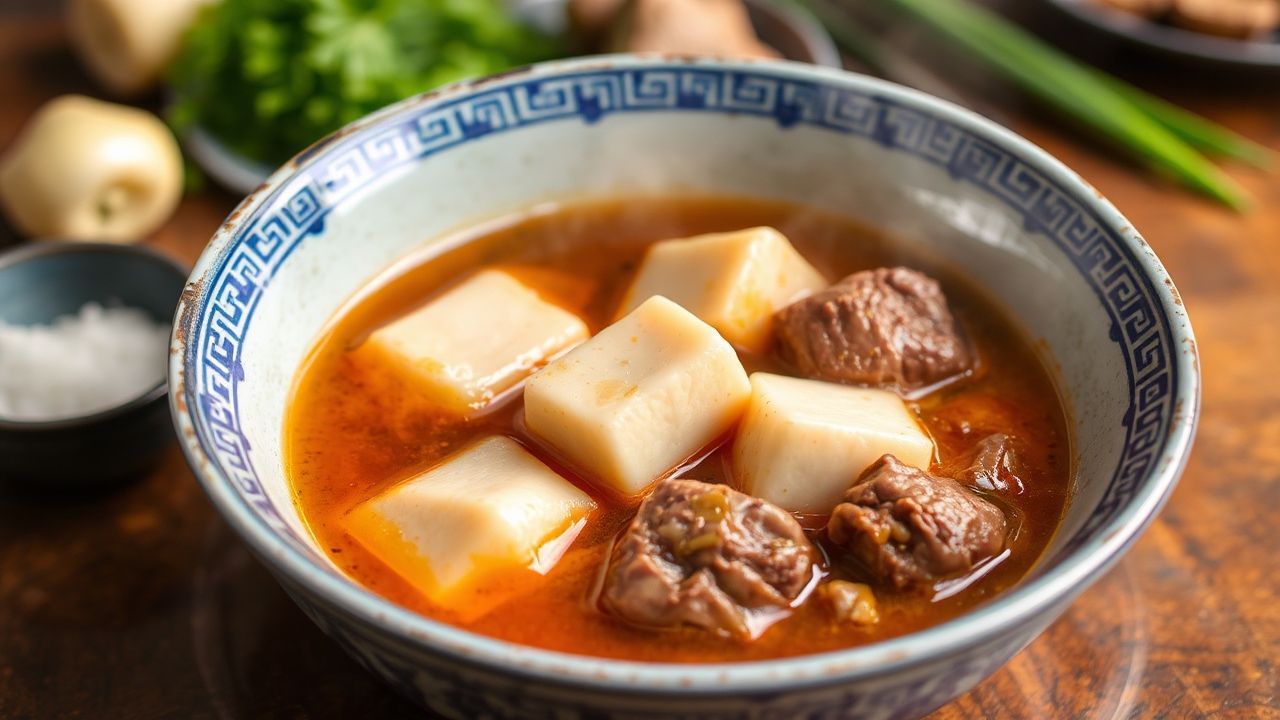
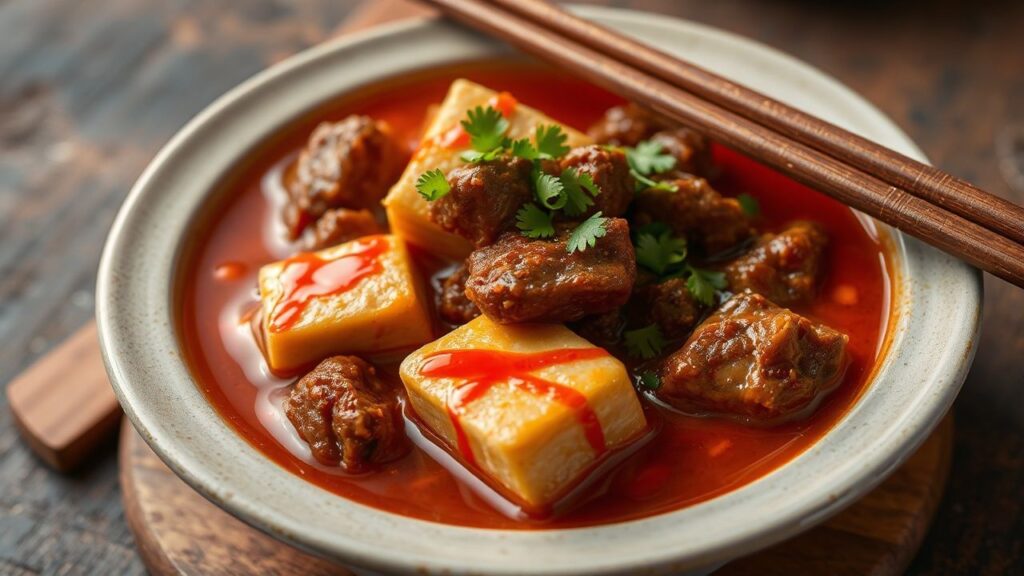
Spicy Soft Tofu & Beef Stew, also known as Soondubu Jjigae, brings a rare mix of silkiness, heat, and savory depth in one pot. The dish wins because silken tofu stays creamy while the broth turns rich from chili paste, aromatics, and simmered beef.
- Prep and Cook time
- Yield
- Difficulty Level
- Ingredients
- Instructions
- Tips for Success
- Q&A
- What makes Spicy Soft Tofu & Beef Stew so uniquely comforting?
- How does beef change the flavor compared with a seafood or vegetable stew?
- Which ingredient controls heat the most?
- How do I prevent tofu from breaking apart?
- Can I make this ahead and still keep it creamy?
- In Summary
- FAQ
- Silken tofu keeps the stew custardy—add it at the right time.
- Gochugaru + gochujang build layered heat and umami, not just “spice.”
- Gentle simmering protects tofu texture and tenderizes beef evenly.
- Season in stages so the broth stays balanced and not overly salty.
Spicy Soft Tofu & Beef Stew is an everyday Korean comfort dish with a specific technique behind its wow factor. You start with aromatics, bloom chili ingredients in oil, simmer beef for flavor, then add tofu so it doesn’t break down. The result tastes bold, warm, and silky—never grainy, and never one-note.
Prep and Cook time
Plan for 55 minutes total for four servings, including prep and simmer time. This schedule works because most effort goes into slicing, marinating, and a controlled simmer.
Use a heavy pot for even heat. When the stew cooks evenly, the chili base stays stable and the tofu cooks through without turning watery.
- preparation: 15 minutes
- Cooking: 40 minutes
- Total Time: 55 minutes
Yield
This recipe makes 4 hearty portions. It also reheats well because the tofu keeps its soft bite when you warm it gently.
If you want leftovers for the next day, keep extra broth separate at first. Then combine and reheat so texture stays close to “fresh from the pot.”
Difficulty Level
Difficulty stays Medium. Home cooks can handle it easily, but timing matters for tofu and for bloom time of the chili base.
Focus on two windows: the 2-minute chili bloom and the 8–10 minute tofu simmer. Miss those, and the stew loses either aroma or texture.
Ingredients
Use quality tofu and beef first. Then measure chili ingredients carefully, because gochugaru and gochujang both affect heat level and broth thickness.
For background on key components, you can read about gochujang and chili-based sauces. That helps you understand why fermentation and paste texture matter in this stew.
- 300g soft Korean tofu (soondubu), drained and cut into large cubes
- 200g beef chuck roast, thinly sliced against the grain
- 1 tablespoon vegetable oil
- 1 medium yellow onion, thinly sliced
- 3 cloves garlic, finely minced
- 1 teaspoon ginger, grated
- 2 green onions (scallions), chopped
- 3 cups beef broth, preferably homemade or low-sodium
- 2 tablespoons gochugaru (Korean red chili flakes)
- 2 tablespoons gochujang (Korean chili paste)
- 1 tablespoon soy sauce
- 1 teaspoon sesame oil
- ½ teaspoon sugar
- Salt and freshly ground black pepper, to taste
Instructions
Follow the sequence closely. Each step builds the next one—aromatics set the base, chili blooms add color and fragrance, beef simmering deepens the broth, and tofu finishes the texture.
If you need a quick reference for beef cutting technique, check beef. Slicing against the grain shortens muscle fibers, which helps tenderness during simmering.
- Prepare the beef: In a bowl, toss the thinly sliced beef with soy sauce, a pinch of salt, and pepper. Marinate for at least 10 minutes to improve flavor absorption.
- Sauté aromatics: Heat vegetable oil in a heavy-bottomed pot over medium heat. Add garlic, ginger, and onion. Sauté until fragrant and translucent, about 4 minutes, stirring to prevent scorching.
- Develop the spice base: Stir in gochugaru and gochujang and cook for about 2 minutes. This short bloom lets the chili aromas lift into the oil, which boosts overall depth.
- Add the beef: Add the marinated beef slices. Cook until they start browning and firming, about 5 minutes, stirring often so the beef doesn’t stick in one spot.
- Pour in the broth: Add beef broth and sugar. Bring to a gentle boil, then reduce to a steady simmer for 20 minutes so beef becomes tender and flavors meld.
- Introduce the tofu: Gently add the tofu cubes by spooning them into the stew. Simmer 8–10 minutes so tofu warms through without breaking apart.
- Final seasoning and oil: Taste and adjust salt and pepper. Turn off the heat, drizzle sesame oil, then top with green onions for a fresh finish.
Tips for Success
Small choices change the final bowl fast. Start with the right tofu softness, then control simmer intensity so the stew stays thick and creamy rather than watery.
To understand why chili pastes behave like flavor concentrate, review chili paste. Pastes carry fat-soluble aromas and thicker texture, so they help the broth coat the spoon.
- Choose soft Korean tofu for a velvety, spoonable bite. Firm tofu makes the stew taste drier and less “silken.”
- Use well-marbled beef chuck for tenderness. Lean cuts can toughen during the 20-minute simmer.
- Adjust heat by changing chili levels: more gochugaru for smoky heat, more gochujang for deeper spice and sweetness.
- If broth reduces too far, add warm water gradually. Keep the pot at a gentle simmer so tofu texture stays intact.
- Make ahead works best when you reheat gently. Over-boiling reheated tofu can turn crumbly.
Serving Suggestions and Pairings to Complete Your Fiery Feast
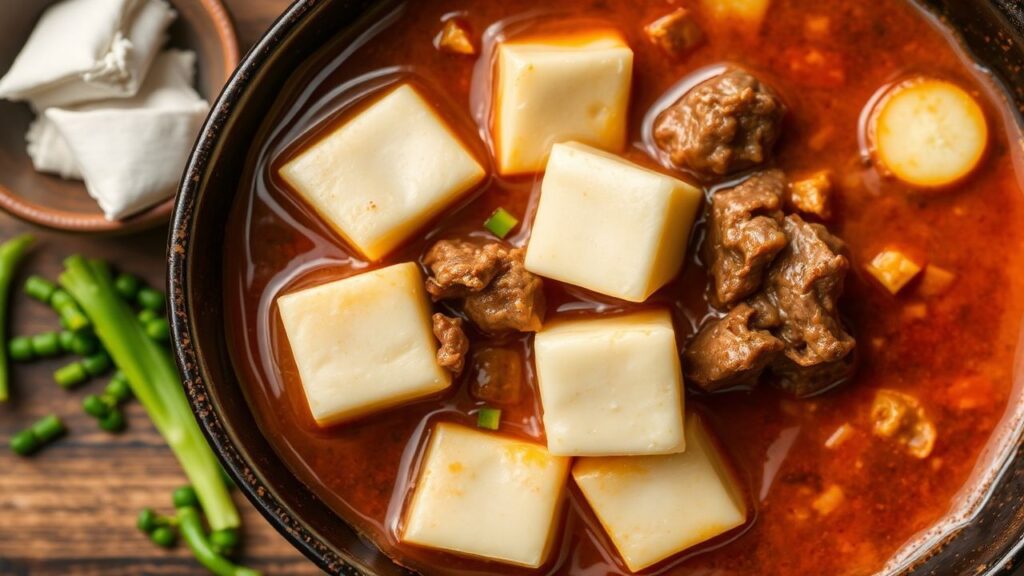
Serve Spicy Soft Tofu & Beef Stew in deep bowls that hold heat well. A stone or ceramic bowl keeps the broth hot longer, so the aroma stays strong from the first spoon to the last.
Pair it with short-grain white rice. Rice absorbs broth without fighting the chili, and it balances the stew’s savory-sweet profile.
For extra contrast, add traditional Korean banchan like kimchi or lightly pickled radishes. The acidity cuts richness and refreshes your palate between bites.
If you want to explore fermentation background behind kimchi and chili paste, read kimchi. Fermentation explains much of the tang and depth people associate with Korean comfort food.
| Nutrient | Per serving |
|---|---|
| Calories | 350 kcal |
| Protein | 28g |
| Carbohydrates | 12g |
| Fat | 18g |
Q&A
What makes Spicy Soft Tofu & Beef Stew so uniquely comforting?
The comfort comes from contrast: silken tofu feels smooth, while the broth packs steady heat and deep umami. Chili paste and chili flakes create layers of flavor, and beef adds savory backbone.
Fermented ingredients also help round out the taste so it feels “complete.” If you want more context on the paste used here, see Gochujang.
How does beef change the flavor compared with a seafood or vegetable stew?
Beef contributes both fat and gelatin-like proteins when simmered, which thickens mouthfeel and boosts richness. When you slice thin and simmer gently, beef stays tender instead of chewy.
Also, browned beef surfaces add roasted notes. Those notes make the chili taste more complex rather than purely hot.
Which ingredient controls heat the most?
Heat comes mainly from gochugaru and gochujang. Gochugaru brings smoky chili punch, while gochujang adds fermented depth and warmth.
If you prefer a milder stew, reduce one of the two first. That keeps the stew’s character while letting you dial in your comfort level.
How do I prevent tofu from breaking apart?
Add tofu near the end and keep the simmer gentle. Stirring hard after the tofu goes in increases breakage and can make the broth look cloudy.
Use large tofu cubes so they survive the final simmer. Swirl the pot instead of stirring for even heating.
Can I make this ahead and still keep it creamy?
Yes. Reheat slowly over low heat and stop as soon as the broth steams. Fast boiling can overcook tofu and reduce the custardy texture.
For best results, store with a little extra broth. Then reheat to the thickness you want.
In Summary
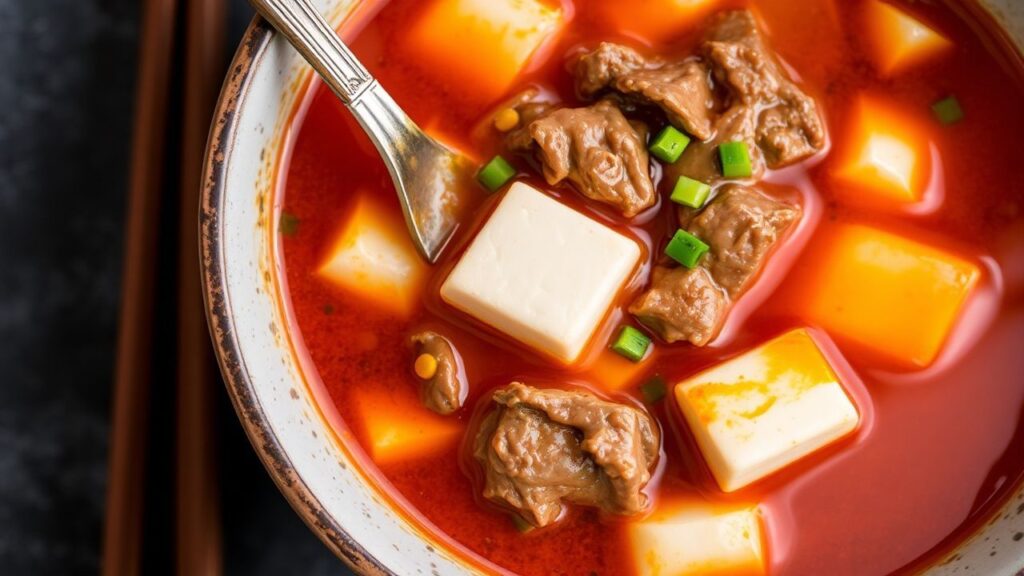
Spicy Soft Tofu & Beef Stew tastes like comfort because each step supports the next one. Bloom chili ingredients in oil, simmer beef until tender, and add tofu at the final stage for a silky finish.
Follow the timing, season in stages, and serve with short-grain rice and banchan. You’ll get a bowl that’s spicy, savory, and smooth—exactly what Soondubu Jjigae should deliver.
FAQ
Is Soondubu Jjigae always made with gochugaru and gochujang?
Most classic versions use both. Gochugaru adds smoky heat, while gochujang provides fermented sweetness and umami that thickens the broth.
If you adjust heat, change amounts gradually so the stew still tastes balanced.
What broth works best for Spicy Soft Tofu & Beef Stew?
Beef broth gives the most direct savory flavor for this version. You can also use low-sodium broth and add salt at the end so you control seasoning.
Warm water can help if the stew reduces too much during simmering.
Should I add sesame oil before or after simmering?
Add sesame oil after turning off the heat. That keeps its aroma bright and prevents it from tasting dull.
Sprinkle green onions at the end for freshness and color contrast.
How spicy should this stew be?
It depends on your gochugaru and gochujang amounts. Start with the measured amounts for a steady medium heat, then adjust next time.
Remember: you can increase flavor depth without adding pure fire by balancing with broth and sugar.
Can I swap beef with another protein?
Yes, but the technique stays similar: slice thin, marinate briefly, then simmer until tender. Chicken, pork, or seafood can work if you match cooking time to the protein’s texture.
The core identity still comes from tofu and the chili base.
See also: Spicy Soft Tofu